
The challenge for all of us as arts educators

In Sweet Sorrow by David Nicholls (2019), there is a powerful reminder of the way that arts education is seen in popular culture (in the UK but shared by many similar Western societies like Australia). Charlie is somewhat reluctantly seduced into participating in a summer production of Romeo and Juliet being staged in his dull suburban community. Used to hanging out on the fringes of his blokey school crowd, Charlie is not a fan of the arts and like his boy mates, is quick to sardonically dismiss and deride drama (though he is secretly reading Dostoyevsky). Here is Charlie’s view about the arts in education.

If there was such a thing as a theatre bug, then I was immune. The problem wasn’t acting. I was happy to watch people pretending to be other people in films and TV that I sucked up indiscriminately. But all the elements that were supposed to make theatre unique and special – the proximity, the high emotion, the potential for disaster – made it seem mortifying to me. It was too much, too bare and artificial.

 Then there was the whiff of pretension, superiority and self-satisfaction that clung to all forms of ‘the arts’. To perform in a play or a band, to put your picture on display in the corridor, to publish your story or, God forbid, your poem in the school magazine, was to proclaim your uniqueness and self-belief and so to make yourself a target. Anything placed on a pedestal was likely to be knocked off, and it was simply common sense to stay quiet and keep any creative ambitions private.

Especially for a boy. The only acceptable talent was in sport, in which case it was fine to strut and boast, but my talents lay elsewhere, very possibly nowhere. The only thing that I was good at, drawing – doodling actually – was acceptable as long as it remained technical and free of self-expression. There was nothing of me in the still life of a peeled orange, the close-up of an eye with a window reflected in it, the planet-sized spaceship; no beauty, emotion or self-revelation, just draughtmanship. All other forms of expression – singing, dancing, writing, even reading or speaking a foreign language – were considered not just gay but also posh, and few things carried more stigma at Merton Grange than this combination. (p. 150-151)

It is useful to reflect on the explicit and underlying issues captured here. Peer pressure; deeply inculcated values of what is important; personal preference all play a part. But Charlie is no orphan in sharing these perceptions. 

Having spent a life time in drama and arts teacher education, I have often speculated about what holds back successful implementation of arts curriculum in schools.

Apart from the general levelling effect of the Tall Poppy Syndrome and the self-deprecating avoidance of ‘showing off’, we see in schools combinations of fear of failing, quests for perfectionism and misunderstandings about the purpose and nature of arts curriculum. Most telling are the misconceptions about arts education (only for talented and ’special’ people; ‘I don’t have a creative bone in my body’; not core curriculum; time filling; something for Friday afternoons after the real learning). I am reminded of our friend who asks again and again but what is there to learn about acting and singing? 

How do we change deeply-held perceptions and prejudices?

What are the misconceptions about The Arts in schools that you see?

The lack of understanding (ignorance even) from gaps in teachers’ own arts education, compound reluctance and reinforce resistance to implementing arts curriculum. What are the game changers that we need for arts education to be successfully taught and learnt by all young Australians? 

Nicholls, D. (2019). Sweet Sorrow. London, UK: Hodder & Stoughton Ltd.
Teaching Drama teachers through stories

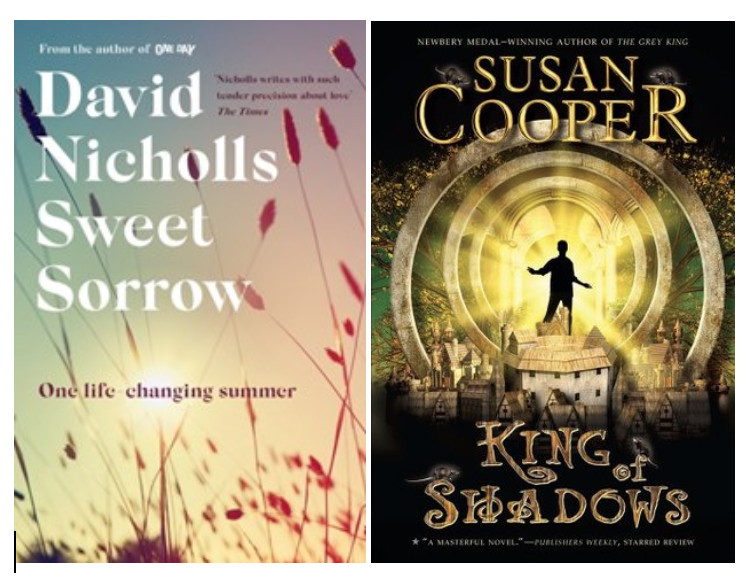
One of the powerful ways we have of learning about teaching drama is through the stories that are told about our field. From the first drama teacher education reader I compiled I included examples from young adult fiction that included descriptions of what happens in a drama workshop or class. Thanks to long-time friend John Foreman, a chapter from King of Shadows (Cooper, 1999) provides a useful description of a drama workshop in a time slip story that links the contemporary Shakespeare Globe Southbank with Shakespeare’s time and theatre. Earlier this year we gave John a copy of Sweet Sorrow (Nicholls, 2019) which features the reluctant participation of Charlie in a summer production of Romeo and Juliet as he pursues a romantic interest in a girl. What’s interesting is the tongue in cheek and jaded adolescent view of drama workshop activities that somehow seduce Charlie into participating in drama when he has scoffed at it. As insiders in the drama education bubble, it is useful to be reminded of the ways that our world is viewed by outsider/insiders. In the chapter called The Name Game Charlie recounts:

We played Catchy-Come-Catch and the Parrot Game. We played Follow My Nose and Scuttlefish and Fruit Bowl. We played Anyone Who? And Orange Orang-utan and Zip, Zap, Zop and Keeper of the Keys, then Chase the Chain and Panic Attack, That’s Not My Hat and Hello Little Doggy and while the others laughed and jerked and threw themselves around, I strived for an air of world-weary detachment, like the older brother at a children’s party.…

But it’s hard to remain cool through a game of Yes, No, Banana and all too soon we were shaking it out again, shake, shake, shake, and then getting into pairs and pretending to be mirrors. (p. 77)

Academic descriptions of drama workshops are mostly procedural. Stories, on the other hand, allow us to imagine possible versions of ourselves and are powerful role modelling. 

We are always looking for more examples of shared stories of drama teaching and learning.

What are your favourite stories about drama workshop experiences?

We would love to hear them when you share them.

Cooper, S. (1999). King of Shadows. New York: Margaret K. McElderry Books.Nicholls, D. (2019). Sweet Sorrow. London, UK: Hodder & Stoughton Ltd.

Cooper, S. (1999). King of Shadows. New York: Margaret K. McElderry Books.

Nicholls, D. (2019). Sweet Sorrow. London, UK: Hodder & Stoughton Ltd.
Continue the conversation on facebook and twitter.

Drama Tuesday - The words that we use to teach drama are important.

The drama teacher says to her students, lets play a drama game!

The simple term drama game carries with it meaning.

On the one hand, a word like game implies a sense of fun and possibility. Games are playful and entertaining. Games also have rules and structures that help us extend learning beyond this particular minute into the future, because once you’ve played the game you can play it again and extend and explore possibilities.

But you can also, depending on your context and culture, see games as frivolous, time filling and time wasting. Some see games as the opposite of learning - we go out from the classroom to play time while in class we study and focus on what’s important. Also, games can be seen as competitive, pitting player against player in order to win, to come out on top.

The people who advocate for the term drama games often do so because it encourages a sense of engagement, focus and commitment. 

Are there useful alternatives? 

I prefer to use terms like drama activities or drama exercise.  Or if needing to use the term drama game to explain and qualify how I use it. 

What this short thought reminds us is that the language we use matters. Language defines thinking and concepts. Rather than simply adopting accepted usage, we need to think purposefully about what we say and do as drama teachers.

image2.jpeg

Drama Tuesday - Williams’s drama gift 

Gifting the emotions 

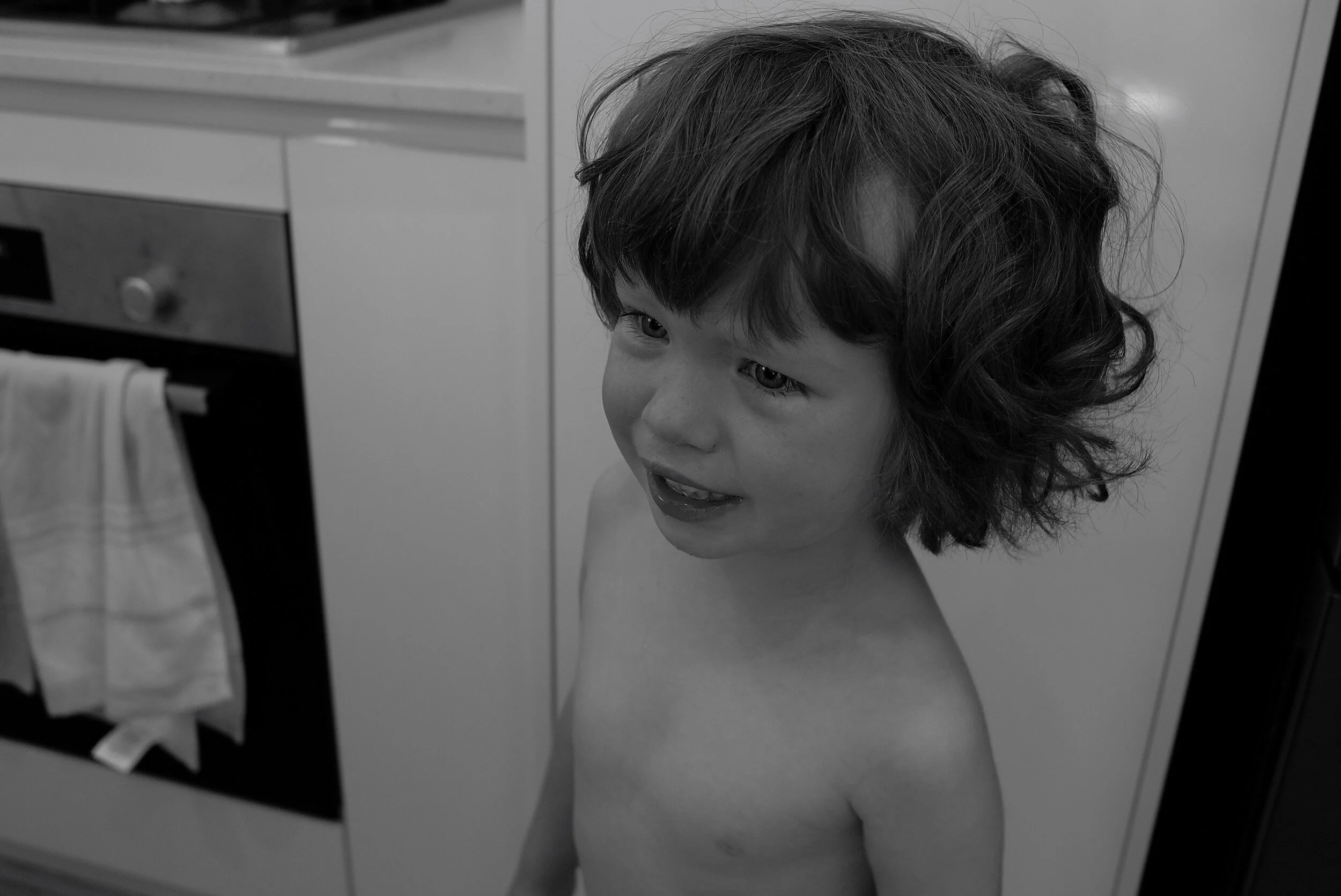
Our grandson, William, shared with us his idea for a drama activity. 

He brings his hands together to cradle an imagined gift. 

I am giving you an emotion he says solemnly as he hands the imagined gift to us. It is an emotion.You must guess the emotion I am giving you and then show it to me in your face and body.

L1000139.jpeg

After his gift he asks us to return the gift to him with our own emotion gift.

From his earliest days his parents had played the game look happy… look sad… look cross…  

William was familiar with how we shaped facial expression, bodies, sounds and even words to show emotions. He now is extending that activity which is a simple start to showing and sharing role and situation through our bodies. What is important is that he is asking us to create an imagined but not nominated emotion.

And so the game continues. Sometimes endlessly. (We sometimes overlook how important repetition is to young learners.)

The opportunity to model and then to encourage exploration and innovation is important in drama teaching and learning.

85121026_10206542157068553_5508382109300948992_o.jpg

Continue the conversation on facebook and twitter.

Drama Term Tuesday #42

Applause

The clapping of hands as an expression of approval. Conventionally there is a round of applause at the end of a play so as to acknowledge and thank the actors and production team for their work.

Excerpt from Drama Key Terms and Concepts. Continue the conversation on facebook and twitter.

Drama Term Tuesday #41

Memorising

The act of committing a text to memory so that an actor can deliver the story fully and accurately every performance. Almost always actors need to memorise their lines and moves in a play. They do so in a range of ways.

  • learning the ideas and their interconnectedness, the story of the lines;

  • saying the lines aloud rather than in the head associating the line with the specific movements of the action;

  • associating and remembering the feelings that the words and images create, not just the words; actioning the words

  • seeing all of the lines in a scene as one whole with its beginning section, middle section, and concluding section and its dramatic progression;

  • figuring out what the character is actually saying when he/she says what he/she says;

  • using mnemonic devices to help remember lists, such as anagrams, rhymes, silly sentences etc;

  • making a tape of the lines that can be listened to repeatedly.

Excerpt from Drama Key Terms and Concepts. Continue the conversation on facebook and twitter.

Drama Term Tuesday #40

Auditioning

Method of casting a play where actors compete for roles by demonstrating their skills of acting by performing a prepared speech or reading a part from the play for directors or producers. There are different types of auditions; open auditions (where a general call is made to anyone interested in auditioning - sometimes referred to as a cattle call); closed auditions (where auditionees are invited to attend often through the agent representing them); group auditions; solo auditions; workshop auditions.

Excerpt from Drama Key Terms and Concepts. Continue the conversation on facebook and twitter.

Drama Term Tuesday #39

Operetta

By contrast with opera, operetta is light hearted and comic; in operetta, songs and scenes of dialogue are interwoven with dance.

Generally romantic in nature and almost inevitably resulting in a happy ending, operetta is a highly entertaining and popular form.

It is often seen as the forerunner to the modern musical.

Excerpt from Drama Key Terms and Concepts. Continue the conversation on facebook and twitter.