
Music Tip Mondays #1 - Straw Phonation

Voice getting fatigued as you head into the last week of the school term?  A quick restorative fix can be found by using a straw to warm your speaking and / or singing voice up before class. You could also use these warm-ups with your choir or school musical cast.

The exercises below can be done either with a straw in the air (hold straw parallel to the ground – or in a bottle of water. 

Maintain soft, slightly puffy cheeks throughout.

Don’t force your air  - let it be a consistent and comfortable air–flow from a sense of low abdominal release.

When blowing into a water bottle keep the bubbles consistent.

  1. Blow air  gently through the straw.

  2. Add sound to the airflow. This will feel like an ‘oo’ sound going into the straw on the breath flow.

  3. Make a low sustained note in the straw.

  4. Blow 5 note scales into the straw. Start from a comfortably low key.

  5. Try descending 8 note scales – starting from a little higher in your vocal range.

  6. Try sirens  - start in the middle of your range and then expand upwards and downwards in pitch.  If you sense a ‘gap’ in the line of sound, go back over that part of the siren gently until the siren moves more smoothly.

  7. Try a section of a song in the straw – remember you cannot use words – just the melody on the ‘oo’ sound.
Of course it is always preferable to use a metal, bamboo, glass or silicone straw rather than single use plastic.

Liz Pascoe

Media Term Thursday #1

television drama

A television genre that follows a conventional structure and narrative. Television dramas are designed to be both entertaining and riveting. One of the central features is emotional or physical conflict.

There are many types of television dramas including crime, hospital, court room, military and supernatural.

Television dramas are episodic and most often serialised. This means that within each episode there is a story with a beginning middle and end, but each week the characters and their relationships are developed and sub-plots may be carried over a number of episodes.

These sub-plots and relationships encourage the audience to watch the program the following week.

Television dramas use theme music and a standard opening sequence and usually end with a preview of the following week’s episode.

See also television genre

Excerpt From: Media Key Terms and Concepts.

Drama Term Tuesday #1

Boulevard Theatre

Developed on the streets of Paris in the late 18th century, popular and bourgeois theatre companies set up on the Boulevard du Temple, performing crime stories and melodramas.

Fireworks, clowning and pantomime added to the boulevard repertoire, which developed into the commercial theatre of Paris.

Has also come to mean light commercial theatre.

See also French theatre.

Excerpt From: Drama Key Terms and Concepts.

Learning Drama Teaching Drama now available on iTunes and Amazon.

Learning Drama. Teaching Drama.

Learning Drama. Teaching Drama.

The first book in our new Concepts and Strategies series is now available on iTunes and Amazon.

This series of books is designed to support teachers Kindergarten to Year 10 to include the Arts in their day-to-day teaching. 

The series is organised around three straightforward ideas:
What to teach – what the curriculum says is important learning

How to teach – strategies to teach the content

Why teach – reasons why this is important learning.  

3.jpg


Learning Drama Teaching Drama is written in a straightforward and informative style.


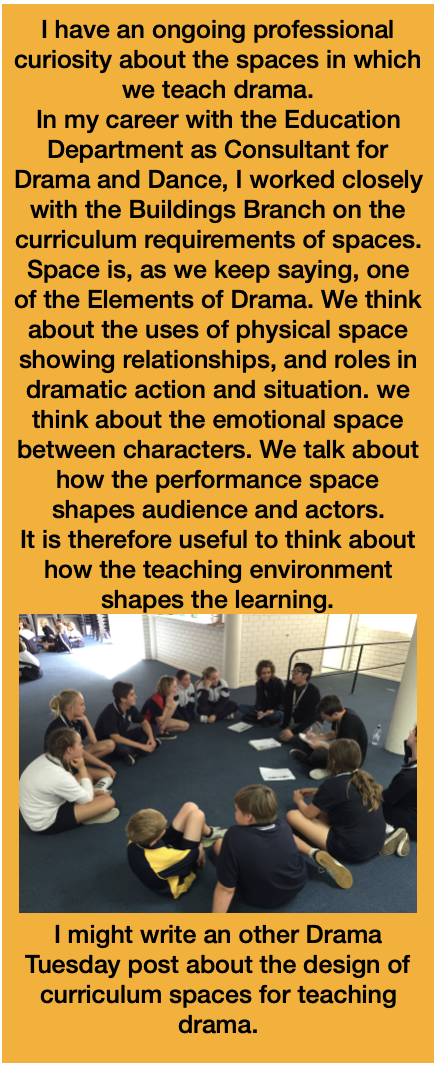
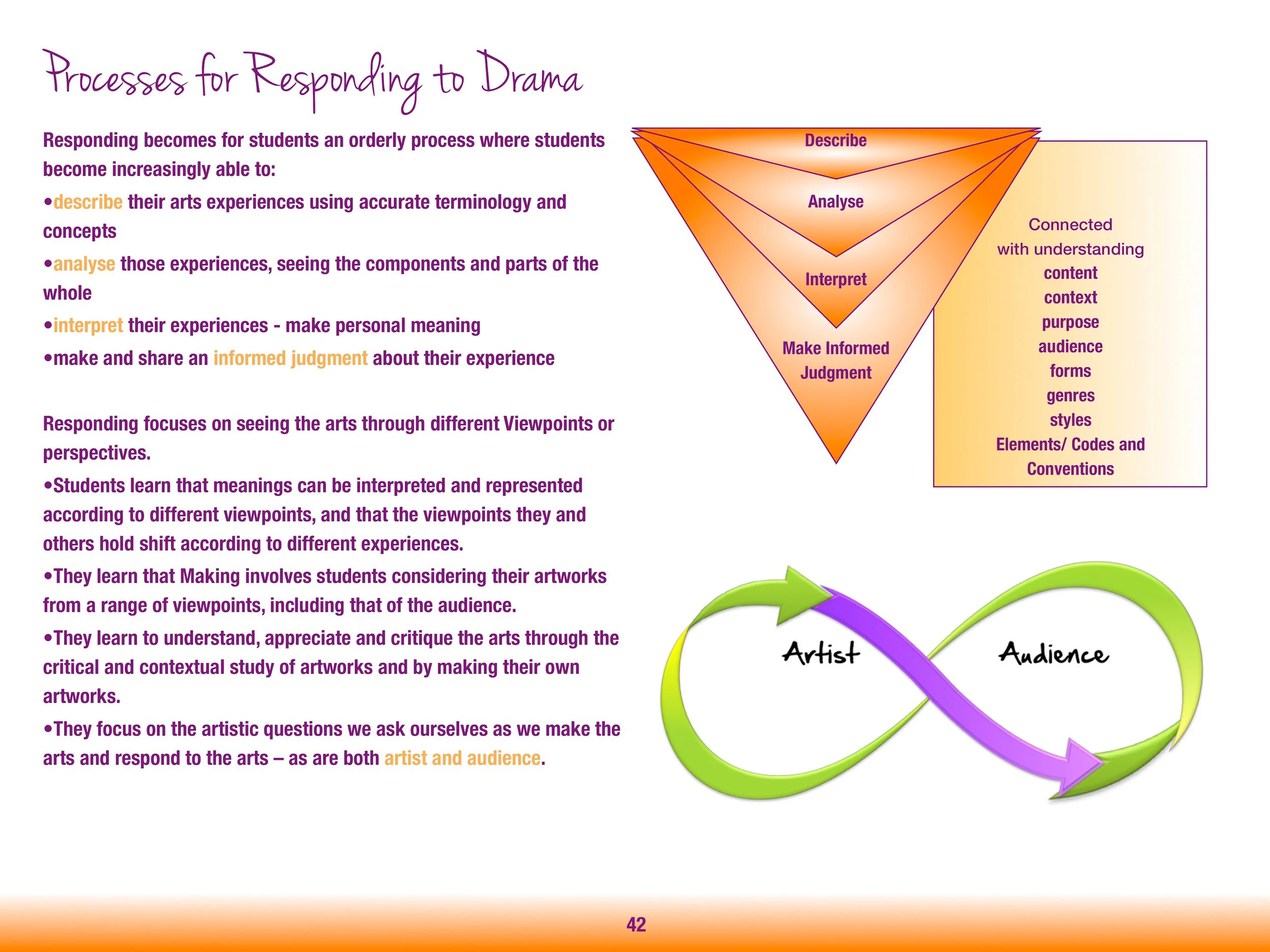
The first section focuses on the key concepts in current Australian Arts curriculum – in particular the Australian Curriculum: The Arts (ACARA, 2014) and the Western Australian Arts Curriculum (SCSA 2015). Concepts are explained in bitesize chunks – enough to get you started on understanding what the curriculum expects. For example, Learning Drama Teaching Drama looks at the building blocks of Making and Responding as fundamental curriculum organisers, the Elements of Drama, the role of Drama in our lives. Drama forms in the curriculum are explained


The strategies section outlines important tools for bringing the required curriculum content to action in classrooms. For example, distinctive pedagogies of Drama are outlined; planning and age and developmentally sound approaches explored; shaping Drama lessons; approaches to teaching skills and concepts; and assessing drama.


Snapshots of classroom practice are included throughout to help teachers see the concepts and strategies in action in classrooms.

A print version of Learning Drama Teaching Drama will be available soon and more titles are set to be released in this series in the coming months. Feel free to contact StagePage with any questions or queries you may have about this book or the Concepts and Strategies series.