
Drama Term Tuesday #37
/Braggadocio
Theatrical swagger, arrogance and overstatement.
Theatrical swagger, arrogance and overstatement.
A zoom lens has a variable focal length. It can be adjusted to provide any shot size you wish within its range without needing to move the camera. The image size grows or reduces as you zoom in or out.” Excerpt From:
Excerpt from Media Key Terms and Concepts. Continue the conversation on facebook and twitter.
An elaborate, sophisticated drama with long traditions and origins in ritual and religion.
Silla period - 578 BC - 935 AD featured
Kommu: masked sword dance about the death of a young warrior.
Muaemu: dance without masks
Ch’oyongmu: grotesque masked dance drama
Koryo period - 918 - 1392 AD featured mainly puppet plays, acrobatic dances, but not a fully featured developed drama tradition.
Choson period - 1392 - 1910
P’ansori: one man operetta accompanied on the pug, double headed drum.
Kwangdae - actor - used three elements:
Sori - singing
Aniri - narration and dialogue
Ballim - acting restricted to emotional expression of joy.
Korean masked drama had two major forms
Purakje - village festival plays
Sanda-togam-g¨uk - court plays that later came to be performed in theatres, included dance, singing, music, mime and exchange of repartee; used elaborate and colourful masks made of dried gourds or paper which were traditionally burned at the end of each performance. Plays were collaboratively developed and transmitted by oral traditions.
Khoktu kaksi - traditional humorous Korean puppet theatre featuring animal and human characters.
Hahoe mask dance drama - originally had ritual significance but in recent times has mainly entertainment focus. Features various allegorical characters represented by masks not dissimilar to the commedia dell’arte use of stock characters and masks. Focused on class and social distinctions in humorous ways.
As Australian teachers return to school after the long summer break, it is timely to talk about voice care.
Teachers are high energy voice users and music teachers in particular need to be mindful of caring for their voice.
Here are some tips I have learned over the years – from singing and voice colleagues as well as fellow teachers:
Try to incorporate a basic voice warm-up into your drive to school. Some gentle sirening on a lip trill, ‘ng’ phoneme or vowel sound will help. Start in the middle of your speaking pitch range and gradually explore higher and lower pitches.
Keep your larynx well hydrated with frequent sips of water throughout the teaching day.
Avoid shouting over your class – establish a signal for attention early in the year. My favourite is to clap a 4- beat pattern which the class echo back. If established at the start of the year it becomes a habit and a terrific way to refocus the students’ attention on what you need to say – as well as bringing them back to the task at hand.
Eliminate throat clearing! If you are a habitual throat clearer, make 2020 the year you break the habit. Try to swallow instead.
Don’t smoke.
Avoid excessive talking / singing when you have a cold.
If you direct a school choir, sing only the parts which are appropriate for your singing range.
What are your favourite voice care tips? We would love you to share by commenting below.
Happy teaching!
The belief that western society is saturated by all types of media messages – news, entertainment, advertising – through all forms such as television, radio, film, print, internet, and that this is so overwhelming it affects our daily lives. This instant gratification affects our ability to think freely and make voluntary judgements with regard to what products to buy, what issues are presented etc.
Also, the pervasive nature of a particular message being promoted across all forms of media (television, radio, film and print) does not give the audience a chance to escape from that message.
A business can also saturate the market with advertising, often past the point of gaining any benefit.
The level of colour (chrominance) in an image.
Divisions of dramatic texts into sections.
In traditional drama, dramatic action was divided into a succession of inter-related scenes, and further shaped into sections called acts. In Aristotelian drama, the action of the play was divided into five acts. Although these divisions have been applied to plays, it is not always possible to set such formal and formulaic limits to drama; frequently the structure of drama is more organic and less schematic.
Some directors and actors also further divided scenes into beats, naturally occuring sections which make a whole statement or point and which contribute to the overall impact of the scene.
Using language effectively to please or persuade an audience. Therefore, in communications studies it is the use of all the codes and conventions used by a media text producer to persuade and audience to its message: selection and omission of particular images; symbolic, technical codes; narrative; audience positioning.
The point of rhetoric is to be so persuasive that the audience is overwhelmed so much by the preferred meaning that they struggle to create a resistant reading.
For example, a particular news network might use seductive graphics, dramatic music, repetition of slogans, a limited variety of paid ‘experts’ for commentary, selection of some details of some news stories to the exclusion of others, in order to create a particular context (fear, patriotism) to seamlessly insert a certain agenda and promote a certain point of view of the left or right wing of politics.
Sanford Meisner (1905 - 1997) developed a form of actor training - Meisner Technique - derived from Method acting and the Stanislavski tradition. Meisner believed that the seeds of the craft of acting is the reality of doing. His approach focused on acting that is rooted in the body of the actor responding authentically to the specific moment of the play. The Meisner technique is often described as ‘living truthfully under imaginary circumstances”. Influenced other acting teachers such as David Mamet.
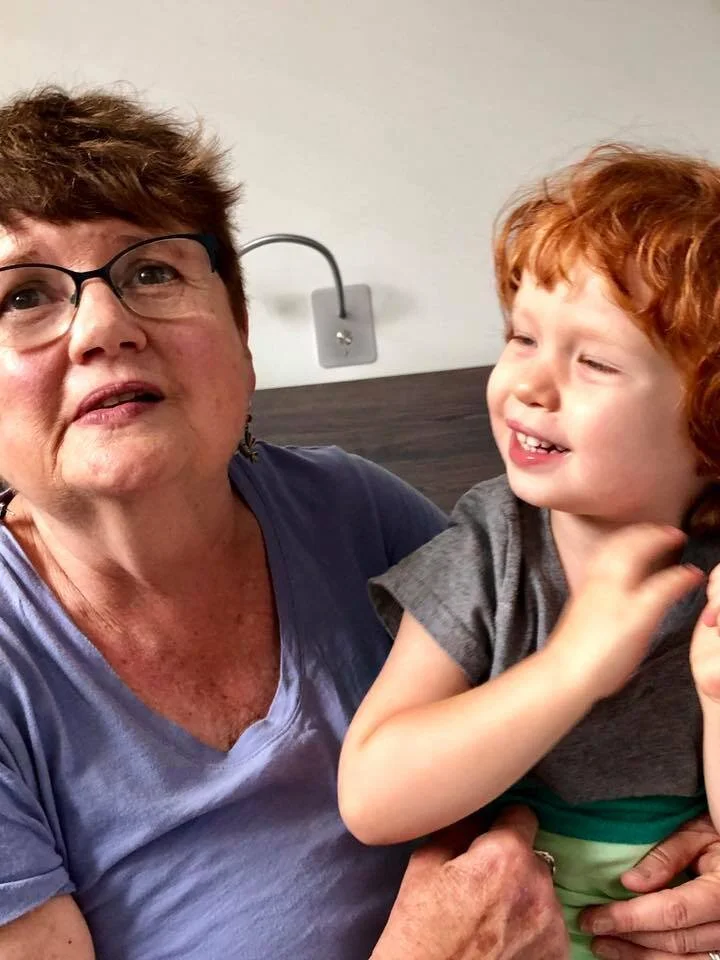
Our son, daughter-in-law and grandson have moved to Perth and are living with us for a month or so until they find a house. Suddenly we have gone from a quiet household of two sixty-something adults to a busy, cluttered, slightly crazy environment with a 3 year-old who springs into each day curious, questioning and eager to play, play, play. I find myself wondering and marvelling that we ever got anything done back in our day as parents of pre-schoolers at the same time working full-time as teachers. Of course, across Australia and the world, this generation of working parents are doing the same.
I find myself observing William’s play and reflecting yet again on the research into musical beat and its connection to reading readiness. I also find myself rethinking the whole idea of using only gross motor skills when making music with this age group – something which was emphasized to us in music education classes. Yes, children under 5 years are still learning to catch a ball, balance on one leg, jump etc. But in another sense they have greater fine motor skills than previous generations, developed through what seems like a universal use of screens these days.
William loves to sing and make up songs. Of course, he is somewhat influenced by parents who are also musical. But his inclination, whether singing his own invented songs or those learned from family and various television programs, is to move to the beat. Today we played with various beat movement combinations – clapping, patschen and so on. He could maintain a steady beat with a recurring 2-action beat but found more than 2 physical actions a challenge to maintain steadily. So a recurring pattern of slapping knees then clapping was easy to maintain while singing the Sesame Street alphabet song. Slapping knees then clapping 2 beats was also a success while singing his current favourite – the refrain from The First “Nowell”. But a 4-beat action pattern of slapping knees, clapping, slapping a partner’s hands then clapping again, while doable, was less successful as a steady beat while singing.
Where am I going with this? Well, music as an art form aside, should we not as a society be maximising the benefits to child development from engaging with beat and rhythm as early as possible? Perhaps childcare centres – especially as their staff are required to do some level of early childhood education training - could be the entry point for children in this work. That would surely have a levelling effect for children before they enter formal schooling.
When a government body or someone else not involved in a media production decides that some elements of the production must be changed or removed so it doesn’t offend a particular group’s values or break the law.
In Australia, The Australian Communications and Media Authority (ACMA) regulates television and radio while the Classification Board oversees films, DVDs, computer games and print media.
Self-censorship occurs during production when the selection process takes into account these external constraints.
Our Latest Blog
This web site and all material included and linked is copyright StagePage 2022
All information correct at time of publication 2022.
Powered by Squarespace.