
Music Monday - COVID 19 + Singing

This report was brought to my attention a few days ago. It is definitely worth a read. (NATS is the highly respected professional association of singing teachers in the USA; the American equivalent of ANATS in Australia.)

Now while it must be remembered that the viral load is very much larger in the USA than here in Australia, the report gives us much food for thought:

Adequate spacing and distancing between singers in any ensemble, choir, class or individual voice lesson will be the only safe way to teach and rehearse for the foreseeable future.

Some of our traditional singing warmup practices of touching our faces and feeling for vibration will be only possible within the most stringent of hygienic practice.

We singing teachers need to be vigilant in watching for and calling out students touching mouths, noses and eyes during our lessons.

As Australia moves towards easing the Covid-19 restrictions over the coming months, we face a challenging time ahead as we all work together to find ways to continue making music safely and with artistic integrity.

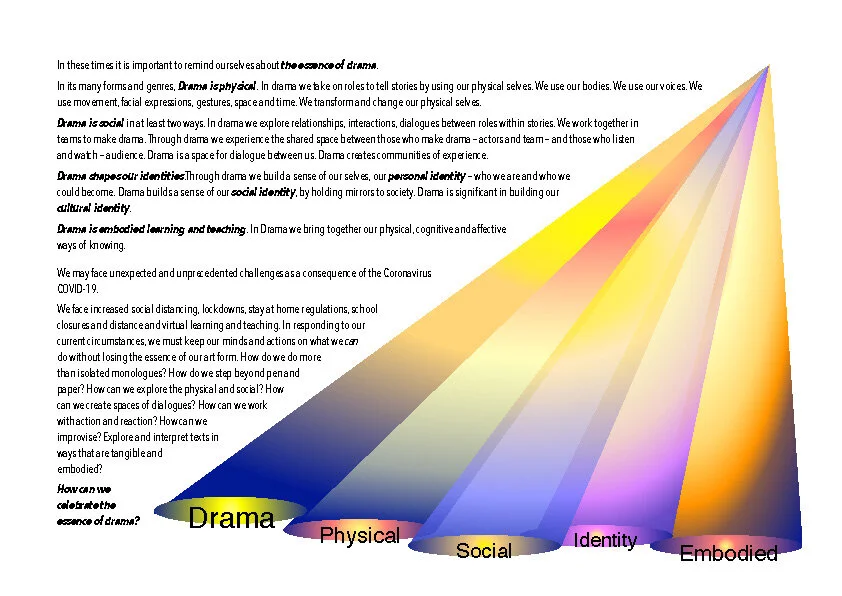
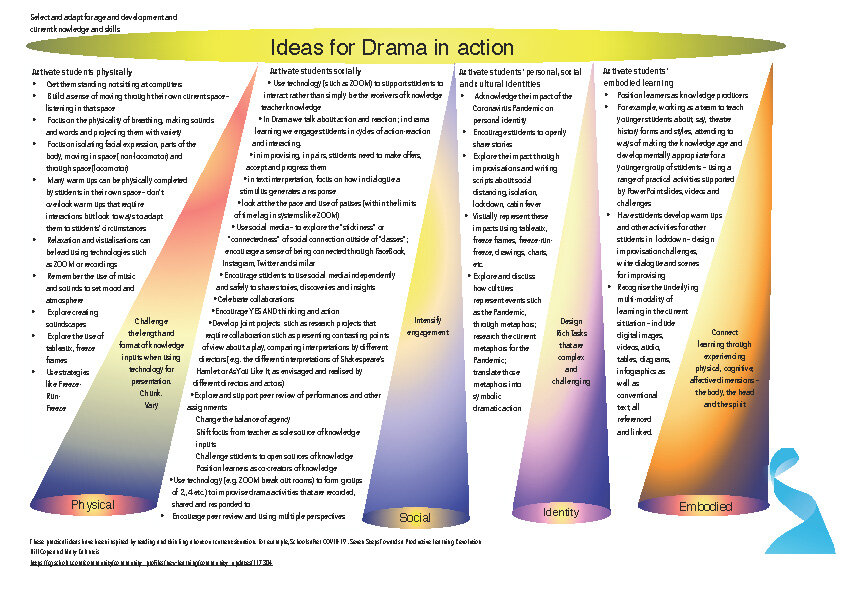
Drama Tuesday - The words that we use to teach drama are important.

The drama teacher says to her students, lets play a drama game!

The simple term drama game carries with it meaning.

On the one hand, a word like game implies a sense of fun and possibility. Games are playful and entertaining. Games also have rules and structures that help us extend learning beyond this particular minute into the future, because once you’ve played the game you can play it again and extend and explore possibilities.

But you can also, depending on your context and culture, see games as frivolous, time filling and time wasting. Some see games as the opposite of learning - we go out from the classroom to play time while in class we study and focus on what’s important. Also, games can be seen as competitive, pitting player against player in order to win, to come out on top.

The people who advocate for the term drama games often do so because it encourages a sense of engagement, focus and commitment. 

Are there useful alternatives? 

I prefer to use terms like drama activities or drama exercise.  Or if needing to use the term drama game to explain and qualify how I use it. 

What this short thought reminds us is that the language we use matters. Language defines thinking and concepts. Rather than simply adopting accepted usage, we need to think purposefully about what we say and do as drama teachers.

image2.jpeg

Drama Tuesday - Williams’s drama gift 

Gifting the emotions 

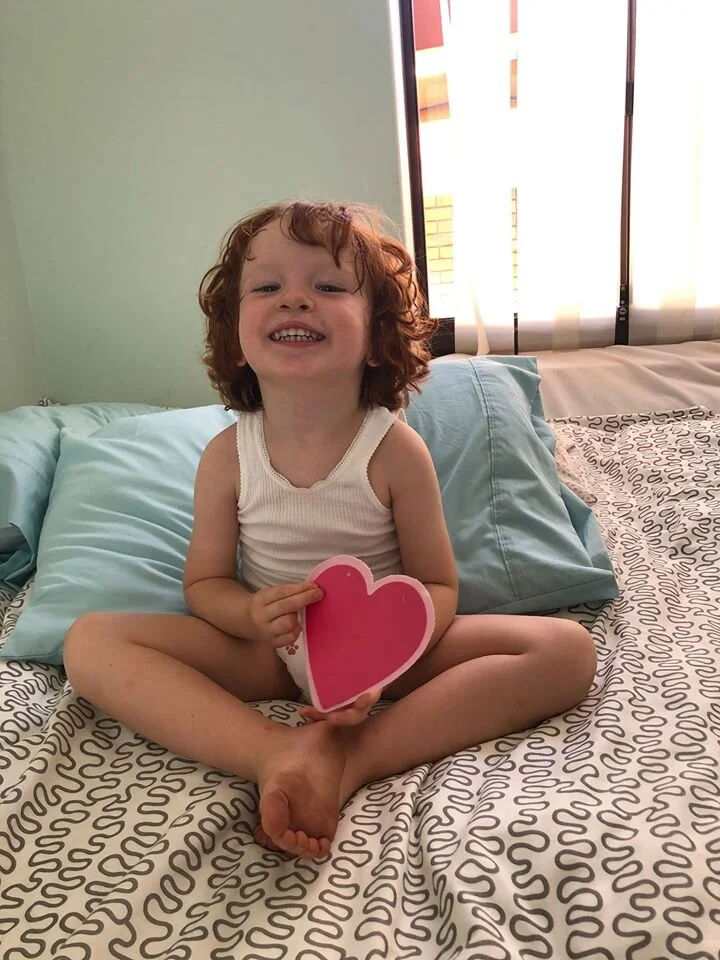
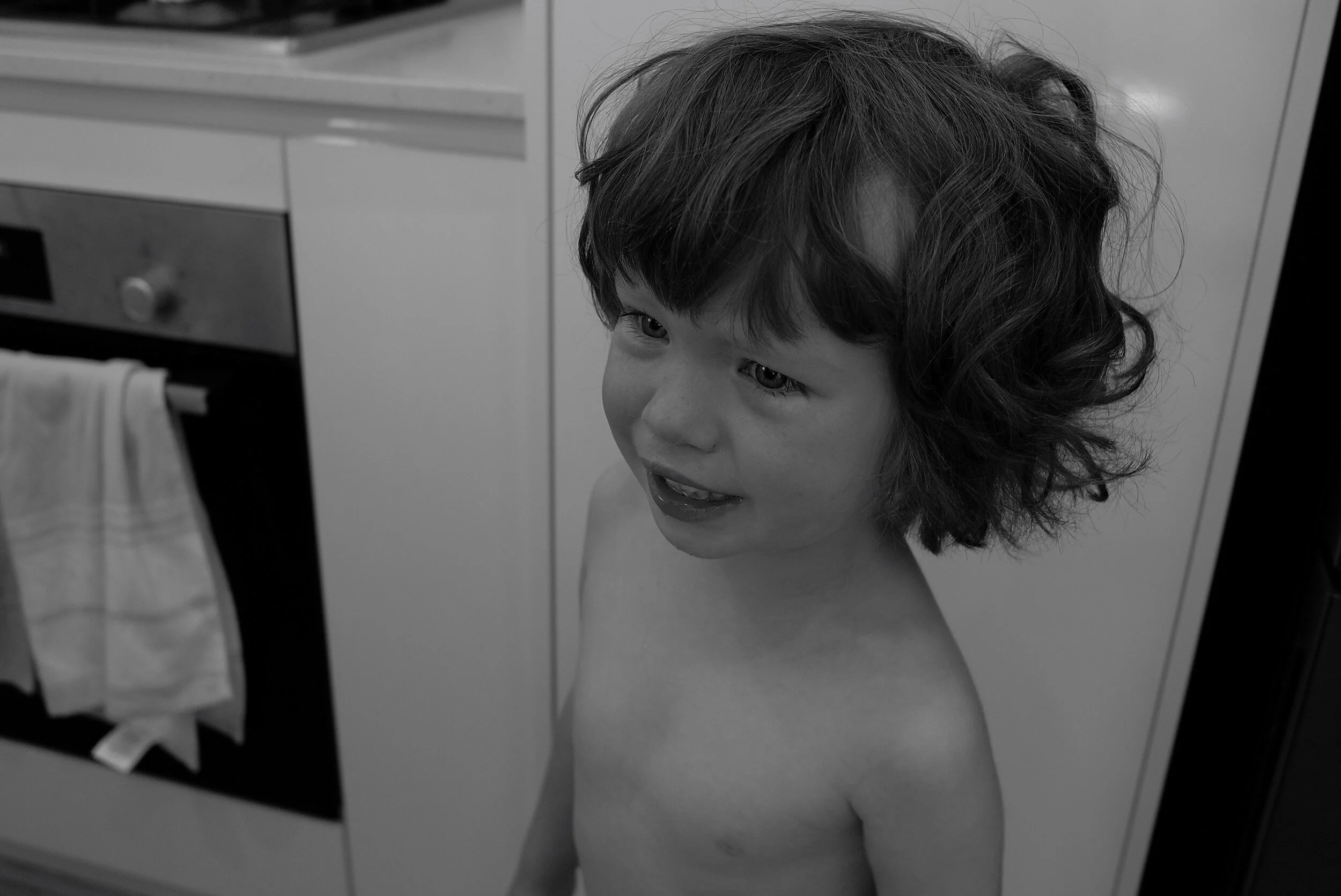
Our grandson, William, shared with us his idea for a drama activity. 

He brings his hands together to cradle an imagined gift. 

I am giving you an emotion he says solemnly as he hands the imagined gift to us. It is an emotion.You must guess the emotion I am giving you and then show it to me in your face and body.

L1000139.jpeg

After his gift he asks us to return the gift to him with our own emotion gift.

From his earliest days his parents had played the game look happy… look sad… look cross…  

William was familiar with how we shaped facial expression, bodies, sounds and even words to show emotions. He now is extending that activity which is a simple start to showing and sharing role and situation through our bodies. What is important is that he is asking us to create an imagined but not nominated emotion.

And so the game continues. Sometimes endlessly. (We sometimes overlook how important repetition is to young learners.)

The opportunity to model and then to encourage exploration and innovation is important in drama teaching and learning.

85121026_10206542157068553_5508382109300948992_o.jpg

Continue the conversation on facebook and twitter.

Music Monday - ANZAC Day

Anzac Day

Anzac Day 2020 was like no other before it in the many years since 1915.

In Australia, with gatherings banned due to covid-19, the usual services and parades were cancelled  - except for one at the Australian War Memorial in Canberra attended by only the few dignitaries who conducted it, telecast to the nation.

Instead, at the tops of suburban driveways across the country, Australians gathered just before dawn, holding lighted candles, and sometimes waving to acknowledge their neighbours without approaching or speaking to them.

 In quiet reflection Australians remembered their Anzacs  - and all who have suffered and perished in war – and as the skies softly lightened with the dawn, the morning chorus of magpies and crows was augmented by players of music – student brass players, music teachers, amateur and professional musicians and singers – each contributing to an extraordinarily moving tribute.

On my own driveway I could hear from the next street the hesitant sounds of a student trumpeter playing “Lest We Forget”. Further away there was the faint sound of the Last Post with its tricky high notes for beginner players. 

In the couple of days since Saturday the papers have carried letters from Australians suggesting that the dawn driveway tradition be kept and commenting on how moving it was to have their own silent contemplation accompanied by the sound of live music. My music teacher friends as well as non-muso neighbours have all said much the same.

Music is SO important in our many life rituals. When we work on the tedium of music theory, or teaching the singing and playing of scales, it is worth remembering how important our job is. We are contributing in our way to the rich tapestry of our country’s unique culture.

Media Term Thursday #43

Hypodermic Needle Theory

Magic Bullet Theory

The theory suggests that a media message is injected straight into the mind of a passive audience who are immediately influenced by the message (or a ‘’bullet’ from a ‘media gun’’). Therefore, the mass media can influence a large group of people directly and immediately and trigger a desired response.

It is a negative perception of the media as being dangerous and suggests the audience is powerless to resist.

Excerpt from Media Key Terms and Concepts. Continue the conversation on facebook and twitter.

Music Monday - COVID 19

I’ve been joining many online meetings and discussion groups for the past week in the quest of finding the most effective ways to structure teaching and learning in music during these pandemic days.

What follows is this week’s discoveries. Use them, add to them, discard them. Whatever works for you:

  1. Zoom seems to be the universally favoured platform for music classes, especially for sound quality. (Of course not all institutions or systems use zoom so we are all bound by our individual situations.) By checking out the various functions on zoom (especially the ‘disable background noise’) you can greatly enhance its capability.

  2. Microphones which plug straight into your laptop greatly enhance your sound quality. One example is the Yeti Blue (about $AUD180). (It doesn’t need an audio interface.)

  3. Many studio music teachers are speaking very highly of the My Music Staff app. 

  4. Group classes which involve any unison singing are best done with the participants’ microphones on mute. Not ideal I know but they can model from your singing.

  5. Call and response has become my new best friend. In normal face to face teaching I use it with younger students and in group classes. Now I find that I am using it in almost every situation, particularly when teaching new song repertoire. I play a phrase. I then sing the phrase. The student sings back and I can check musical accuracy and tone placement and technique. I imagine this would work with most instrumental teaching too. In group classes, although I would have the students sing ‘back’ with mics on mute, they could then email individual performances of the material (audio or video) for checking by the teacher.

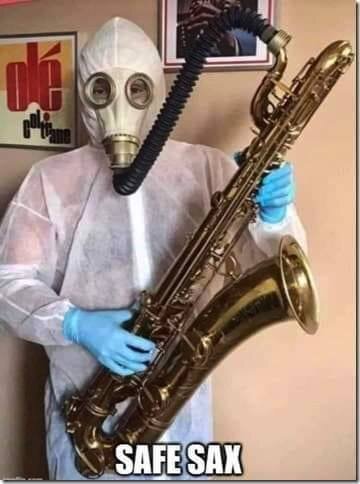
And to finish this week’s post, something to make you smile – with thanks to drama teacher John Foreman.

Music Monday - COVID 19

Well what a fortnight it has been. As the Covid-19 pandemic escalates, schools have closed across Australia and higher levels of social distancing brought into force across the country. Stores have lines and markers on the floor to indicate where the customers can move and stand.  All of society is impacted. When I visited a music store last week the entrance was secured until the staff member had asked me the reason for my visit. 

And in the midst of this, music teachers at primary, secondary and tertiary levels are on a very steep learning curve as they try to figure out ways of teaching their classes, individual instrumental and vocal lessons, vocational courses and everything else in between.

One of my primary music specialist friends shared that she had taken all day to figure out a plan for online pre-primary music learning – in a school where a number of families do not have access to internet at home.

My singing teaching colleagues are finding that the lag on platforms such as Zoom, Webex, Facetime etc means that the standard practice of playing warmups and song accompaniments live while the student sings simply doesn’t work anymore. (It seems that instrumental teachers have more success where they are less reliant on an accompanying instrument.)

My teacher friends who are also parents of school-aged children now find themselves juggling music lessons online with their own kids’ schoolwork.

There is also a real risk of a further social divide during these times – students of more affluent parents being more likely to have greater access to online resources while at the other end there will be students who slip through the net.

Here at StagePage we are committed to bringing you a weekly update on what we have learned and sharing any resources we think might help during the pandemic.

We welcome your contributions too- either through the comments section below or by email or private message. We will always acknowledge you.

Many musicians and music teachers have lost all or part of their income. Let’s look out for their presence online and support it where appropriate.

We look forward to hearing from you. 

Stay safe and well – and keep making music.

Media Term Thursday #42

Authority figure

A character ‘type’ used in media narratives and advertising who the viewer/consumer is positioned to relate to positively and ’look up to’.

Examples include doctors or scientists in advertisements, standing in their white coats in a laboratory setting, endorsing a particular shampoo and the hours of research behind its production. We believe in the authority of that person.

Others would be newsreaders, experts, religious leaders and long-established/ much-loved characters in a television drama.

Excerpt from Media Key Terms and Concepts. Continue the conversation on facebook and twitter.