Drama Thursday - Restoring beauty and interest in things that have been neglected

Screen Shot 2020-11-16 at 9.09.54 AM.png

 The buzz of anticipation in a theatre audience is palpable. 

I am sitting in the Octagon Theatre on the campus of the University of Western Australia. It’s the first time i have been in a theatre since March. We have been through the long Winter drought of theatre as our society has grappled with the Coronavirus COVID-19 pandemic. I am here because Black Swan State Theatre Company is launching its 2021 season. 


Always hopeful to hear the new season, particularly after the year of no theatre that we have in this plague year. And the program from Black Swan looks interesting:

  • a localised Cherry Orchard set in Manjimup and playing in and around the remnants of the Sunset Home on the banks of the Swan River; act 2 in the dying embers of sunset in summer.

  • a new production about the relationships between Australian colonial settlement and indigenous people. York.

  • a pick up from a Blue Room production.

  • a year long quest to find the Shakespeare play that will conclude the season; Black Swan audiences asked to vote on which of the plays of Shakespeare will be performed. The director is named but everything else – actors, creatives – are up in the air.

  • a celebration of 30 years of Black Swan as a company that was born out of the success of Bran New Day.

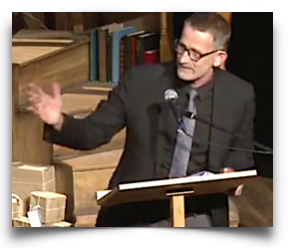
There’s much to look forward to. The Artistic Director, Clare Watson outlined the exciting season of productions for 2021 (not forgetting the Oklahoma production that will be what is left of the 2020 season that was pandemic struck). Revisiting the founding vision of the Company and an embedding of local stories and indigenous spirit.


Screen Shot 2020-11-12 at 12.46.45 PM.png

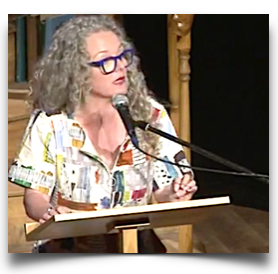
But, in particular, I was struck by the words of Rick Heath, appointed as Executive Director just eight months ago and immediately before the pandemic shutdown. Describing himself as a pragmatic idealist and that “extraordinariness is for everyone if you choose to lean into it” Rick explored how “logic makes you think; emotion makes you act”.  

We are living in a time when our emotions are important. They are critical to our ell-being, our families and our neighbours, our lovers and relationships, our businesses and communities. Proust said that art is a mechanism that can restore beauty and interest in things that have been neglected – unfairly neglect. He also said that we can learn arts great lessons – to re-examine our relationship with the world

Rick went on to observe that theatre is a service industry – plumbers in better suits. He explored the idea that as curators of theatre we remember that that curators are “ones responsible for the care of souls”. and he moved towards his conclusion reminding us that the measure of success for a theatre company is twofold. Is what the company does great art? And how has the company shaped the circumstances put in place to make that art great?


Of course, the focus of any theatre company is not on any one person, let alone the executive director. But I found it refreshing that any executive director could and would share and shape thoughts in this way.


Looking forward to the year after a plague year. Looking forward to restoring beauty and interest in things that have been neglected. 

Screen Shot 2020-11-12 at 12.46.51 PM.png

You can check out the whole launch as well as what Rick and Claire had say at the live stream of the event: https://www.facebook.com/watch/live/?v=413042723397048&ref=watch_permalink

Screen Shot 2020-11-12 at 12.46.55 PM.png

Music Monday

The past few days have been more optimistic ones for women and people of colour across our planet.

In an election result which left the world breathing a collective sigh of relief, Kamala Harris was elected to the role of Vice President of the USA – making her not only the first woman to hold that office, but the first person of colour as well.

It is sobering to recognise that the election of a woman to that office comes exactly one hundred years after women were first given the vote in the USA. 

Change for women worldwide is a painfully slow process and for women of colour, so much more so.

But what a good day for girls and young women of colour in the USA to see that anything is possible.

Today in Australia, the cast for the 2021 Australian production of Hamilton was announced. This has been a joyful cause for celebration, not just in my waapa workplace from where a number of the cast originate, but across Australia. What a good day for diversity!

Yesterday I helped out at a local Solo Vocal Festival – an annual opportunity for secondary school voice students to perform a solo song in front of an audience. Given that there has been so little live music performance this year, this too was cause for celebration. As I looked around the (socially distanced) performers and audience yesterday afternoon, it was so good to see students from many ethnic and cultural backgrounds, all sharing in their common love of singing.

Music really does have the power to bring people together, to heal divisions and to promote empathy and understanding. People of all skin colours sing together – the vocal folds and larynx do not discriminate race. People make music together with little concern about their differences.

Importantly, this week is NAIDOC (National Aborigines and Islanders Day Observance Committee) Week in Australia. 

The 2020 theme is Always Was, Always Will Be.

Across Australia, schools and communities are celebrating local indigenous people, indigenous practitioners in all of the arts are sharing with the wider community.

Many music teachers teach songs from the original custodians of the lands on which their schools sit. It is worth noting that, while many Aboriginal people encourage wadjelas (white fellas) to sing their songs, some are sensitive. Always best to check with your local indigenous elders for guidance on this.

As we hopefully move towards healing from years of political divisions, racial inequality and oppression of women, let us always use music to connect people, never to divide.


Drama Tuesday - Before I Hang Up My Hat

19.jpg

A guest post by John Foreman

After around forty years of teaching Drama, there are a few of my students who stand out in my memory and underline the importance for me of teaching my subject. In each case, they were kids who never stood out to an audience in performance, but they were recognised by their classmates and by me.

The first, I’ll call Brian. It was he who arrived to our Sunday rehearsal at 2:50pm. We all stared at him. Why was he late? Why was he turning up now? “You said the rehearsal was 10 to 3.”

At the outset, Brian couldn’t act his way out of a wet paper bag. By the end of our run of four performances he could. Just. The rest of the cast, eight girls, mobbed him. They knew. His journey was far greater than any of the others, and there was a couple of very talented performers in that group. His parents were proud and probably the only ones in the audience who even noticed him.

The second we’ll call Richard. He turned up in my year eight Drama class. He possibly spoke half a dozen times in the semester. Shy. Solitary. Avoiding all attempts to engage him. As year eights, all students were assigned their classes. The following year, there he was again – his choice. And he did engage a little more. 

0-3.jpg

Year ten, there he was yet again. And this time for our end of year Panto. 

I asked him, “Richard you’ve done this for the past two years, and you hated it. Why are you here?”

“Yes, Mr Foreman, I hate Drama, but I NEED Drama.”

Such insight for a young man.


So, much as many of my young charges want to make it in the ‘Business’, and a few have, Brian and Richard underline for me what teaching Drama is all about.

We are here to foster some confidence, to nourish creativity, to expose our students to the world of performance, both their own and, hopefully, that of professional theatre.

At a promenade performance at University of Western Australia of the medieval mystery plays, I found one of my students in a corner at the interval crying her eyes out.

“What’s wrong?”

“It’s so beautiful.” An ‘angel’ had just sung from the top of the clock tower. And, yes, it was beautiful. Almost as beautiful as Grace’s reaction.

I often wondered why so many students wanted to be in those end of year Pantos. I wound up writing walk-on roles for those who were in Maths or Art or... and at least one for an ex-student. 

One of my practicum students told me simply it was my passion for Drama. Really? I just loved what I was doing. 

During the audition process for one of those Pantos there was one boy who said, “I thought Drama was going to be fun.” Before I could respond, one of the class jumped in, “It is! It’s serious fun.”

Perhaps my one huge disappointment is that over the years I haven’t seen that enthusiasm for drama in high school students carry over to attendance at professional theatre after they leave school.

image.png

For at least thirty of the years I have been teaching Drama, there have been upwards of 1000 students per year graduating across the state with Drama as one of their subjects. Their ‘high school love’ of their subject has not transferred to attendance once they leave school. It saddens me.

That being said, I still love that moment when a pair of Year Sevens nail a duologue to the point of bringing me to tears. Or when Year Elevens take over the design for their Antigone production, stage, make-up, costuming and poster. Or when a grandma hugs me after a performance, saying how proud she is.

Teaching Drama has been an unexpected joy. 

[I trained as an English Teacher.]

Drama Tuesday - The double gifts of Drama Learning

I am preparing a presentation to be given online for IDEC in Beijing. One of the questions they have asked me to focus on is about Why drama helps learning? At the same time I am co-supervising a Masters of Education Research student looking at how drama could help multi-cultural adolescents develop friendships as immigrants to Australia. In thinking about both, I come back to some earlier thinking I have been doing about the ways that drama learning works simultaneously at two linked levels. 

Drama learning is a double gift. 

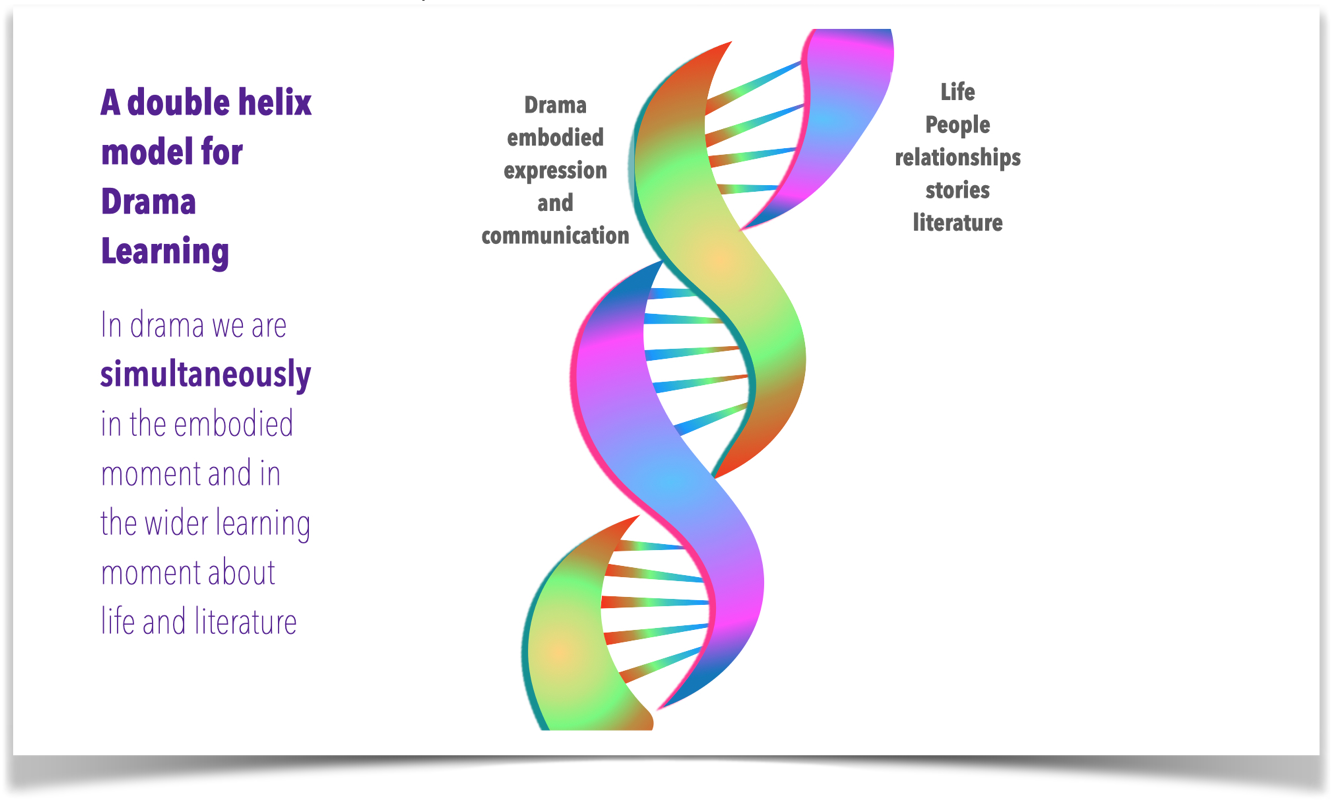
In drama we are simultaneously in the embodied moment and in the wider learning moment about life.

It will help we think this as the double helix of drama learning. Just like the double helix model of DNA, there are two intertwined linked spirals.

Screen Shot 2020-10-27 at 10.41.25 PM.png

In one spiral we learn drama through using the Elements of Drama to express and communicate ideas, stories and feelings through our bodies. At the same time, in a linked spiral we use those drama experiences to learn about life, people and relationships, story and literature. We learn about ourselves, our society and our culture through and with drama along side and with stories from life. These two spirals grow together, support learning in both.

This is why drama – when well taught – is powerful learning for life.

In the case of the research student, the drama acuities enable students to embody their experiences through doing, thinking and feeling (Applied Aesthetic Understanding, Wright and Pascoe, 2020). Simultaneously they are engaging in the matrix of experiences of multi-cultural friendships. This double linked spiral of experiences works at the same time where drama provides experiences of and insights into friendships across cultures while those same experiences of friendship deepen the drama.

Screen Shot 2020-10-27 at 10.45.11 PM.png

Metaxis in drama learning

This model of drama learning draws on the concept of metaxis: simultaneously belonging to two worlds. Boal defined metaxis as "the state of belonging completely and simultaneously to two different autonomous worlds" (Boal 1995 p. 43) This dual state of awareness is a  key understanding in drama teaching. 

It can play out in a range of ways:

The tension between self in role and self out of role – and moving between these two states is a powerful reason why Process Drama is such a powerful learning opportunity. In this sense we can be participant in the dramatic experience (as actor) and also audience (responding to the choices made). O’Toole (1992) suggests that in theatre there always exists the dual awareness of being an actor and yet watching or being an audience to one's own performance. 

The relationship between the world of actors and their perceptions, and the perceptions of the audience. Boal coined the term spect-actor to identify the duality where  an audience member can step from being observer to actor in re-shaping the drama in forms such as Forum theatre. Metaxis is the where one can be both oneself and someone other than oneself.

Actors being and making decisions in role and out of role.

All of this matters in answer the question I started with: Why drama helps learning?

.Bibliography

Boal, A. (1995). The Rainbow of Desire. The Boal method of Theatre and Therapy. New York, Routledge.

O'Toole, J. (1992). The Process of Drama: Negotiating Art and Meaning. London, Routledge.

Landy, R. 1993, Persona and Performance, The Meaning of Role in Drama, Therapy, and Everyday Life, London: The Guildford Press.

A different Drama Tuesday

 I am teaching a class on using Critical Incidents in Professional Practice. It is a capstone unit for Masters students. 

In particular I am focusing on writing Critical Incidents that strongly evoke the qualitatively significant learning of a particular event. This store of writing is difficult for many students who are schooled in objective and distanced academic writing (not just in the sciences). In particular, I need to help my students understand the concepts of “thick description” and integrating emotion. 

I thought it might help if I provided an example. 

Why I am a teacher. Why am I teacher? 

During my first year in teacher education I found myself sitting across from a troubled young student. Anxiety was written in his sweaty body language, the tightly drawn breaths and the lacing of his finger tips as he dodged around the reason for his visit: he was struggling to write the first assignment in EDN101 Intro to Teaching. The task was a gentle recount of something from his own schooling that had left an indelible mark on his own decision to become a teacher. This topic was something that I could relate to as it was a question I had asked myself often.

“I can’t think of anything to write…” he muttered before trailing off into indefinite silence. 

I wanted to help so I offered some suggestions but his answers were desultory and noncommittal.

Tell me about where your went to school. In the country

What were your teachers like? They were OK, I guess.

Were you a good student? Guess so, about average. I always did what i was told. My mum made sure of that.

Why do you want to become a teacher? Mum thought it would be a good idea. Dad told me that it was a good job, steady. Lots of holidays. Good pay.

So you want to be a teacher? Nup. 

Impasse. I searched in my backpack of conversation topics to see if we could move on.

Tell me a bit more about school. Was there something you were good at in school? Sport. 

OK, tell me about that. I thought that being a PE teacher would be good. Always out on the oval, moving about. Couldn’t sit long in a desk. Hated doing head stuff and reading. But I could see myself doing that. I was pretty good at running and OK at footy and the health stuff was OK, bit sexy scary but it was interesting…

Something seemed to have switched on for him. Words flowed.

There was this one time, we had a lightning carnival. Our little District High went to the Senior High in the next big town and I was in the relay team. It was a blustery down south sort of day but OK and we won the relay which was right at the end of the competition. In fact, it was the very last event and the PE teacher made us get on the bus as soon as the race was finished and the cup was handed over. I was so happy. But it had been a busy day and after lunch i was too nervous to go to the toilet and had run the race with a full bladder, thinking I could go before I got on the bus. But that didn’t happen, did it (he added with a discomforting shiver of his spine).

She made us get on the bus, quick. Grab your things and get on there. I was still holding the trophy, a big silver cup and plonked it down on the seat beside me. The back of the bus had the usual gaggle of girls laughing and making jokes. The rest of the boys were sat at the fort of the bus because the teacher wanted to keep an eye on them because they caused trouble. So I was sitting halfway down the bus. It was OK at first, as we chugged out of the town and onto the highway. It was even OK when the other PE teacher driving the bus, ground through the gears and bunny hopped into cruising speed. But i knew I was in trouble.

I was desperate to pee. It really hurt. I asked the teacher and she said, Tie a knot in it, buddy! 

I pretended to look out the window at the green but couldn’t think of a helpless sense of agony. I tried looking out the window at the flicking by of the Tuarts and trying to ignore the rowdy shouting and the noisy joking in the bus that was starting to fog up the windows. I squirmed one way, then another. I crossed my legs. I tried thinking of other things – winning the race – but that only made it feel worse.

I scrabbled around in my bag in case there was an empty drink container. It would be desperate I know but I simply had to go. I looked at the plastic bag that mum had sent my lunch in, but it was too flimsy. I thought about opening the window of the bus, but those girls behind me would see. There was only one thing for it. The silver trophy was on the seat beside me. Trying to look casual, I slid it towards me and quietly, checking to see no one was looking … 

The relief was immediate.

I would have gotten away with it, but at that moment the bus slid into a turn and there was a clanking of silver cup against the back of the next seat. The PE teacher who was standing near the boys at the front of the bus, looked up quickly and was catapulted a couple of steps down the busy towards me. Her face said it all. She noticed the slopping yellow liquid, and my startled face looking up at her wide eyes. You dirty little bugger! And then everyone else on the bus was looking with questioning eyes. That’s disgusting, you little animal!, she said. Can’t you control your animal instincts! Her eyes had that look of disgust.

His narrative stopped now. He looked away and down, ashamed. Then he whispered mostly to himself. Bitch. She didn’t need to have called me that. I hate her. She can stuff her PE teaching.

I let the moment settle, waiting.

Why don’t you write about that? Mum would kill me, if I did that. 

Do you think so? I know so. I can tell, even now. She had to go up to the school to get me after the bus got back. They rang her from the bus. 

I still think you should write about it for your assignment. Not gonna happen. 

He left my study with a shrugged shoulders at an offer to help him write it. Soon after, he left the teaching  course. It might be something that happened a long time ago but I still remember it powerfully. 

Concluding thoughts

Was it a good decision for him to leave teaching? Impossible to know. Could I have done more to help him at this moment in his teacher education journey? There are no second guesses in teaching. When you think about it, his telling of the story and his sense of outrage of his own teachers might have given him the necessary empathy to be a great teacher. Or, may be it was the right decision for him to leave his course.

I am happy to share with you that I came into teaching determined that I would make teaching better than my own schooling. The casual brutalism of the daily plying of power and status of my own teachers resonated with this student’s experiences. I know it was judgmental and naive of me to be so dismissive of the parade of tired middle aged men who taught me. Their sarcasm that passed for wit ran hand in hand with their occasionally physical violence. And it is easy to say that was then and now. We do things differently. But do we? As teachers are we kinder than those teachers from my past? I hope so. I hope that we are, but when I hear stories like this one, I see the old soft shoe shuffle of power and status holds the spotlight. 

One thing I have come to recognise is that we all somehow live out the unfulfilled ambitions of our parents. My mother, who lived through the Great Depression and a World War, wanted to be a teacher but couldn’t do so.  Therefore it is not surprising that she gently pushed me in that direction. But there was something more than that wish fulfilment to my decision to go into teaching. I was angry about my own education: the narrowness and aridity; the power plays between teachers and amongst students; the dullness. There had to be something more. I trained my eye to observe and notice. To be aware of the undertow of people and relationships and how that shaped learning. I teach because it is about being human, being alive, being wide-awake to the world (thank you Maxine Greene). As that young man in my study taught me: every moment is a learning occasion. 

Learning lies at the heart of teaching.


My Theoretical Frameworks include:

Social Justice in Education; Empathy and the role of the emotions; making meaning from experience (Maxine Greene (1995))

Bibliography

Greene, M. (1995). Releasing the Imagination: Essays on Education, The Arts and Social Change. San Francisco, Jossey-Bass.

Music Monday - Music teachers and musicians – keep playing those ‘Covid Concerti’

A week ago, I experienced a sudden and unexpected attack of gastro. It started as I got my backpack out of the car to start a new term of teaching – not great timing at all. After a hasty retreat to the staff facilities, I returned to my car and headed home to spend several hours in bed and the bathroom. Luckily for me it was a 24-hour thing and I was pretty much back to normal the next day. But I was perplexed. How had I caught it? Over the 7 months since the pandemic struck, I have followed strict routines of hand sanitising and cleaning the touchable surfaces in my home and teaching spaces. Here in Western Australia we are fortunate to have gone 6 months without community transmission of Covid so I – like many – have hugged the occasional friend. Could the gastro have come to me that way? And if so, had I passed it on to my husband? I kissed him goodbye that fateful morning. I was still pondering all this when I ran into a friend and work colleague. She shared with me that she, too, had had identical symptoms, and so had a student in one of her classes. Because the student fell ill during class, my friend had taken care to avoid direct contact with her (it was an acting class). However, at the end of class my friend had packed away ( and therefore touched) various shared props and equipment. This was possibly the source of transmission to her. That sparked a memory for me. A few days earlier I had been running late for a singing lesson. The student was waiting outside the room and there was also a student inside the room whom we had to ‘evict’. Usually I would sanitise the surfaces, including the piano keyboard, before starting on the lesson, but on this occasion, I recall thinking, “What harm can it do to skip that? After all we have no Covid in WA” I suspect (and I realise that this is anecdotal and speculative) that I could have picked up the virus that way and later, inadvertently touched my face. Now this was not Covid – it was a short-lived bout of gastro. But it serves as a reminder to us all – especially those of us living in the relative safety of Australia, where governments, both federal and state, have based their advice on medical science rather that politics – that the basics of hygiene are still our best protection against this awful virus. Observe social distancing, keep surfaces sanitised, wash your hands frequently, don’t touch your face – and when necessary, wear a mask! Some of my colleagues joke about the sound we all make when wiping down the piano keys with disinfectant as being the ‘Covid Concerto’. Musicians and teachers – please keep playing these Covid Concerti, whatever your instrument, until this damn pandemic ends.

A different Drama Tuesday

Why I am a teacher. Why am I teacher?

During my first year in teacher education I found myself sitting across from a troubled young student. Anxiety was written in his sweaty body language, the tightly drawn breaths and the lacing of his fingertips as he dodged around the reason for his visit: he was struggling to write the first assignment in EDN101 Intro to Teaching. The task was a gentle recount of something from his own schooling that had left an indelible mark on his own decision to become a teacher. This topic was something that I could relate to as it was a question I had asked myself often.

“I can’t think of anything to write…” he muttered before trailing off into indefinite silence. 

I wanted to help so I offered some suggestions but his answers were desultory and noncommittal.

Tell me about where you went to school. In the country

What were your teachers like? They were OK, I guess.

Were you a good student? Guess so, about average. I always did what i was told. My mum made sure of that.

Why do you want to become a teacher? Mum thought it would be a good idea. Dad told me that it was a good job, steady. Lots of holidays. Good pay.

So you want to be a teacher? Nup. 

Impasse. I searched in my backpack of conversation topics to see if we could move on.

Tell me a bit more about school. Was there something you were good at in school? Sport. 

OK, tell me about that. I thought that being a PE teacher would be good. Always out on the oval, moving about. Couldn’t sit long in a desk. Hated doing head stuff and reading. But I could see myself doing that. I was pretty good at running and OK at footy and the health stuff was OK, bit sexy scary but it was interesting…

Something seemed to have switched on for him. Words flowed.

There was this one time, we had a lightning carnival. Our little District High went to the Senior High in the next big town and I was in the relay team. It was a blustery down south sort of day but OK and we won the relay which was right at the end of the competition. In fact, it was the very last event and the PE teacher made us get on the bus as soon as the race was finished and the cup was handed over. I was so happy. But it had been a busy day and after lunch i was too nervous to go to the toilet and had run the race with a full bladder, thinking I could go before I got on the bus. But that didn’t happen, did it (he added with a discomforting shiver of his spine).

She made us get on the bus, quick. Grab your things and get on there. I was still holding the trophy, a big silver cup and plonked it down on the seat beside me. The back of the bus had the usual gaggle of girls laughing and making jokes. The rest of the boys were sat at the fort of the bus because the teacher wanted to keep an eye on them because they caused trouble. So I was sitting halfway down the bus. It was OK at first, as we chugged out of the town and onto the highway. It was even OK when the other PE teacher driving the bus, ground through the gears and bunny hopped into cruising speed. But i knew I was in trouble.

I was desperate to pee. It really hurt. I asked the teacher and she said, Tie a knot in it, buddy! I pretended to look out the window at the green but couldn’t think of a helpless sense of agony. I tried looking out the window at the flicking by of the Tuarts and trying to ignore the rowdy shouting and the noisy joking in the bus that was starting to fog up the windows. I squirmed one way, then another. I crossed my legs. I tried thinking of other things – winning the race – but that only made it feel worse.

I scrabbled around in my bag in case there was an empty drink container. It would be desperate I know but I simply had to go. I looked at the plastic bag that mum had sent my lunch in, but it was too flimsy. I thought about opening the window of the bus, but those girls behind me would see. There was only one thing for it. The silver trophy was on the seat beside me. Trying to look casual, I slid it towards me and quietly, checking to see no one was looking … 

The relief was immediate.

I would have gotten away with it, but at that moment the bus slid into a turn and there was a clanking of silver cup against the back of the next seat. The PE teacher who was standing near the boys at the front of the bus, looked up quickly and was catapulted a couple of steps down the busy towards me. Her face said it all. She noticed the slopping yellow liquid, and my startled face looking up at her wide eyes. You dirty little bugger! And then everyone else on the bus was looking with questioning eyes. That’s disgusting, you little animal!, she said. Can’t you control your animal instincts! Her eyes had that look of disgust.

His narrative stopped now. He looked away and down, ashamed. Then he whispered mostly to himself. Bitch. She didn’t need to have called me that. I hate her. She can stuff her PE teaching.

I let the moment settle, waiting.

Why don’t you write about that? Mum would kill me, if I did that. 

Do you think so? I know so. I can tell, even now. She had to go up to the school to get me after the bus got back. They rang her from the bus. 

I still think you should write about it for your assignment. Not gonna happen. 

He left my study with a shrugged shoulders at an offer to help him write it. Soon after, he left the teaching course. It might be something that happened a long time ago but I still remember it powerfully. 

Was it a good decision for him to leave teaching? Impossible to know. Could I have done more to help him at this moment in his teacher education journey? There are no second guesses in teaching. When you think about it, his telling of the story and his sense of outrage of his own teachers might have given him the necessary empathy to be a great teacher. Or, may be it was the right decision for him to leave his course.

I am happy to share with you that I came into teaching determined that I would make teaching better than my own schooling. The casual brutalism of the daily plying of power and status of my own teachers resonated with this student’s experiences. I know it was judgmental and naive of me to be so dismissive of the parade of tired middle aged men who taught me. Their sarcasm that passed for wit ran hand in hand with their occasionally physical violence. And it is easy to say that was then and now we do things differently. But do we? As teachers are we kinder than those teachers from my past? i hope so. I hope that we are, but when I hear stories like this one, I see the old soft shoe shuffle of power and status holds the spotlight. 

One thing I have come to recognise is that we all somehow live out the unfulfilled ambitions of our parents. My mother, who lived through the Great Depression and a World War, wanted to be a teacher but couldn’t do so.  Therefore it is not surprising that she gently pushed me in that direction. But there was something more than that wish fulfilment to my decision to go into teaching. I was angry about my own education: the narrowness and aridity; the power plays between teachers and amongst students; the dullness. There had to be something more. I trained my eye to observe and notice. To be aware of the undertow of people and relationships and how that shaped learning. I teach because it is about being human, being alive, being wide-awake to the world (thank you Maxine Greene). As that young man in my study taught me: every moment is a learning occasion. 

Learning lies at the heart of teaching.

Music Monday - A Health Report on Music Education

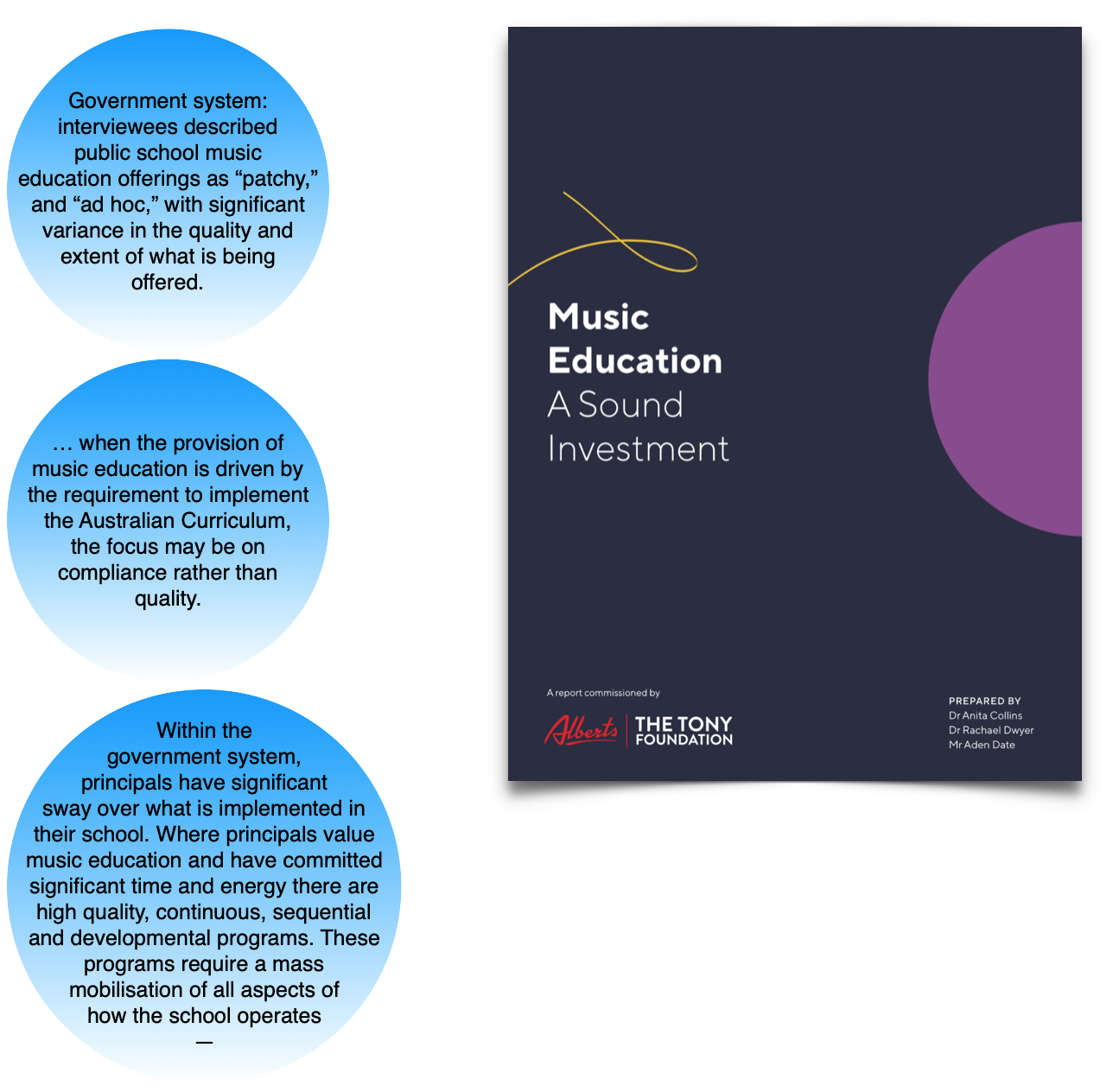
It has been 15 years since the National Review of School Music Education (2005) and it is timely that a new  Report has been published: Music Education A Sound Investment by Dr Anita Collins, Dr Rachel Dwyer and Aden Date. The Report was commissioned by The Tony Foundation “to inform their vision to use music to achieve improved life outcomes for young people”.

Like the National Review of School Music Education, this report finds:

The problem: a large proportion of Australian primary school children have little or no access to music education.

The Report outlines the benefits of music education and  best [practice in the field. 

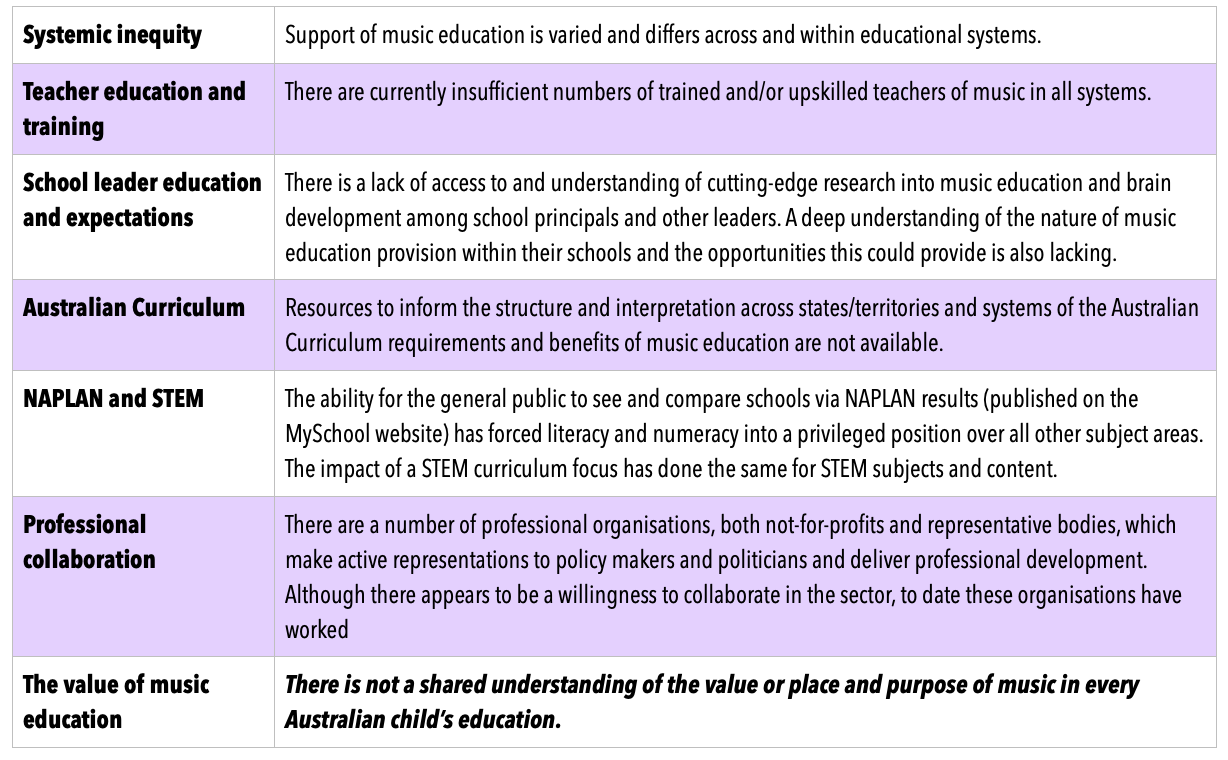
The following factors and issues were identified by the project team as the key barriers to the provision of a quality music education to all Australian primary school children:

Screen Shot 2020-10-12 at 9.34.25 AM.png

Arts Educators would not be surprised by these findings. Nor by the State-by-State report on approaches to music education.

Screen Shot 2020-10-12 at 9.37.20 AM.png

The question for arts educators must be what to do with the findings of the Report. 

Thanks to Music Australia <marketing@musicaustralia.org.au> for alerting us to this important report. 

Bibliography

Pascoe, R., S. Leong, J. MacCallum, E. MacKinley, K. Marsh, B. Smith, T. Church and A. Winterton (2005). Augmenting the Diminished: National Review of School Music Education. Canberra, Australian Government Department of Education, Science and Training.

Drama Tuesday - Making a difference for Arts Education – book by book

Screen Shot 2020-09-22 at 9.25.46 AM.png

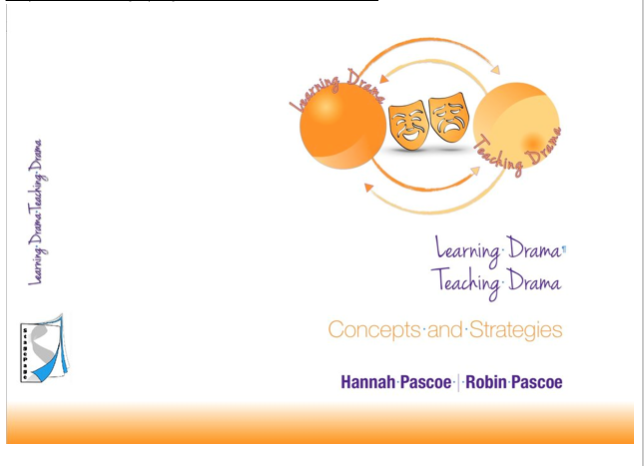
From time to time I am asked to review arts education texts. I do so with a keen interest in arts education particularly arts teacher education. We are always searching for the Holy Grail of arts  education textbooks (and have an interest in writing that “perfect” text one day!). Therefore, I look at these reviews as a way of honing my thoughts about what will help. I ask myself, would this help a student teacher who does not have embodied experience of these arts concepts, to teach dance/drama/media arts/music/visual arts in her/his own classroom?

In the terms of the research literature (e.g. Darling-Hammond, Hammerness, Grossman, Rust, & Shulman, 2005), what content knowledge and what pedagogic content knowledge do you need to teach the Arts in schools?

  • What arts specific information does a teacher need – by that I mean what knowledge of the discipline of an art form do they need? How much “arts knowledge” do you need?

  • What arts teaching information do you need as a teacher about the specific pedagogies of teaching Dance/Drama/Media Arts/Music/Visual arts?

Looking at the texts available across Australia, what do we see?

There’s focus on:

  • Addressing gaps in student’s own arts knowledge

  • Interpreting the various curriculum mandates – including the labyrinth of how the Australian Curriculum: The Arts [ACARA] has been “adopted and adapted”

  • Providing context

  • Advice on teaching 

Each of these are noble aims and each of the texts addresses them. 

Do any of these texts address the reasons why the implementation of the Australian Curriculum: The Arts is inconsistent? Do they address the resistance of many teachers and school administrators to the expectation of teaching the Arts for all students? Or of student teacher’s own resistance to engaging with this area of the curriculum? Or do they address the prevalent misconceptions about the place, value and necessity of arts education in a comprehensive curriculum?

Maybe, maybe not. It is a huge task for any text to address the gaps in knowledge and experience of Initial Teacher Education students, let alone the prevailing points of view of school administrators, teachers and the wider Australian community.

It is 15 years since the two national reviews relevant to arts education – Music (2005) and Visual Arts (2008) – and even longer since the Senate Inquiry into Arts Education in 1995 which summarised the issue as Arts Teaching – the Cycle of Neglect.

The latest salutary warning comes from Robyn Ewing (2020) where she cogently argues:

There is unequivocal research evidence that quality arts processes and experiences engender a distinctive and critical set of understandings and skills that all young people need to navigate twenty-first century living. Yet the potential for the Arts and arts education to transform the curriculum coupled with the ongoing paucity of Australia’s arts storylines threaten the actualisation of The Australian Curriculum: The Arts. (p. 75)

All the textbooks in the world have not fixed the one obvious glaring and central problem: implementation of the endorsed Arts curriculum. 

Designing the next text for Arts Education

Firstly, a new text needs to set out the context for Arts Education as curriculum and as reality.

With that in mind, there are three focus points: 

  • What to teach in the Arts – the disciplinary knowledges of each of the arts included in the curriculum

  • How to teach the Arts – the distinctive pedagogies of each of the Arts

  • Why teach the Arts – beyond the requirements of compliance 

Disciplinary knowledge needs to move beyond listing or defining. For example, fundamental to drama are the Elements of Drama: Role, character and relationships, situation, voice and movement, tension, focus, etc. It is one thing to list them and provide definitions for them (something that is not easily accessed in curriculum documents). But lists of information provided in a linear fashion proceeding from point to point in a logical fashion ultimately reads as a list. There needs to be a sense of a concept being used in the classroom setting. For example, role, character and relationships are fundamental to drama but look differently in a year 1 class or in a year 6 class. There is a progression from role (a focus on typical and generalised features) to character (distinctive and individualised focus). 

Teaching drama is three dimensional (teaching each of the arts subjects is three dimensional). There needs to be rich evocation of how a teacher manipulates and manages the elements of drama and the principles of story and making and responding praxis in the dimensions of time/place/resources and on the spot decision making in response to what students offer and do (and the other classroom circumstances). A list of elements of Drama doesn't actually give a sense of how they work - and what the teacher does to make them work.

Recognising that there is a need for examples of where the arts are integrated with the wider curriculum, examples of teaching programs must do more than provide tokenistic arts experiences for students and teachers. For example a unit on contrast  would provide. Contrast is evident across the arts and also a term used in other learning areas. It is possible to teach students about the use of contrast in role, situation, voice, movement and symbol. It is possible to teach about how contrast is used in the Principles of Story. It is possible to link this to the Principles of Design in Visual Arts and the use of juxtapostioning in Media Arts. There are links  to Music and Dance. But what needs to be remembered is that the activity is always only the vehicle for the underlying learning – where is the knowledge, understanding and use of the elements of the arts subjects is so that students learn to make and respond with them. 

A further point is that this text must connect students in training with their professional context. We need to help teachers strengthen their communities of practice (Wenger, 1998). Not only is this implicit in the AITSL Standard (https://www.aitsl.edu.au/teach/standards) for Professional Engagement, it underlines the need engage in ongoing professional learning and engaging professionally with colleagues, parents/carers and the community. The text must link students with professional associations, sources of inspiration and going information and growth. 

A text is not nor cannot be a substitute for experience. (And we are even more aware of that in these Coronavirus COVID-19 times). But it must work harder (and adopt different formats to fit the times) to address the underlying issues of learning to teach the Arts.  

Bibliography

Darling-Hammond, L., Hammerness, K., Grossman, P., Rust, F., & Shulman, L. (2005). The Design of Teacher Education Programs. In L. Darling-Hammond & J. Bransford (Eds.), Preparing Teachers for a Changing World What Teachers Should Learn and Be Able to Do: Jossey-Bass/Wiley.

Diana Davis, & Australia Council for the Arts. (2008). First We See: The National Review of Visual Education. Retrieved from http://www.australiacouncil.gov.au/research/education_and_the_arts/reports_and_publications/first_we_see_the_national_review_of_visual_education

Ewing, R. (2020). The Australian Curriculum: The Arts. A critical opportunity. Curriculum Perspectives, 40, 75-81. doi:https://doi.org/10.1007/s41297-019-00098-w

Pascoe, R., Leong, S., MacCallum, J., MacKinley, E., Marsh, K., Smith, B., . . . Winterton, A. (2005). Augmenting the Diminished: National Review of School Music Education. Retrieved from Canberra: 

Senate Environment Communications Information Technology and the Arts Committee. (1995). Arts Education. Retrieved from http://www.aph.gov.au/SEnate/committee/ecita_ctte/completed_inquiries/pre1996/arts/report/contents.htm

Wenger, E. (1998). Communities of practice: Learning, meaning, and identity. Cambridge: Cambridge University Press.

From splendid to surreal: reflections of a weekend at an online national singing conference

From last Friday evening until late Sunday afternoon, I was online on my laptop, attending the 2020 ANATS National Conference. This conference of Australian singing teachers was originally planned for Adelaide, but after Covid-19 rendered a face to face conference out of the question, the planning shifted to a virtual conference. I was part of the organising committee and therefore experienced the weekend both as a delegate and organiser.

Conferences are certainly not new to me; over my 30+ years of singing teaching I have attended many, both nationally and internationally. I have assisted in the planning and running of several. But this was my first fully online conference.

It was refreshingly relaxing not to have to pack a suitcase and race to the airport after teaching classes up to the last moment. But I missed the flying and the opportunity those few hours in the air give to separate oneself from work at home and into conference mode. For the same reason, I missed the whole hotel experience – the catchups with colleagues over breakfast, late night drinks in the bar while going over the next day’s schedule and so on.

We did have a welcome reception on Friday evening. When planning for a conference in Adelaide, the Beatles famous appearance there in the 1960s, provided a theme. One venue which was considered in the early stages of planning was the Adelaide Town Hall, on the balcony of which the Beatles famously appeared on June 1964, to the largest crowd of fans of their Australian tour. Thus, the conference title “Come Together” was born and even when the conference planning moved towards an online format, the title and theme remained. 

At the welcome reception, delegates changed their computer screen backgrounds to Beatles themes, dressed in Beatles and / or 1960s inspired costumes and poured their own drinks at home. The inimitable Pat Wilson wrote and performed (with a little help from music theatre students at Elder Conservatorium) a song welcoming us all to the conference and showing us what we were missing in Adelaide. Delegates turned off their mics and sang along to “Come Together”. Random break-out rooms were created twice during the reception so that delegates could chat in small groups. This was a very popular activity. Vocalocity – Amelia Nell’s singing ensemble from the Blue Mountains, sang for us and provided a link between the previous conference and this one. Another link was provided by a video of the song composed by Di Hughes for, and recorded at, the previous conference in 2018.

An important aspect of any conference is the networking that happens during meal breaks and various social activities. The Beatles theme provided some opportunity to engage in asocial way despite being online; for example there was a photo competition for the best photo referencing to a Beatles song. Delegates were very creative with their photo submissions.

The conference took place over a conference app – Whova – with Zoom used for larger sessions. Delegates engaged easily with the app and were able to send messages to presenters and other delegates during sessions and throughout the conference. Similarly, the Chat function on Zoom was used both for personal messages and professional questions. Most of the keynotes were delivered live but papers and other presentations tended to be pre-recorded.

The 3 keynote speakers came from the USA, UK and Australia and during their sessions I felt a strong sense of being at the conference. But at the morning tea, lunch and afternoon tea breaks, it felt surreal to duck out and into my own kitchen to boil the kettle. I missed the chat with conference friends and colleagues. 

On the Saturday afternoon (we were 2 hours behind in WA) delegates from WA gathered at a bar in South Perth for a conference get-together. That was fun and a chance to chat with colleagues. Interestingly, many had not yet watched any of the conference. With the conference app, all sessions will be available for one month after the conference. The upside of that is that, unlike face to face conferences when one has to choose between concurrent sessions, with this one, all sessions can be watched eventually. 

Overnight on Saturday, some Australian states moved into daylight saving time. That meant that in my state of WA the Sunday 9.30am session started at 6.30am. Differing time zones is certainly an issue to be considered in virtual conferences.

This conference attracted around 300 delegates which is big for an ANATS conference. We had delegates from New Zealand and the USA – again unusual. Management of large groups online can be challenging; for example in the special interest group which I chaired, there were 4 screens of participants and I found it quite stressful to constantly scroll across screens to spot delegates with hands raised to speak, while at the same time focussing on the discussion.

In a post - Covid world there is likely to be an appetite for more online conferences – or at least  an online option or component in future conferences. Just as teachers have upskilled in online teaching this year, I am sure we will all become better at engaging in the virtual conference world.