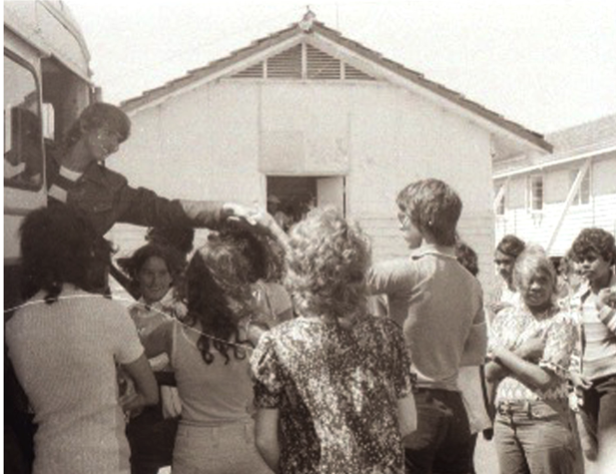
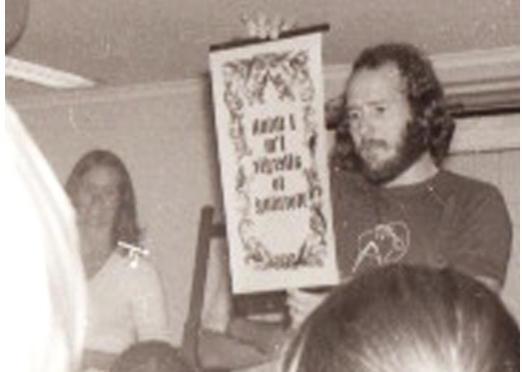
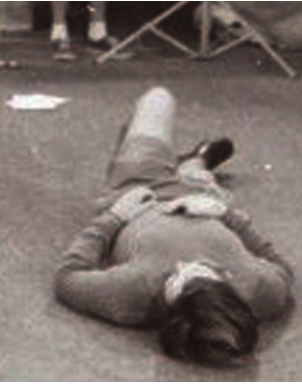
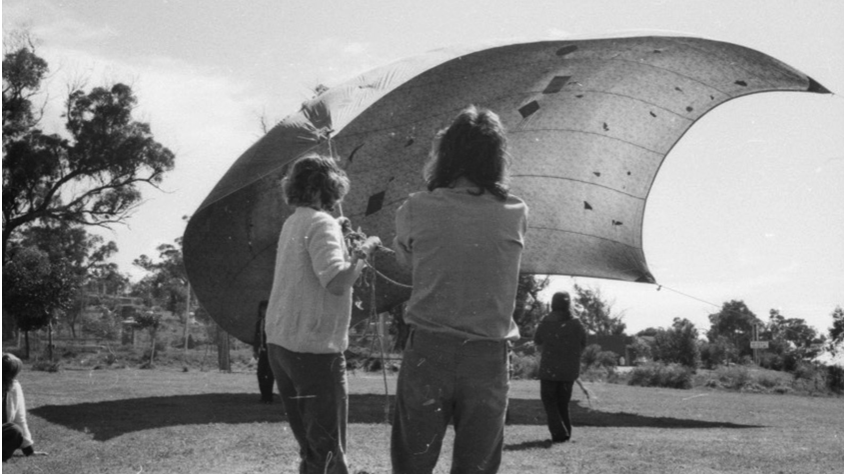
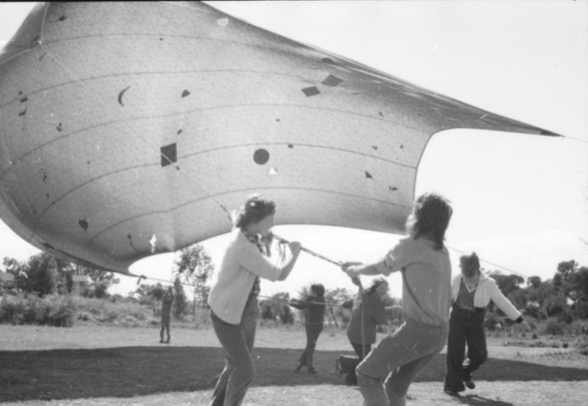
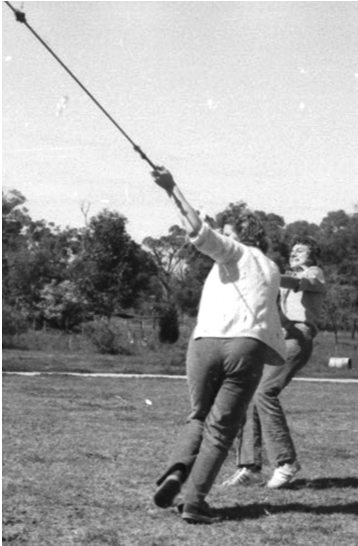
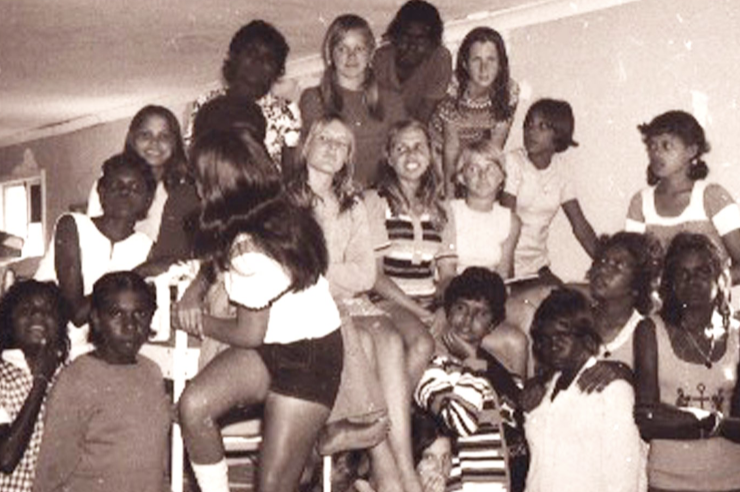
There were heaving breaths and wind blown red faces. Lots of laughing. The stated purpose was the sense of collaboration and cooperation implicit in all drama. There was certainly a sense of fun and participation. But what was the drama learning purpose?
I didn’t teach any specific drama lessons. But I did carry from the experience the need for committing everyone to a shared experience. I learnt the need to provide structure. It would be a time before I learned more about the purposes of warmups but I did sense their importance in providing focus and concentration (noted in all the drama teaching textbooks). There was a sense of “breaking the fourth wall” between teacher and students. In the sweaty closeness of the drama classroom there is a different dynamic from the desk bound world of teaching English Lit. But above all, I did have a sense of wanting to commit to this drama teaching world.
There is a serious purpose to the questions posed beyond an exercise in nostalgia.
Things were different then. I was different then.
Drama teaching was not something I knew from my own schooling. There was none. Studying Shakespeare in school was reading Hamlet around the room desk bound. That activity was accompanied by the elderly teacher reading the Harley Granville-Barker Introduction to Shakespeare. It was mind numbingly deadly. At least I knew from my English teaching pedagogy that we would be focusing on understanding drama through practical exploration using voice and movement not simply cognitive note taking and regurgitation. So I was aware that drama teaching was committed to schooling that was significantly changed from my own schooling. It was a world of opportunity and possibility.
I was driven by what still drives me now all these years later: in drama we express and communicate ideas physically in time and space for others to share.
My drama teaching experiences on that camp were intense and memorable and thin on theory. There wasn’t much passing on of specific knowledge about the Elements of Drama. There wasn’t that much drama learning. But it was strong on enthusiasm, on the value of participating and risk taking. I don’t mean the risk taking of falling backward off tables into the hoped for arms of others. I am talking about stepping into an unknown, unscripted teaching space. I am talking about the riskiness of facing uncertainty, ambiguity, unknown unknowns. Drama teaching is not about following the prescriptions of those who have gone before us; there are no prewritten scripts, we are always improvising, stepping into the improvised space of making choices and facing consequences.
I didn’t recognise it at the time, but working on this drama camp was a springboard for a career.
It was also about making mistakes and living with the consequences of them. As the song goes, “mistakes, I’ve made a few”. In fact in my own teaching I wore as a badge of honour saying to students and teachers, one of the reasons I can talk about learning to teach is because if there’s a mistake to be made, I’ve probably made it. I remember, hearing or reading about Teacher-in-Role and being foolish enough to think I could try it. After all, I had done a bit of acting; it couldn’t be different could it? We might be humbled by our mistakes, but they only have meaning if we learn from them.
What is the best drama teacher education? Reflection and Reflexivity in action
How do we learn to become drama teachers? How do we become better drama teachers?
Drama teacher education is best modelled on our understanding of how we learn drama. We learn drama through practical, hands on and guided experience. With Vygotsky in mind, we learn reaching into our Zones of Proximal Development hand in hand with the Knowledgable Other.
In whatever form of learning to teach drama – university or community based, we keep several principles in mind. We belong to Guilds of Drama Educators. We serve apprenticeships. We are mentored. We make mistakes. We learn.