
Drama Tuesday - Challenges of space and changing times

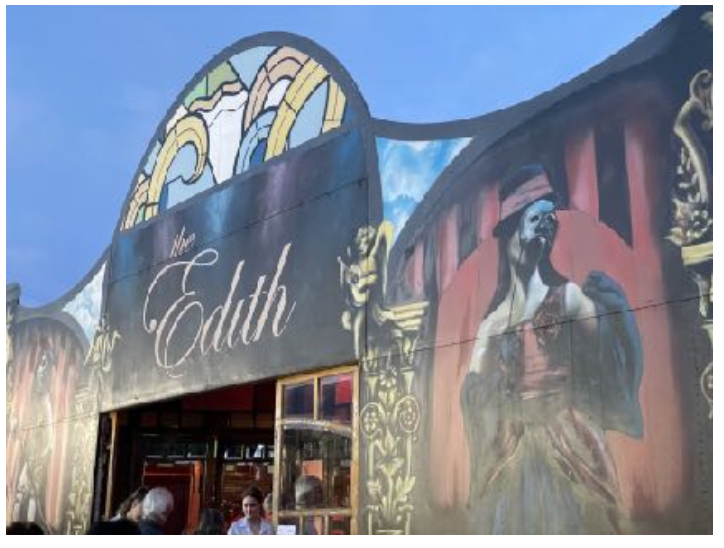
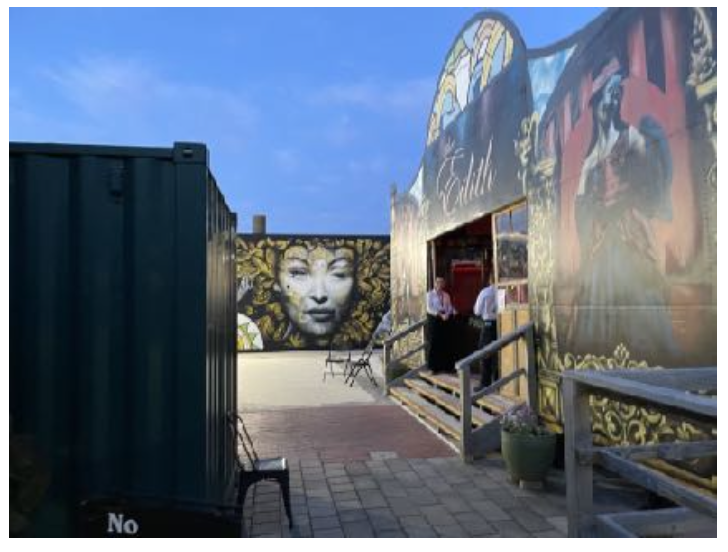
 The Spiegeltent called The Edith sits as one of the on-campus performance venues at WAAPA @ ECU (the Western Australian Academy of Performing Arts at Edith Cowan University)

It rounds out the performance opportunities for students . The plush faux red velvet and glittering mirrored interior provide a circular space flanked by serried support posts and audience banquettes arrayed around. This spiegeltent, or “mirror tent” in Dutch, was designed and built by the Belgian Klessens family, who have been making them since the 1920s. 

As a performer and for a director, the space presents particular challenges. It is a form of performing “in the round”. The mirrored pillars interrupt sight lines. The sound is quickly swallowed in the soft fabric “chimney” over the performance space. Lighting opportunities can be limiting. The seating can be unforgiving on spines. Yet, there is a charm in watching the reflections of both performers and audience multiplying and shimmering. 

Certain productions work best in this space. (others haven’t!)

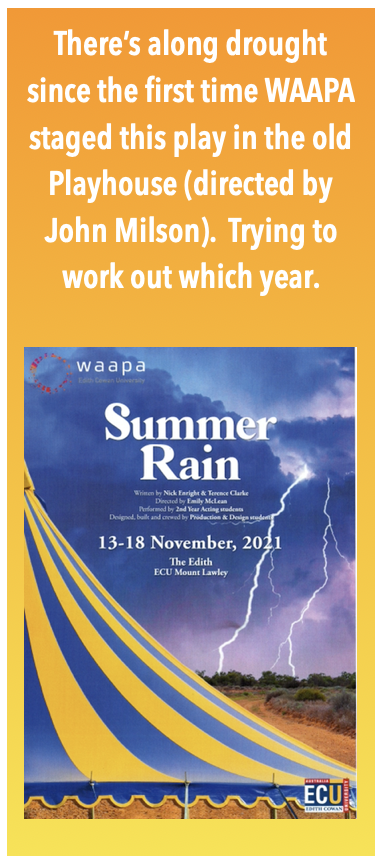
The production of Summer Rain, the iconic Enright/Clarke collaboration, finds a relatively comfortable fit in the Edith, performed by the second year Acting students. The tale of the rakish “show people” sits in the space with ease.

Beginning with the forced closure of Slocum’s travelling tent show in immediate Post-War 1945,  the remnants of the family on their threadbare arses, travel back to Turnaround Creek in search of something lost. This is a nostalgic paean to a lost Australia (a joyous song or hymn of praise, tribute, thanksgiving, or triumph). Broke ringmaster Harold Slocum is searching for something he lost in Turnaround Creek years before. He is accompanied in their clapped out truck by his brassy wife and partner Ruby, returned soldier son, Johnny, and teenage daughter, Joy. Their tent has burnt, their truck given up the ghost. They arrive in a Turnaround Creek that is in the midst of a long drought, economic depression (a familiar and current meme in parts of inland Australia beyond the Blue Mountains). Their arrival disrupts the lives of Turnaround Creek. Their arrival also coincides with the breaking of the drought – everyone singing Send Her Down Hughie (similar emblematic slang runs through this piece with a kind of loving familiarity). Sometimes wearing a “fair dinkum-ness” on its sleeve, a world past is evoked for a different generation. I wonder how the young-looking cast relate to this world that has passed.
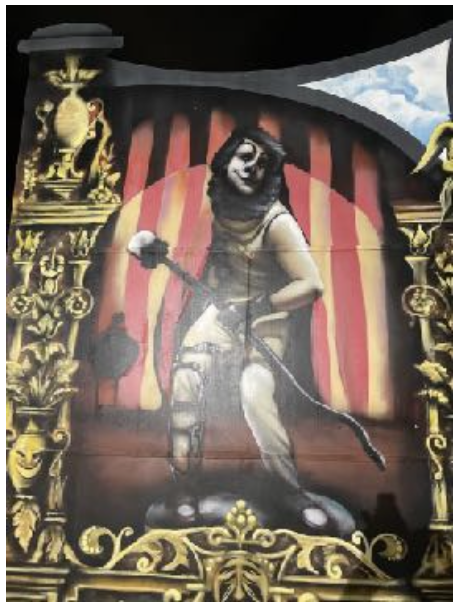
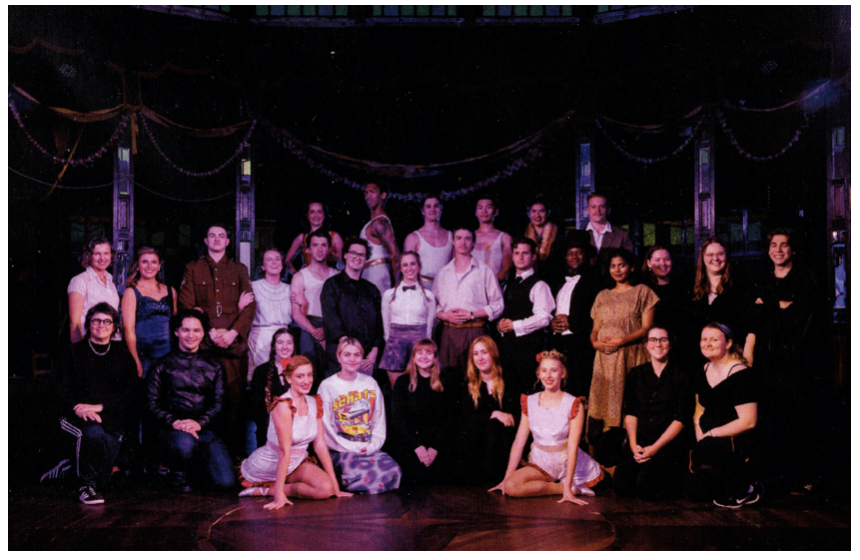
This is a music theatre fable. The characters are familiar, even predictably stereotypical. In these times, the diverse cast carry characters of a more mono cultural Australia with names like Clarrie, Cecil, Bryce, and Peg. The production raises interesting questions for drama educators. In the West Australian on the day I write this, there are reports of the decision by PLC and Scotch College to abandon their planned production of Grease because of objections by some PLC students about the negative portrayal of women. How do we view plays that portray different sensibilities, particularly on issues of representation? This production quite clearly chose colour blind casting. Would cancel culture even close down this production and those like it?

What this production did for me, however, was to resolve the dilemma of performing in the spiegeltent. The action worked best, particularly for singing, when the chorus sang out through the mirror pillars. The valiant cast worked hard to overcome the limits of the scenes that were played more conventionally into the circular space. I am also reminded of the first principle of working in the round: continually redraw the stage pictures so that there is a shifting perspective – and do so in a way that appears integral to the outflowing action (that appears motivated, as the classics say!). Easier said than done.


Just as The Roundhouse thrust stage at WAAPA needs a very specific spatially-aware direction, so too does The Edith Spiegeltent. The companion production by Second Year Music Theatre students of Brightstar (the Steve Martin piece) in the Roundhouse is also noteworthy and successful.

The performances of both were charming and the singing mostly confident and in character. The overall charm of Summer Rain lingers. It is also remarkably accessible for secondary age performers. I wonder, just quietly, whether it too might be cancelled by activist voices in school.

Drama Tuesday -  The Tempest in contemporary times

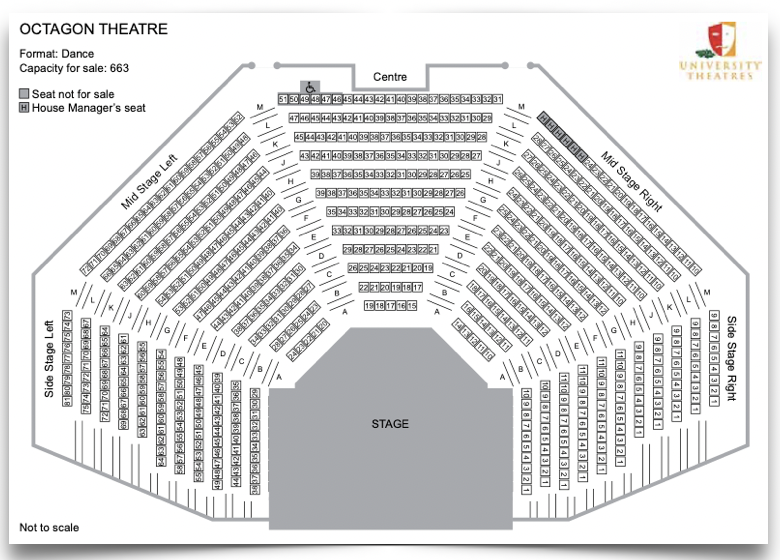
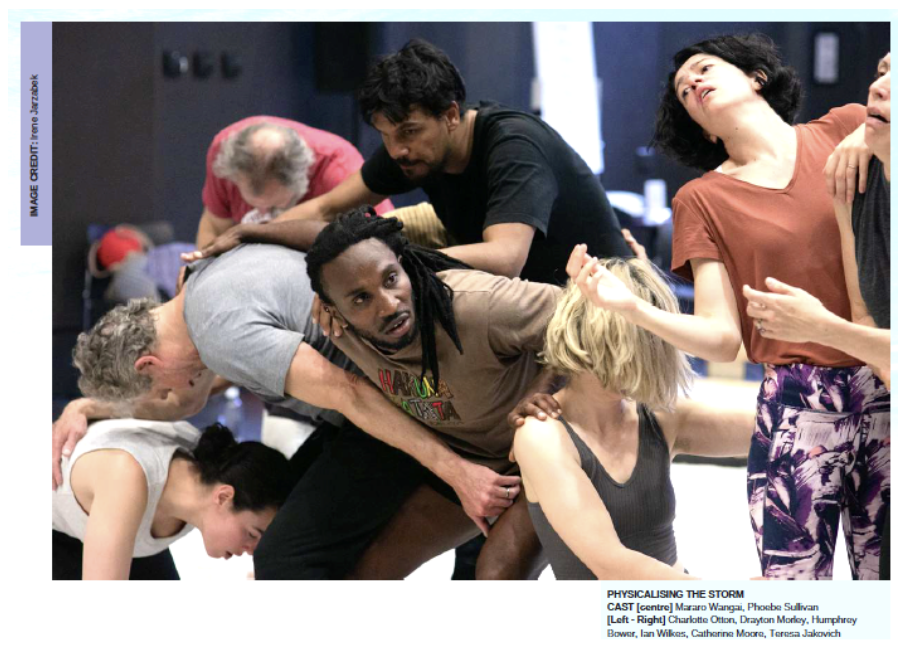
A circular strand of white sand fills the stage when you enter the Octagon Theatre for the Black Swan State Theatre Company production of The Tempest (directed by Matt Edgerton). The familiar thrust stage has been expanded and reshaped. A crescent moon pit is slashed into the sand.

Cast members meet and greet the audience as they enter. They are skilfully collecting items from the audience to provide the props for the play – a jacket is borrowed to be Prospero’s magic cloak; a book for Prospero’s library; jewellery to be Miranda’s treasure (carefully buried in the sand; from the start the mood of audience participation is built.

The action starts with the audience invited to join the sea shanties being sung. An invitation taken up with gusto.

The strength of this production is in the ensemble.

The welcome to country is shared on the voices of the cast. A cohesive ensemble of actors and audience is reinforced as the audience are invited to join the cast in breathing deeply - a ritual three times – signalling the start of the play.  

From Teacher support notes

The action pitches immediately into the storm on board the ship cast into the storm by Prospero’s magic incantation. Immediately the strength of the ensemble work is evident with a skilfully evoked creation of the ship and the bodies in turmoil. Fluid, disciplined and powerful images created. Beautiful and strong. Set the action at a cracking pace. The whole production runs at just over 100 minutes without interval.

Into the exposition scenes – so much back story – handled with efficiency. Always a challenge but again the ensemble successfully created images using bodies to support. The level of ensemble was sustained throughout.

The other design element introduced from this point was the continual drizzling of sand from above the action, a fine thin drifting caught in the light beam – a metaphoric hour glass reminding us of the play’s themes.

The lighting of the production deserves special mention. It added significantly yet subtly to the unfolding action and shifting moods including the threatening and fantastical. It complemented the  neutral and sand coloured costuming adding to the sense of “found” objects. 

The music is created live (mostly) throughout the production incorporating the skills of the ensemble – the composer (Pavan Kumar Hari) playing a range of instruments - as well as a lithe Ariel – joined by Didge, tapping stick and haunting clarinet played by cast members. The vocal work was mostly strong and clear but there were some concerns. The strong vocal training shown by most of the cast needed to be evenly evident for all. Perhaps the super chilled theatre air conditioning was also playing havoc on some.

In tune with contemporary times, there was diversity in the casting. There are also gender/name changes. 


Seeing The Tempest again (it is such a familiar and memorable text for me) reminded me of some key points. Successful productions of The Tempest t hinge not so much on the plot – which is cartoon-esque. It relies on recognising the emotions at play. What drives Prospero must be a sense of anger and bitterness that shifts to forgiveness. The play must begin with his sense of outrage and pain driving him to fury the storm on his political opponents, to hold Ariel as captive, to imprison Miranda in ignorance, to punish and humiliate Callan so cruelly. His journey must show the recognition that anger is an insufficient emotional response. Forgiveness is necessary.

The handling of the always difficult opening of the fourth act – the Masque – is interesting and innovative. The cast sit and watch projected a series of vignettes from audience members in the foyer before the show (presumably they will be fresh each performance). There were loud guffaws from audience members as some are recognised, perhaps to the point that we lost what was being said. This inclusion of audience is not surprising – it is a hallmark of Black Swan under Artistic Director Clare Watson. It will be interesting to see how this innovation works for the rest of the season. There is an issue for me about this: the purpose of the Masque in the text is to signal the significant shift in Prospero’s attitude. He shows that he can find compassion for Miranda and Frederick and the cruelty of his punishing them. That, in turn, leads to his later forgiveness of those who plotted against him and landed him on this island. It extends to his freeing of Ariel.

For me The Tempest must hinge on the character journeys of each and we must sense the shifts in Prospero most of all. The triangular relationships between Miranda, Frederick and Caliban also need to be evident. Caliban is more than a threat to Miranda, he is a rival to Frederick. The insecurities of political life and intrigue – echoed in the comic characters – also need to be more than plot devices. The bed of vipers or politics need to be evil under the cloaks of civility. There needs to be productive tension and sense of threat underpinning the comedy of the drunkards plotting with Caliban. They could unhinge Prospero’s magic.

This is a production that drama teachers – and their students – should see. It is a wonderful example of ensemble. It presents interesting design, music and movement opportunities that should inspire. It is successful and enjoyable. It can bring our students into the under used Octagon theatre and remind them of the challenges of space and design. 

The other point of note, is that this production was staged by Black Swan following an invitation to audiences to nominate which Shakespearean play would conclude the season. It is a fitting and interesting choice in these times when there is so much clamour about “rigged elections”. 

The Teacher Support Notes for the production are again wonderful and useful.


Postscript

With a little flutter of the heart I recognise that it is 50 years since The Octagon was opened and around that amount of time since I was a student sitting in first year lectures in this space. The passing parade of lecturers –two sessions early and late – are somehow etched into the walls (though the seats have been renovated from the utilitarian hard padded benches. 

We watched in fascination as the floor of the stage creaked as Dorothy Hewett paced her lectures (while her partner Merv Lilly sat in the back row as a grim reminder to any would-be interjections). Dorothy always put on a good show – opening her Ibsen lecture with the actress Pat Skevington emerging from the wings with pistol.

The history of how a University on this side of the world in what is still sometimes called the most isolated capital city int he world, came to have a theatre designed by the famous Tyrone Guthrie is often told. There was a time when the University of Western Australia was ground breaking for drama and theatre education. It should not be forgotten that The New Fortune Theatre which sits inside the courtyard of the Arts Building is a full-scale replica of the Fortune Theatre from London. 

In all there are five full theatre venues on this campus: The Octagon, The New Fortune, The Dolphin, the Sunken Garden, Winthrop Hall (not forgetting The Somerville now used for Festival Films but originally for performances). What drama courses are taught at UWA in 2021? What has been lost in the world of the contemporary academy? Too much. 

The Octagon is still a warm and inviting performance space, vastly under-utilised for purpose.

Drama Tuesday -  World Teacher Day 2021

What makes a memorable Drama Teacher?

On World Teacher Day I pose a simple challenge: who are the inspirational, unforgettable, indelible, significant, impressive, illustrious, brilliant, timeless drama teachers in your lives?

And why are they so memorable?

The drama teachers who I remember –

  • Know drama and theatre

  • Know how to teach drama and theatre

  • Always learning and reflecting

  • Care about the learning of their students

  • Know curriculum, progression in learning drama and assessment that matches drama to students’ ages and stages of development

  • Model effective drama teaching and learning

  • Advocate for drama

  • Confidently understand their role and purpose

Or to share this graphically:

Of course there are academic words for all this.

Teach drama focuses on embodied learning in the arts (Bresler, 2004). Through practical, hands-on experiences in drama, we model the ways that students learn the arts and ways they are taught. This  engenders embodied teaching.

This approach is based on sound research about providing:

  • Analogue experiences – these are experiences like the ones students in drama experience, providing teachers with similar learning experiences that they need to facilitate for their students (Borko & Putnam, 1995; Morocco & Solomon, 1999).

  • Content focus – unambiguous content description (Desimone, Porter, Garet, Yoon, & Birman, 2002; S.Garet, Porter, Desimone, Birman, & SukYoon, 2001; Shulman, 1986).

  • Active learning – where teachers are engaged in the analysis of teaching and learning; learning from other teachers and from their own teaching; reviewing examples of effective teaching practice (Desimone et al., 2002; Franke, Fennema, & Carpenter, 1997; Morocco & Solomon, 1999; S.Garet et al., 2001).

  • Dialogue amongst teachers – belonging to a community of drama teachers participating in discussion with practising teachers (T. R. Guskey, 1986, 2003; Virginia Richardson, October 1990).

  • Long-term support and feedback – support beyond the immediate experiences in the workshop through enrolling in a community of drama teachers (Borko & Putnam, 1995; T.R. Guskey, 2002).

This is an articulated theoretical framework for drama teacher education course design that steps beyond pragmatic functionalism. It is a framework informed by Dewey, Vygotsky, Bruner, Eisner, Greene and others. Learning to teach drama involves acts of purposeful meaning-making that draw together personal experiences and those of others (Dewey, 1938; Eisner, 2002). No one learns alone (Grumet, 2004; Vygotsky, 1978). Drama teachers learn cognitively, somatically and affectively – mind, body and spirit (Peters, 2004). They work with enactive, iconic and symbolic modes (Bruner, 1990). Learning to teach drama engages aesthetic imagination (Greene, 1995). Learning to teach drama involves proactive participation in communities of practice (Wenger, 1998). Learning to teach drama organises drama knowledge, categorises it and uses strategies of paradigmatic thinking and narrative building (Bruner, 1991).

Extract from chapter about drama teacher education in a forthcoming book 

But you can sum up all these ideas:

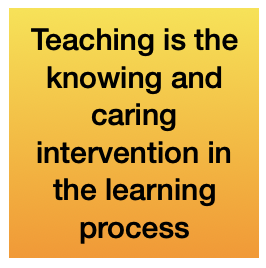
Memorable Drama Teachers know their stuff… They get their act together and take it on the road everyday…

Bibliography

Borko, H., & Putnam, R. T. (1995). Expanding a teacher’s knowledge base: A cognitive psychological perspective on professional development. In T. R. Guskey & M. Huberman (Eds.), Professional Development in Education. New York: New York: Teachers College Press.

Bresler, L. (2004). Knowing Bodies, Knowing Minds - Towards Embodied Teaching and Learning. Dordrecht: Kluwer Academic.

Bruner, J. (1990). Acts of Meaning. Cambridge, MA: MIT Press.

Bruner, J. (1991). The Narrative Construction of Reality. Critical Inquiry, 18(1), 1-21. Retrieved from http://www.jstor.org/stable/1343711

Desimone, L. M., Porter, A. C., Garet, M. S., Yoon, K. S., & Birman, B. F. (2002). Effects of Professional Development on Teachers' Instruction: Results from a Three-Year Longitudinal Study. Educational Evaluation and Policy Analysis, 24(2 (Summer 2002)), 81-112. Retrieved from http://www.jstor.org/stable/3594138

Dewey, J. (1938). Experience & Education. New York, NY: Kappa Delta Pi.

Eisner, E. W. (2002). What can eduction learn from the arts about the practice of education? John Dewey Lecture for 2002, Stanford University. Retrieved from www.infed.org/biblio/eisner_arts_and_the_practice_or_education.htm . Last updated: April 17, 2005.

Franke, M., Fennema, E., & Carpenter, T. (1997). Teachers creating change: Examining evolving beliefs and classroom practice. In E. Fennema & B. Scott-Nelson (Eds.), Mathematics teachers in transition (pp. 255-282). Mahwah: Lawrence Erlbaum Associates.

Greene, M. (1995). Releasing the Imagination: Essays on Education, The Arts and Social Change. San Francisco: Jossey-Bass.

Grumet, M. (2004). No one learns alone. In N. Rabkin & R. Redmond (Eds.), Putting the Arts in the Picture: Reframing Education in the 21st Century, (pp. 49–80). Chicago, IL: Columbia College Chicago.

Guskey, T. R. (1986). Staff development and the process of teacher change. Educational Researcher, 15, 5-12. 

Guskey, T. R. (2002). Professional development and teacher change. Teachers and Teaching: Theory and Practice, 8, 381-391. 

Guskey, T. R. (2003). Scooping up meaningful evidence. Journal of Staff Development, 24(4), 27-30. 

Morocco, C. C., & Solomon, M. Z. (1999). Revitalising professional development. In M. Z. Solomon (Ed.), The diagnostic teacher: Constructing new approaches to professional development (pp. 247-267). New York: Teachers College Press.

Peters, M. (2004). Education and the Philosophy of the Body: Bodies of Knowledge and Knowledges of the Body. In L. Bresler (Ed.), Knowing Bodies, Moving Minds - Towards Embodied Teaching and Learning. Dordrecht: Kluwer Academic Publishers.

S.Garet, M., Porter, A. C., Desimone, L., Birman, B. F., & SukYoon, K. (2001). What Makes Professional Development Effective? Results From a National Sample of Teachers. American Educational Research Journal. doi:https://doi.org/10.3102/00028312038004915

Shulman, L. (1986). Those who understand: Knowledge growth in teaching. Educational Researcher, 15(2), 4-14. 

Virginia Richardson. (October 1990). Significant and Worthwhile Change in Teaching Practice. Educational Researcher, 19(7), 10-18. doi:10.2307/1176411

Vygotsky, L. S. (1978). Mind in Society: The Development of Higher Psychological Processes. Cambridge, MA: Harvard University Press.

Wenger, E. (1998). Communities of practice: Learning, meaning, and identity. Cambridge: Cambridge University Press.

Drama Tuesday - Perth Festival

 Connecting our students with the Arts in their society

The Perth Festival which runs in late Summer in Perth, has announced the program for teachers and students ahead of a Festival launch in November.

It’s always exciting to have an insight into the Festival delights. 

Also wonderful is the  commitment to engaging young people and their teachers. The arts in schools are not separate from the wider reach of the arts in society. It is important that young people see from an earlier age the opportunities for connection. 

As the Australian Curriculum The Arts (ACARA, 2014) reminds us: 

In making and responding to  artworks, students consider a range of viewpoints or perspectives through which artworks can be explored and interpreted. Responding in each arts subject involves students, as artists and audiences, exploring, responding to, analysing, interpreting and critically evaluating  artworks they experience. Students learn to understand, appreciate and critique the arts through the critical and contextual study of artworks and by making their own artworks.

A vibrant arts culture in the wider society is essential for effective  arts education in schools. There needs to be a symbiotic relationship between arts learning and arts making and enjoyment in our community. 

There are also  TEACHER PROFESSIONAL LEARNING opportunities.

Drama Tuesday - If We Were Villains

 The Never Ending Quest – Stories of Drama Education

Let’s be clear from the very start – If We Were Villains (Rio, 2017) is a murder mystery (I will try to avoid any spoilers!). My interest in  this story is the specialist Shakespearean theatre and acting school context: the people and the setting.

The action takes place in a small liberal arts/performing arts college in an undisclosed location in the Mid-West in driving distance from O’Hare in Chicago. The action focuses on the seven remaining fourth year students in the Shakespeare Acting cohort. 

The author has neatly skewered acting types (and stereotypes) – hero, villain, tyrant, temptress, ingenue, supernumerary, observer (though along the way, the roles change). These are the seven who have survived the end-of-yearly purges. Richard, pure power, six foot three, carved from concrete, black eyes, thrilling bass voice, playing despots and warlords. Meredith, supple curves, skin like satin, designed for seduction. Wren, Richard’s cousin, ingenue, girl next door, waif thin, Filppa, tall, olive skinned, cool, chameleonic. James, quintessentially heroic, handsome like a Disney Prince. Oliver (who narrates the story) sees himself as average in every imaginable way.

The staff are also deftly drawn – Gwendolyn, the bangle leaden, redheaded stick figure hippie acting teacher; Frederick, the chalk dust laden theatre history and text don; and, Camillo, the physical action, combat and movement teacher. And the distantly inspirational Dean of the Academy: I encourage you to live boldly … make art, make mistakes, have no regrets; we expect you to dazzle us and we do not like to be disappointed. (p. 36). The hothouse climate of selective acting schools is strongly evoked.

This group of students are all that are those remaining in the  elite program. The dark hints of savagery in the process are present from the start. Final year students focus on The Tragedies – following on from Third Year focused on The  Comedies – a Midsummer Night’s Dream production with Oliver and James as Demetrius and Lysander clad only in striped boxers and undershirts.

Their unfolding school year is effectively sketched.

The acting classes for the year begin with a ritualistic personalised purging interrogation in acting class leading to revelation and self discovery at the hands of Gwendolyn. How many times do we read accounts of acting schools setting out to break down and then re-build individuals. In so many acting school approaches this sort of blood sport is mandatory. Cathartic and cleansing and cruel. Questionable.

The text study class is full of fusty philosophy and dusty epithets. The first combat class gives a sound description of the business of the illusions of stage fighting – setting up for later as the rules of the game are disrupted when things get out of hand. The ordinariness of observations such as “being Monday, we all lined up to be weighed”, touch on the unspoken assumed practices of this sort of training.

Productions provide major plot points in the mystery and there are also well-drawn examples of creative challenges for acting students. Twice in the plot development, students are set “secret assignments”. For Halloween, each of the main characters are given roles from the Scottish Play and the instruction to learn the lines and talk to no one else about their role. On the night, they are told to turn up to the lake side with their provided costume and, without any rehearsal, play their given roles. This impromptu and high risk task is an adrenaline rush, calling on skill and trust. Oliver is assigned to play Banquo. The tensions revealed in the exercise set in motion significant plot developments. 

The second example of this is when the students secret assignment involves Romeo and Juliet for the Christmas Masque Ball. Oliver here plays Benvolio, reinforcing his status as the sidekick mate, at the edge of the main action. Passions unfold and swirl around him yet provide him with insight into his growing power as an actor. 

Major plot developments are embedded in two productions: Julius Caesar and King Lear

Another major feature of the writing is the frequent resort to the characters quoting from the wide Shakespearean cannon at apposite moments in their lives. As tempting as it is to skim them, each quotation is apt and pertinent to the character development. And serve as reminders us of how annoyingly obsessive and insular the lives of actors in training can be. They converse in their own language (borrowed language!) to the exclusion of all others. The quotations are wide ranging – and are a good primer for “best bits of the Bard”.

There is a deep wisdom put into the mouths of the characters. 

Do you blame Shakespeare for any of it?

I blame him for all of it.

It’s hard to put into words. We spent four years – and most of us years before that – immersed in Shakespeare. Submerged. Here we could indulge our collective obsession. We spoke at a second language, conversed in poetry and lost touch with reality a little.

Well that’s misleading. Shakespeare is real, but his characters live in a world of real extremes. They swing from ecstasy to anguish, love to hate, wonder to terror. It’s not melodrama, though, they’re not exaggerating. Every moment is crucial.

A good Shakespearean actor – a good actor of any stripe really – does not just say words he feels them. We filled all the passions of the characters we played as if they were our own. But the characters emotions don’t cancel out the actors – instead you feel both at once. Imagine having all your thoughts and feelings tangled up with all the thoughts and feel feelings of a whole other person. It can be hard, sometimes, just sort out which is which.

Our shear capacity for feeling got to be so unwieldy that we staggered untruths, like Atlas with the weight of the world.

The thing about Shakespeare is, he’s so eloquent … He speaks the unspeakable. He turns grief into triumph and rapture and rage into words, into something we can understand. He renders the whole mystery of humanity comprehensible.You can justify anything if you do it poetically enough. (p. 248)

It’s important not to read too much into all of this. As I said the start – never forget that this is a mystery novel. It is designed to thrill and charm us. Yet, there is also something to tell us about acting schools. The small interchanges are revealing. (Often the text is laid out like a play script)

Meredith: “Welcome to our art school. It’s like Gwendolyn always says, “when you enter the theatre there are three things you must leave at the door: dignity, modesty, and personal space.

Philippa: I thought it was dignity, modesty, and personal pride.

Oliver: She told me dignity, modesty, and self-doubt.

All three of us were silent from moment before Philippa said Well this explains a lot.

Do you suppose she had three different things for every student she talks to me? Oliver asked. (p. 261)

Through the whole novel there is a melancholic recognition of Hamlet’s words:

“There is special providence in the fall of a sparrow." 

Yes, I did enjoy the mystery. I also enjoyed the portrait of the acting school and the people who live there. 

Is this a fair portrayal? 

I open our discussion to stimulate the debate.

Currently, there is turmoil in many of the known institutions – acting schools amongst them. It is reasonable, in these times, to question the practices of some, maybe all, drama schools. What lies behind the seductive images of Lotus Eaters and sirens? Why are some drama schools churning and turning themselves inside out over casting, choices of texts and practice? It is important to remember that there is a climate of disruption in the wider academy that has found its way into acting schools. 

What could be the way forward for these troubled spaces?   

Oh, and,  who killed the actor? It’s a mystery. Or, tongue in cheek, to quote from Shakespeare in Love :

Philip Henslowe: Mr. Fennyman, allow me to explain about the theatre business. The natural condition is one of insurmountable obstacles on the road to imminent disaster.

Hugh Fennyman: So what do we do?

Philip Henslowe: Nothing. Strangely enough, it all turns out well.

Hugh Fennyman: How?

Philip Henslowe: I don't know. It's a mystery.


Bibliography

Madden, J. (Writer). (1998). Shakespeare in Love. In. United Kingdom: Universal Pictures, Miramax, and The Bedford Falls Company.

Rio, M. L. (2017). If We Were Villains. New York, NY: Flatiron Books.

Drama Tuesday - A Muse of Fire … 1991

 How our schools are being transformed by "the brightest heaven of invention"

Not so long ago,. there was little room in the school curriculum for drama and theatre studies apart from the occasional enthusiastic rendering of the "school play". In rosy hazy memory, the "school play” was a major occasion on the school calendar - triumphs of chaos and art wrought from the temperament of the teacher/ director. the nervous energy of young performers, the long suffering patience of school administrators and the fond forbearance of parents. Whatever the critical response to these occasions might have been, it is worth noting that often for those involved, the experience was remembered long after other subject content has been forgotten.

As the educational framework of our schools has expanded, drama and theatre studies have found a place as a subject discipline in their own right. Students in our schools have on offer a range of drama and theatre experiences.

In the early years of schooling, when students take part in creative play, they are using part of the language of drama. Through their experiences of make believe and pretending they are exploring different roles. A group of pre-school students at the dress up box or pretending to be a dragon with roaring noise and faces contorted are acting out roles beyond their own lives. Sometimes such games and creative play is formalised into a performance for someone else, an audience, but mostly the focus of this play is on the enjoyment of the moment for the particular students involved. The importance of these early experiences in creative play is now widely recognised; capacity for risk taking, for lateral thinking, for imaginative exploration are just some of the important life skills that are developed in these early games.

As students in our schools progress, there are increasing opportunities for them to develop a broader understanding of drama. Other areas of the curriculum such as understanding society can be explored through role playing and simulation games. Language can be developed through a love of words, exploring their textures and character. An understanding of changing physical development can be explored through movement, mime and characterisation work. The are few bounds for imaginative teachers using drama as a tool for learning content material, and as a means of developing student awareness of themselves and their own development. Increasingly, students in primary school have the opportunity of performing for an audience: sometimes a small performance to another group of students in the class, or an assembly item or an end of year concert or a performance for the people at the local Senior Citizens Centre are all ways of developing in students a sense of self confidence, of working in a group, and enjoying acting in roles.

In the secondary school, courses in drama and theatre are offered at a more formal level. In the Unit Curriculum students can explore improvised drama (plays without pre-written scripts). mime and movement. developing self-devised performance pieces. Gradually the focus of their studies takes them beyond drama as a tool for self development and exploration of the aspects of theatre and performance. The technical aspects of theatre, developing the voice, understanding something of the history of theatre and its place in society. In the post compulsory years of schooling students can take a more specialised course in theatre which broadens their understanding of the place of theatre and drama in the cultural life of our society. Further opportunities for performance develop self-confidence, commitment. self-image and group interaction skills. In the Senior Secondary we have both ATAR and General courses in Drama for the WACE the Western Australian Certificate of Education. (ATAR. An Australian Tertiary Admission Rank (ATAR) represents your rank amongst all the other year 12s in Western Australia.)

Naturally, there are links to life beyond school. Some students take further studies at a tertiary level or enter the professional theatre; some develop a love for theatre as a form of entertainment and argument; some others use the techniques of rehearsal and visualisation developed in drama and theatre studies in a wide variety of other careers. It is safe to claim that ( although they mightn’t always realise it ) all students who have been involved in drama and theatre are enriched in ways that they barely dream of.
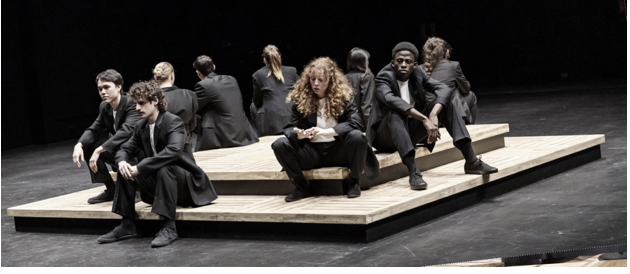
In all recorded societies there have been forms of drama and theatre. Some people argue that the health of a society is reflected in its capacity for reflecting and exploring the values and concerns through this imaginative world. As Hamlet in the play by Shakespeare reminds us

" ... the purpose of playing ... is to hold ... 

the mirror up to nature ..."


Scenes from around the state

South Hedland

In one end of a teaching block, cocooned from the searing heat outside, a class of Year 5 students are telling their version of the story of the dragon and the damsel in distress. An aboriginal boy with an infectious smile has dressed as the dragon's mother and is berating the dragon for being " ... so mean to the poor girl. .. " and for" … getting dragons a bad name ... " He concludes" ... is it any wonder that we are almost:-extinct ... ". Toe rest of the students in the class are laughing and teacher Rhonda Brentnall is enjoying his performance. These students are one step beyond playing "dress ups" and "pretending" ¢ they are learning to shape a performance for the enjoyment of others listening.

Belmay Primary School

A circus is in progress - not a traditional circus under tent with lions and high flying aerialists under the Sole Brothers' banner, but a group of students from a primary school are making their own circus. Working for five weeks with Reg Bolton from Suitcase Circus this group of students have discovered in themselves a wealth of talent that they barely suspected existed. Stilt walkers, acrobats, clowns, unicyclists and performers of all kinds have shaped a circus where before there was nothing but the idea. Under the guidance of teacher, Graham Baxter and with the help of tutors such as Reg, these students have worked as a team to make a satisfying and enjoyable performance.

Geraldton

At the local shopping centre students from Standing Room Only the performing group from John Willcock Senior High, have drawn a crowd of shoppers to them with their short impact drama with a road safety message. Later that same group of students will take their play oto a receptive audience at the Senior Citizen's village. Here drama is being used to communicate a health message and is part of a joint project undertaken with the local office of the Department of Health.

Fremantle

For many years now, John Curtin Senior High School has had a reputation as centre for students specially gifted in theatre. Students from this program have distinguished themselves through making memorable theatre. 1991 is an important year - a breakthrough

What would we report from around the state in 2021?

Drama Tuesday - Drama Teaching in action in the Media

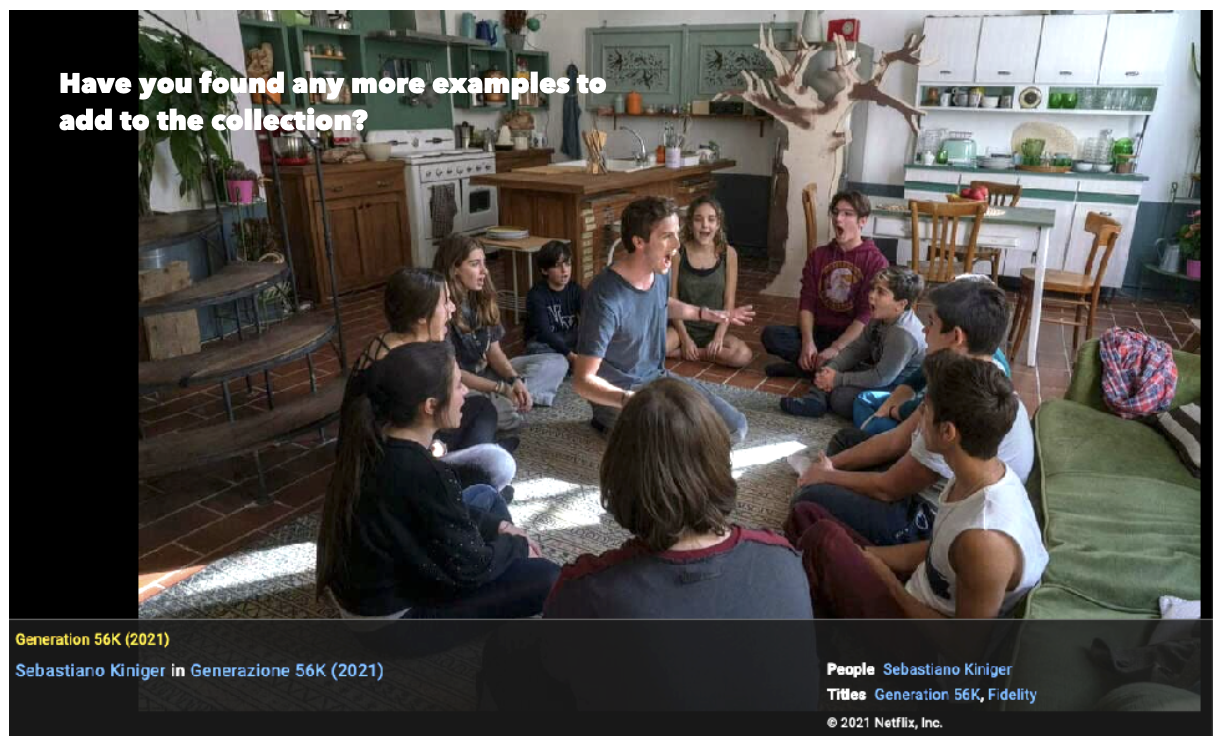
Part of my ongoing quest is to find examples of drama teaching happening – in novels, stories, television and films. In Generazione 56K – a show on Netflix produced in Italy – one of the secondary characters runs a drama group for underprivileged young people. We see scenes of him working with them on a production of Midsummer Night’s Dream. There are scenes of warming up with vocal exercises; behind the scenes teen romance between actors playing Titania and Bottom; and, the obnoxiously sweet kid whose answer to everything is to give the finger. and the production that we see scenes from sends the audience into polite slumbers.

Yes, its’ a secondary story and likely to be of interest in passing. But it’s yet another example of contemporary interest in drama teaching. 

Have you found any more examples to add to the collection?

Drama Tuesday - The Drama Teaching Space

Spaces of learning/Spaces of Performance

Screen Shot 2021-10-12 at 8.48.48 AM.png

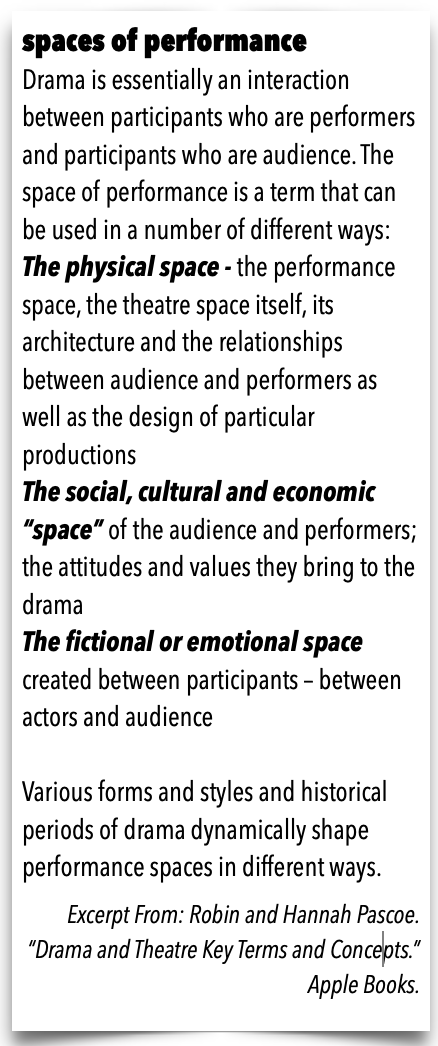
 We take for granted that students understand how the elements of Space and Time are crucial building blocks for making drama. But we usually think of this in terms of the performance spaces we use – our theatres and performance venues. In this post I shift our thinking to consider that every drama room – whether it’s a purpose built space or a classroom rearranged - in the same terms as we do in making drama: the physical space,, the social space and the imagined emotional space. 

The space of performance is essentially an interaction between participants who are performers and participants who are audience. We can think of the drama teaching space as the interaction between participants – students and teacher – and the physical, social and imagined emotional space. 

I am thinking about this having read an interesting post from TheatreFolk in Canada and a new publication they have put out called Return, restore, rebound: Post-Pandemic Resource.. In that post they discuss the challenges of being a teacher who has been teaching online and remotely as they return to their physical classrooms. (https://www.theatrefolk.com/products/return-restore-rebound-post-pandemic-resource) . In particular, they set out to support the beginning teacher who is moving into the physical space of teaching for the first time after their graduation – a delayed taking up of a teaching position because of the Pandemic. 

Screen Shot 2021-10-12 at 8.48.54 AM.png

In that resource, they pose useful questions for teachers – fresh to the space or returning to the space – reflecting on the potential of the teaching space. The physical strengths and limits as well emotional reactions to being in the space. The potential for doing things differently. 

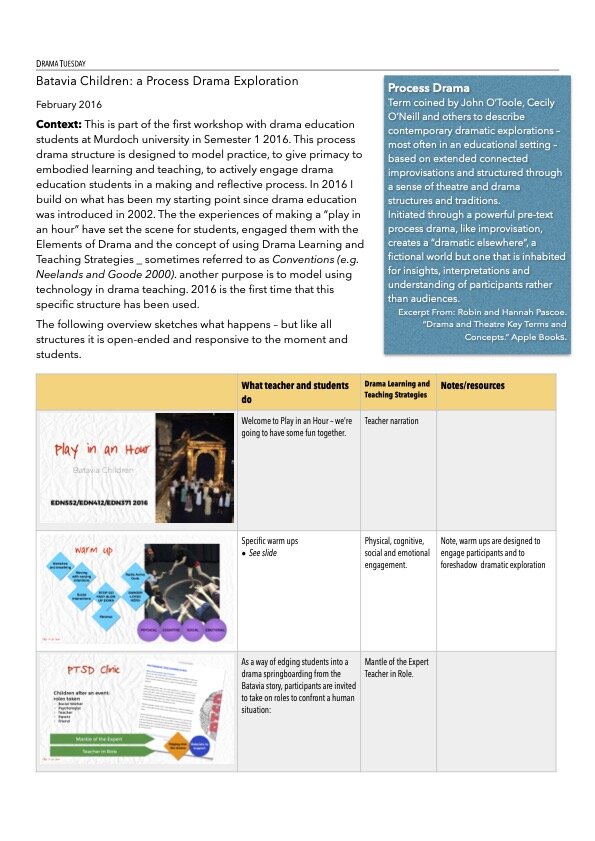
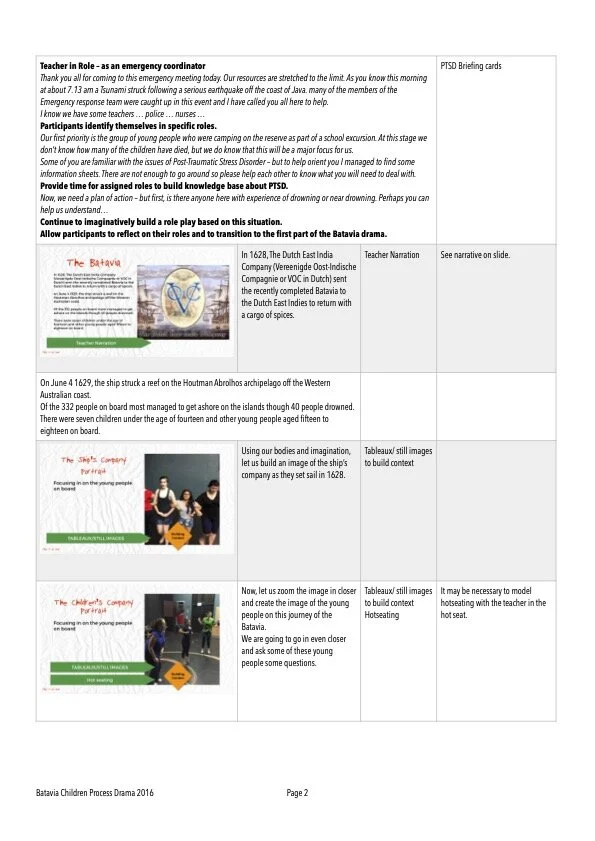
In my work with drama teacher education students I include a module on thinking about setting our “perfect” drama teaching space (as part of a workshop on Managing Drama Teaching). At one level there is no “perfect” drama teaching space – and at another level the “perfect teaching space” is the one you are in the process of making. It is always in a state of becoming.

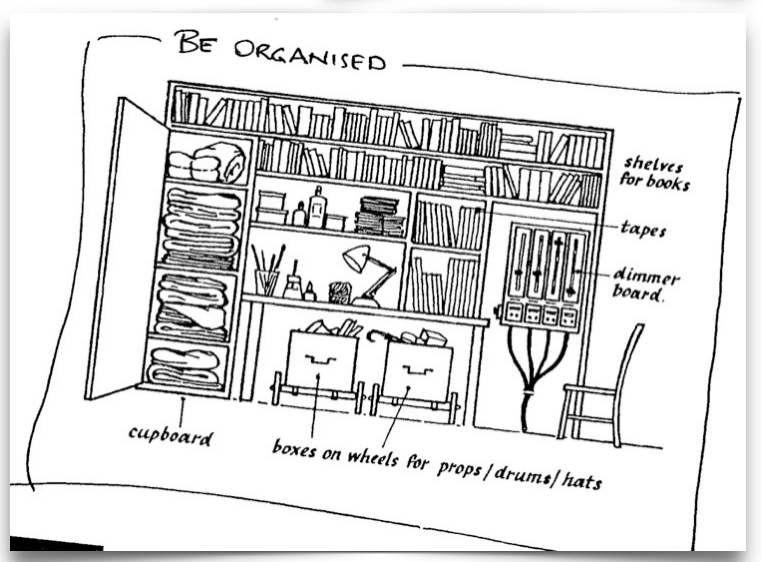
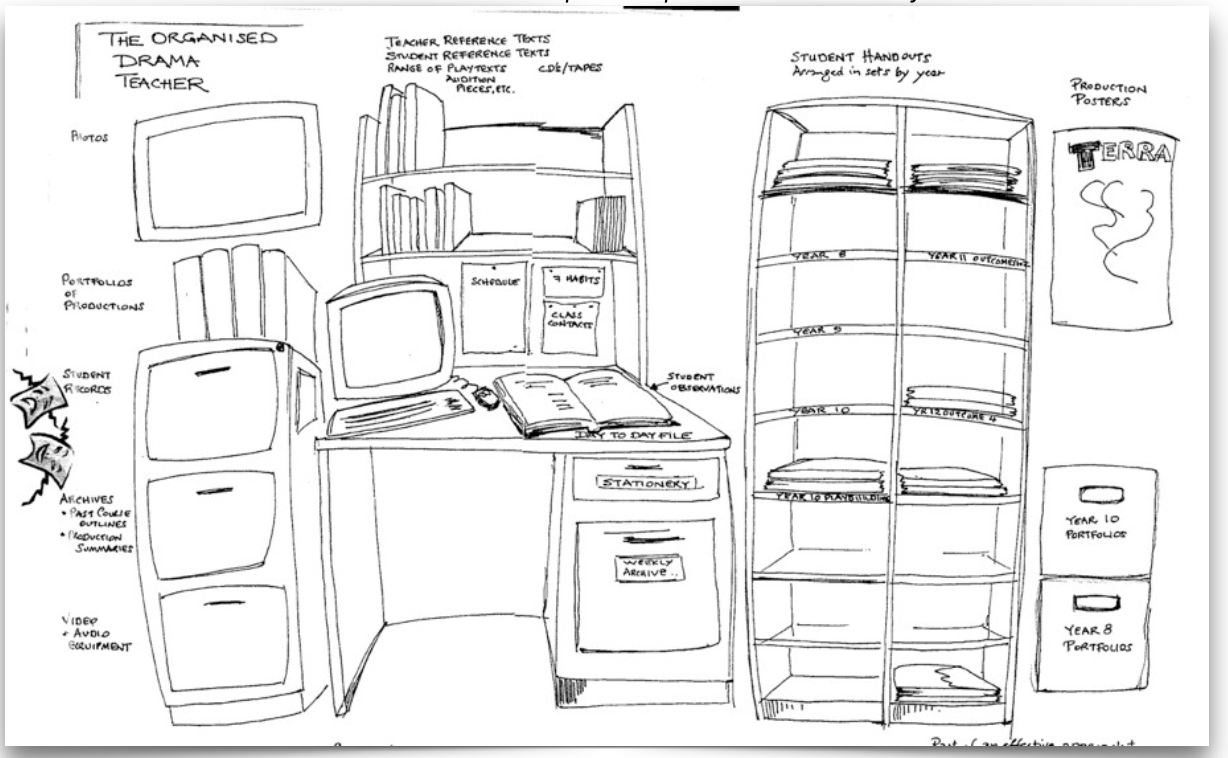
There are some important principles though: be organised. I have lost track of where this image comes from – the antiquated dimmer board takes it back somewhere into the dim dark past. But the notion of managing the space is important. 

The second image was something I drew after visiting a successful teacher’s space. Christina is thoroughly organised. For example, students know that if they missed a class, the can always go into the shelf where notes from each workshop are kept and find what they missed. 

The other thing about this teacher’s work, is that each student had their own portfolio which they added to systematically with each lesson. This provided both organisation of accumulating learning, it also made explicit metacognitive processes of articulating learning through writing and journal entries. (Of course, nowadays, we might not have a physical portfolio but keep a digital one). There is more to teaching drama than being able to lead a process drama. 

Screen Shot 2021-10-12 at 8.49.08 AM.png

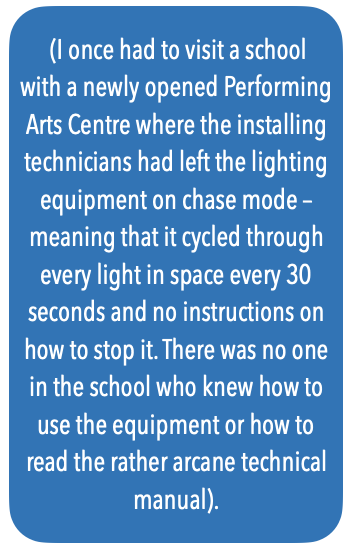
If you work in most secondary schools in Western Australia there is likely to be a purpose built Performing Arts Centre. They vary but are basically a workshop space of about 14 metres by 114  metres with associated dressing room/green room (that is also another teaching space). They are equipped with lighting bars and lights, sound systems. Most are carpeted. They are in. effect black box theatres. But if you are the drama teacher, most likely the only drama teacher in the school, you will wind up being responsible for a facility that costs over a million dollars to build and a school community that don’t quite understand the complexity of being responsible for it. There is the technical side – sound and lighting that requires specialised knowledge. There is the security side where there is equipment that is highly desirable that can be easily stolen or misappropriated. There is the maintenance and air conditioning and all the Occupational Health and Safety requirements when it comes to audiences and not having students push each other around on the scaffolding for the lighting. 

That’s a huge amount of financial and professional responsibility for a beginning teacher. And, sadly, so little time in a teacher education course to provide the necessary background for managing. Part of the work of drama teachers is to manage their teaching and learning space.

What are the necessary knowledge and skills to step into the drama teaching and learning space? What do you need to know to teach drama – apart from a knowledge about the art form itself?

Drama Tuesday - Generosity of Spirit

Screen Shot 2021-08-17 at 9.54.08 AM.png

Don't come to my production if you there to point score, to redirect it or to criticise it unreasoningly.

Come to enjoy, to share, to discover along with us the joy and rough magic of theatre, to understand why we are performing, to share what we are saying ( or trying to say!)

Come to share our sense of achievement, to understand what it is we can now do as a result of the process of discovery we have explored.

I am not going to apologise or pretend that it maybe couldn't ( and shouldn't ) be better. I can be critical as the next person (honest!) I try to have a real sense of what should be on the stage - but I also know that in schools we are working with theatre in an educational context - the learning is as important ( perhaps even more important ) than the production.

Having said that I don't advocate using that thinking as an easy excuse or escape clause. (My old mother, ever a realist, taught me to never apologise for what might have been or to blame someone else, but to cop it sweet whatever happens.)

There can be a lack of generosity of spirit in the barely suppressed commentary of carping criticism I sometimes overhear. This is more than just sad (or hurtful), It damages and diminishes the rest of us.

They sometimes say that the theatre is the natural resort of bitches but I question whether that ought to be the case in theatre in educational settings. If we saw or heard our students rubbishing other performers, we would do something about it, wouldn’t we! Surely we wouldn't join in. ( Which isn't to say that the application of critical frameworks as part of understanding the role of the critic isn’t part of the theatre going experience - but that is something different from the mood of picky and personalised knifery that sometimes seems to pervade the audience of our peers. )

I know that it is easier to laugh at something than to think about it; it is easier to wreck rather than to feel; it is easier to snigger than to understand. If theatre is truly to move us - and move us in more than a simple cathartic burst of emotion - to make us think and feel and, therefore, to change, then we cannot afford to rely on the easy response, to use a quick laugh at someone else’s expense as a substitute for a genuine reaction. Are we so insecure about our own work and abilities that we have to prove our worth at the expense of someone else’s work?

Screen Shot 2021-08-17 at 9.53.59 AM.png

When I go to see someone else’s production, I try to see the production in its context. I try to see its successes and strengths. I try to find something positive to say. I try to base any comments that I make on the production - particularly in discussion with my students - focus on the specific, avoiding the personal or the cheap Jibe. I aim to make my comments balanced, clear and thoughtful. And the amazing thing I have discovered, is that it isn't so difficult to take this world view because often what I see when young people perform is wonderful, amazing and awe inspiring. so it is not effort to focus on the positive.

I am not claiming to be some plaster saint - or to say that sometimes I am not tempted to think a few cheap and nasty thoughts. But I am saying that I have learnt to bite my tongue when the carping starts. And I think we all should do that.

So, when you come to my production, come knowing what to expect. It will be the best that I can do with the talent and the resources that I have at the moment. We have set out to make a production which is the best that we can achieve at this moment in time. We are what we are. Whatever our deficiencies, we don't excuse them but then we don’t let them diminish our sense of achievement.

Screen Shot 2021-08-17 at 9.53.53 AM.png