
Arts Education – is it being lost in the thunder of the current election
/Arts and drama educators mostly get on with their day to day teaching. This week ACARA, the Australian Curriculum, Assessment and Reporting Authority launched The Australian Curriculum Version 9. On the whole, the focus of this major revision, politically driven, has been on strengthening Phonics in English and on headline grabbing issues amongst some such as “strengthening and making explicit teaching about the origins and Christian and Western heritage of Australia's democracy” (once again reinforcing the deep seated suspicion of dark motives in curriculum writers, sensed by some conservative Australians.
There are changes for the Australian Curriculum: The Arts – I will write about them in a later post.
For now I focus on the relative quiet amongst the media and public about the changes in Version 9. Where is the uproar. Where is even the ripple of recognition that a change has been made that has consequences to teaching and learning?
Put simply, there is nothing showing on the Richter Scales of Education.
The new version, despite the consultation that happened in 2021, is sinking like a stone unnoticed.
In fact, Arts Education is not on many people’s radar this election.
Not surprising given the focus on cost of living (petrol prices rising; inflation figures burgeoning) and the bickering and scrapping tone of the election and going for the jugular gotcha moments that dominate the media feeds.
But is anyone noticing that Arts Education is floundering in the quicksand of Australian education. Passionate few struggle to lift it up. But generally, as an education community, our focus is elsewhere. Not waving, but drowning.
I share the media release from the National Advocates for Arts Education NAAE in full.
Is anyone listening?
Certainly, this call falls on deaf ears of my rusted-on local representative.
ACARa advises. Version 9 will be implemented by states and territories according to their own timelines. ACARA will maintain the current Australian Curriculum website with Version 8.4 curriculum and both websites will remain live until such time as there is no need for schools to access Version 8.4 of the Australian Curriculum.NAAE statement about the 2022 federal election
Who we are
The National Advocates for Arts Education (NAAE) is a coalition of peak arts and arts education associations representing approximately 10,000 arts educators across Australia. NAAE members are Art Education Australia (AEA), Australian Dance Council – Ausdance, Australian Society for Music Education (ASME), Australian Teachers of Media (ATOM), Drama Australia and the National Association for the Visual Arts (NAVA).
NAAE advocates for every Australian student in primary and secondary schools to have access to quality Arts Education across the five arts subjects: Dance, Drama, Media Arts, Music and Visual Arts. We ask all political parties to endorse this principle.
Why arts education?
Australian and international research has continued to show the multitude of benefits that The Arts can have on student academic and non-academic outcomes. Arts Education not only fosters the development of artistic skills for art making, but it also teaches skills in collaboration, innovation, experimentation, resilience, confidence, problem-solving and communication. Research finds that students who engage in The Arts do better academically in their non-Arts subjects than those students who do not participate in The Arts (Martin et al., 2013).
There is ample global evidence (including Australia) that speaks to the explicit value and benefits of an Arts rich society. This enrichment begins and is contingent upon access to quality Arts Education. Arts Education plays an essential role in preparing young people and industry professionals to respond holistically, meaningfully, and purposefully to the impacts of global events. The long tail of COVID, coupled with catastrophic climate events and significant global conflict all point to the necessity of and need for Arts education in Australia.
It is now time to halt the erosion of support for arts and arts education that has occurred over the past decade. We ask for meaningful investment in quality Arts Education across all levels of Australian society. This means making a tangible commitment to providing increased support for rigorous and sophisticated opportunities for teaching, learning, making, producing, and creating into the future.
What we are calling for
The National Advocates for Arts Education are calling for all political parties to consider and endorse the following policy imperatives.
NAAE urges all political parties to commit to the development of a National Cultural Policy that includes Arts Education and is developed in consultation with artists, arts educators, the community, and peak arts bodies to ensure a well-supported arts and cultural sector that is serving the Australian community.
NAAE calls for support for implementation of arts curriculums across the five Arts subjects in each state and territory in Australia from Foundation to Year 12 with targeted professional development, training, and education programs.
Halt the erosion of arts specific education training in Initial Teacher Education (ITE) to increase curriculum, pedagogy, and assessment course allocation time for The Arts. This extends to specialisations and time for arts learning in early childhood and primary education courses to ensure teachers are well equipped to teach at least one Arts subject in depth. See NAAE’s submission to the Quality Initial Teacher Education Review here.
Undo the current government’s university fee increase to Creative Arts courses. We call for an equitable tertiary education system that does not target Creative Arts degrees with increased fees on the false basis that this area of study does not lead to employment. See our August 2020 statement and September 2020 statements for more details.
Increase funding to the Australia Council for The Arts to specifically include funding for teaching artists in schools for existing and future programs, as well as support for arts engagement programs with students and for teacher professional learning.
The National Music Teacher Mentoring Program (established by Richard Gill and implemented through the Australian Youth Orchestra) be expanded with additional funding to ensure early childhood and primary school teachers also have professional learning support across the other four Arts subjects: Dance, Drama, Media Arts, and Visual Arts.
NAAE calls for the removal of political interference in Australian Research Council (ARC) directions for Australian research. Earlier this year we raised concerns about the increased level of government interference in independent peer-review processes, and major implications for the type of research that will occur in years to come.
Given the concerns raised above, NAAE calls for a federally funded Review of The Arts in Australian Schools. Within the past 15 years, two federally funded reviews have been conducted into two arts subjects; National Review of School Music Education: Augmenting the diminished (Pascoe, Leong, MacCallum, Mackinlay, Marsh, Smith, Church, and Winterton (2005) and First We See: The National Review of Visual Education (Davis, 2008). These have been significant, important, and valuable reviews that were completed before the Australian Curriculum: The Arts was endorsed in 2013.
It is now timely to recommend another review that will include the five arts subjects (Dance, Drama, Media Arts, Music, and Visual Arts) included in the Australian Curriculum and how various national, state, and territory arts curriculum is being implemented and taught in Australian schools. NAAE has proposed a draft terms of reference for the review which include:
Relevant Australian and international research published in the last ten years, on national arts curricula in schools focusing on best practice delivery and resourcing models.
Map current curriculum provision (intended curriculum) and implementation of curriculum (enacted curriculum) across the five Arts subjects in each state and territory in Australia from Foundation to Year 12 to ascertain: which Arts subjects are implemented in primary and secondary schools; which teachers implement the five arts subjects; how schools manage the time required to provide quality Arts learning experiences for students; and, what is the ‘actual’ time provided for each Arts subject. An analysis of the differences between the intended curriculum and enacted curriculum is required to investigate the elements that nurture and hinder implementation.
Map current Initial Teacher Education (ITE) and Early Career Teacher support offerings nationally in education courses (across early childhood, primary education, and secondary education) and identify lecturer expertise, assessment types, number of units, and hours allocated to Arts education.
Examples of effective primary school programs that provide sequential foundational learning in the five arts subjects.
Provide recommendations for:
future iterations of arts curriculum and implementation at a national and state/territory level.
provision of Initial Teacher Education for The Arts (and any implications for AITSL to consider).
improving Initial Teacher Education programs in Arts curriculum and pedagogy, across early years, primary and secondary pre-service teachers. o
ongoing professional learning for primary generalist, primary specialist, and secondary specialist teachers. Recommendations for the Commonwealth, State and Territory Governments, Teacher Accreditation Boards and Universities to consider.
a range of best practice delivery models of The Arts in Australian schools.
NAAE acknowledges the extensive research and industry evidence pointing to how and why Australian society looks to Arts Education to foster individual and collective resilience in crises. We ask our policymakers to do the same.
Meaningful investment, proper resourcing, and support in the form of sustained professional learning and adequate initial teacher education for Arts teachers are essential for how we leverage the unique skills and understandings obtained by the field in recent years. This is going to be essential for how we work together to understand how change is experienced on the ground, and deliver on the ambitions of version 9.0 of the Australian Curriculum.
For further comment contact:
John Nicholas Saunders, Chair, NAAE at contact@naae.org.au
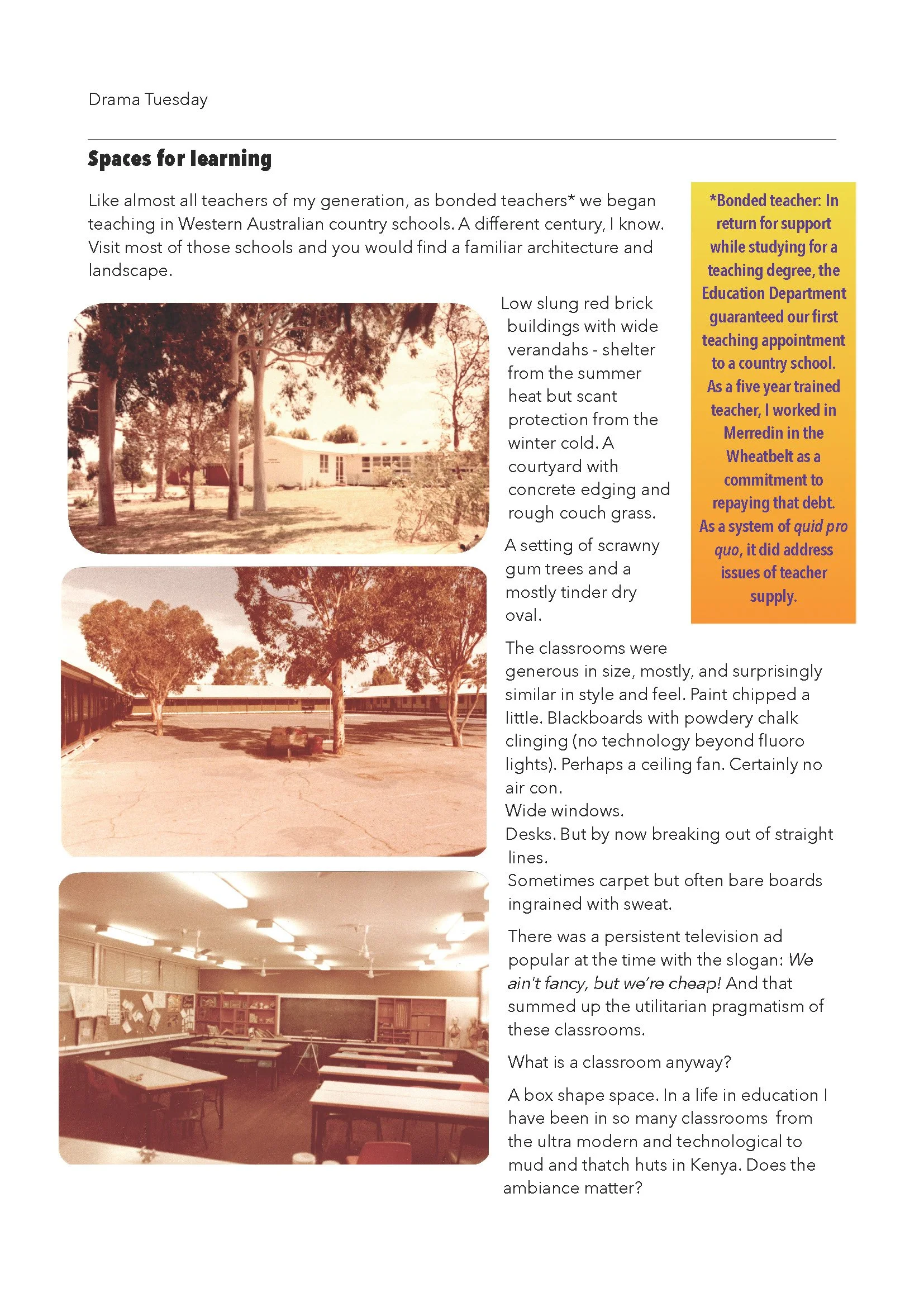
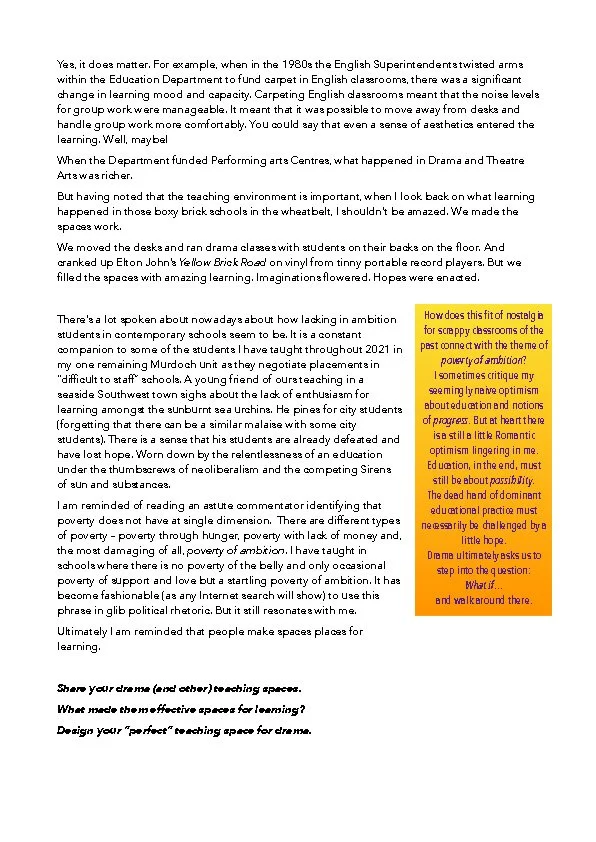
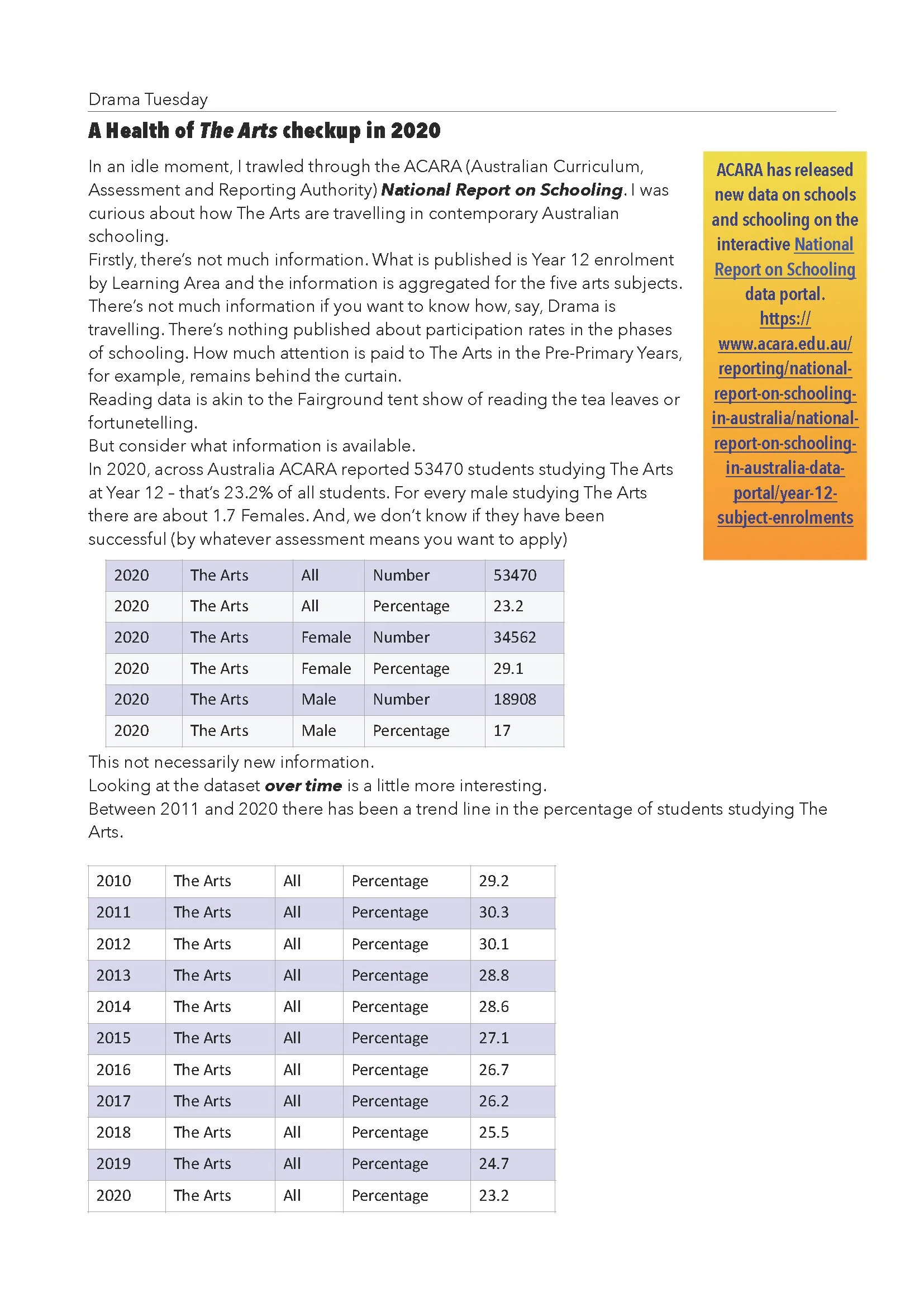
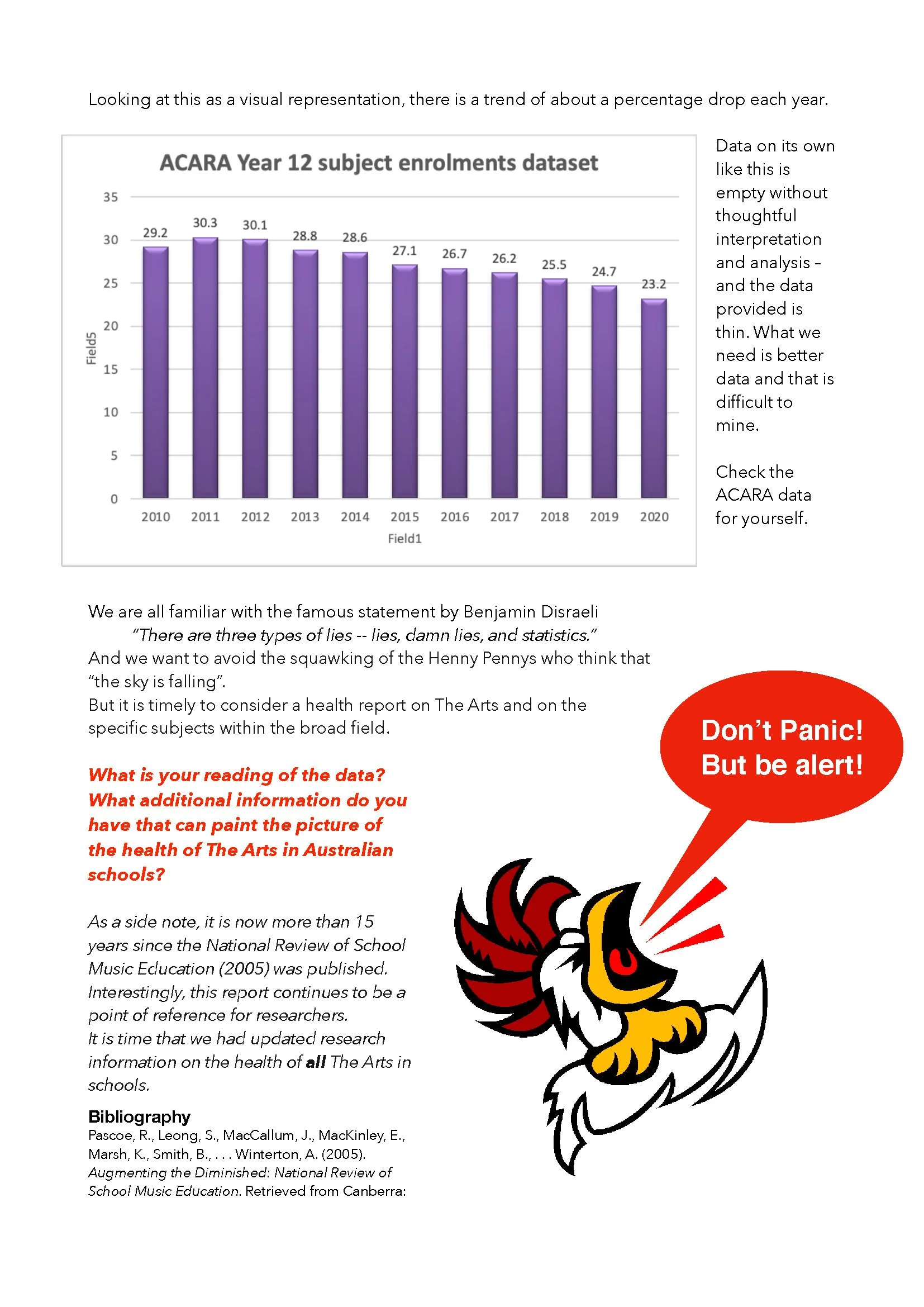
Drama Tuesday - How to Make a Drama Teacher
/How to Make a Drama teacher
I return to a favourite topic: I am preparing a proposal to present at the next IDEA Congress in Reykjavik Iceland in July 2022 (More information available at: https://ideaiceland.com).
Again, I propose talking about Drama Teacher Education. I wanted to include a fun way of thinking through this issue and share with you the latest tongue in cheek recipe for making a drama teacher.
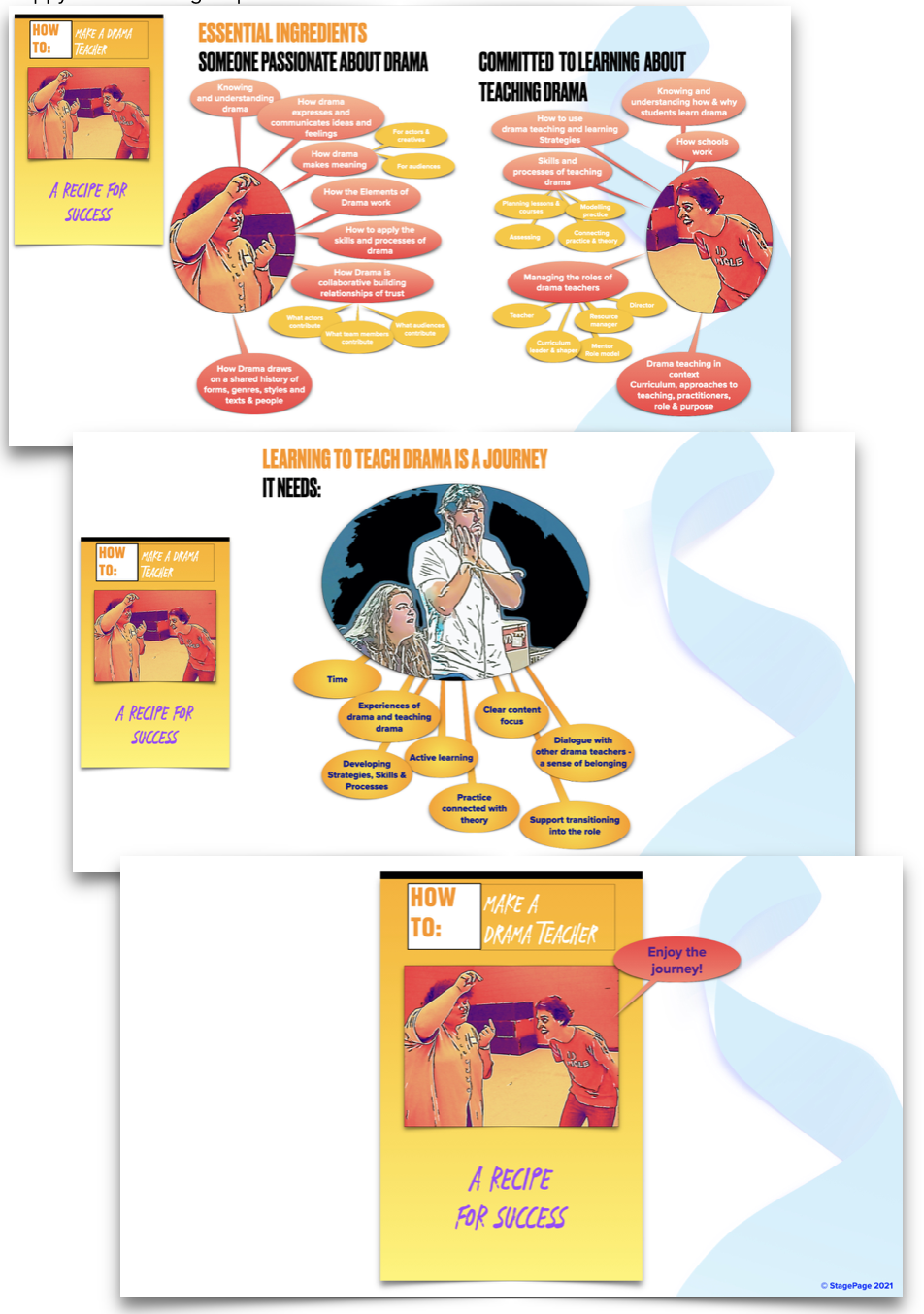
Happy to let the images speak the words:
Drama Tuesday - First Voice
/How do you teach Theatre History?
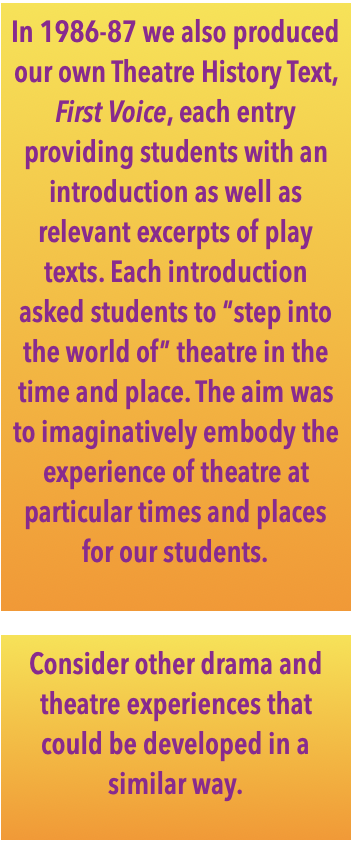
One of the perennial problems about fully developed drama education courses is finding ways of engaging students with the drama and theatre of other times and places. We became frustrated with the usual approaches – finding a television documentary and slapping students down in front of 60 minutes. All that sort of teaching encourages is passive engagement. The students who are interested focus; the rest get bored quickly.
Of course, you can ask students to take notes – or fill in a work sheet – but it is still deadly theatre (to steal a term from Peter Brook). The other approach is to send students off to the Library or to do Google searches. The result is always skewed or idiosyncratic viewpoints of a particular author and the perennial problem of “cut and paste”. Where is the development of critical thinking that promotes questioning and, above all, linking to the student’s own practice.
Of all the reasons that we ask students to consider drama of other times and places, is the hope that they will take ideas from the long trajectory of drama and theatre over time and place and apply ideas to their own drama making. It must not be drama knowledge for drama knowledge’s sake.
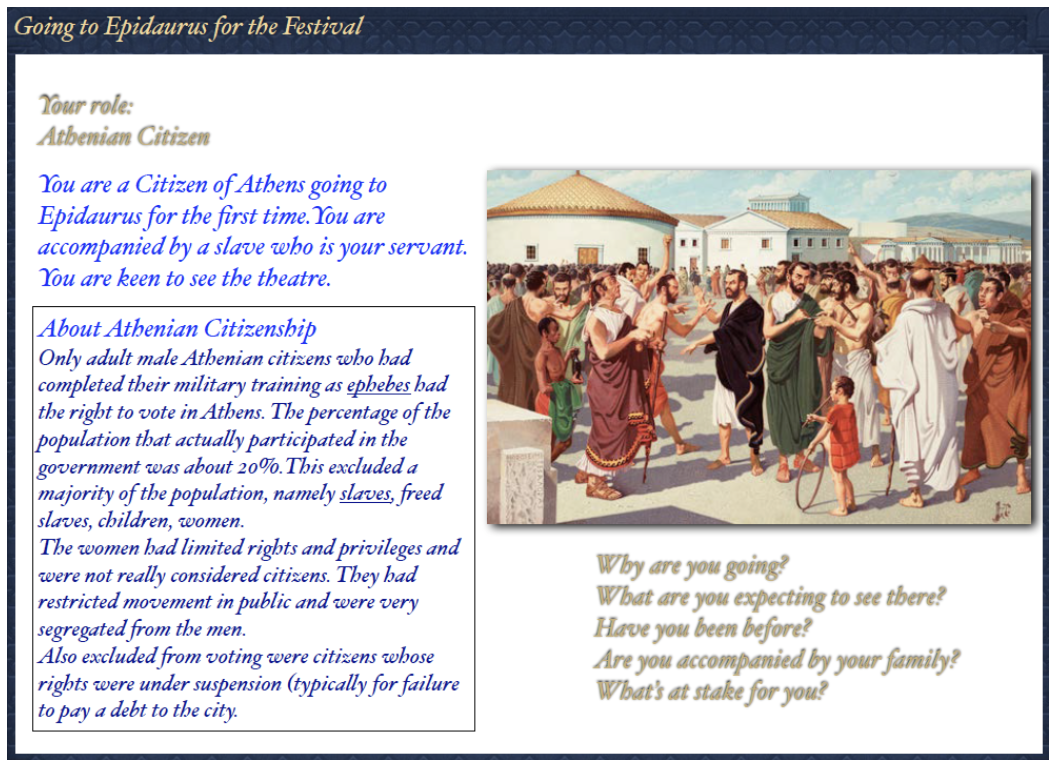
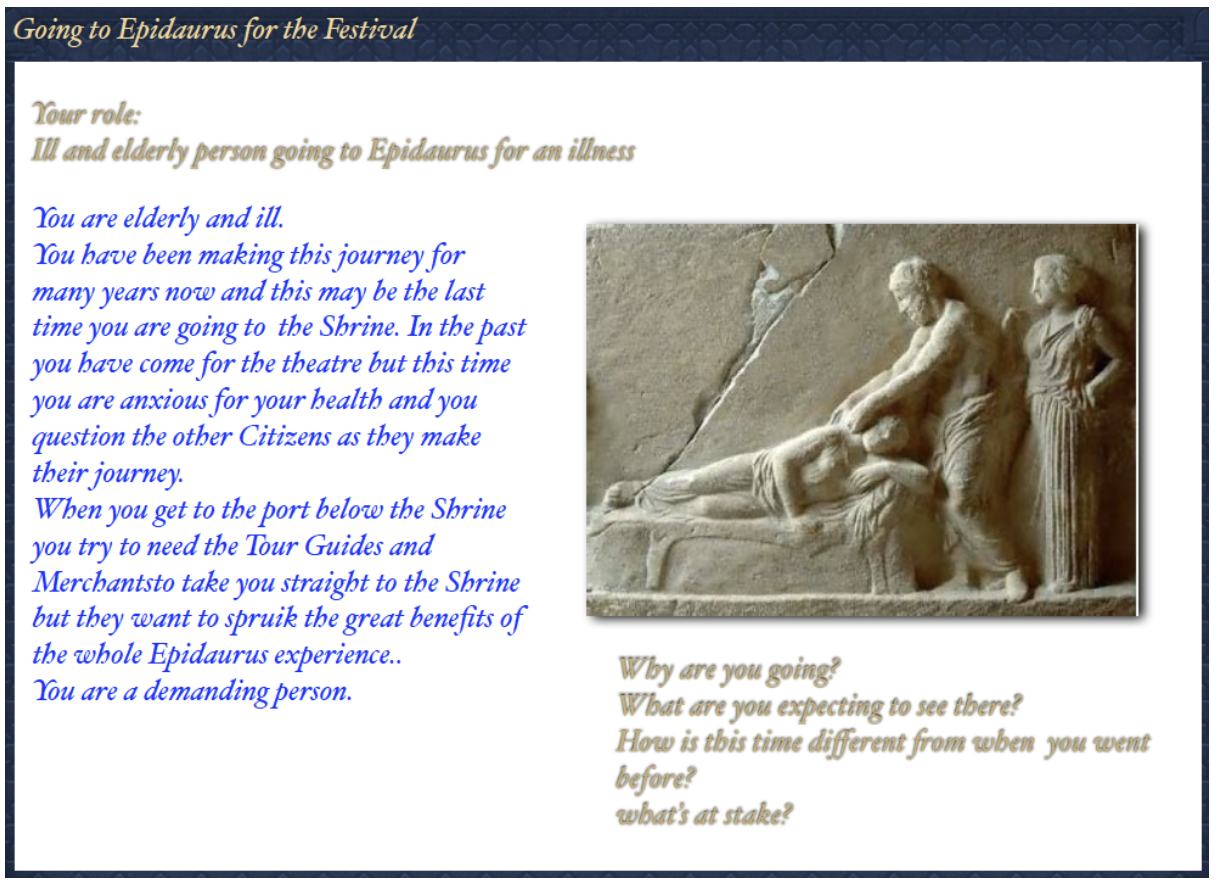
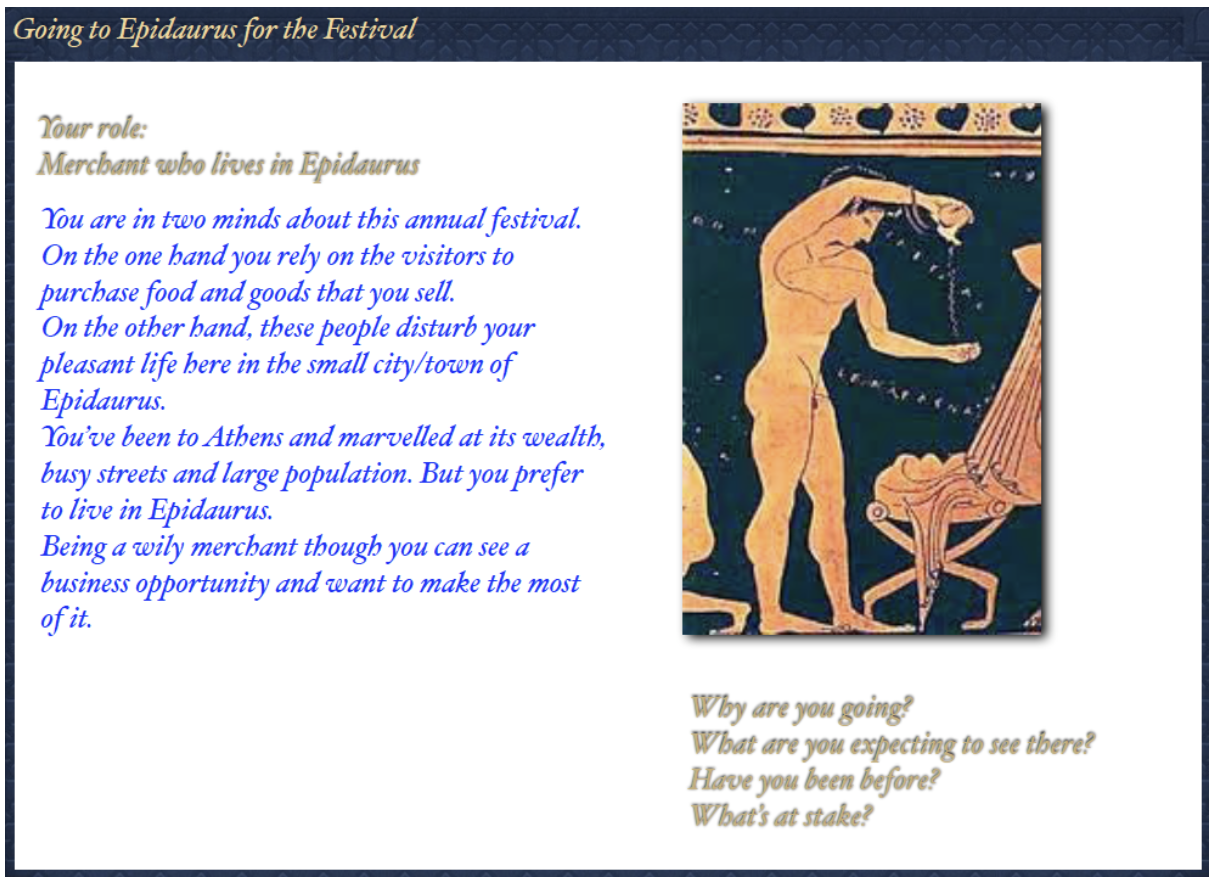
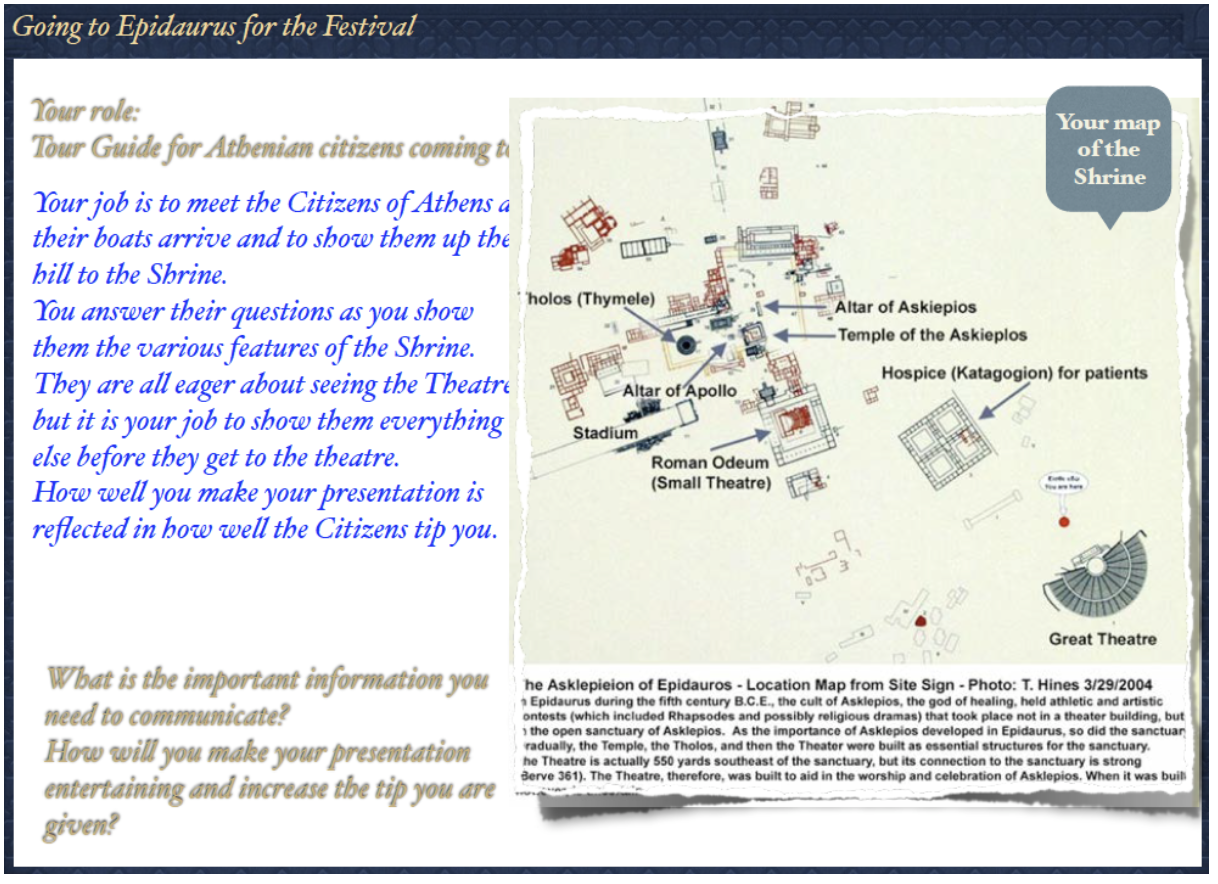
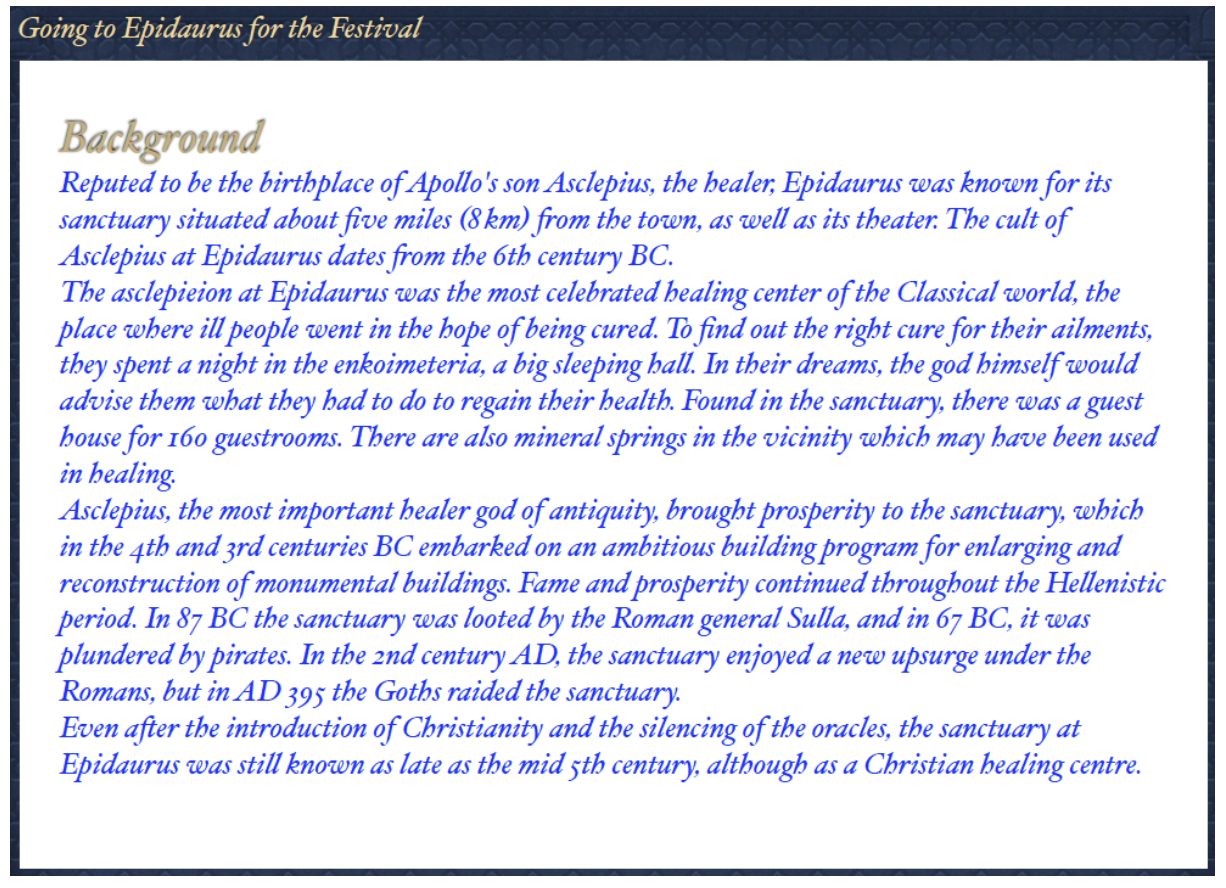
In my drama teacher education classes at Murdoch University, the concept of these introductions in First Voice were developed into workshops where students took on the roles of, for example, making the journey to Epidaurus for the Festival of Asclipios.
The aim – as always in my drama teaching – is to embody knowledge and learning.
Drama Tuesday - Drama Australia Creating Community
/
To subscribe to Drama Australia publications
Drama Australia AdministratorPO Box 1205, Milton, QLD 4064. AUSTRALIA
Ph: +61 7 3009 0664
Fax: +61 3009 0668
email: admin@dramaaustralia.org.au
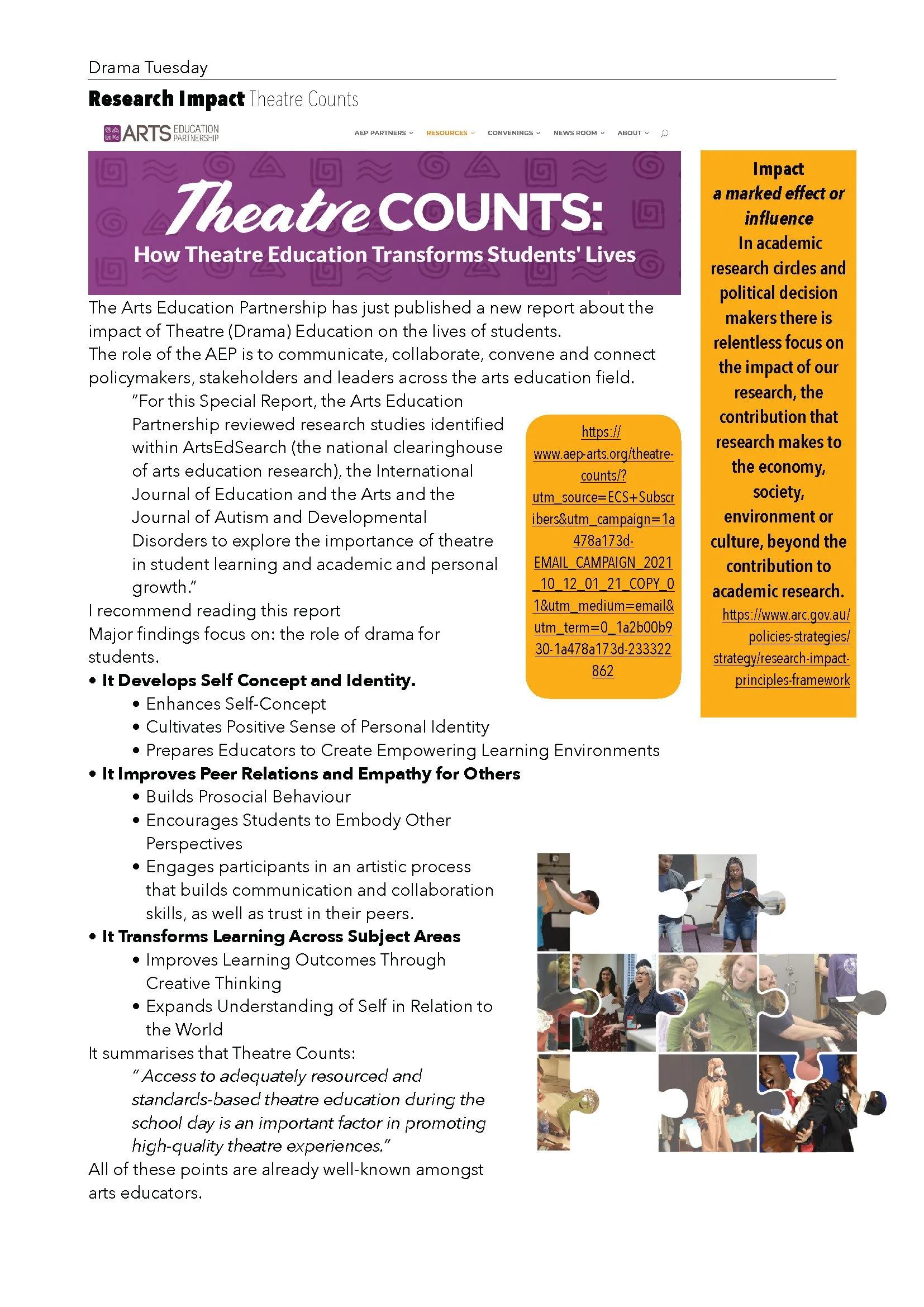
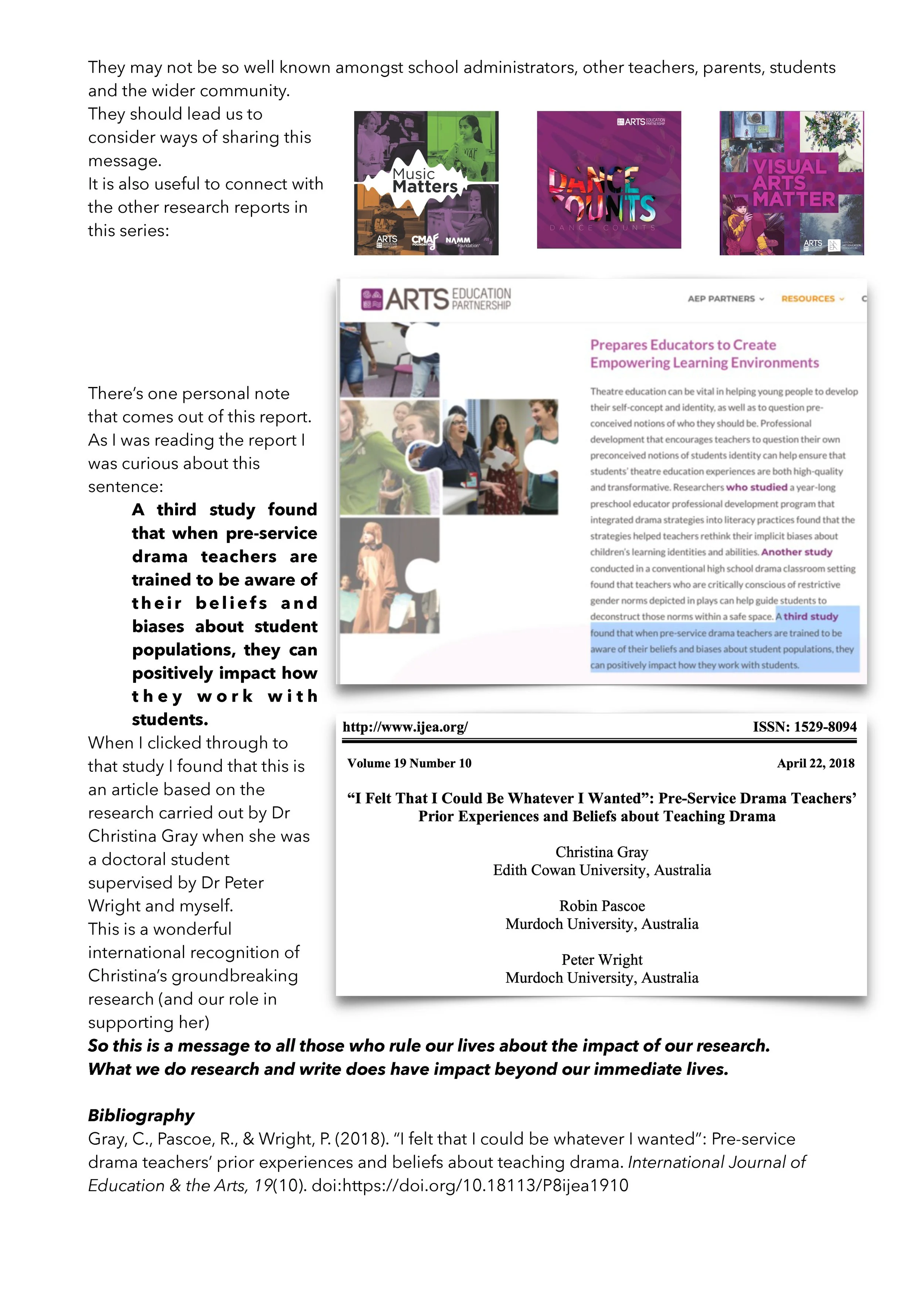
It’s always exciting when Drama Australia publishes ADEM, the Australian Drama Education Magazine. ADEM sits alongside the fully referred NJ - Drama Australia Journal. It is designed to create community and share news.
This themed edition celebrates 10 years since the publication of Drama Australia’s Acting Green Guidelines (2011) – https://dramaaustralia.org.au/assets/files/Acting%20Green%20The%20case%20studies(1).pdf. ADEM calls for a timely revision and invites responses to a survey (https://www.surveymonkey.com/r/YQVK8G2) on ways of moving forward.
Drama Australia’s Acting Green guidelines were built on the understanding that sustainable drama and theatre practice and teaching about sustainability through drama are ways to directly involve students in understanding their connections with the natural environment, and the interdependence of systems that support life on Earth. They connect to the Australian Curriculum (ACARA)
The articles focused on Drama and Sustainability are a clear commitment to engaging with this key issue.
Eco-anxiety and Drama Education, Jo Raphael.
Unity in troubled times, Darcie Kane-Priestley, Emma McDonald, and Julia Prestia.
Two articles offer drama curriculum ideas based on children’s literature.
Susan Chapman writes about Drama giving voice to sustainability through an Arts immersion approach, exploring the novel Chelonia Green, Champion of Turtles (Mattingly, 2008).
Helen Sandercoe outlines a process drama based on ‘Circle’ by Jeannie Baker,
Learning about ecoscenography Tanja Beer.
Beyond the pandemic: Seeking sustainability in online drama education, Andrew Byrne, Susan Cooper, and Nick Waxman.
The final section provides 2021 Reflections from the State and Territory member Associations of Drama Australia.
In these times where the COVID-119 Pandemic has increased our sense of isolation, the value and need for a shared community of practice – as provided by Drama Australia and member associations – is essential and necessary.
Thank you Drama Australia for this latest initiative.
Thanks Dr Jo Raphael (Editor) and Danielle Hradsky (Associate Editor).
Drama Tuesday - Identification
/The Experience of Humanity

Key to the experience of drama – as an audience member but also as an actor and director – is our capacity to empathetically identify with characters and situations in drama.
That doesn’t mean that we have to “Cry 'Havoc,' and let slip the dogs of war” in bloody assassination or become a husband and wife team intent on regicide or be an abandoned fourteen year old swallowing a potion to fake death when abandoned by her lover. But, when we experience drama we share some of the emotion and thinking. We laugh or cry; our senses and emotions work in overload.
This is a tricky issue (particularly for some parents and community members) who fret at the idea of children confronting issues and emotions – and fear of losing control.
But at its heart identification is the concept of recognising that drama is experiencing the shared experiences of being human. Drama, particularly great and lasting drama, works directly on our senses of seeing and hearing. It impacts on our focus and attention , our thinking and emotions. It registers with us somatically, our breathing rates, our postures, our muscles. All of this physical action is directed towards the mental and emotional understanding of people (who could be like us, or not) in situations and relationships (that we can imaginatively enter).
As much as I can say, rationally, that what I am experiencing in drama is just an actor representing action symbolically, the significance lies in the connection with the human experience of others because I am standing in their shoes as if it were happening to me.
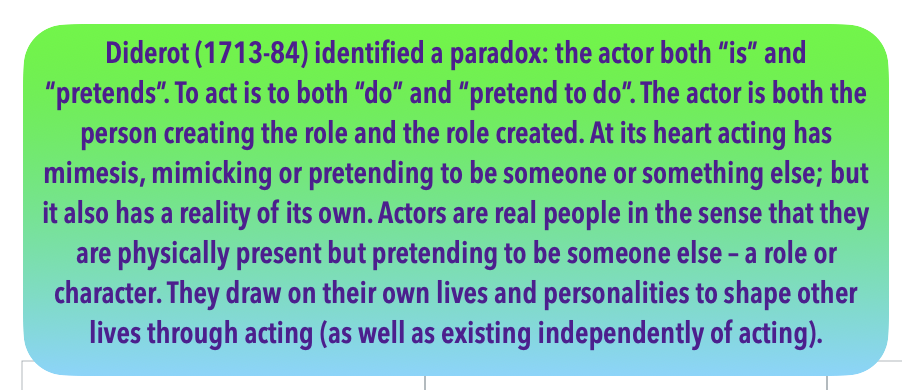
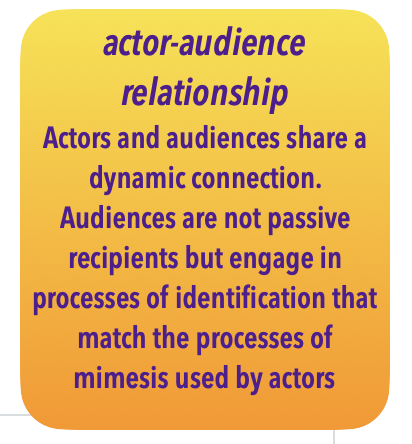
To put it another way, identification in drama is the moment that has the Ah Ha! impact.
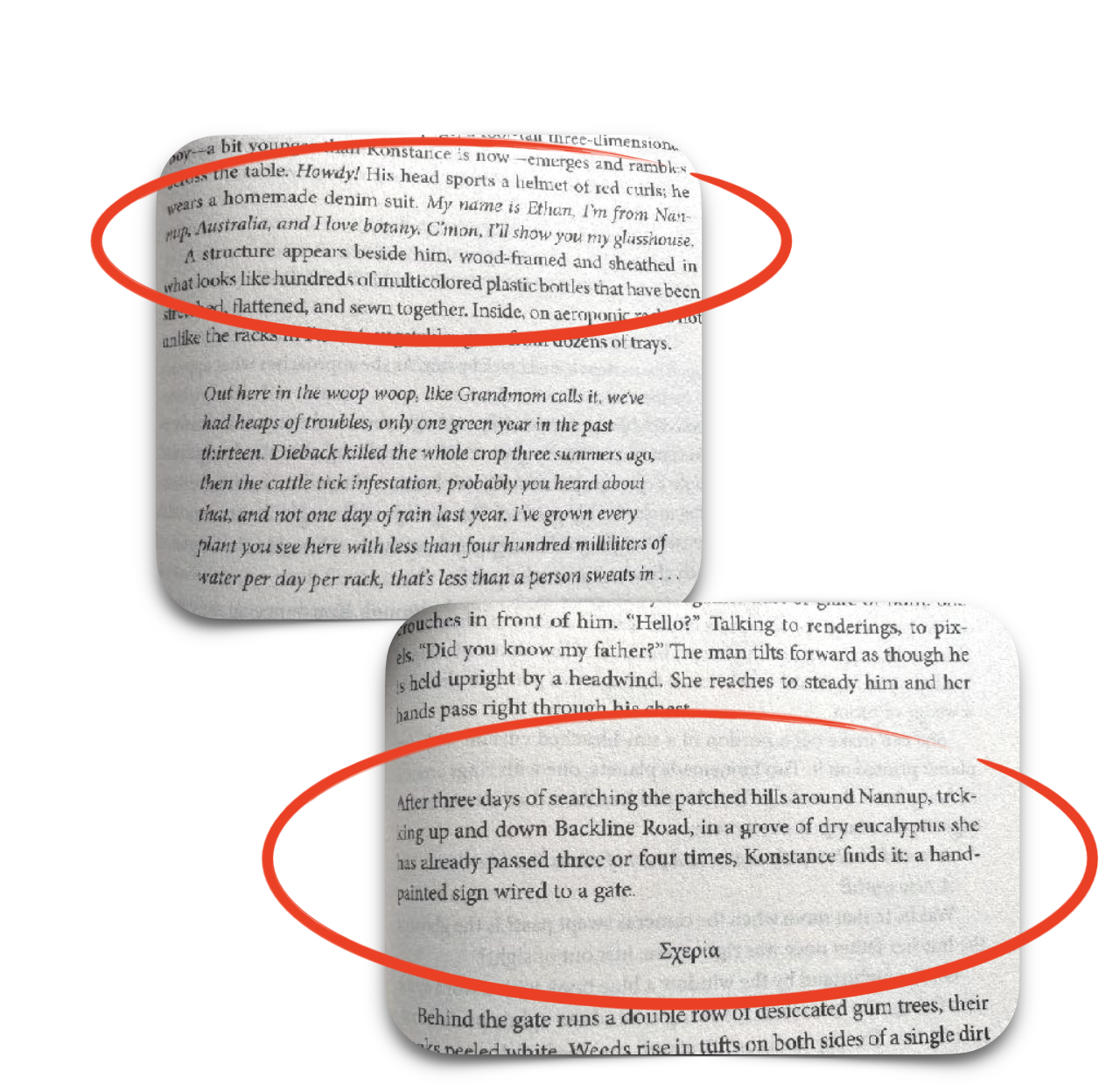
All of this is preamble for the following. An analogous experience in literature – reminding us of the connection between the arts
In a lifetime of reading, a new experience.
I turned page 357 of Anthony Doerr’s Cloud Cuckoo Land and find for the first time a fictional representation of Nannup.
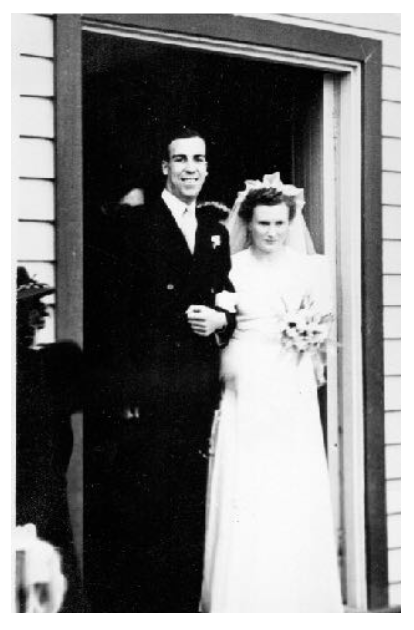
My parents Nannup wedding 1949
Nannup is my mother’s heart land. She grew in this South West Western Australian timber town. In school she won the prize as Dux of Grade 7 when she was 12. She lived with her mother Win and sister Carmel and brother Francis. After her death we found that she was born out of wedlock. (See the investigation by our Historian/Doctor son, Phillip, for that story.)
The black and white photo of her wedding shows her outside the wooden church with my father, Richard (mostly known as Dick). In summers camping at Dunsborough we would make family pilgrimages to Nannup – in scalding heat, of course. It is heart land for me too. Songline contours on my soul.
It is therefore strange to finally come across a fictional telling of Nannup.
I read on.
Drama Tuesday - Casting the First Stone
/In my previous post I noted the report on The West Australian about the school production of Grease being cancelled.
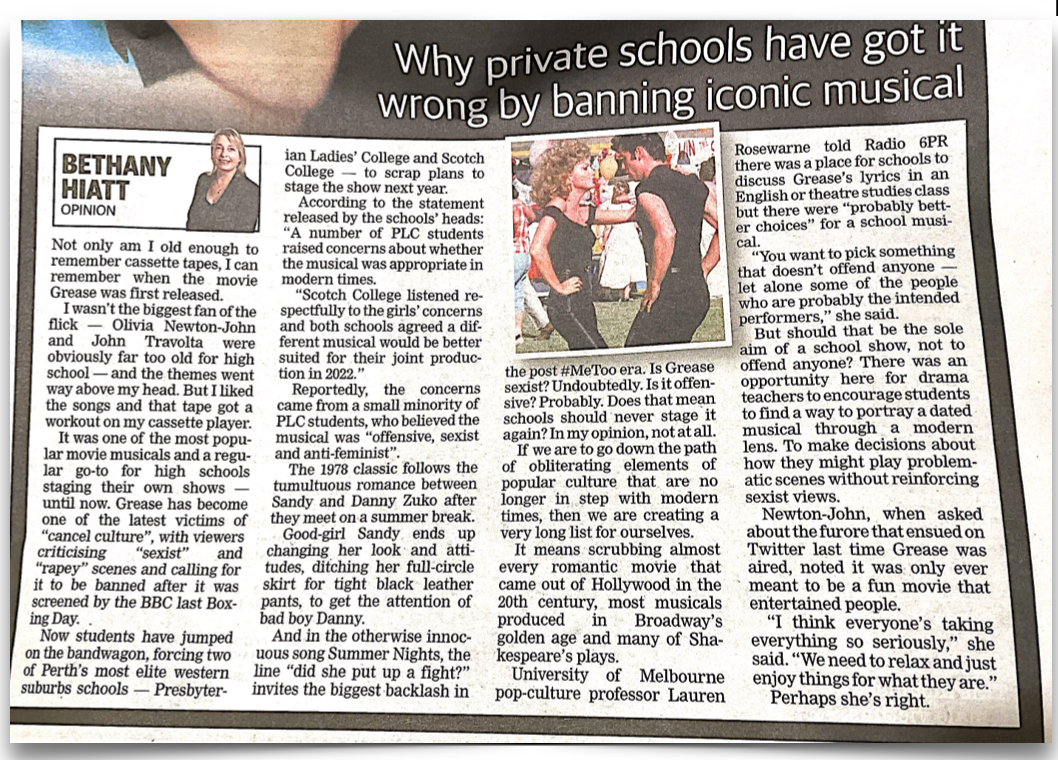
…students have jumped on the bandwagon, forcing two of Perth’s most elite western suburbs schools –presbyterian Ladies’ College and Scotch College - to scrap a stage show next year.
According to the statement released by the schools’ heads: “A number of PLC students raised concerns about whether the musical was appropriate for modern times.
“Scotch College listened respectfully to the girls concerns and both schools agreed…”
Leave aside the implied values of terms like “most elite”. I am no advocate for Grease. In fact, I have often wondered about its underlying message and depiction of gender issues. But I do open discussion on two issues about censorship and those who censor.
What is (or is not) appropriate for inclusion in drama classes?
Who makes the choices about what topics or plays are explored in drama?
Plato’s famous disparagement of theatre and forms of representation is often echoed in forms of distrust and fear in our own times. The Puritans – and the new Puritans of our own times – rail against drama. Sometimes out of fear and sometimes from misunderstanding the nature of the experiences of identification and catharsis that lie at the heart of what happens when we witness others taking on role. In a forthcoming chapter I mention that some people dismiss drama: “Drama is just pretending/a form of lying or dishonesty/unleashes undesirable thoughts and feelings/encourages rebellion/challenges authority/is subversive” (Drama teacher education – a long-view perspective Robin Pascoe https://orcid.org/0000-0002-9650-892X )
There are plenty of people with varied agendas who find the presence of drama in the school curriculum as challenging them and their authority.
But, it does bring us as drama educators to fundamental questions: what is appropriate content for investigation through drama? Is there any topic beyond bounds? Is there any language that is inappropriate? Are there any plays that we should keep away from children and students? (As often as Shakespeare is held up as the given canon for study, there are the critics like Dr Bowdler who deemed it fitting and proper to bowderlise the Bard – to expurgate, omit or modifying the parts considered offensive and morally objectionable.
What is interesting about this moment in time is that we are seeing different groups of people taking on the roles of censors. The conventional image of the Mrs Grundy Censor – elderly, judgmental, narrow-minded – is giving way to an equally judgmental activist younger person.
The debate on cancel culture is hot and divisive. At times it does call out questionable practice. It can also cripple debate. It is hijacked by political hacks. But the drama classroom cannot be immune to the culture in which we live.
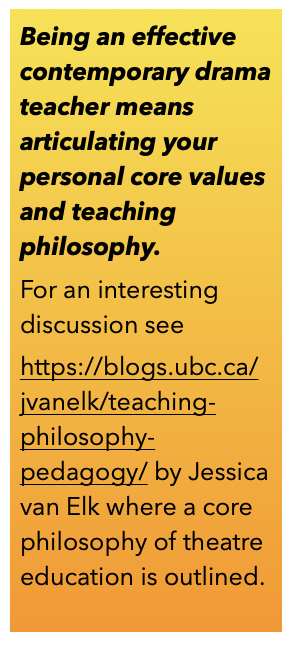
In the current unit I teach, I ask students to articulate their Theoretical Frameworks as a set of lenses through which to view Crucial Incidents in their Professional Practice. That involves stating and exploring their knowledge and theories of knowledge (epistemology); they need to explore their worldview (ontology); they need to recognise they have developed ideology; and, that their values (axiology) impact on their practice (praxeology). All those baffling scary –ology words
No drama teacher can retreat to a hermetically sealed drama room.
Drama education must be a part of its wider world.
Mea culpa
I don’t want it to be thought that I haven’t been guilty about this issue. (One of my tag lines as a drama educator was that, with hand on heart, I could say that I teach from experience because I have made almost every mistake in the book and lived to tell the tale).
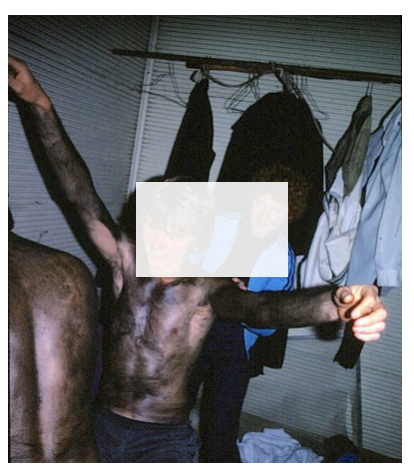
Looking through old production photos I found this from one of our productions (production name and place discretely withheld; faces obscured).
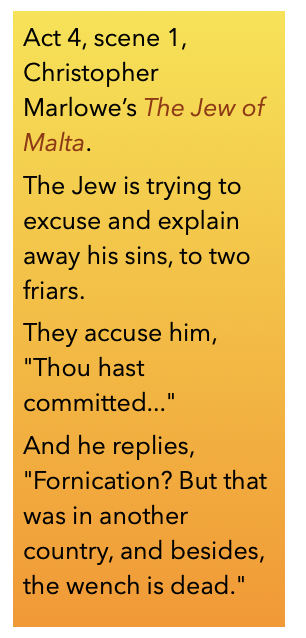
In the spirit of involving the whole school in the “school production” we persuaded the Student Councillors (male, of course) to make a cameo appearance as wandering desert Aboriginals clad in footie shorts and charcoal daubed bodies. Yes, looking back, it was a cringe-worthy moment. It’s no justification to say that there was only one indigenous student in the school (cultural issues of place meant the town was avoided) In the current climate and with what we now know and think, we wouldn’t do this. We were younger and greener. And, "the past is a foreign country; they do things differently there." (wrote L.P. Hartley inThe Go-between), echoing, perhaps, Kit Marlowe.
Would I do it now? Of course not. But it is useful to remind ourselves that we change and grow and develop across our careers. We are not the people we once were when we began – and. that is mostly a good thing. The passion and the drive we began with still can burn but it needs to be tempered in the crucible.
See also https://ncac.org/resource/the-show-must-go-on the Educational Theatre Association (EdTA), in collaboration the American Alliance for Theatre and Education (AATE), and the Association for Theatre in Higher Education.