Drama Tuesday - IDEA 2022 Congress UPDATE 

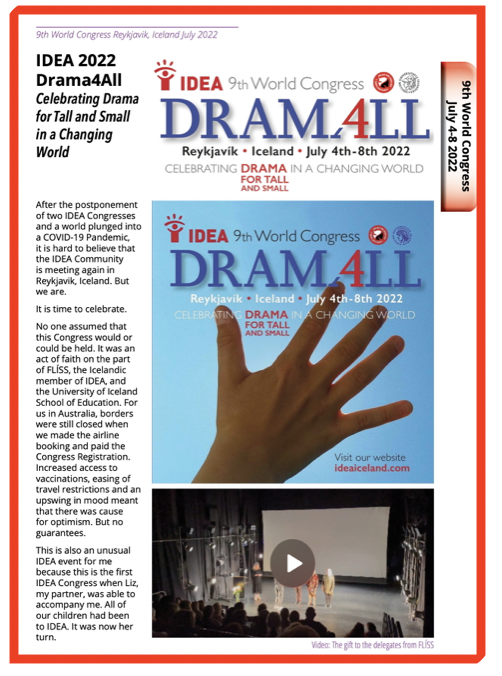
IDEA gathered for a Congress in Reykjavik, Iceland, July 4-8. after a hiatus caused by Pandemic and troubled times, it was a great pleasure to be with friends in person and face-to-face.

This is a link to my report from Drama4All.

I set out to capture experiences of the Congress through images, video clips and words. It is published as an ePub so that we can use technology to share some of the moments of the Congress particularly for people who could not travel to Iceland because of the COVID-19 Pandemic and other circumstances.

How do you access this Report?

StagePage has published this Report on Apple Books.

Here is the link to the Apple Books

https://books.apple.com/au/book/idea2022/id6443526061

You will be able to download to your computer and view on screen (fingers crossed the technology works for everyone) 

Part of a larger project for IDEA30

This report is a chapter from a larger project I am undertaking to celebrate 30 years of IDEA. IDEA Remembered is a personal memoir (Link here for opening pages of that project).

This chapter is shared free of charge as a service to the drama education community and IDEA. 

When IDEA Remembered is finalised in the next few months, it will be available to purchase by donation with proceeds to IDEA.

Drama Tuesday - Swimming in the infinity pool of drama education

 Reflecting on the status of drama education

Robin Pascoe, Honorary Fellow, Murdoch University, Perth, Western Australia

An infinity pool is a swimming pool in which water continuously flows over one or more of its edges. This produces a visual illusion of water without a boundary, appearing to be vanishing or extending to infinity.

Drama explorations are powerful ways of engaging students in possibilities, creative opportunities to enter worlds where they have options. In taking on role, we ask students to be simultaneously themselves and others. They can make choices to explore ideas and situations beyond their immediate lives. Students living in suburban Perth can, for example, become group of refugee children on a boat from Sri Lanka. Students can imagine themselves confronting plague in other times and pandemic in their own. Students can question, wonder and challenge. They can explore their own lives and situations as well as imagined ones.

Teaching and learning drama  – like the infinity pool – does move towards unlimited possibilities. In taking on role and exploring situations through creating productive tension, we embody physically, mentally and emotionally the potentialities of human experiences that can be real and imagined. This is exhilarating and potentially life-changing opportunity for our students. But it’s also challenging. As drama teachers we carry a weight of responsibility. The choices we make as teachers about subjects explored and roles taken,  need to be responsible. When our students move into dangerous places, we need to know how to lead and manage experiences safely. We and they can be caught so strongly in the rip tide of the moment that we lose sight of the impending danger of drifting towards the cliff or edge where we crash over the abyss.

In a recently completed chapter for the Routledge Companion to Drama Education (Edited by Mary McAvoy & Peter O'Connor, Routledge, 2021/2) I explore the concept of “abyssal thinking” and its impact on drama teacher education. Santos (2007) identifies abyssal thinking as “a system of visible and invisible distinctions, the invisible ones being the foundation of the visible ones. The invisible distinctions are established through radical lines that divide social reality into two realms, the realm of “this side of the line” and the realm of “the other side of the line”. In the case of the infinity pool, this side is inside the pool and safe; the other side is over the edge into the unknown.

What are the lines we draw as drama teachers? What are the limits of our practice, the edges of safety? When do we cross the line? Can we swim on both sides of the line?

How do drama teachers stand astride the line between safety and risk? 

After a lifetime of teaching Drama in schools and in universities, I am often struck by the observation that there is still a lack of acceptance of the place and value of drama. I wonder about what leads to this resistance to recognise that the teaching and learning of drama is life-enhancing and valuable. What leads some to put drama the other side of the line?


Drama is risky business

Some drama education teachers can find themselves being drawn towards unsafe practice. Some focus, concentration and warm up activities, for example, while helping students step into the drama can also take them into darker places. Some warm ups are considered too trance-like. There are reports of drama lessons where students disclose events that too revealing. The subject matter explored is sometimes considered too confronting or questioning of authority. 

In fact one of the major criticisms of drama in schools, driven by fear from some parents and community members, is that drama taking their children into places that they don’t want them to explore 1. They argue that drama classes are loose and uncontrolled “therapy sessions” where “it all hangs out”. They argue that the topics explored are “subversive” and question the status quo. The texts explored in drama are considered to be “unsuitable”, questioning values and social norms. As drama educators, we can be considered to be on the other side of that invisible line of what is acceptable (June 09, 2020). These sorts of myths about drama in schools are inflamed in the context of “culture wars” (Brownstein, February 15, 2022; Hunter, 1991) As much as we might scoff at this characterisation of drama education, we need to take these criticisms seriously or we risk being rendered invisible (see Finneran, 2008 for a critical lens on the mythologising of drama education). 

We need to be clear about the limits of drama in schools. Drama therapy is, as I tell my drama teacher education students, a legitimate field of therapeutic healing with medical protocols and protections, but this drama education course is not a drama therapy course. Drama therapy addresses specific mental health issues. “Drama therapy is an aesthetic healing form that …  [draws] its uniqueness among psychotherapies is that it stems from an expressive, aesthetic process--the art of drama and theatre” (Landy, 2007). It provides “a safe space for individuals in specific mental health and community settings to explore telling their stories, expressing their emotions, and finding new ways of looking at their situations, fostering a greater understanding of their experiences, as well as improved interpersonal relationships” (Snyder, 2019). As drama educators, we do provide safe spaces and encourage understanding of experiences but we also need to be conscious of the limits of our field and have strategies that help us know them – and when we need to seek help from trained health practitioners. When drama lessons unveil significant mental health issues or disclosures, we need to have skills to defuse situations and capacity to channel any student to the needed help. 

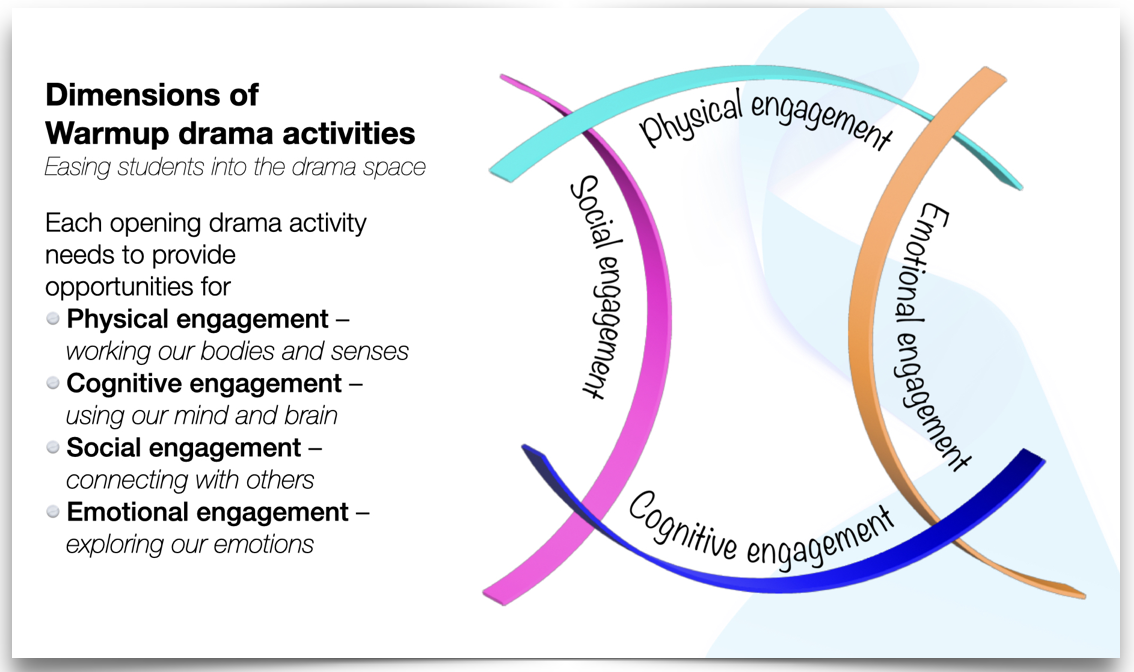
To help balance on that abyssal line, it is necessary to reaffirm the purpose and limits of what we do. For example, the purpose and focus of the activities that help us initiate drama – loosely, our warmups – need to recognise that they are something more than games and that they need to have clear educative purpose. They serve as a bridge from the world outside the  drama space and the safe space for exploration. They necessarily should pre-figure content, skills and processes of the drama lesson. I have written before about the skilful choices drama teachers need to make about their warm ups. In easing students into the drama space, each opening drama activity  needs to provide opportunities for:

  • Physical engagement – working our bodies and senses

  • Cognitive engagement – using our mind and brain

  • Social engagement – connecting with others

  • Emotional engagement – exploring our emotions.

These principles also apply to the content of our drama lessons. The choices that we make about the content of the drama exploration should be made with care. We need to understand how the topics we choose challenge and have relevance for students. We need to recognise that the drama we make can often set up dissonances between parents and students, between community and students. Drama education has long been associated with “progressive education practice” and identified with “subversive thinking” (See, for example, O'Toole, Stinson, & Moore, 2009). But it is timely to remember Boal,(Quoted in Moral-Barrigüetei & Guijarroii, 2022): “Art not only serves to teach how the world is, but “[…] also to show why it is like this and how it can be transformed” (Boal, 2011, p115). A drama exploration about the impact of farming practices on the Australian Great Barrier Reef, engages students with a significant climate change issue but it also necessarily involves students in the politics and competing passions of people. Drama teaching must take account of both challenging and conserving values and ideas.

Similarly, the texts we choose as we draw on the published literature of drama and theatre presents us with choices that can promote radical thought and challenges. The plays of Shakespeare, so often held up as the established cannon, also highlight teen rebellion (Romeo and Juliet) or the overthrowing of tyrants (Julius Caesar ). No text we choose (apart from the most bland) are values free. What interests us in  great drama is how it brings ourselves face to face with ideas, people and situations where something is at stake, something matters. Without this we do not have conflict and dramatic tension. But as Heathcote usefully reminded us, in drama workshops we need to build on productive tension (O'Neill, 2014)

As drama teachers we walk the tightrope. Or swim in a pool of ambiguous possibilities.

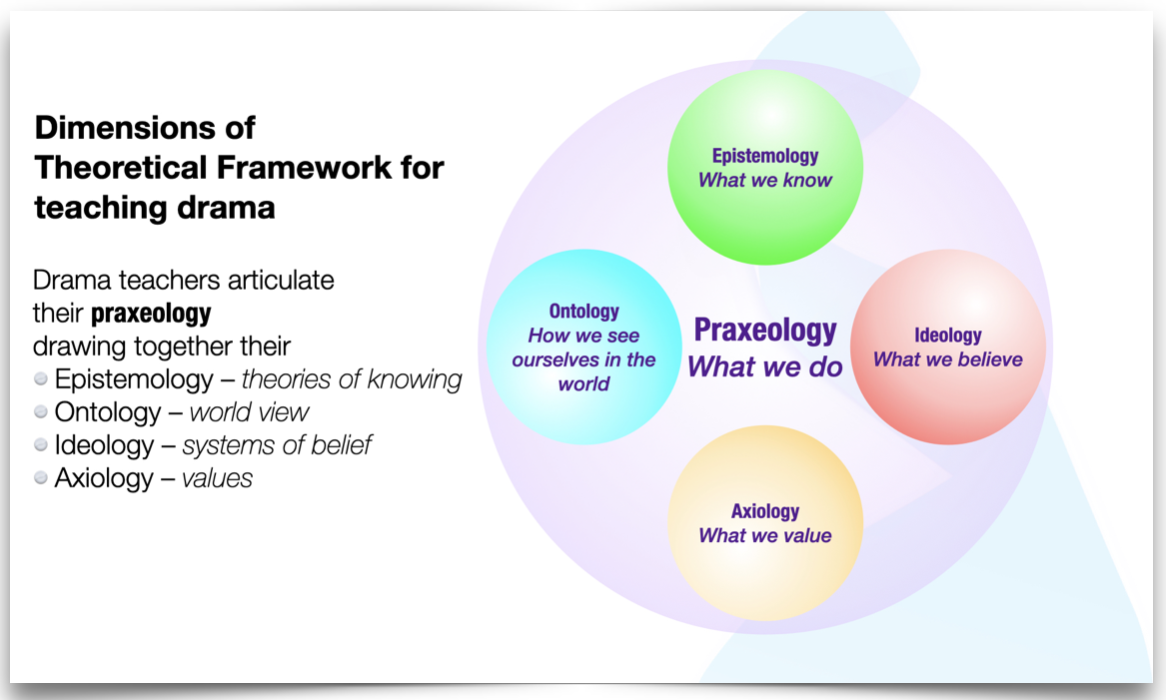
Drama teacher education must be firmly situated within a values framework that recognises our responsibilities and balances them with our instincts to lead change. Drama teachers need an articulated philosophy of why and how they work – a Theoretical Framework. It is not enough to just recognise that drama is risky business but to know why it is and how we proceed to work in the world. Teaching is a refuge for pragmatists. Often, teaching is seen as atheoretical (a point I have often made about the way Australian Curriculum documents are presented to teachers). But none of us teach in a vacuum of ideas. We are the sum of our ideas of knowledge (epistemology), our  world view (ontology), systems of beliefs (ideology) and our values (axiology), all contributing to our praxeology that links our actions and our thinking. The quality of our work as drama teachers lies in our knowing, being and doing. 


To stay afloat in the infinity pool of drama education, we need always to know where we are and where we are headed. Without that, we risk moving towards another abyss – a loss of perceived relevance and we move towards that “the other side of the line”, becoming non-existent. We can be cast in the role of being “the other” in education. What we need to do is to challenge the most fundamental characteristic of abyssal thinking: the impossibility of the co-presence of the two sides of the line. We need to remind all that we are here, we have relevance and meet a human need. We do not belong beyond that perceived line, where there is only nonexistence, invisibility, non-dialectical absence (Santos, 2007). As we teach our students about acting – we must be both in the moment and out of the moment simultaneously. We must be in the pool eying infinity while keeping ourselves oriented to present reality. We must fight against  being seen as invisible and ignored and, as a result, viewed as a “waste of  time”.

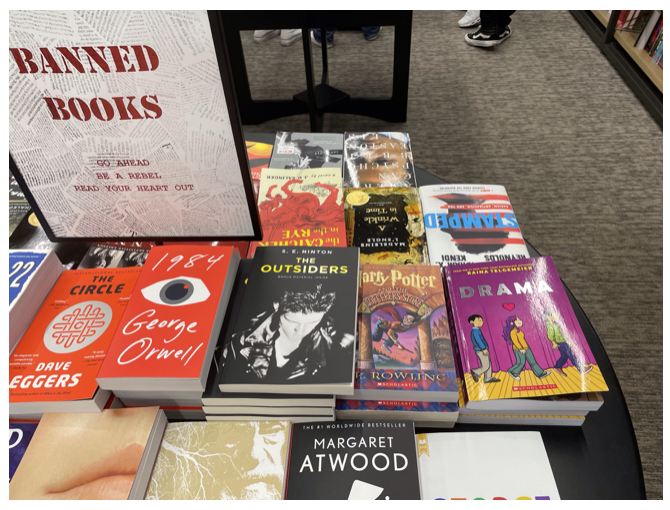
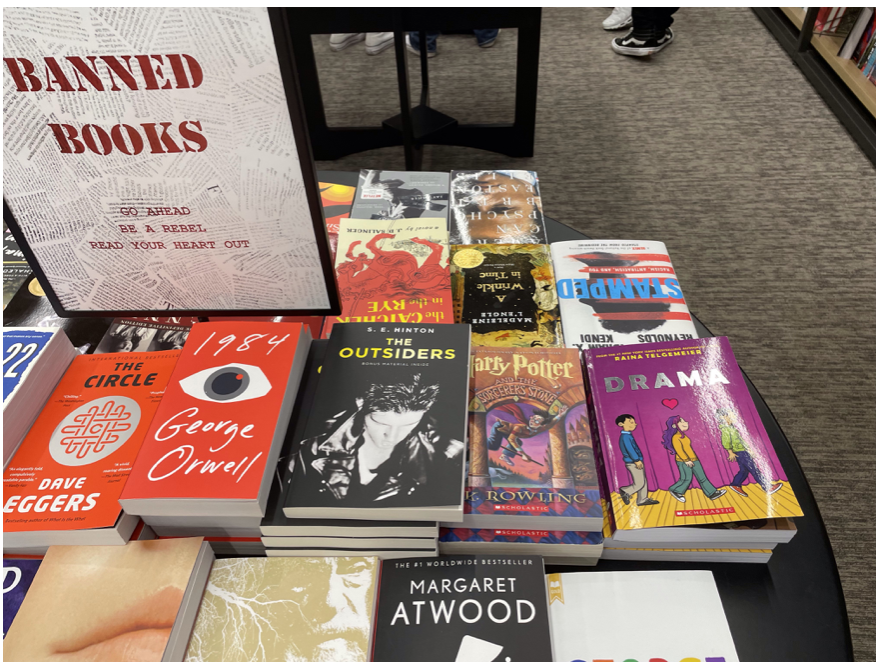
1. Note: I was astounded to see in the suburbs of Washington DC in July 2022, a table in the Barnes and Noble Bookstore labelled Banned Books. Among them was one titled Drama (Telgemeier, 2012), a graphic novel about middle school students and a drama production. In some places it has been banned not for profanity, drug or alcohol use, or sexual content but because it includes LGBTQ characters.

Drama = Danger (in some eyes!)


References

Boal, A. (2011). Juegos para actores y no actores. Barcelona: Alba.

Brownstein, R. (February 15, 2022). Why schools are taking center stage in the culture wars. 

Finneran, M. J. (2008). Critical Myths in Drama as Education. (Ph.D.). University of Warwick, Warwick. 

Hunter, J. D. (1991). Culture Wars: The Struggle to Define America. New York: Basic Books.

Landy, R. J. (2007). Drama therapy: Past, present, and future. In I. A. Serlin, J. Sonke-Henderson, R. Brandman, & J. Graham-Pole (Eds.), Whole person healthcare Vol. 3. The arts and health (pp. 143–163): Praeger Publishers.

Moral-Barrigüetei, C. d., & Guijarroii, B. M. (2022). Applied theatre in higher education: an innovative project for the initial training of educators. EDUCAÇÃO & FORMAÇÃO, 7(1). doi:https://doi.org/10.25053/redufor.v7i1.5528 https://revistas.uece.br/index.php/redufor/index

O'Neill, C. (2014). Dorothy Heathcote on Education and Drama: Essential Writing: Routledge.

O'Toole, J., Stinson, M., & Moore, T. (2009). Drama and Curriculum A Giant at the Door: Springer.

Pascoe, R. (June 09, 2020). Misconceptions about Drama Teaching.  Retrieved from http://www.stagepage.com.au/blog/2020/6/9/misconceptions-about-drama-teaching

Santos, B. d. S. (2007). Beyond Abyssal Thinking: From Global Lines to Ecologies of Knowledges. Review, XXX(1). 

Snyder, B. (2019). The Healing Power of the Arts - Drama Therapy and the Use of Theatre in the Treatment of Trauma. In: Student Scholar Symposium Abstracts and Posters. 370. https://digitalcommons.chapman.edu/cusrd_abstracts/370.

Telgemeier, R. (2012). DRAMA: Scholastic/Graphix.

Drama Tuesday - Change government – change the nation - National Cultural Policy

The change of the Australian government after the election in May is starting to play out in cultural policy development. 

It is a welcome sign that a consultation process has started. 

A new National Cultural Policy is needed to establish a comprehensive roadmap to guide the skills and resources required to transform and safeguard a diverse, vibrant and sustainable arts, entertainment and cultural sector now and into the future.

Our starting point will be Creative Australia, the national cultural policy launched by Prime Minister Julia Gillard in 2013.

This new policy will be shaped by the diverse voices of the Australian arts, entertainment and cultural sector around the 5 goals of Creative Australia which have been distilled to the following pillars:

  • First Nations: recognising and respecting the crucial place of these stories at the centre of our arts and culture.

  • A place for every story: reflecting the diversity of our stories and the contribution of all Australians as the creators of culture.

  • The centrality of the artist: supporting the artist as worker and celebrating their role as the creators of culture.

  • Strong institutions: providing support across the spectrum of institutions which sustain our arts and culture.

  • Reaching the audience: ensuring our stories reach the right people at home and abroad.

We are seeking views on these pillars.

How you can voice your opinion

There are 2 ways for you to tell us what you think:

1. Making a submission

  • contact name

  • organisation name, if applicable

  • contact details, including telephone number, postal and email addresses

  • confirmation of whether or not your submission can be made public (published) or kept confidential.

  • All submissions need to meet the Digital Service Standard for accessibility in order to be made public. Any submission that does not meet this standard may be modified before being published. Please ensure you do not include any personal information that you do not want to be published.

  • If your submission is confidential, please ensure each page of the submission is marked as confidential.

  • Upload your submission using the form below, or email your submission to culturalpolicy@arts.gov.au

2. Attending a town hall event


At one level, I am concerned that the starting point appears to be the 2013 Creative Australia—National Cultural Policy (https://www.arts.gov.au/documents/creative-australia-national-cultural-policy). There is a need to recognise that almost a decade has passed. Huge social upheavals  have taken place – including the changes to education and social life as a result of the Coronavirus COVID-19 Pandemic. Participation in the Arts has changed. Schools and arts education face significant recalibrations as a result of economic, social and educational policies. Recycling is not enough. 

I have made a submission which I am happy to share. 

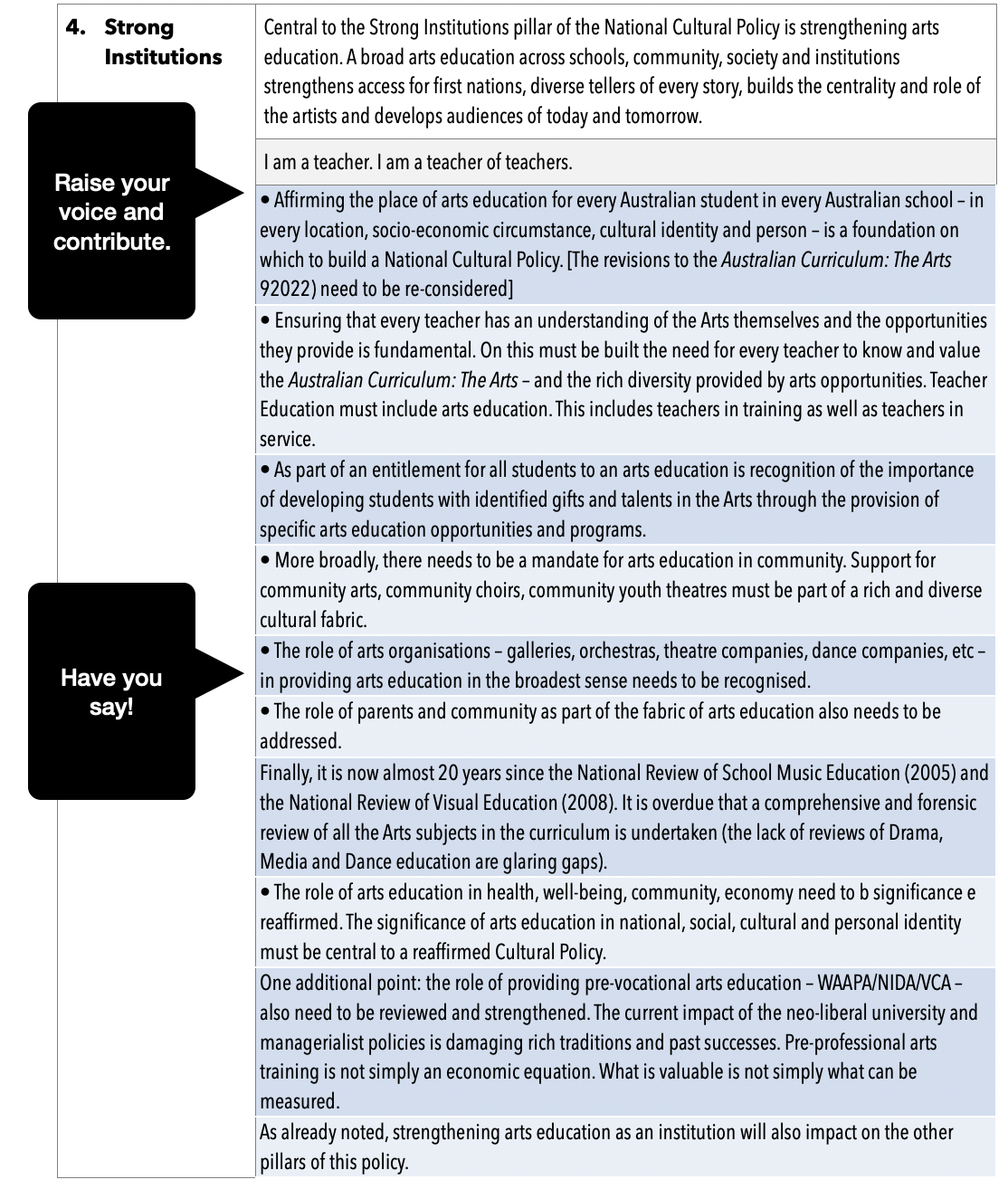
Rather than attempting to address all the issues of a National Cultural Policy, I have focused on Arts Education (unsurprisingly). I have done this by focusing on the 4th pillar of the policy document:

Drama Tuesday - What's in a prop?

 “What is this quintessence of dust?” 

Duchess is looking for his brokendown drunk father, a former Shakespearean actor reciter in vaudeville houses. He does not find his father but he is handed something left behind by his father.


 At the height of his father’s fame, when he was a leading man in a small Shakespearean troop performing to half filled houses, he had six of these cases and they were his prized possessions.


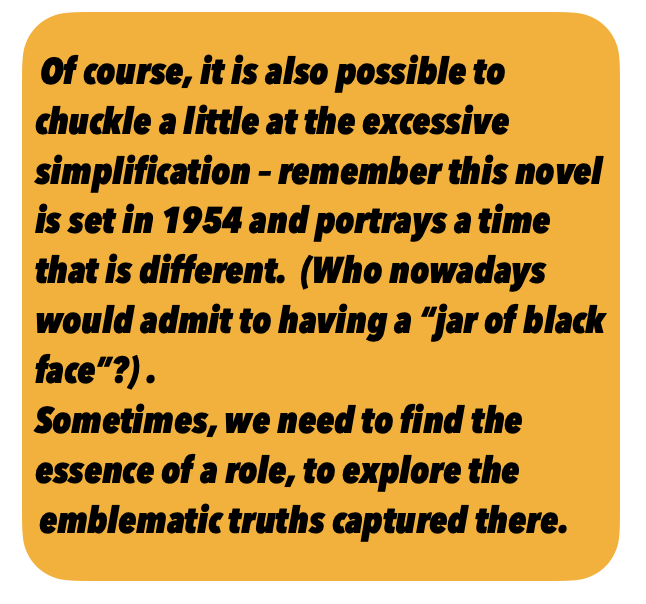
The gold embossing on this one was chipped and faint, you can still make out the O for Othello.  Throwing the class, I opened the lid. Inside there were four objects resting snuggly in velvet lined indentations: a goatee, a golden earring, a small jar of black face, and a dagger. 


Like the case, the dagger had been custom-made. The golden hilt which had been fashioned to fit perfectly in my old man’s grasp, was adorned with three large jewels in a row: one ruby, one sapphire, one emerald. The stainless steel blade has\d been forged, tempered, and burnished by a master craftsman in Pittsburgh, allowing my father in Act 3 to cut a wedge from an apple and stick the dagger upright into the surface of the table, where it would remain ominously as he nursed his suspicions of Desdemona‘s infidelity.


But while the steel of the blade was the real McCoy, the hilt was Gilded brass and jewels were paste. And if you press the sapphire with your thumb, it would release a catch, so that when my old man stabbed himself in the guts at the end of Act Five, the blade would retract into the hilt. As the ladies in the loge gasped, he would take his own sweet time staggering back-and-forth in front of the foot lights before giving up his ghost. Which is to say, the dagger was as much of a gimmick as he was.


When the set of six cases was still complete each has its own label embossed in gold: Othello, Hamlet, Henry, Lear, Macbeth, and – I kid you not – Romeo. Each has its own velvet mind indentations holding its own set of accessories.

P. 247 

Your challenge is to make imagined prop cases for other plays.

What are four emblems central to Macbeth or Romeo and Juliet?

What would you choose to symbolically encapsulate any other of Shakespeare’s plays? 

Or any other play that you can perform?

How might this activity of looking for the essence of a play help you understand a role?


Towles, A (2021) The Lincoln Highway, New York, New York, Random House, 

Drama Tuesday - Fearless Drama

During our visit to Washington DC, we saw this table at the Barnes and Noble in Alexandria VA, promoting the books that have been banned. At first  you think it’s a joke. But then, the reality of this America sinks in.

It’s sobering to think of the increasing pressure on schools and teachers from those who seek to control, censor and limit ideas.

Drama teachers are in the crosshairs (to use an apt but chilling metaphor) along with English teachers and history teachers.

As I have noted before, Drama has been criticised by association as “progressive education”. 

Looking back, I do recognise that at times our teaching has been fearless though sometimes foolhardy. But we were certainly braver than perhaps we might be if we were teaching in schools now. We pushed the envelope. We reacted against the perceived dead hand of censorship and “politeness”.Sometimes when I consider even the words that I hear on television panel shows that would have been found only in the roughest of vocabularies of those times, I think of how unrecognisable those times are.


Prompted by remembering The Chocolate War

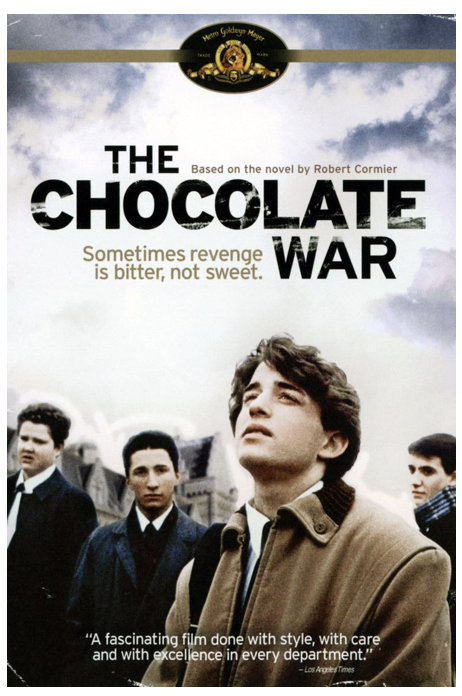
In part this post is prompted also because, by chance, on one of the streaming services the other night I found the 1988 film version of The Chocolate War based on the novel by Robert Cormier. The tag line was that the film was it was “the most banned book in schools” or something similar. 

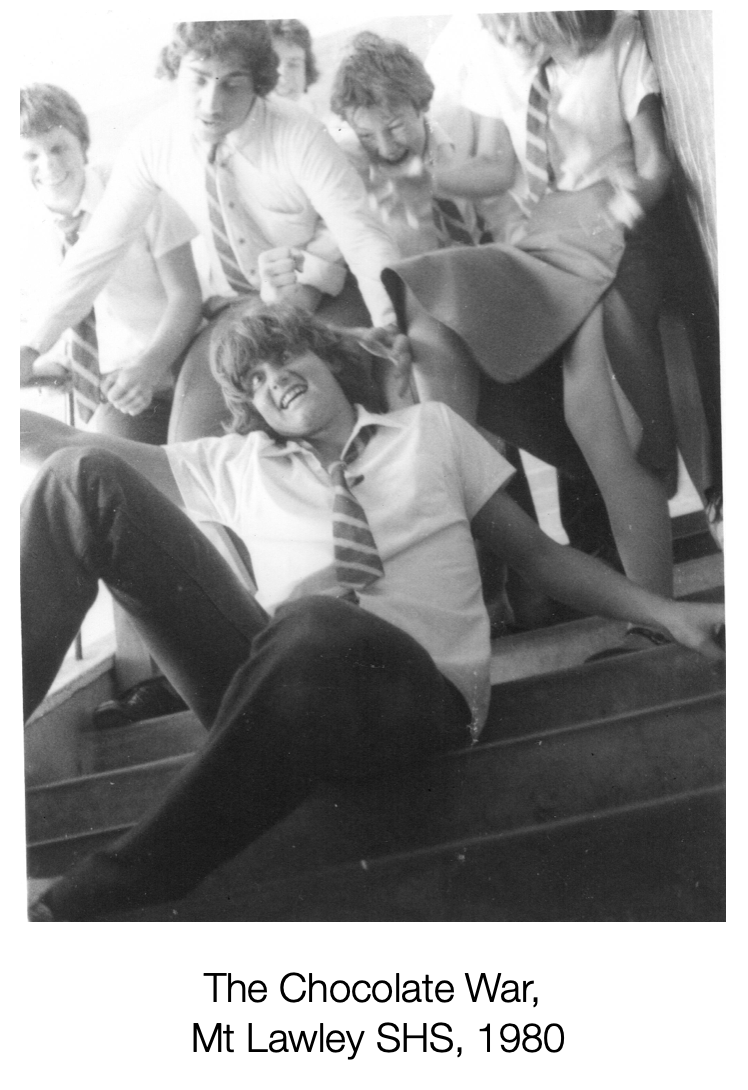
In 1980 at Mount Lawley Senior High School, we staged an adaptation of The Chocolate War as a school production. In part, we were attracted too the story because it was studied in the school and also because it was intrinsically dramatic.

Having survived a Catholic Boys School education myself, I had a sense of the manipulative power of the Brother Leon in the story, intent on having each boy in Trinity College sell 50 boxes of leftover Mother’s Day chocolates in a fundraiser. Inside the underbelly of this scheme are the efforts of the “secret” society called The Vigils. (This world of school was one that resonated and I had seen enough of the devious mind games myself. I always remind myself that while my Mother planted the seed to be a teacher, my commitment to teaching came from a desire to do things differently – better – from my own schooling!). The plot hinges on a new boy to the school directed by The Vigils to refuse to sell the chocolates. The consequences are dark. The cruelty is frightening. But why ban this book?

Our production transposed Australian Football and localised accents. But was faithful to Cormier’s dark and bleak vision of school as a battleground. 

Aside from concerns about infringing copyright (I said that we were often foolish), we had no hesitation in working with this text.

Were we braver then than now?

I have noticed a closing down of bravery amongst drama teachers. I see more and more safer choices being made (not that there is a problem with the Disney Junior Musicals, but they are quite sanitised. Even the version of the Jason Robert Brown production 13 which dropped on Netflix this week, has eliminated some songs – the notorious Here Comes the Tongue, for example – in favour of a sunny and sweet ending). 

Where is the sense of edge? Where is the risk taking?

I don’t wear the “progressive education” label as a badge of honour. Rather, it is a necessity that our drama work challenges, questions and celebrates. It must step beyond what is known.  It must open possibilities. 

Be brave.

Cormier, Robert. (1974). The chocolate war. [New York] :Pantheon Books

The Chocolate War (1988), Keith Gordon,Writer/Director. MGM

Drama Tuesday - Drama Education? Theatre Education? Something else?

 If someone asks me what I do. I reply automatically: I am a drama teacher.

My most recent profession has been teaching drama teachers. Sometimes I teach theatre but it is within the scope of teaching drama.

This is something more than habit or comfort. It is a position that developed out of my role as a curriculum leader and writer.

When I found myself in a position as a Consultant and Writer for Curriculum I faced a confusing and conflicted landscape. On the one hand there were the teachers of “Speech and Drama” who were vying for status with the “Theatre Arts” teachers. There was also “Dramatic Literature” taught in English and Literature classes. There were competing syllabuses. It’s also fair to say that there was no single unifying understanding of the term drama. Add to that the overlaying of terms like drama in education and child drama and creative drama. Compared with other arts subjects such as Music and visual arts, the somewhat haphazard and opportunistic growth of drama as curriculum, meant that there was no convenient orthodoxy or curriculum codification to fall back on. 

There needed to be a recasting of the ways that the terms and categories of the field are sorted. It was a one of the first tasks I attempted. 

It had to be more than simply my preference or even my habit and practice. I spent time researching and drawing on different sources such as those published by NADIE (National Association for Drama in education – Australia) and from the United Kingdom such as Peter Abbs (1987), Dorothy Heathcote (1995), and the journal 2D. I also drew on my time as a Summer Fellow at Northwestern University, Evanston, Chicago and the traditions of Winfred Ward as well as the dynamism of Viola Spolin (1975). Particularly useful – because it stepped back to survey the broad field – was Richard Courtney’s The Dramatic Curriculum (1980) alerting me to the role of Play and Ritual.

Emerging from this flux of ideas was an argued model for the field. This served to underpin my work in curriculum writing in Western Australia and inform my contributions to development of National Statements and Profiles (1994) and subsequently for the Australian Curriculum: The Arts (ACARA, 2014).

Setting out the field of Drama Education

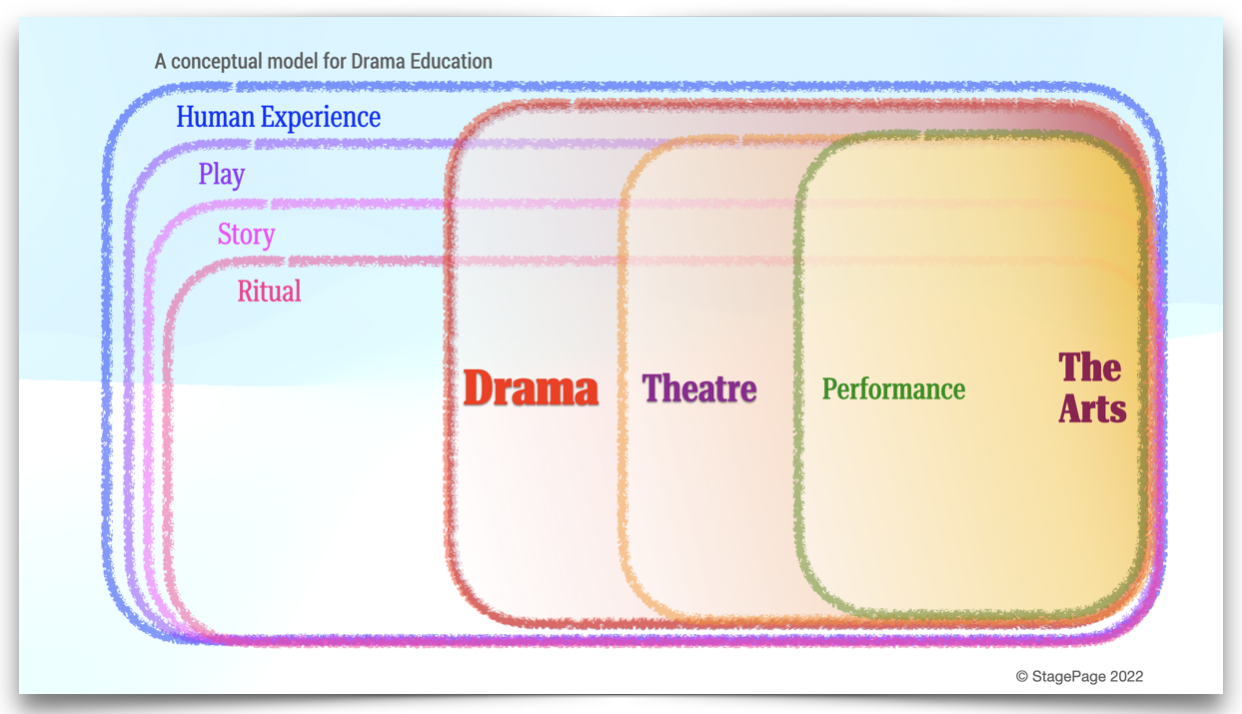
In the broad field of human experience, there are overlapping worlds of Play, Story and Ritual. Within these experiences there is a particular way of making and sharing meaning through taking on roles and enacting situation using the principles of story. Within the field of drama there are times when the Elements of Drama are shaped as Theatre. Overlapping with Drama is the wider field of the Arts and Performance. 

If you put all of that into a visual model, then these overlapping fields draw from each other, interact porously. They are not discrete pods but are fluid and dynamic. 

As a small animation, the conceptual model looks like this:

Facing the realities of differing points of view

Not that any of this is as simple as it is when you write it down on paper. When I proposed a curriculum workshop for the First Drama Education Congress in Oporto, Portugal, in 1992 – the founding of IDEA – we were asked to make sure that we provided translations of our abstracts for the three official languages: French, Spanish and English. Easy I thought (falling back on my first year Uni French 100) Drama = le Drame. It is always so much more than a simple transliteration of terms. As we quickly found out within the Congress, terms are enculturated, embedded in social practice and ways of thinking about the world. And people are prepared to “die in ditches” about terminology. 

I know that this naming of the parts is a sometimes futile attempt at trying to make all of the atoms stand still or line up. It is always a work in progress. There is no convenient compliance or even agreement, but at least for my purposes as a curriculum writer, it made some sort of sense and had an internal coherence that stood up to scrutiny. 

References

Abbs, P. (Ed.) (1987). Living Powers: The Arts in Education. London: Falmer Press.

ACARA. (2014). The Australian Curriculum: The Arts. Retrieved from http://www.australiancurriculum.edu.au/the-arts/introduction

Courtney, R. (1980). The Dramatic Curriculum. London: Heinemann Educational Books.

Emery, L., & Hammond, G. (1994). A Statement on the arts for Australian Schools. Melbourne: Curriculum Corporation (Australia)/Australian Education Council.

Heathcote, D., & Bolton, G. (1995). Drama for Learning: Dorothy Heathcote’s Mantle of the Expert Approach to Education (Dimensions of Drama). London: Heinemann.

Spolin, V. (1975). Theater Game File. In. St Louis Missouri: CEMREL.

Drama Tuesday - Australian Curriculum: The Arts Plus ça change? Oui ou non!

  Australia has two versions of The Australian Curriculum. 

Curriculum is contested space. There are too many political fingers in the pie - particularly in the so-called culture wars. The suspicious caste who see a shadow conspiracy lurking in every word have focused mostly on their versions of history and English and largely ignore the Arts. Indifference can be a blessing – particularly in expecting an arts curriculum to be implemented. 

Does this revision of the Arts curriculum make a difference?

At one level, there is consistency. At another level there is significant change that should be noted.

What stays the same?

The Curriculum provides a fundamental commitment to an arts education for all young Australians: “The Arts curriculum is written on the basis that all students will study The Arts from Foundation to the end of Year 8”.

But there is the weasel qualification: “State and territory school authorities or individual schools will determine how the curriculum is implemented”.

There is still a commitment to

Getting action beyond pleasant platitudes and meaningful arts education is always a challenge. 

Where should we be awake to changes?

The V.9 Arts Curriculum must not be understood as “business as usual”.

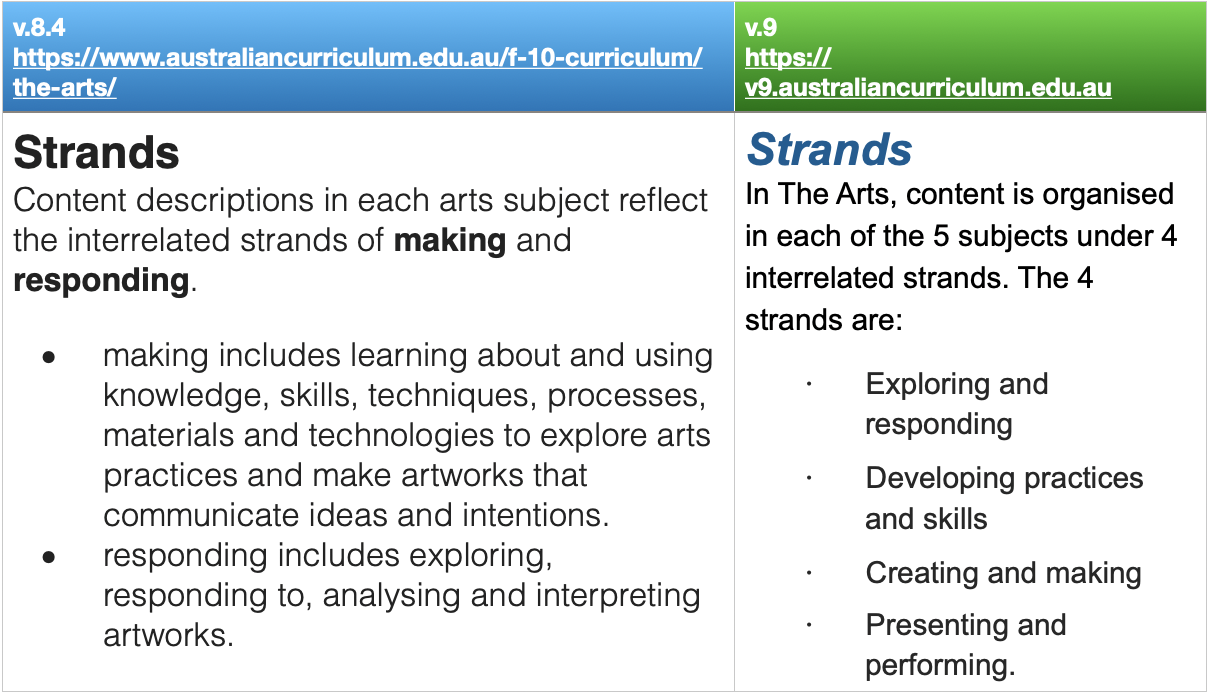
  • The Strands of the curriculum have changed.

  • There are implicit shifts in what is highlighted and valued throughout the whole document.

Consider the Strands of the two versions:

The naming of parts is more than “silent, eloquent gestures” (as the Henry Reed poem reminds us). What we call things matters. How we organise our thoughts matter. 

Teachers work from familiar patterns – habits of thinking or mind, if you will. For the past few years we have trained ourselves to plan and teach using one paradigm (for better or worse) and now the world of thought is changed. 

This is more than semantics. Nor is it just a re-visiting of the many arguments amongst the advisory community – for those with long memories the responses to Shape of the Australian Curriculum: The Arts (ACARA 2010) included different structuring organisation. For example, 

“Queensland supports the proposition that there are three processes — generating, realizing and responding — that can organise art form learning and the recursive nature of arts learning and arts processes. This reflects existing practice in Queensland”.  

That three part structure has resonances in Version 9 strands. The Western Australian Curriculum Framework (1998) identified four learning outcomes (which have some overlap with Version 9 strands):

  1. Arts Ideas: “Students generate arts works that communicate ideas.” (p. 53)

  2. Arts Skills and Processes: “Students use the skills, techniques, processes, conventions and technologies of the arts.” (p. 54)

  3. Arts Responses: “Students use their aesthetic understanding to respond to reflect on and evaluate the arts.” (p. 56)

  4. Arts in Society: “Students understand the role of the arts in society.” (p. 57)

Version 9 is more than just re-working of the previous version. It is a radical conceptual re-think. More than that, there is the shift in focus on making the arts – exploring/practices and skills/creating and making/presenting and performing – and a downplaying of responding.

In writing this, I am not defending the simplistic making/responding model. For all its catchy two part structure, it was flawed.  But what I am trying to highlight is that when you change the ways that we think about a curriculum structure, we change the curriculum. 

Perhaps, the only saving grace is that the actual implementation of the previous versions of the Australian Curriculum: The Arts have had such limited success that these changes will slip by unnoticed. 

No curriculum is worth anything unless it is implemented. 

What we have had in successive versions of Arts Curriculum in Australia has not been a failure to write good curriculum, but a failure to implement what is developed. 

I urge everyone to read the new version of the Arts Curriculum, with an eye looking back to what was valuable in the past (not forgetting what’s in state/territory documents as well). But also reading Version 9 with criticality and connoisseurship (to invoke Eisner). 

We need to ask ourselves two questions:

  1. What changes and what stays the same?

  2. Do the changes matter to a successful arts education for every young Australian?

Bibliography

Costa, A. L., & Kallic, B. (2000-2001). Habits of Mind. Retrieved from http://www.habits-of-mind.net/

Eisner, E. W. (2002). What can eduction learn from the arts about the practice of education? John Dewey Lecture for 2002, Stanford University. Retrieved from www.infed.org/biblio/eisner_arts_and_the_practice_or_education.htm . Last updated: April 17, 2005.

Drama Tuesday - Drama teaches life. Drama teaches employability skills.

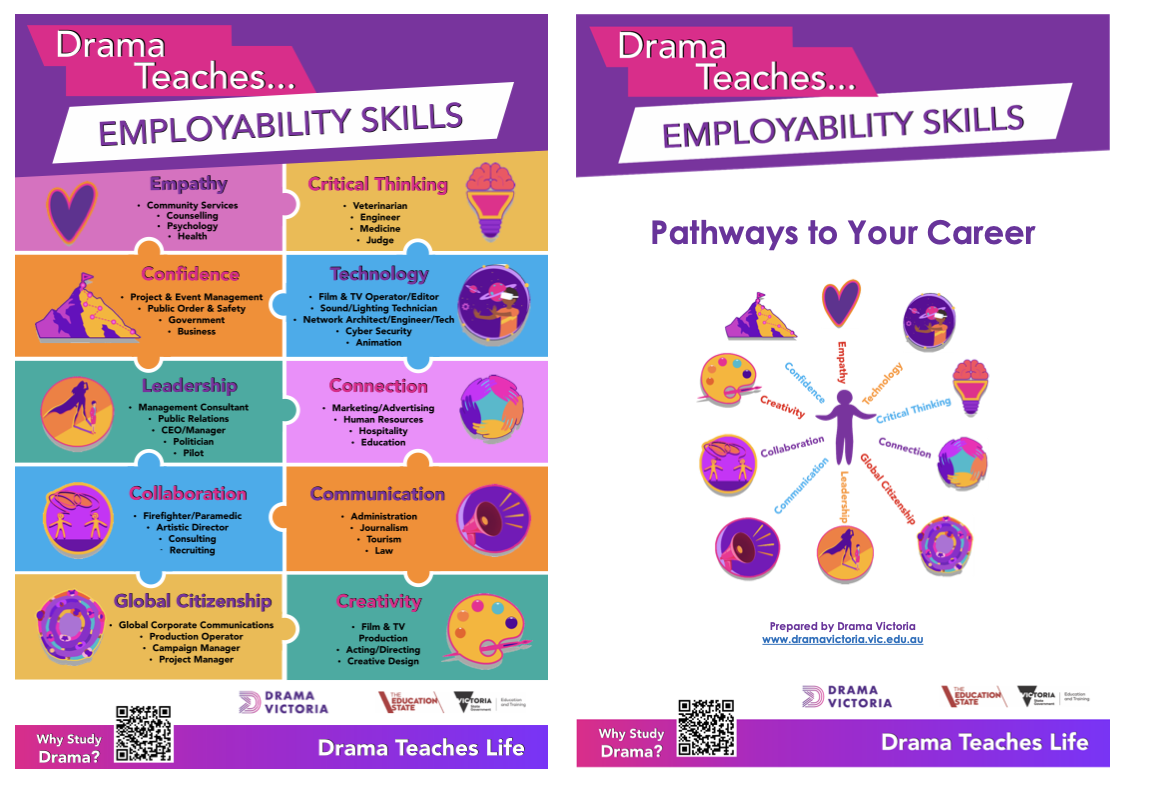
 Professional Associations are wonderful advocates for drama education. Drama Victoria, a member of Drama Australia, has just published a notable series of videos and posters that promote reasons for studying drama.  

It is therefore a pleasure to share the link and recommend this work.

There is a series of short videos covering each of these topics. 

These resources are for use by careers guidance counsellors, teachers, parents, guardians and students. The resources consist of a Careers Night compilation video, A3 downloadable posters, core competency case study videos and Drama Teaches Employability Skills Booklet & Course Guide, These resources were produced by Drama Victoria in association with the Australian Centre for Career Education and with funding provided by the Victorian Government Department of Education and Training.

Although pitched for Victorian contexts, this resources is highly recommended for all drama educators. 

It is important to acknowledge that the skills noted for drama are also applicable beyond employment fields. They are important for life. It is perhaps a comment on the functionally-focused approach to education taken by some governments. Drama is important because it connects us with our social aesthetic our  sensitivity to the nuances in human relationships and adds greatly to the richness of social experience.

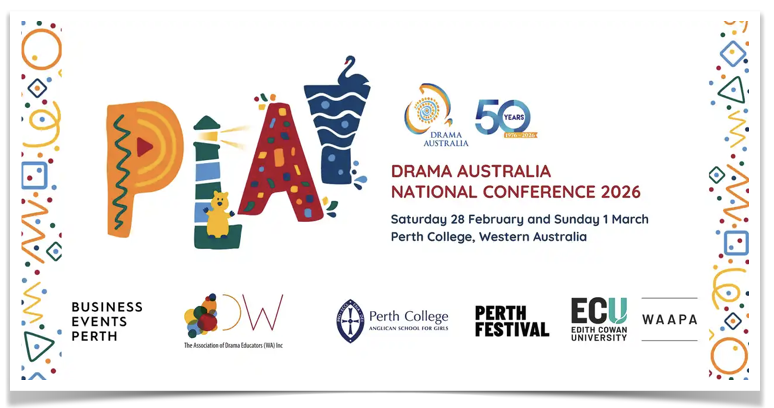
Drama Tuesday - This is my IDEA DREAM from the IDEA 2022 Congress.

With 30 years of IDEA there is still one unresolved issue of drama/theatre education… (well, to be honest, probably more than one, but let’s focus on just one!)

The issue is captured in the awkward English naming of IDEA – the International Drama/Theatre and Education Association. It’s a mouthful in English. And it is avoided in other versions of the association name.

What is the name of the field?

Is the term “drama”?

Or, is it “theatre”?

Does it matter!

Is it just an issue of language and terminology? Or are there underlying cultural, social, pedagogical and even political issues and tensions that are fundamentally significant.

IDEA seeks always to be inclusive. And strives to be careful in the use of language. Hence the difficult wording in the English naming of IDEA. But my tongue stumbles over it every time. It has been a long discussed project but now, I suggest, a necessary one.

IDEA could be the point where there is a bringing together a commonly shared and understood language about our field. One starting point, I suggest, is to collect from all places and points of view the ways that drama education is named and explained. Putting it all in one place would be a starting point.

What sorts of questions would be the starting point?

  • What do you call your work: drama education? Or theatre education? Or, something else?

  • List (and briefly explain) 5 key terms that you use that are central to your practice.

  • Identify (and briefly say why) up to 5 significant practitioners in your field that shape your work.

What other questions would we ask ourselves as a community?

This is above all not about trying to homogenise the language. Not to normalise or make practice common. It is rather, the need to recognise and celebrate our differences and recognise our shared connections while making our dialogues even easier and creating community.

Drama Tuesday - Are We There Yet?

 Research is a journey and it is useful to reflect on our journey’s into drama education research. Like the restless child in the back seat of the car on the road trip, we ask again and again the question: Are we there yet!

I came to academic research as a classroom-based researcher. The confluence of the stars meant that I began teaching at a time that gave attention to research in place. The mantra of the times was that every teacher was necessarily a researcher in their own classroom. I initiated action research projects in the spirit of But My Biro Won’t Work (Coggan and Foster undated)  that supported school-based curriculum. When I moved to curriculum leadership positions within the Department of Education, this approach led the development of progression maps in Drama and Arts (1998) that drew on the lived experiences of drama teachers in their classrooms. I reported this work in progress at the 1997 International Drama in Education Institute, IDEIRI, conference convened by Juliana Saxton and Carole Miller at the University of Victoria, British Columbia, Canada. 

Yet, even amongst a sympathetic clan I always had the feeling that I was not seen as a “real researcher”.

This was annoyingly and frustratingly confirmed when in 2002 I started working at Murdoch University. The sniffs of “academic dismissal” might be disguised until certain rites of passage took place, but this “blooding” only strengthened a commitment to valuing portraits of authentic experience qualitatively told. Built into the assessment design of my drama teacher education courses was a focus on reflective and reflexive practice. Building on models such as those provided by Norris, McCammon and Miller (2000), I asked students to build and share case stories of their drama teaching learning. Every teacher must be a researcher about their own practice.

This is not to downplay the case for academic rigour in research nor undervalue the quest for trustworthiness. Nor should we ignore necessary training in the protocols and rituals of apprenticeships in research. We need to reassure the wider community – and ourselves – that we have a legitimate place in the research arc. But we also have to find the courage to affirm our own research confidence. I hasten to assure you that I did serve my time and built an academic research profile (for example, https://www.researchgate.net/profile/Robin-Pascoe). But I have to add that I learn so much from working with research students as their research lives unfolded and this reinforces the idea that research is a journey .

You ask two questions:

  1. What is ONE important development in Drama/Theatre and Education research in the last 30 years?

  2. What is IDEA's role in furthering Drama/Theatre and Education research in the future?

In answer:

  1. One important development in Drama/Theatre and Education research has been a recognition of seeing ourselves as teacher researchers.

  2. IDEA’s role is to create communities where we empower and share the voices of teachers as researchers.

There is a third question:

Are we there yet?

Of course, we are not there yet. 

It’s the journey that matters.


Taking a moment to reflect on IDEA and Research as a quest

The role of IDEA in supporting research since its founding in 1992 has been significant. Not only is this a reflection of the role of drama educators in the Academy, it is an endorsement of the founding principles of IDEA. As noted in Article 3 of the IDEA Constitution, the aims of IDEA are: 

  • to provide an international forum for communicating about, promoting and advocating for drama/theatre and education in schools, communities and all fields of endeavour;

  • to support development of drama/theatre practice and theory as part of a full human education.

Research lies at the heart of the IDEA mission. 

As a community, IDEA must recognise and celebrate the role of Research in its ongoing story.

It is interesting to read overviews of drama education research (see, for example, Jones 2021, reviewing Drama research methods: provocations of practice: edited by Peter Duffy, Christine Hatton and Richard Sallis, all IDEA figures). In acknowledging the rich inheritances of research in the field, it is important to recognise that participants in IDEA have been drawn together into a shared international space. Belonging to community has contributed to and fired debates and differences, resonances and refractions. IDEA is not about creating an homogenised view about research in drama/theatre and education. It is about creating a space for sharing. 

Research is ultimately about questioning practice and IDEA’s role is to help us ask better questions. Morgan and Saxton (1994) reminded us there is a compelling role for questions in creating powerful learning environments. Active learners ask and answer questions. In a different religious context, George Herbert, poet coined the phrase repining restlessness, to describe a state of always, ever striving forward. Research should always leave us asking the next question, not merely giving us a warm afterglow of satisfaction. 

We shall not cease from exploration
And the end of all our exploring
Will be to arrive where we started
And know the place for the first time.

TS Eliot, Little Gidding.


Bibliography

Coggan, J. and V. Foster (undated). "But My Biro Won't Work" Literacy and learning in the secondary classroom - an action research study. Camden Park, South Australia, Australian Association for the Teaching of English AATE: 96.

Curriculum Council of Western Australia (1998). Curriculum Framework, Curriculum Council of Western Australia.

Eliot, T. S. (1969). Complete poems and plays of T.S. Eliot. London, Faber and Faber.

Jones, J. P. (2021). "Drama research methods: provocations of practice." Research in Drama Education: The Journal of Applied Theatre and Performance 26(2): 379-384.

Morgan, N. and J. Saxton (1994). Asking Better Questions Models, techniques and classroom activities for engaging students in learning. Markham, Ontario, Pembroke Publishers Limited.

Norris, J., L. A. McCammon and C. S. Miller (2000). Learning To Teach Drama: A Case Narrative Approach. Portsmouth, Heinemann Drama.