Drama Term Tuesday 34

Meisner (Sanford Meisner)

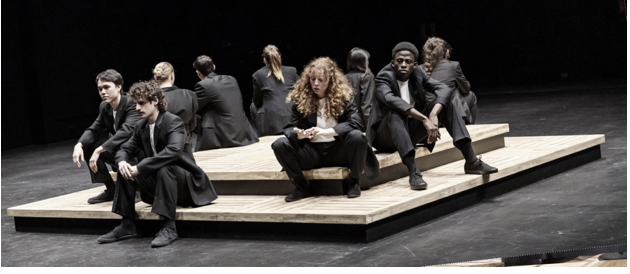
Meisner approach to acting

Sanford Meisner (1905 - 1997) developed a form of actor training - Meisner Technique - derived from Method acting and the Stanislavski tradition. Meisner believed that the seeds of the craft of acting is the reality of doing. His approach focused on acting that is rooted in the body of the actor responding authentically to the specific moment of the play. The Meisner technique is often described as ‘living truthfully under imaginary circumstances”. Influenced other acting teachers such as David Mamet.

Excerpt from Drama Key Terms and Concepts. Continue the conversation on facebook and twitter.

Music Monday - What I am learning from my 3 year- old grandson

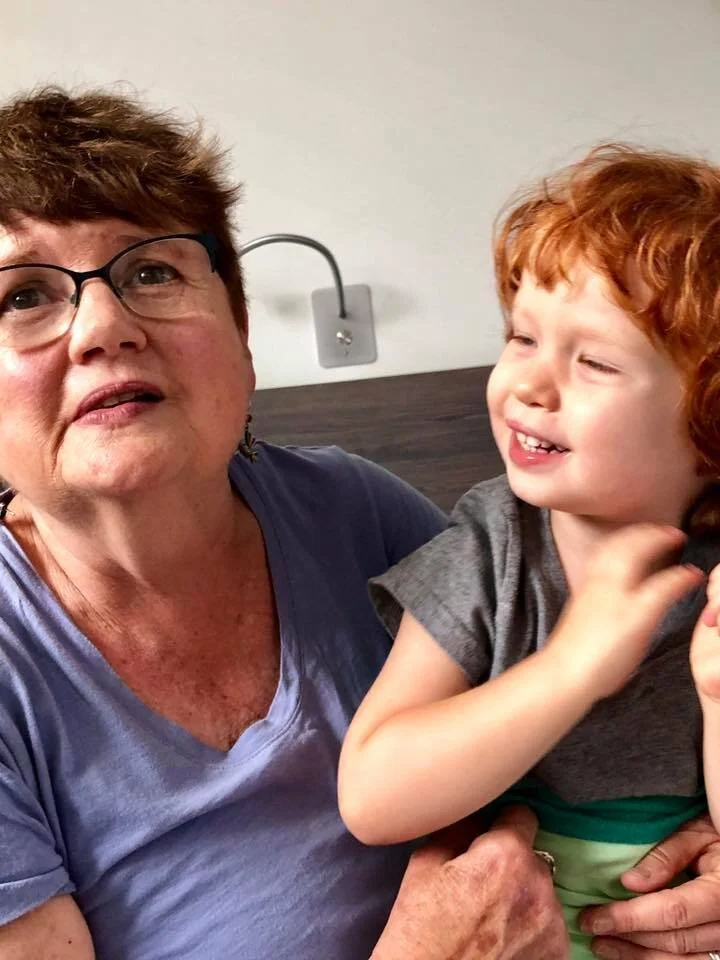
67179287_10218548860449368_6373396288016220160_n.jpg

Our son, daughter-in-law and grandson have moved to Perth and are living with us for a month or so until they find a house. Suddenly we have gone from a quiet household of two sixty-something adults to a busy, cluttered, slightly crazy environment with a 3 year-old who springs into each day curious, questioning and eager to play, play, play. I find myself wondering and marvelling that we ever got anything done back in our day as parents of pre-schoolers at the same time working full-time as teachers. Of course, across Australia and the world, this generation of working parents are doing the same.

I find myself observing William’s play and reflecting yet again on the research into musical beat and its connection to reading readiness. I also find myself rethinking the whole idea of using only gross motor skills when making music with this age group – something which was emphasized to us in music education classes. Yes, children under 5 years are still learning to catch a ball, balance on one leg, jump etc. But in another sense they have greater fine motor skills than previous generations, developed through what seems like a universal use of screens these days.

William loves to sing and make up songs. Of course, he is somewhat influenced by parents who are also musical. But his inclination, whether singing his own invented songs or those learned from family and various television programs, is to move to the beat. Today we played with various beat movement combinations – clapping, patschen and so on. He could maintain a steady beat with a recurring 2-action beat but found more than 2 physical actions a challenge to maintain steadily. So a recurring pattern of slapping knees then clapping was easy to maintain while singing the Sesame Street alphabet song. Slapping knees then clapping 2 beats was also a success while singing his current favourite – the refrain from The First “Nowell”. But a 4-beat action pattern of slapping knees, clapping, slapping a partner’s hands then clapping again, while doable, was less successful as a steady beat while singing.

Where am I going with this? Well, music as an art form aside, should we not as a society be maximising the benefits to child development from engaging with beat and rhythm as early as possible? Perhaps childcare centres – especially as their staff are required to do some level of early childhood education training - could be the entry point for children in this work. That would surely have a levelling effect for children before they enter formal schooling.


Media Term Thursday #33

Censorship

When a government body or someone else not involved in a media production decides that some elements of the production must be changed or removed so it doesn’t offend a particular group’s values or break the law.

In Australia, The Australian Communications and Media Authority (ACMA) regulates television and radio while the Classification Board oversees films, DVDs, computer games and print media.

Self-censorship occurs during production when the selection process takes into account these external constraints.

Excerpt from Media Key Terms and Concepts. Continue the conversation on facebook and twitter.

Music Monday - Happy New Year

A happy new year to you all.

With almost all of our Australian music teachers currently on holiday, and with many, many families affected directly or indirectly by the unprecedented bushfires raging across our country, we thought that this Monday could be a time to consider how we might help families and school music communities who may have lost musical instruments and valuable resources at this time.

Of course, right now what is needed is immediate monetary and material relief and assistance - and it has been heartening to see so many Australians and indeed, compassionate people across the planet, responding with financial and other assistance.

But when the fires finally subside (and the experts are predicting it might be months) there will be children who no longer have an instrument and music teachers who have lost everything.

Perhaps you have an instrument gathering dust at the back of a cupboard? Could it have a new home with a young player?

Do you have ideas on how this could be achieved? Please respond in comments below. Stage Page is always happy to assist.

Join the conversation on facebook and twitter.