Drama Term Tuesday #5

Mark

Hitting the mark

Marking through a performance

Hitting the mark: when an actor moves to a prearranged place on the stage on given lines.

Marking through a performance: in rehearsal when an actor goes through the actions and lines but does not give a fully committed performance; most often used for technical rehearsals and to preserve the voice in opera rehearsals. 

Excerpt from Drama Key Terms and Concepts

Music Tip Monday #4 - Straw Phonation Part 2

It’s no secret that here at StagePage we are big fans of straw phonation.


Here are two more uses for your straw – and as always,  we encourage you to use a metal or bamboo straw rather than single use plastic or paper:

  1. If you have reluctant singers in your primary music class they could be encouraged to use a straw to ‘play’ a song at first. That way they are barely heard by their peers and at the same time they are preparing to eventually sing with an unforced sound that is forward in placement.

  2. All students can benefit from breathing in through a straw and feeling cool air touching the soft and hard palate in the mouth. This will encourage a more rounded choir singing tone.

Media Term Thursday #4

Propaganda

propaganda film

A simplistic and obvious manipulation of information by selection, exaggeration and appeal to people’s fears, insecurities and basic instincts. It produces an emotional response rather than a rational one, creating a sense of ‘us’ and ‘them’ and so needs an ‘enemy’ to blame. If there isn’t an enemy, propaganda creates one. Complex issues are reduced to simplistic slogan and ‘blame’.

Generally refers to the manipulation of political beliefs.


A propaganda film is a film produced (often by governments) for the express purpose of convincing the viewer of a political point. In war time, propaganda films are produced by governments to support the war effort and convince the public that it is for the good of their country. 

Nazi propaganda films were commissioned by Adolf Hitler to chronicle his reign.


Triumph of the Will (1934), Olympia (1936), Reefer Madness (1938).

Excerpt from Media Key Terms and Concepts

Drama Term Tuesday #4

Futurism

20th century theatre movement focusing on the “dynamism of the Machine Age”; rejected all former stage practice and argued for the inclusion of the dramatic energy of other forms such as circus, music hall and  cabaret; a compression of drama into brief situations.


Influenced many later 20th Century innovations such as the use of new technologies, multimedia approaches and environmental theatre.

Excerpt from Drama Key Terms and Concepts

Music Tip Monday #3 - Twang

Last Monday we talked about simple ways by which music classroom teachers can look after their own vocal health and resilience.

An additional technique to learn for that purpose is twang.

Twang is useful for teachers because it increases vocal volume and projection without an increase in effort level – important in the classroom or in a choir rehearsal.

In essence, twang is a bright, clear (spoken or sung) sound quality produced by lowering the epiglottis slightly to narrow the aryepiglottic sphincter.  

Twang is not nasality.

Twang can  - but does not have to – include nasal resonance.

In simple practical ways, twang can be found and practised in your car on the way to school via these speech cues:

  1. Make the sound of a hungry cat  - ‘miaow!’

  2. Imitate the light, high and forward placed sound of a duck quacking.

  3. Make the sound of a young sheep bleating – ‘meh!’

  4. Imitate a baby’s cry

  5. Imitate the young bright sound of a playground taunt – usually starting on the falling minor 3rd  - doh lah, re doh lah,  - ‘nyeah nyeah nyeah nyeah nyeah!’

  6. Sing some vowels on ‘sing –ee, sing-ah’  with emphasis on the ng as you move into the twang sound.

Remember- always keep the sound light, bright and forward in placement and use minimal vocal effort.

Happy twanging!

Media Term Thursday #3

Three act structure

Many Hollywood films are said to follow a basic three act structure. Basically the beginning, middle and end or setup, confrontation and resolution.

In act 1 the characters (and their main goals) and setting are introduced and ends with the first turning point or conflict (plot point 1).

Act 2 is the longest act, characters and conflict are further developed and the act ends at plot point 2 (quite often, the hero has overcome some kind of conflict something else has thwarted their progress, everything seems lost but a renewed drive compels them to forge on).

Act 3 is the shorted act and all of the conflicts are resolved.

Excerpt from Media Key Terms and Concepts

Drama Term Tuesday #3

Readers theatre

Staged reading

A performance where the dramatic script is read aloud rather than memorized; costumes and simple settings may or may not be used; focus and limited movement feature strongly; although the play has been rehearsed the actors are familiar with their lines but there is no attempt to pretend  that they are not reading.

See also chamber theatre

Excerpt from Drama Key Terms and Concepts

Music Tip Monday #2 - World Voice Day

It’s World Voice Day tomorrow Tuesday 15th April and so it seems appropriate today to talk about voice care for music teachers.

Last Monday’s tips about straw phonation would be a good starting point.

Here are some more ideas:

  1. Use non-verbal cues to get the students’ attention when they are working in groups – for example, establish a routine of clapping a short rhythmic pattern (which the students then clap back to you) when you want their attention. Vary the patterns from lesson to lesson to reinforce rhythmic concepts as well.

  2. Avoid aggressive and  / or habitual throat clearing  - it can cause vocal fatigue.

  3. Focus your speaking voice forward  - straw phonation helps establish this.

  4. Drink water before you feel thirsty.

  5. When you need to talk over loud background noise, use the vocal technique of twang to increase your projection without placing stress on your throat. We will look at twang next Monday.

Let us know if you have voice care tips to share!


Media Term Thursday #2

Mass Audience

The concept of mass audience began in the early days of cinema, radio and television. It is the notion of something being communicated to an enormous number of people from all walks of live with diverse values, beliefs and attitudes and the impact or influence it has on them.

It is commonly acknowledged that the theory of mass audience is in decline, our lives are more media-rich (we have more choices) and we are increasingly interacting with media on a one-to-one basis.

Excerpt from Media Key Terms and Concepts

Drama Term Tuesday #2

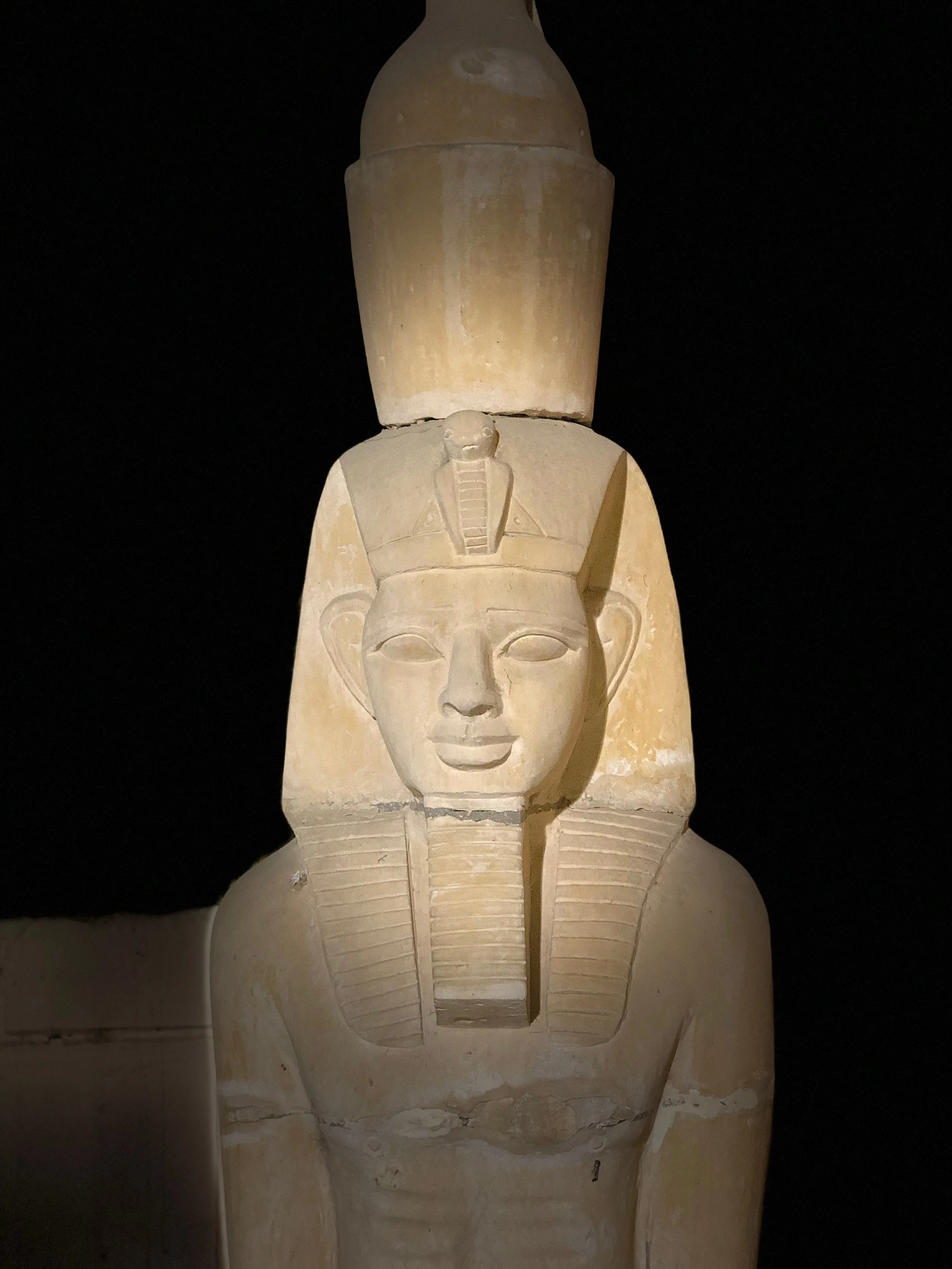
The Valley of the Kings.  Photo by Robin Pascoe.

The Valley of the Kings. Photo by Robin Pascoe.

This weeks Drama Term Tuesday is inspired by Robin Pascoe’s recent trip to Egypt to attend the World Alliance for Arts Education Summit.

Egyptian Drama

Has its origins in coronation rituals in the early Dynastic Period (3100 - 2686 BC) with key elements of enactment and dialogue. In the Old Kingdom (2686 - 2181 BC) ritual drama explored mysteries of creation, life and death and the con flight between good and evil.

On ascending the throne, every King of Egypt became Horus, on of Osiris and Isis, and the story was enacted during annual festivals. By the time of the Middle Kingdom (2133 - 1786 BC) there is evidence of a civilisation of frequent holidays, ceremonies, parades, amusements, music and celebrations. Osiris plays continued into the Christian era.

The Valley of the Kings. Photo by Robin Pascoe

The Valley of the Kings. Photo by Robin Pascoe

Later Egyptian drama reflected the conquerors from Greece and Rome.

Some extant fragments of Egyptian drama include:

  • The Triumph of Horus

  • The Memphite Drama

  • The Abydos Passion Play

  • Books of the Dead

Excerpt from Drama Key Terms and Concepts