
Drama Term Tuesday #12

Censorship

Censorship of Drama

Censorship sets out to define, control and restrict individual or group freedom and access to ideas or expression.

In the long history of drama there has been strong recognition of its power to influence thought and to change action amongst audiences. As such a powerful force in society, drama has attracted the attention of many who wanted to control it, curb its influence or to use it for their own purposes. Censorship has been undertaken on the basis of religious belief, political ideology and propaganda, sexual or personal morality. Censorship can be undertaken by individuals, groups, governments or religious groups.

Self censorship is another common example of how individual playwrights and actors limit ideas or dramatic action.

Optimistically, wherever there has existed censorship, there has been ingenuity and resilience in drama which questioned or countered the deadening influence of censorship and ensured the power of drama continued to have an impact on society.
Excerpt from Drama Key Terms and Concepts

Music Tip Monday #9 -

One of the reasons music is an appealing art form is that people can engage in it at any age.

It is never too late to start making music.

When planning music learning for a primary (elementary) class, the teacher often faces the challenge of teaching the basic music concepts in an engaging way. For example, what happens if an upper primary class has had limited or no prior exposure to music learning?

The fundamental concepts must be taught for the learning to be meaningful and sequential, but the pre-adolescent child can be impatient with learning the basics of, say, beat and rhythm.

Many teachers successfully apply this rule: Keep the concept simple but the activity age-appropriate.

Here are some examples:

You need to teach the concept of maintaining a steady 4 beat pattern.

In the pre-primary classroom the children stamp to the 4 beats – left right left right – repeat the sequence.

In the middle primary classroom the children form pairs and face each other to mirror a 4 beat sequence – slap own thighs, clap hands, ‘high five’ the partner with both hands, clap hands again – repeat the sequence.

In the upper primary classroom the children try a more complex cross-patterning sequence – extend left arm and tap left shoulder with right hand, tap left wrist with right hand, use left hand to reach across to grab right shoulder, extend right arm – repeat the sequence.

What activities have you found successful in teaching fundamental music concepts?

Media Term Thursday #11

Poster Art

Originated in France in the late 1800’s. Posters were a new, low cost method of advertising for theatrical productions and department store merchandise, and at the time attracted a lot of aspiring painters who needed to earn a living.

The huge popularity of posters meant great commercial success for the artists, widespread use across Europe and the US and before long they began to be exhibited in galleries.

The arrival of the movie theatre opened up the market for mass produced poster art.

Excerpt from Media Key Terms and Concepts

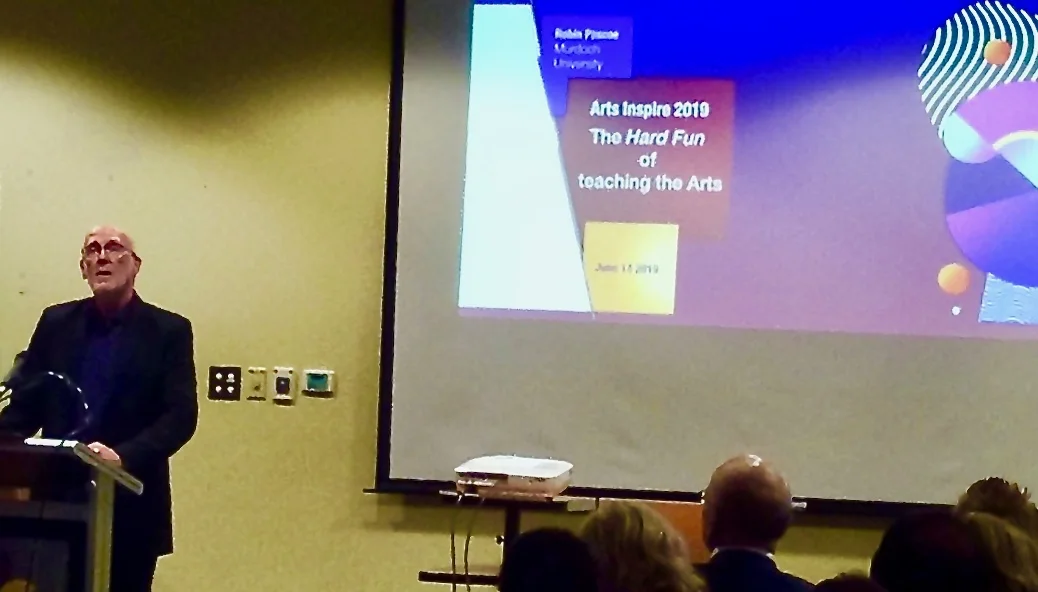
Drama Term Tuesday - Arts Inspire Conference 2019

64424006_1348123368687752_8181482699639226368_o.jpg

Robin was a keynote speaker at the Arts Inspire 2019 Conference in Adelaide, South Australia, June 14-15. This conference was an initiative of Educate SA, the combined association of education associations in South Australia.

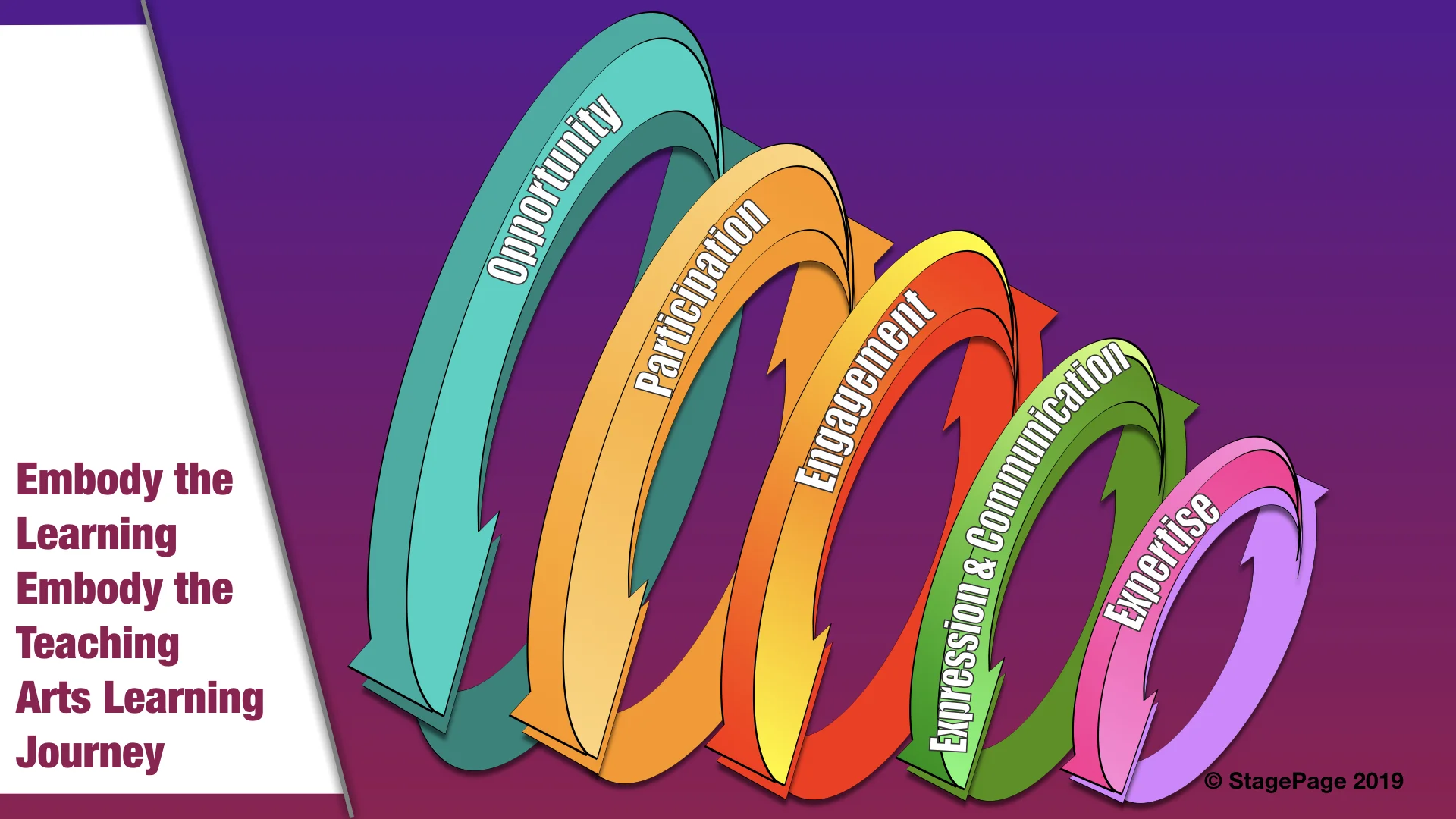
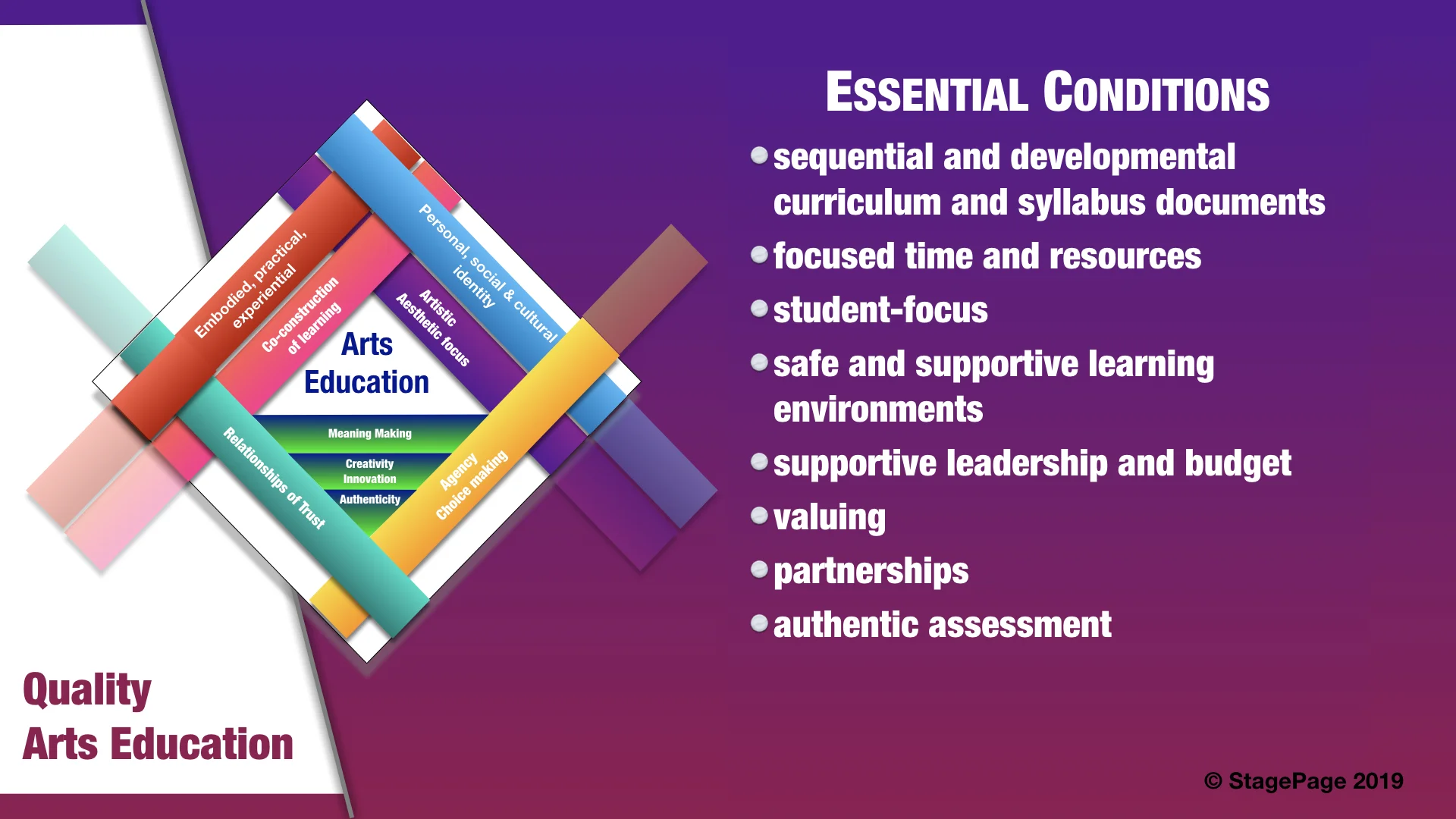
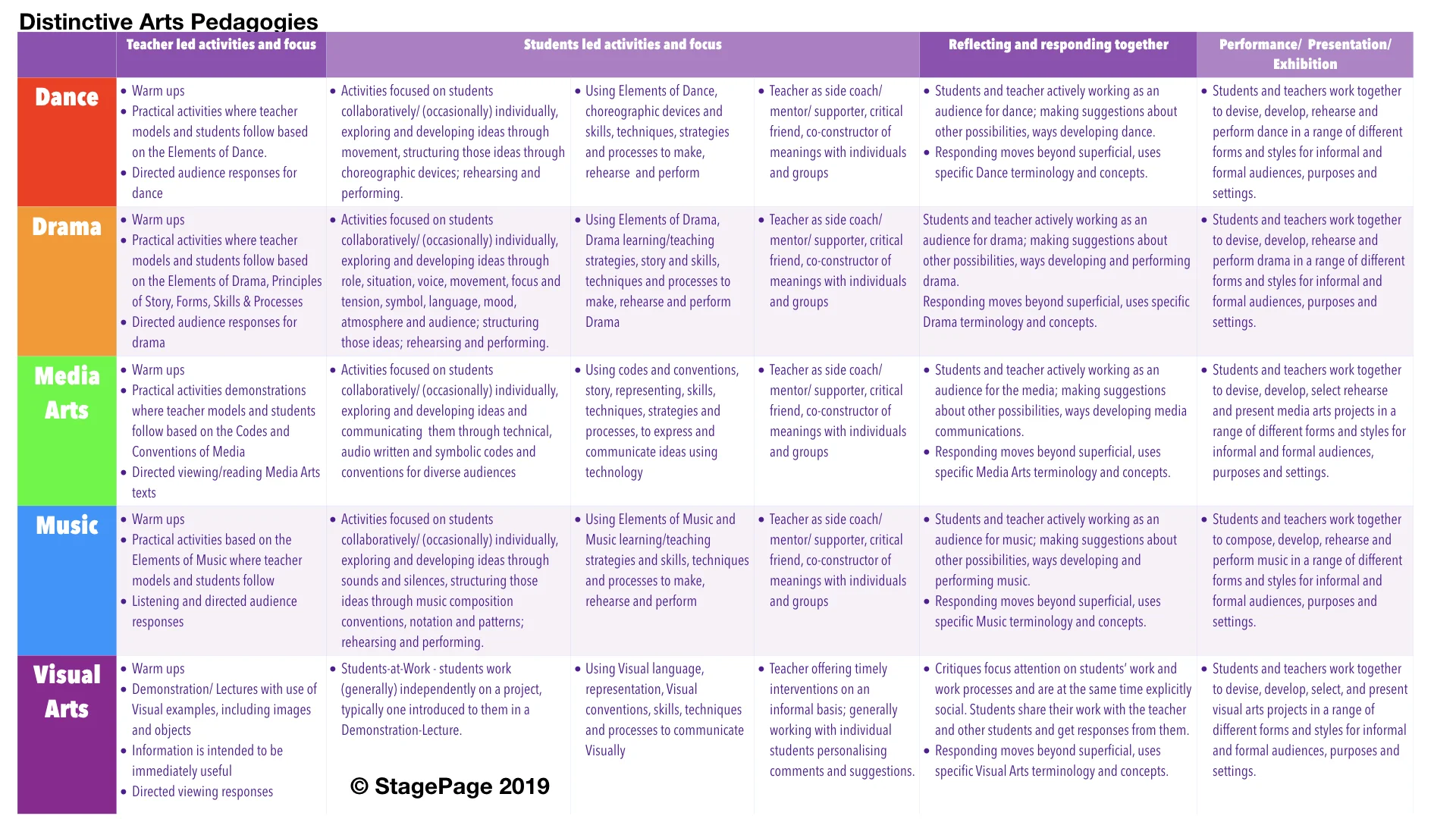
We share with you four slides from Robin’s presentation: his five key messages for arts educators; models for arts learning; and, an overview of arts specific pedagogies for the five arts subjects in the Australian Curriculum: The Arts.

Summary Notes for Arts Inspire 2019 by Robin Pascoe.001.jpeg
Summary Notes for Arts Inspire 2019 by Robin Pascoe.002.jpeg
Summary Notes for Arts Inspire 2019 by Robin Pascoe.004.jpeg

We also share with you, the outline of Robin’s Master Class in Adelaide. He modelled using Process Drama strategies to use drama to teach concepts across the curriculum. The Pre-Text for the process drama was a Chinese Idiom story. In the workshop called The Boy who Asked Too Many Questions - embodied learning in action, participants explored drama strategies and then made simple paper Bunraku puppets to explore learning in Science.

Music Tip Monday #8 - More on Neuromusical Development.

Children who play an instrument enjoy the ‘rewiring’ effects in their brains of participating in making music while moving (ie the action of playing their particular instrument).

In order for singers to get the same benefit, some movement while singing is necessary. It is not always appropriate for your school choir to move when performing. However we can all get into the habit of moving while warming up the singing voice – perhaps marking beat with some cross-patterning actions or indicating pitch changes with the hands or whole body.

How do you incorporate movement and singing in your teaching room?

Drama Term Tuesday #11

Text-based approaches

Drama that works from a text written by a playwright through exploring and interpreting ideas and themes, solving practical problems of directing and staging including placing the text in contexts through dramaturgy.

Excerpt from Drama Key Terms and Concepts

Music Tip Monday #7 - Neuromusical education

Last Friday I attended a thought provoking day on music learning and brain development given by Dr Anita Collins, an Australian neuromusical educator from the ACT.

Anita is a passionate, practicing music teacher as well as researcher. Her three sessions focused on how learning music affects the brain and a child’s cognitive development. It was a discussion more about using music education as a powerful tool in building bigger better brains, than about the equally important function of music learning in an arts enriched education.

Here are a few points which resonated strongly with me:

  1. Left brain / right brain is an outmoded way of thinking.

  2. Hearing is our biggest information gathering sense.

  3. The ages 0-7 are critical in the first wiring of the brain. Rhythm and beat form the basis of all brain development. ( Aside: any early- childhood classroom teacher is capable of simple beat and rhythm activities and is thereby enhancing the cognitive development of every child in the class)

  4. In the ‘first wiring’ stage, significant results can be achieved by just 10 min of beat and rhythm activities per day.

  5. After age 7 brain development is considered ‘rewiring’. It can be achieved but requires more minutes per day.

  6. Singing and moving engages the whole sensory network.

That is just a taste of Dr Anita Collins’ work. To read more, check out ‘Bigger Better Brains’ on Facebook.

Media Term Thursday #9

German Expressionism

Highly symbolic, stylised and surreal film movement from Germany in the 1920s. The plots dealt with madness, despair, intellectual topics and weird characters.

The set designs used geometric shapes and shadowy lighting.

It was influenced by the Dadaist and Surrealist art movements at the time. Fritz Land and F.W. Murnau were two Expressionist directors.

The Cabinet of Dr Calligari (1920), Nosferatu (1922) and Metropolis (1927)

Excerpt from Media Key Terms and Concepts