Media Term Thursday #34

Rhetoric

Using language effectively to please or persuade an audience. Therefore, in communications studies it is the use of all the codes and conventions used by a media text producer to persuade and audience to its message: selection and omission of particular images; symbolic, technical codes; narrative; audience positioning.  

The point of rhetoric is to be so persuasive that the audience is overwhelmed so much by the preferred meaning that they struggle to create a resistant reading.

For example, a particular news network might use seductive graphics, dramatic music, repetition of slogans, a limited variety of paid ‘experts’ for commentary, selection of some details of some news stories to the exclusion of others, in order to create a particular context (fear, patriotism) to seamlessly insert a certain agenda and promote a certain point of view of the left or right wing of politics.

Excerpt from Media Key Terms and Concepts. Continue the conversation on facebook and twitter.

Drama Term Tuesday 34

Meisner (Sanford Meisner)

Meisner approach to acting

Sanford Meisner (1905 - 1997) developed a form of actor training - Meisner Technique - derived from Method acting and the Stanislavski tradition. Meisner believed that the seeds of the craft of acting is the reality of doing. His approach focused on acting that is rooted in the body of the actor responding authentically to the specific moment of the play. The Meisner technique is often described as ‘living truthfully under imaginary circumstances”. Influenced other acting teachers such as David Mamet.

Excerpt from Drama Key Terms and Concepts. Continue the conversation on facebook and twitter.

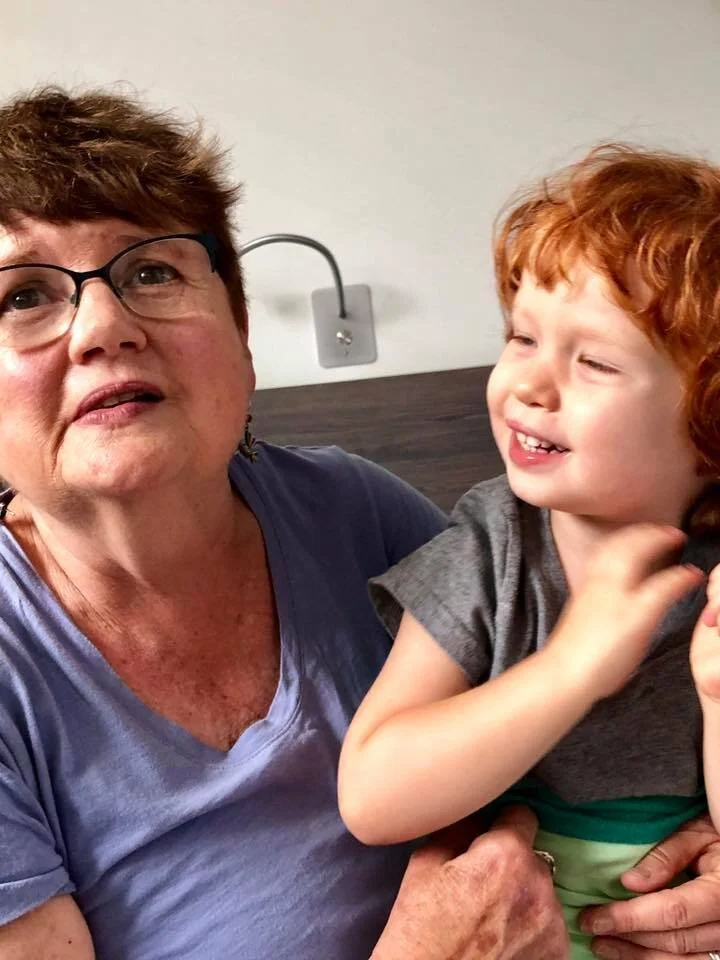
Music Monday - What I am learning from my 3 year- old grandson

67179287_10218548860449368_6373396288016220160_n.jpg

Our son, daughter-in-law and grandson have moved to Perth and are living with us for a month or so until they find a house. Suddenly we have gone from a quiet household of two sixty-something adults to a busy, cluttered, slightly crazy environment with a 3 year-old who springs into each day curious, questioning and eager to play, play, play. I find myself wondering and marvelling that we ever got anything done back in our day as parents of pre-schoolers at the same time working full-time as teachers. Of course, across Australia and the world, this generation of working parents are doing the same.

I find myself observing William’s play and reflecting yet again on the research into musical beat and its connection to reading readiness. I also find myself rethinking the whole idea of using only gross motor skills when making music with this age group – something which was emphasized to us in music education classes. Yes, children under 5 years are still learning to catch a ball, balance on one leg, jump etc. But in another sense they have greater fine motor skills than previous generations, developed through what seems like a universal use of screens these days.

William loves to sing and make up songs. Of course, he is somewhat influenced by parents who are also musical. But his inclination, whether singing his own invented songs or those learned from family and various television programs, is to move to the beat. Today we played with various beat movement combinations – clapping, patschen and so on. He could maintain a steady beat with a recurring 2-action beat but found more than 2 physical actions a challenge to maintain steadily. So a recurring pattern of slapping knees then clapping was easy to maintain while singing the Sesame Street alphabet song. Slapping knees then clapping 2 beats was also a success while singing his current favourite – the refrain from The First “Nowell”. But a 4-beat action pattern of slapping knees, clapping, slapping a partner’s hands then clapping again, while doable, was less successful as a steady beat while singing.

Where am I going with this? Well, music as an art form aside, should we not as a society be maximising the benefits to child development from engaging with beat and rhythm as early as possible? Perhaps childcare centres – especially as their staff are required to do some level of early childhood education training - could be the entry point for children in this work. That would surely have a levelling effect for children before they enter formal schooling.


Media Term Thursday #33

Censorship

When a government body or someone else not involved in a media production decides that some elements of the production must be changed or removed so it doesn’t offend a particular group’s values or break the law.

In Australia, The Australian Communications and Media Authority (ACMA) regulates television and radio while the Classification Board oversees films, DVDs, computer games and print media.

Self-censorship occurs during production when the selection process takes into account these external constraints.

Excerpt from Media Key Terms and Concepts. Continue the conversation on facebook and twitter.

Music Monday - Happy New Year

A happy new year to you all.

With almost all of our Australian music teachers currently on holiday, and with many, many families affected directly or indirectly by the unprecedented bushfires raging across our country, we thought that this Monday could be a time to consider how we might help families and school music communities who may have lost musical instruments and valuable resources at this time.

Of course, right now what is needed is immediate monetary and material relief and assistance - and it has been heartening to see so many Australians and indeed, compassionate people across the planet, responding with financial and other assistance.

But when the fires finally subside (and the experts are predicting it might be months) there will be children who no longer have an instrument and music teachers who have lost everything.

Perhaps you have an instrument gathering dust at the back of a cupboard? Could it have a new home with a young player?

Do you have ideas on how this could be achieved? Please respond in comments below. Stage Page is always happy to assist.

Join the conversation on facebook and twitter.

Media Term Thursday #32

Nickelodeon

One of the first cinemas opening in 1905 in Pittsburgh, USA by Harry Davis. It was a makeshift establishment and charged patrons a nickel (hence the name) to see a short, single reel film combined with a vaudeville act. Ninety-six people crammed into a storefront on wooden chairs.

Soon there were hundreds of Nickelodeon’s around the country and foreshadowed the mass viewing and money making potential of cinema. A cable television network that screens programs primarily for children and teenagers. This channel started in the US but now has channels in several countries. This was the first cable channel in the world to devote all of their programming to children/youth.

Excerpt from Media Key Terms and Concepts. Continue the conversation on facebook and twitter.

Drama Term Tuesday #32

Booth Theatres

A temporary portable theatre used throughout Europe from about 15th Century; derived from rows of raised booths or pageants in with Biblical episodes were played. Punch and Judy puppet shows at the British seaside continue the booth tradition.


Excerpt from Drama and Theatre Key Terms and Concepts. Continue the conversation on facebook and twitter.

Music Monday

Across Australia some schools have finished for the year and for the others this is the final week before the long summer holiday starts.

With Christmas carols everywhere at present, I noticed a recent facebook post which drew attention to the carol, “Joy To The World”. This carol begins with a descending major scale. The post read something like, “Joy to the world is a major scale” (which also referenced that the carol is often sung in the key of A major).

This got me thinking about other songs which contain whole scales – in other words all the notes of the scale, rather than little sections interspersed with intervals. I cannot think of many; in fact so far I have been able to think of only 3:

1. The afore-mentioned “Joy To The World” (descending major scale)

2. The opening of the canon known as “The Wordless Canon” or sometimes simply “lah ti doh re” (ascending Aeolian Mode / natural minor scale)

3. Bars 3 and 4 of the introduction to Stevie Wonder’s “You Are The Sunshine Of My Life” (ascending whole tone scale)

When I asked my year 9 students whether they could think of any, an interesting and lively discussion began. Many students were able to identify fragments of scales in songs that they know – and there was occasional confusion between the various forms of the minor scale. Students offered suggestions and were shouted down by others because their song contained intervals – not pure scales. And so on. It was interesting to see the students engaging with scales in an animated way – such a contrast to the look of benign resignation when we practise singing the set scales for their technical work assessments.

So facebook friends – can you add to my list of songs?

Continue the conversation on facebook and twitter.

Media Term Thursday #31

Stereotype

A generalised way of grouping people together by the way they look and/or behave. How the stereotype is represented will depend upon the values the community holds about the group. Therefore, stereotypes can be positive and negative.

Stereotypes can be based on occupation, gender, nationality, subcultures etc.

In order to identify a stereotype, you must be able to recognise the symbols and understand their meaning. Symbols may be items of clothing, physical appearance, facial expressions, gestures, speech, objects, setting and behaviours.

The instantly recognisable nature of stereotypes means that they are a very effective way of communicating to an audience. The mass media rely on this recognition as a shortcut for the development of characters.

Stereotypes are continually modified (and new ones created) by the mass media to suit the changing audiences and current value systems.

Excerpt from Media Key Terms and Concepts. Continue the conversation on facebook and twitter.