
Misconceptions about Drama Teaching

Misconceptions about Drama Teaching are interesting.

The misconceptions that many people have about drama and arts education are revealing.

A misconception is a view or opinion that is incorrect because it is based on faulty thinking or understanding

For example, there are misconceptions about drama itself. Drama is just entertainment. Drama is showing off.  Drama is faking emotions. 

Screen Shot 2020-06-09 at 9.48.31 AM.png

Drama can be entertaining but it can often serve a wider purpose through telling stories that are enacted and embodied. 

There are misconceptions about drama in schools. Drama is just putting on scripted plays/musicals/Shakespeare. Drama is not a serious school subject/just something as a break from real learning. Drama is time filling/wasting/just games/pretending to be trees. Drama is touchy feeling/too emotional/too revealing. Drama is OK for the show off kids but not for all kids/drama is only for talented kids not average kids/. Drama is messy/noisy/disruptive/kids get too excited and they are high when they go to their next class. You also hear people say there’s nothing to learn in drama/there’s no writing/there’s no content. Drama is just pretending/a form of lying or dishonesty/unleashes undesirable thoughts and feelings/encourages rebellion/challenges authority/is subversive.

Drama teaching and learning is a legitimate field of study; what students learn in drama is specific knowledge and skills about using embodied forms of expression and communication to share stories. They also learn through drama about their  personal, social and cultural identities.

What are the misconceptions about drama in schools that you have come across?

How do we deal with these misconceptions?

I doubt that any one wilfully sets out to hold and pass on misconceptions. They often reflect gaps in a person’s experience or education or are the residue of a bad experience of school drama. Sometimes they reflect a lack of understanding of the purposes and scope of drama in schools. Sometimes, they reflect unspoken prejudices or cultural norms. Sometimes they are the fear of the unknown. Whatever the reason, misconceptions are learnt and as teachers our

role is to respond to that mis-learning and address it. 

Eggen and Kauchak (2013) observe, “misconceptions are constructed; they’re constructed because they make sense to the people who construct them; and they are often consistent with people’s prior knowledge or experiences” (p. 195). In that light it is important to understand the factors that impact on how we learn to teach the Arts and Drama.

All of us, including teachers, bring to our lives and work, our own learning experiences in the Arts. Teachers learn about their job and craft from other teachers:

  • as students themselves, they see what teachers do and how they teach; the school culture can both enable teaching in the Arts or it can powerfully de-motivate and limit it

  • if a teacher’s own Arts education or the Arts teaching they observe is telling them one thing, they are likely to believe and do what they see and are familiar with. If they are told often that Drama is time wasting/time filling/just games/etc. then this  message is reinforced. Many teachers continue to teach the way they themselves were taught even when they didn’t particularly enjoy that schooling.

Tied closely to what teachers do are their underlying attitudes, values and dispositions and these have an impact on how the Arts are taught and learned. Attitudes and values are most often socially formed. It takes powerful and embodied personal experience to change entrenched points of view.

Pointing out a misconception, simply labelling it as “wrong” or “flawed thinking”, is of limited use. People who change their thinking and practice need: 

  • viable, alternative experiences that disrupt their mis-conceptualised understandings

  • to see how that changed understanding is useful in the real world

  • to see how applying their revised thinking to new situation actually produces desired results

  • to have their revised world view valued and endorsed by peers and the school community

  • to see that students are learning differently, with higher levels of approval and satisfaction and with better outcomes or results

  • to see that parents and the community support what is different.

Teaching the Arts often needs to be transformational learning for a teacher personally and professionally. It needs also be transformational for parents, educational leaders and policy makers and the wider community.

The antidote to misconceptions is being clear in the messages we communicate. The ways that we state purpose and scope needs to be well articulated. We need to check for understanding.  Or to put it another way, as  Stephen Covey (2004) reminds us: SEEK FIRST TO UNDERSTAND, THEN TO BE UNDERSTOOD.
Stephen R. Covey  (2004) The 7 Habits of Highly Effective People: Powerful Lessons in Personal Change, New York, NY. Free Press.

Eggen, P., & Kauchak, D. (2013). Educational Psychology: Windows on Classrooms, Ninth Edition. Boston: Pearson.

Purposes of Arts and Drama Education

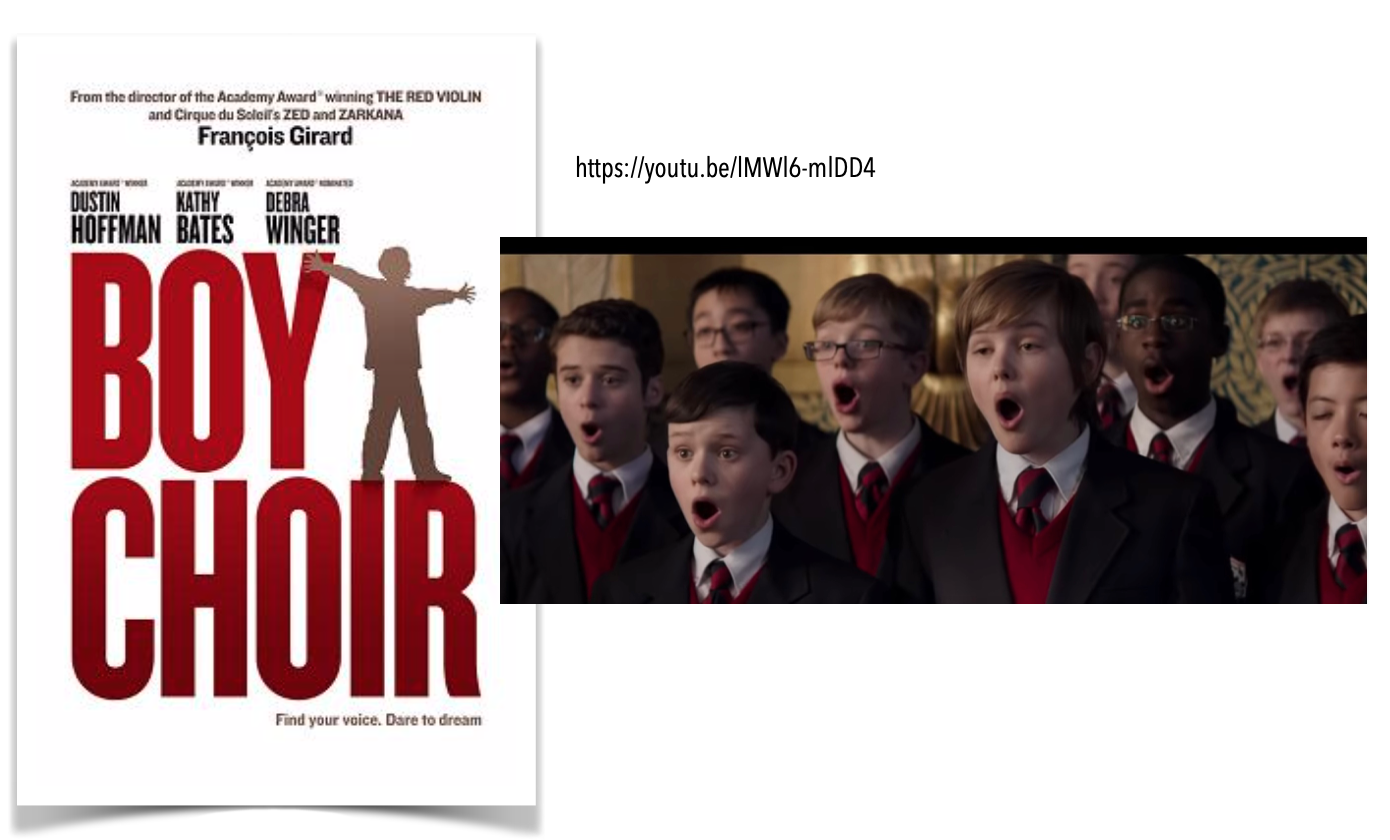
There is a moment in the film Boychoir (Dir. François Girard, 2014), playing on SBS Movie Chanel, when the character played by Dustin Hoffman in a discussion about the notoriously short singing life of a treble voice over sees, “we give them a life, not a vocation”.

While, some students who study drama in schools continue to have lives and careers in their art form, arts education in schools is not just pre-vocational, just as a successful comprehensive education is not just pre-vocational.

Drama draws from stories of all human experience. Through the lives of other presented in drama we can better understand our own lives and stories. Drama is a rich and powerful form of expression and communication found in some form in all societies and times.

Drama shows how people interact with each other. It is about people living together in society.

Drama passes the stories of our culture from one generation to another. Drama is part of the cultural DNA, the stories that shape our wider identities.

Another way of saying that is that through drama we learn about our personal, social and cultural identities. Drama in schools is much more than a “try out” for some future job. Yes, it does develop what are sometimes called life skills such as confidence and communication. It is more importantly about how we shape the ways we express ideas and communicate and share them with others. The particular skills of using our voices and bodies, stepping into the shows of others with empathy and understanding, and having a sense of place and time are valuable in their own right. They help us tell and share the stories of our lives.

This challenges the views held by many about the purpose of drama and arts education. It questions some of the prevalent misconceptions. Misconceptions are interesting because they tell us so much. This idea of misconceptions about Drama is developed in the next post. (And there is a need to also consider drama for students who are identified as gifted and talented and pre-vocational.

Music Monday - Listening

Today is WA Day; a public holiday in our state to celebrate all things West Australian. 

In these pandemic times it certainly feels reassuring to live in a state where the active covid-19 cases today are 28, and of that number, all but 3 are from interstate and overseas.

However, as the world erupts into protests over the USA police killing of George Floyd a week ago, we have a lot less about which to be comfortable and complacent here in Australia. 

In Australia 432 indigenous people have died in custody since 1991. A shameful and sobering statistic.

As I drove home this evening after seeing a music theatre student (the student was heading to the Perth Black Lives Matter protest after her singing lesson), I was pondering how I would write a Music Monday post to acknowledge today’s holiday in WA  - while my mind was really preoccupied with the situation in the USA. 

It set me thinking about the art of listening – one of the most important skills to develop when engaging in any aspect of music. 

Throughout history music has been shown to cross cultural and racial divides. Music brings people together. It has the potential to bind, rather than divide, humanity.

From these thoughts as I drove, my mind segued to Western Australian music makers I could recall. 

Once I reached the house, and with a little help from google, I came up with this list of some important WA music makers:

  • Birds of Tokyo (Alternative Rock)

  • Ross Bolleter (Improvised Music and ruined pianos)

  • Blackeyed Susans (Rock)

  • Jimmy Chi (Bran Nue Dae)

  • Cat Hope (Composter)

  • Desert Child (Acoustic Duo)

  • The Dugites (Indie Pop)

  • Eskimo Joe (Alternative Rock)

  • Iain Grandage (Composer)

  • The Jam Tarts (Band)

  • The John Butler Trio (Bluegrass)

  • Little Birdy (Indie Rock)

  • Mucky Duck Bush Band (Folk Music)

  • The Pigram Brothers (7-piece indigenous band from Broome)

  • San Cisco (Indie Pop)

  • Bon Scott (AC/DC)

  • The Triffids (Rock Alternative / Folk Rock)

  • Troye Sivan (Pop)

  • The Waifs (Folk Rock)

  • George Walley (Noongar song writer)

  • Dr Richard Walley (Aboriginal performer, musician and song-writer)

  • Dave Warner (Rock musician)

  • Gina Williams (Noongar musician, singer and promoter of Language in schools)

  • Graham Wood (jazz pianist and founder of the Ellington Jazz Club)

Please add to this list.

Please listen to the music of those listed.

As musicians, singers and teachers of music we can never do too much listening. 

And what the world needs right now is for people to listen, both to music and to each other.

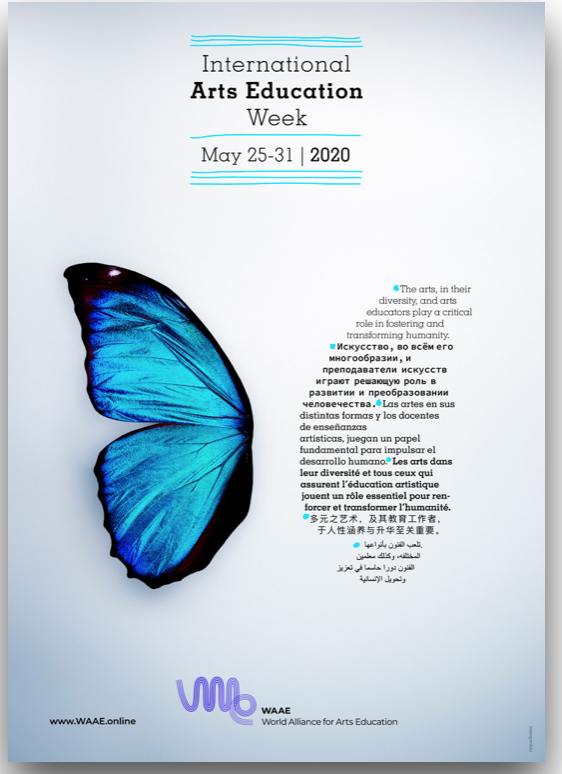
Support International Arts Education Week May 25-31 2020

Each year the last week of May is declared UNESCO International Arts Education Week.

It is an opportunity to advocate for arts education in all its diversity. 

Screen Shot 2020-05-26 at 9.28.39 AM.png

The WAAE World Alliance for Arts Education (FaceBook) has again promoted International Arts Education Week with poster, events and webinars.  

Check out the following sent by UNESCO.

Watch this promotional video from UNESCO

Watch this Video Message from the UNESCO Assistant Director-General for Culture

Read this UNESCO Director-General's statement

Message from Audrey Azoulay, Director-General of UNESCO, on the occasion of International Arts Education Week 25 – 31 May 2020 

International Arts Education Week is an opportunity to promote learning with and through the arts to improve the quality and relevance of our education systems, nurture creative thinking and resilience. 

UNESCO – as the only United Nations agency with a core mandate encompassing culture, heritage, arts, creativity and education – is committed to joining forces with its Member States to step up cooperation, mobilizing civil society, educators and arts professionals to fully harness the potential of both culture and education.

On this day, I call upon everyone to join us in celebrating International Arts Education Week, so we can make this disaster into flowers, to offer to the  world. 

IDEA the International Drama/Theatre and Education Association is celebrating International Arts Education Week in collaboration with WAAE. You can find out more information on the IDEA web page (FaceBook: https://www.facebook.com/IDEA.DRAMA and https://www.facebook.com/robin.pascoe.391) 

Screen Shot 2020-05-26 at 9.28.50 AM.png

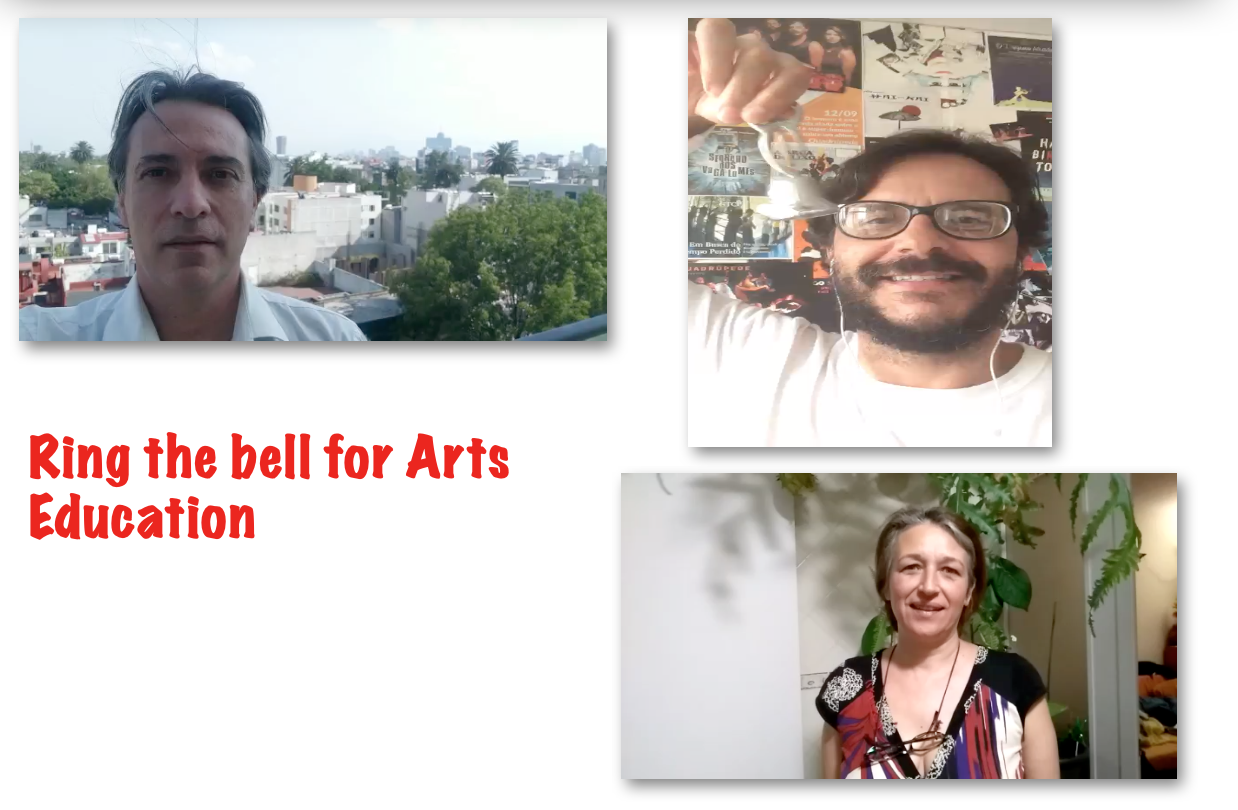
Ring the Bell for Arts Education

Sanja Krsmanovic Tasic from CEDEUM in Serbia amplified an idea from Tintti Karppinen from FIDEA in Finland challenged us all to ring the bell for arts education - to create a flash mob event of bell ringers. 

IDEA Webinar 1 May 30 – Reviving the Soul of the Seoul Agenda on Arts Education

 The other initiative of IDEA is to organise its first Webinar - as part of a larger strategy responding to the current Pandemic and the cancellation of the IDEA2020 Congress. 

You can still register for this webinar at https://us02web.zoom.us/webinar/register/WN_hMZdJH1AR_qDioGjpjkxoQ  

 IDEA is looking forward to further webinars to bring together the worldwide membership of drama educators. And there’s more

Screen Shot 2020-05-26 at 9.28.55 AM.png

For example, The Canadian Network for Arts & Learning made A Call to Action on Arts Education

“The Canadian Network for Arts & Learning calls on governments, artists, educators, professional organizations, researchers, universities, communities, and all advocates of arts and learning to endorse the following principles to ensure that the arts are positioned to make an increased and sustainable contribution to learning both at school and throughout our communities.

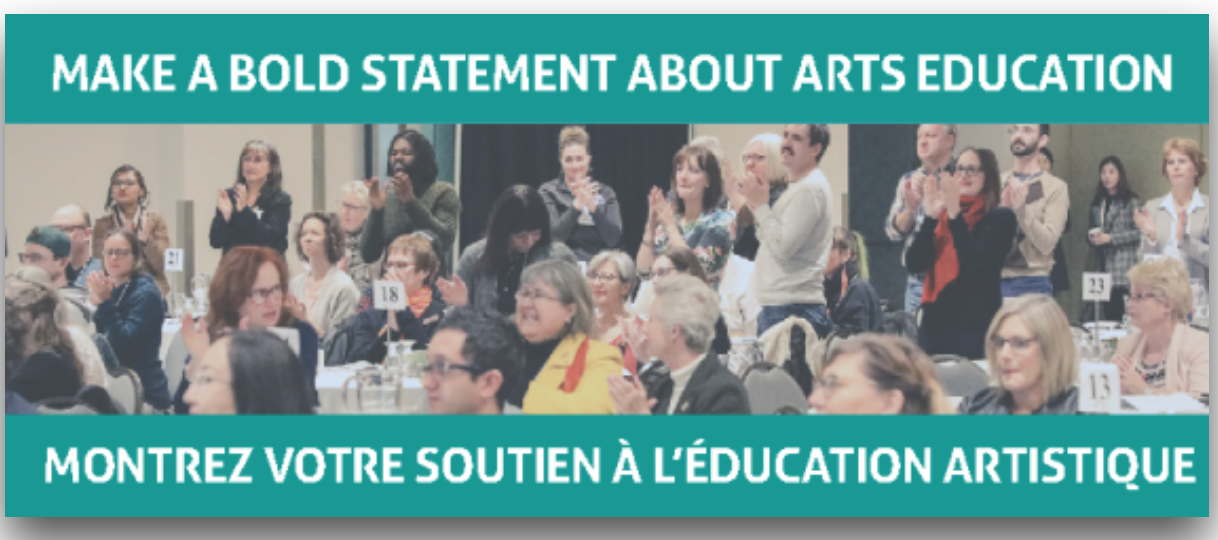
To kick off International Arts Education Week, they are  officially launching an endorsement campaign for our Call to Action on Arts Education. COVID-19 has devastated the arts and learning sector, threatening to push the arts completely out of post-pandemic school programming while limiting the impact of the sector on broader community revival. Your endorsement will help our advocacy efforts as we seek to sustain and grow arts and learning in an emerging new normal. By adding your name, you will make a bold statement that arts and creativity are integral to the learning process, both at school and throughout life, and are fundamental to the development of the fully realized individual.”

Screen Shot 2020-05-26 at 9.29.01 AM.png
Screen Shot 2020-05-26 at 9.29.14 AM.png

Music Monday - Don’t sing ‘Fah’!

Yesterday morning our friend John sent us a link to the recently -gone -viral Dustyesky Fake Russian Choir from Mullumbimby on the northern coast of NSW in Australia. Here a bunch of Aussie blokes, who speak no Russian but have a love of vodka, Russian music and song, have formed what they claim to be ‘the largest fake Russian choir in the southern hemisphere’. In that mysterious way that things go viral, they have become an internet sensation and were actually invited to visit Russia (before the pandemic put a stop to their plans). Instead they sent to Russia a video collaborated through social media. 

And that video has been popping up all over social media.

(As an aside, a Russian choir responded by sending a performance of Waltzing Matilda – in that wonderful way that choirs unite people across cultures).

Anyway, later yesterday I was driving from my school to another campus when our local ABC radio conducted an interview with the conductor of the choir. And then later still, when I was finally home in the evening, ABC television was doing a feature on the same choir. 

I was saturated with fake Russian choir singers yesterday!

Now what was of particular interest to me – and the point to today’s post -  was that, at the end of the TV report, a disclaimer was flashed across the screen alerting viewers that singing in groups at this time is not considered safe.

And so back to our previous Music Monday post where we alerted you to the disturbing findings by NATS in the USA.

In the fortnight since, the Guardian has published another finding which many singers and singing teachers - and possibly wind instrument players and teachers – have seen as a glimmer of hope.

But then a few days later, the highly regarded Australian Gondwana National Choirs hosted a webinar with a leading epidemiologist and an aerospace engineer with further findings. As one of my colleagues commented, “It seems we need to stick to pentatonic scales for now – or at least avoid singing fah.”

This evening ANATS (Australian National Association of Teachers of Singing) are hosting a ‘coffee and conversation’ webinar (for members) on health and hygiene in the singing studio.

Where do those findings leave us? I think that at the very least, we should be cautious about observing a safe distance between us and our singers. Many usual teaching studios and rooms will be of insufficient size. 

For the past 2 months I have been very aware of how dirty my laptop screen becomes after zoom lessons and classes. I demonstrate directly to the screen and aerosol droplets collect on the surface. The days of the singing student reading music over the shoulder of the pianist are sadly over - at least for now.

For so long we have recognised how beneficial singing is to all aspects of health (for example: https://ideas.time.com/2013/08/16/singing-changes-your-brain/). Singing is also immensely pleasurable and fun. 

We all owe it to ourselves to search for the safest ways forward at this time.

The challenge for all of us as arts educators

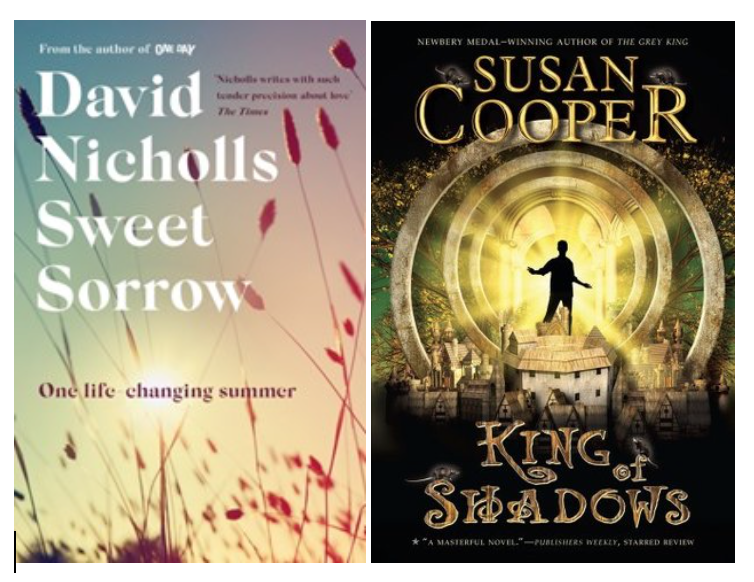
In Sweet Sorrow by David Nicholls (2019), there is a powerful reminder of the way that arts education is seen in popular culture (in the UK but shared by many similar Western societies like Australia). Charlie is somewhat reluctantly seduced into participating in a summer production of Romeo and Juliet being staged in his dull suburban community. Used to hanging out on the fringes of his blokey school crowd, Charlie is not a fan of the arts and like his boy mates, is quick to sardonically dismiss and deride drama (though he is secretly reading Dostoyevsky). Here is Charlie’s view about the arts in education.

If there was such a thing as a theatre bug, then I was immune. The problem wasn’t acting. I was happy to watch people pretending to be other people in films and TV that I sucked up indiscriminately. But all the elements that were supposed to make theatre unique and special – the proximity, the high emotion, the potential for disaster – made it seem mortifying to me. It was too much, too bare and artificial.

 Then there was the whiff of pretension, superiority and self-satisfaction that clung to all forms of ‘the arts’. To perform in a play or a band, to put your picture on display in the corridor, to publish your story or, God forbid, your poem in the school magazine, was to proclaim your uniqueness and self-belief and so to make yourself a target. Anything placed on a pedestal was likely to be knocked off, and it was simply common sense to stay quiet and keep any creative ambitions private.

Especially for a boy. The only acceptable talent was in sport, in which case it was fine to strut and boast, but my talents lay elsewhere, very possibly nowhere. The only thing that I was good at, drawing – doodling actually – was acceptable as long as it remained technical and free of self-expression. There was nothing of me in the still life of a peeled orange, the close-up of an eye with a window reflected in it, the planet-sized spaceship; no beauty, emotion or self-revelation, just draughtmanship. All other forms of expression – singing, dancing, writing, even reading or speaking a foreign language – were considered not just gay but also posh, and few things carried more stigma at Merton Grange than this combination. (p. 150-151)

It is useful to reflect on the explicit and underlying issues captured here. Peer pressure; deeply inculcated values of what is important; personal preference all play a part. But Charlie is no orphan in sharing these perceptions. 

Having spent a life time in drama and arts teacher education, I have often speculated about what holds back successful implementation of arts curriculum in schools.

Apart from the general levelling effect of the Tall Poppy Syndrome and the self-deprecating avoidance of ‘showing off’, we see in schools combinations of fear of failing, quests for perfectionism and misunderstandings about the purpose and nature of arts curriculum. Most telling are the misconceptions about arts education (only for talented and ’special’ people; ‘I don’t have a creative bone in my body’; not core curriculum; time filling; something for Friday afternoons after the real learning). I am reminded of our friend who asks again and again but what is there to learn about acting and singing? 

How do we change deeply-held perceptions and prejudices?

What are the misconceptions about The Arts in schools that you see?

The lack of understanding (ignorance even) from gaps in teachers’ own arts education, compound reluctance and reinforce resistance to implementing arts curriculum. What are the game changers that we need for arts education to be successfully taught and learnt by all young Australians? 

Nicholls, D. (2019). Sweet Sorrow. London, UK: Hodder & Stoughton Ltd.

Teaching Drama teachers through stories

One of the powerful ways we have of learning about teaching drama is through the stories that are told about our field. From the first drama teacher education reader I compiled I included examples from young adult fiction that included descriptions of what happens in a drama workshop or class. Thanks to long-time friend John Foreman, a chapter from King of Shadows (Cooper, 1999) provides a useful description of a drama workshop in a time slip story that links the contemporary Shakespeare Globe Southbank with Shakespeare’s time and theatre. Earlier this year we gave John a copy of Sweet Sorrow (Nicholls, 2019) which features the reluctant participation of Charlie in a summer production of Romeo and Juliet as he pursues a romantic interest in a girl. What’s interesting is the tongue in cheek and jaded adolescent view of drama workshop activities that somehow seduce Charlie into participating in drama when he has scoffed at it. As insiders in the drama education bubble, it is useful to be reminded of the ways that our world is viewed by outsider/insiders. In the chapter called The Name Game Charlie recounts:

We played Catchy-Come-Catch and the Parrot Game. We played Follow My Nose and Scuttlefish and Fruit Bowl. We played Anyone Who? And Orange Orang-utan and Zip, Zap, Zop and Keeper of the Keys, then Chase the Chain and Panic Attack, That’s Not My Hat and Hello Little Doggy and while the others laughed and jerked and threw themselves around, I strived for an air of world-weary detachment, like the older brother at a children’s party.…

But it’s hard to remain cool through a game of Yes, No, Banana and all too soon we were shaking it out again, shake, shake, shake, and then getting into pairs and pretending to be mirrors. (p. 77)

Academic descriptions of drama workshops are mostly procedural. Stories, on the other hand, allow us to imagine possible versions of ourselves and are powerful role modelling. 

We are always looking for more examples of shared stories of drama teaching and learning.

What are your favourite stories about drama workshop experiences?

We would love to hear them when you share them.

Cooper, S. (1999). King of Shadows. New York: Margaret K. McElderry Books.Nicholls, D. (2019). Sweet Sorrow. London, UK: Hodder & Stoughton Ltd.

Cooper, S. (1999). King of Shadows. New York: Margaret K. McElderry Books.

Nicholls, D. (2019). Sweet Sorrow. London, UK: Hodder & Stoughton Ltd.

Continue the conversation on facebook and twitter.

Music Monday - COVID 19 + Singing

This report was brought to my attention a few days ago. It is definitely worth a read. (NATS is the highly respected professional association of singing teachers in the USA; the American equivalent of ANATS in Australia.)

Now while it must be remembered that the viral load is very much larger in the USA than here in Australia, the report gives us much food for thought:

Adequate spacing and distancing between singers in any ensemble, choir, class or individual voice lesson will be the only safe way to teach and rehearse for the foreseeable future.

Some of our traditional singing warmup practices of touching our faces and feeling for vibration will be only possible within the most stringent of hygienic practice.

We singing teachers need to be vigilant in watching for and calling out students touching mouths, noses and eyes during our lessons.

As Australia moves towards easing the Covid-19 restrictions over the coming months, we face a challenging time ahead as we all work together to find ways to continue making music safely and with artistic integrity.

Drama Tuesday - The words that we use to teach drama are important.

The drama teacher says to her students, lets play a drama game!

The simple term drama game carries with it meaning.

On the one hand, a word like game implies a sense of fun and possibility. Games are playful and entertaining. Games also have rules and structures that help us extend learning beyond this particular minute into the future, because once you’ve played the game you can play it again and extend and explore possibilities.

But you can also, depending on your context and culture, see games as frivolous, time filling and time wasting. Some see games as the opposite of learning - we go out from the classroom to play time while in class we study and focus on what’s important. Also, games can be seen as competitive, pitting player against player in order to win, to come out on top.

The people who advocate for the term drama games often do so because it encourages a sense of engagement, focus and commitment. 

Are there useful alternatives? 

I prefer to use terms like drama activities or drama exercise.  Or if needing to use the term drama game to explain and qualify how I use it. 

What this short thought reminds us is that the language we use matters. Language defines thinking and concepts. Rather than simply adopting accepted usage, we need to think purposefully about what we say and do as drama teachers.

image2.jpeg

Drama Tuesday - Williams’s drama gift 

Gifting the emotions 

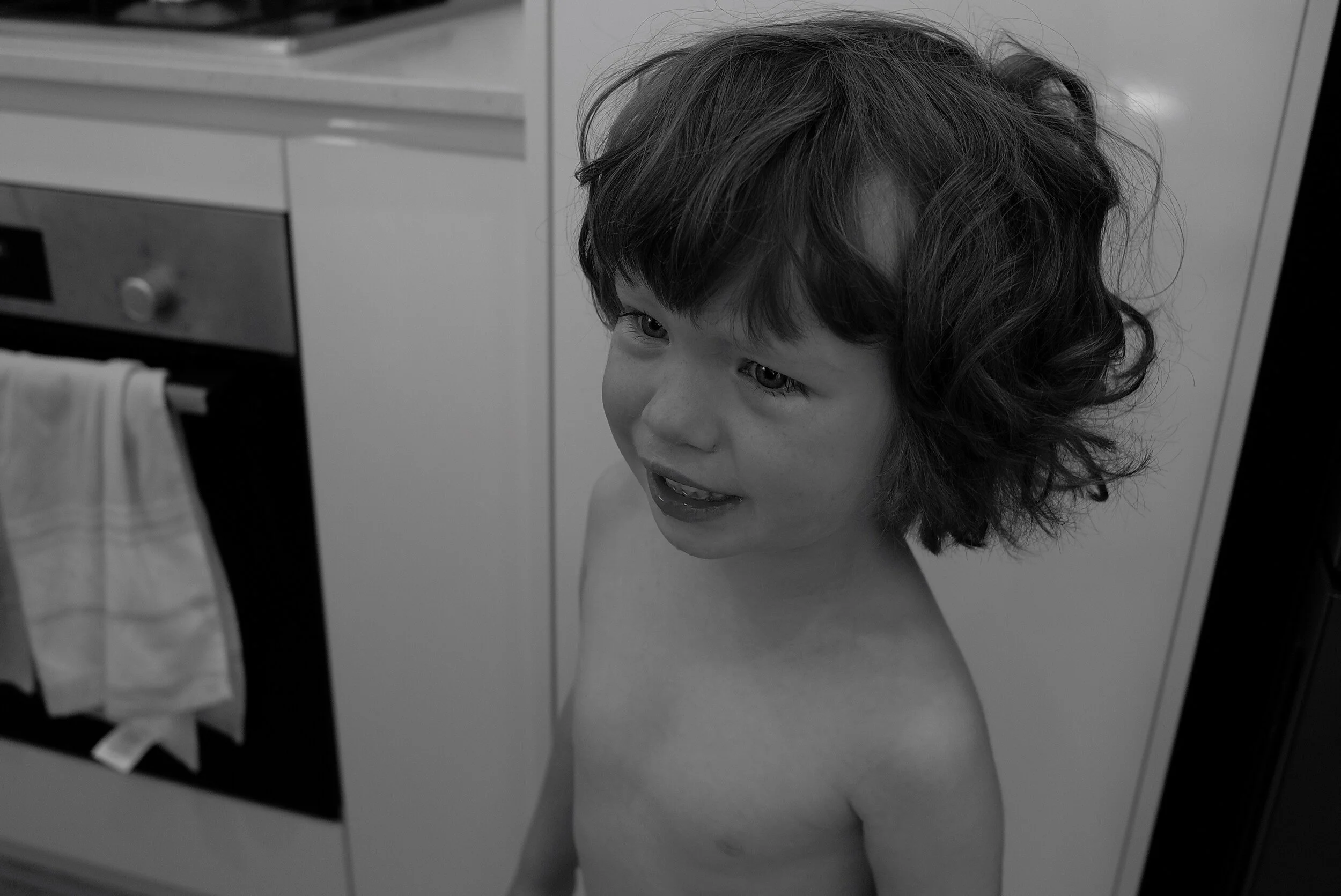
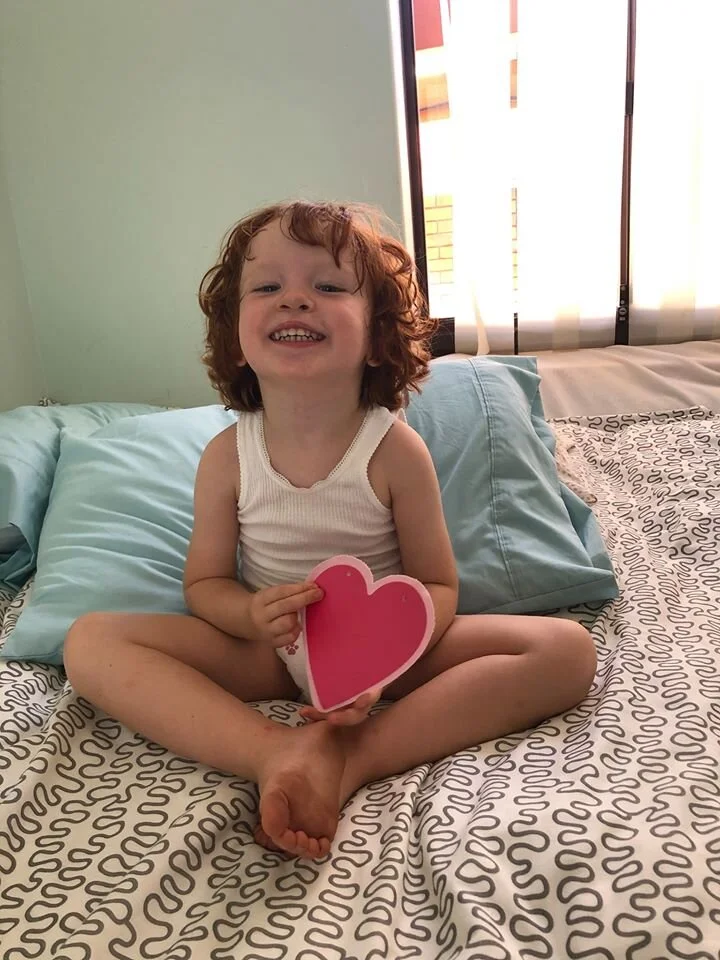
Our grandson, William, shared with us his idea for a drama activity. 

He brings his hands together to cradle an imagined gift. 

I am giving you an emotion he says solemnly as he hands the imagined gift to us. It is an emotion.You must guess the emotion I am giving you and then show it to me in your face and body.

L1000139.jpeg

After his gift he asks us to return the gift to him with our own emotion gift.

From his earliest days his parents had played the game look happy… look sad… look cross…  

William was familiar with how we shaped facial expression, bodies, sounds and even words to show emotions. He now is extending that activity which is a simple start to showing and sharing role and situation through our bodies. What is important is that he is asking us to create an imagined but not nominated emotion.

And so the game continues. Sometimes endlessly. (We sometimes overlook how important repetition is to young learners.)

The opportunity to model and then to encourage exploration and innovation is important in drama teaching and learning.

85121026_10206542157068553_5508382109300948992_o.jpg

Continue the conversation on facebook and twitter.