Drama Tuesday - Telling the story of Drama in schools – a challenge to us all

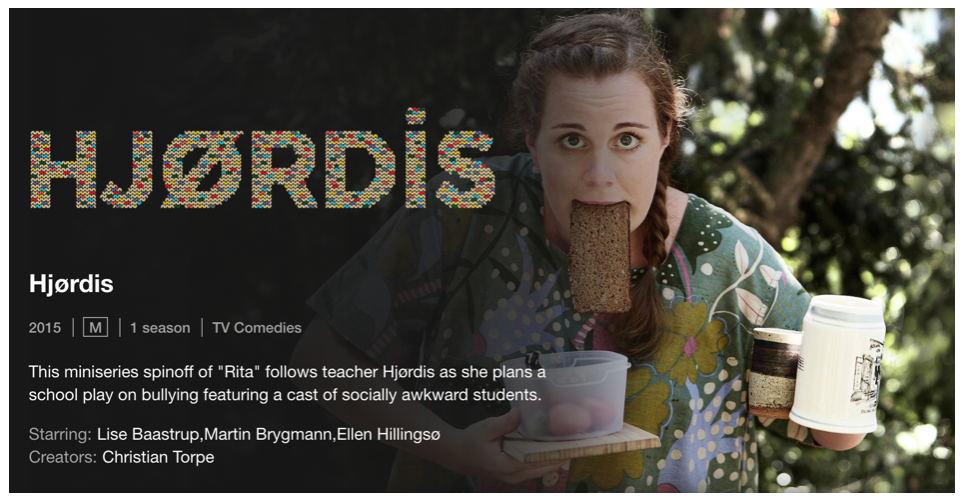
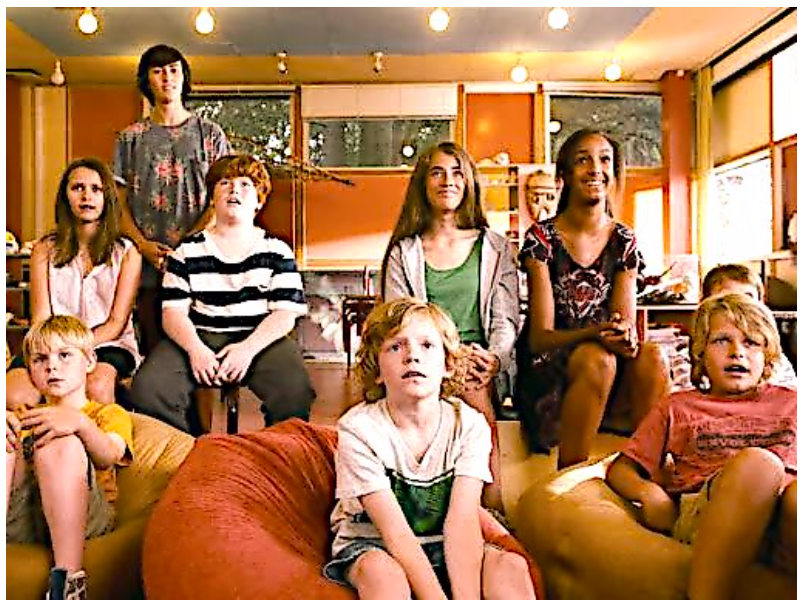
I am always looking for examples of teachers using drama and theatre with young people. Hjørdis from Denmark is the latest find. Hjørdis is a teacher given the task of creating a play for Anti-Bullying fortnight.  with a cast of socially awkward students. The pressure is on because the play is to be performed for a school visit by Princess Mary. As to be expected, things don’t go well. 

The story is told economically in four short episodes. The casting of the young people is effective and credible (unlike so many so-called teen comedies where the actors are so clearly post puberty, hirsute and sculpted by fashion). Lise Baastrup who plays Hjørdis is delightfully gangly (think Miranda). Her story of wanting to play the Princess in a school play and being forced to play the donkey is told with humour and bittersweetness. The other story threads are handled deftly. 

The “let’s put on a play” trope has been with us from Mickey Rooney and Judy Garland days (if not before -  See Babes in Arms the 1939 American film version of the 1937 Broadway musical of the same title. Directed by Busby Berkeley). The spin offs on television of the original version of Fame or shows such as Glee present one version of the transformation stories of learning and teaching drama. Often we are so used to seeing glossed versions of this experience that we can overlook the others. 

Screen Shot 2020-09-11 at 1.38.18 PM.png

Challenge to drama teachers: tell the story – the real story – of working in drama with young people. 

 Check out Hjørdis. It’s funny and touching. Enjoy it.

A Socially Critical look at the state of Arts Education

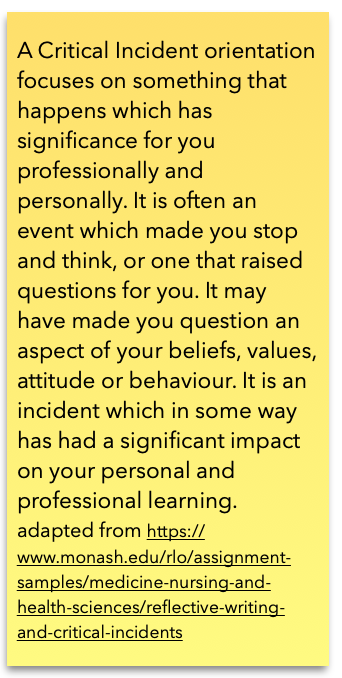
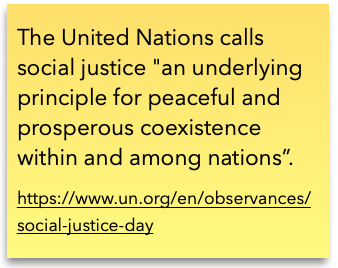
I have been teaching students about Critical Theory and Critical Incidents. It occurred to me that arts educators might need to think about making a social justice case for the arts in schools. 

Critical Incident

Screen Shot 2020-09-21 at 8.59.07 AM.png

In 2020, the implementation of arts education is under threat. Government decisions to strengthen STEM Education and the pressure to focus on Literacy, Numeracy and Science education through NAPLAN focus and teaching to the test, is diminishing the promise of arts education that documents like the Australian Curriculum: The Arts (ACARA 2014) dangle before us. Arts teacher education is being contracted. What is even more troublesome and galling is that the voices of arts educators are not cutting through the static. Our point of view is not being heard nor respected.

As Robyn Ewing (2020) observes, while 

…there is unequivocal research evidence that quality arts processes and experiences engender a distinctive and critical set of understandings and skills that all young people need to navigate twenty-first century living.… the potential for the Arts and arts education to transform the curriculum coupled with the ongoing paucity of Australia’s arts storylines threaten the actualisation o The Australian Curriculum: The Arts. (p 75)

It distresses me, as an arts educator, that the good work of many arts educators is going unnoticed. It angers me that my life’s work in arts education seems to be evaporating. I have been teaching my students to deepen their analysis of Critical Incidents as part of professional growth.and should try that approach.

Applying a socially critical lens to the current state of arts education as I perceive it, might help us better understand what is happening and why it is causing me distress.

Here is a useful outline of Critical Theory as proposed by David Tripp

Socially critical analysis in education is informed by principles of social justice, both in terms of its own ways of working and in terms of its outcomes in and orientation to the community. It involves strategic pedagogic action on the part of classroom teachers aimed at emancipation from overt and covert forms of domination. In practical terms, it is not simply a matter of challenging the existing practices of the system, but of seeking to understand what makes the system be the way it is and challenging that, whilst remaining conscious that one’s own sense of justice and equality is itself open to question. (modified from Tripp 1990b: 161) (Tripp 1993/2012 p 114)

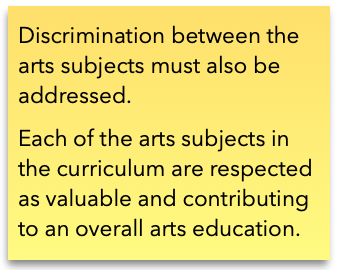
Using this formulation for socially critical analysis I argue that arts education is being discriminated  against, marginalised and disadvantaged.

Screen Shot 2020-09-21 at 8.59.13 AM.png

What is happening to arts education goes against fundamental principles of social justice, against a sense of what is fair and just. Prevailing attitudes to arts education in many schools are marginalising the value and significance of the arts in education; arts educators have legitimate concerns about choices which discriminate or minimalise their contribution and place in schools. There is hegemony in the status given to forms of knowledge and subject disciplines that play out in the curriculum offerings and the teaching of the arts.

There needs to be care in making this argument. In a time when there are many examples of marginalisation and discrimination, it might seem whinging to argue a case for arts education. Disadvantage, poverty, racism, gender bias and cancel culture are all legitimate causes for social justice concern. In the wider scheme of discrimination on social justice grounds, it might seem that the case for arts education is relatively trivial and unimportant because it speaks for a narrow group of people. Rather than weakening the case, the fact that we continue to see forms of discrimination gives legitimacy to the claim. The lack of arts education in schools is an indictment of discrimination which ultimately is one measure of social justice. It is discriminatory because the benefits of arts education are  withheld from the many whose lives would benefit from an arts education.

Screen Shot 2020-09-21 at 8.59.21 AM.png

What arts education suffers from are forms of overt and covert domination. Decisions made by politicians,  school administrators and parents reflect unspoken misconceptions, assumptions and prejudices that place other forms of knowledge, other subject areas in the curriculum ahead of arts education. Arts education needs to be freed from these hegemonic decisions.

In stating this, I am not arguing that arts education is more important than other fields rather that arts education is as important. It is as important because a successfully comprehensive education addresses the breadth of human needs. Over time in schools, students need their cognitive, social, emotional and physical needs to be addressed. The Arts are part of a whole education. The arguments of a need for efficiency and prioritising of some sections of the curriculum over others, ignore the need for a broad and comprehensive approach that addresses the overall health, well-being and sense of identity in a democratic society. 

Steven Covey in (2004) offers the principle… seek first to understand, then to be understood. It is useful to consider how we understand what makes the system be the way it is. We need to spend time analysing why attitudes and values about arts education prevail. I speculate three points here: 1) the inertia of the ways things have always been (history and precedent); 2) fear of the unknown; and, 3) lack of opportunity.

History and precedent are no defence. In former times, prevailing social values gave legitimacy to slavery, racial and religious discrimination that we now question and challenge. Consider how attitudes and forms of habit about smoking have changed broad societal values and actions. What are the factors of those campaigns that provided the psychological and physical push towards change?

Fear of the unknown is a legitimate human response. To flee from the unknown rather than to confront it, is common. Without resorting to Rumsfeld’s known unknowns , the truism about teaching must be recognised: you can’t teach what you don’t know. In what ways can there be unthreatening and enjoyable experiences of arts education?

Ignorance and lack of opportunity. Poor or ineffective arts education negate decision makers who do not see the value and purpose of arts education. But the danger of Catch 22 lurks in the proposition that we bring long term improvement by incremental change. How do we implement opportunities in arts  education that are transformative of attitudes and values?

Shouting in the face of discrimination sounds hysterical and is too easily dismissed. Making logical arguments (like this one) are too easily ignored. Taking positions of influence and power are one way of addressing these issues – but slow, glacially slow. It is easy to get into a cycle of hope followed by disappointment. Making a cosy critical analysis of the arts education problem might help me understand better what is happening but does it change anything? What brings about actual change?. 

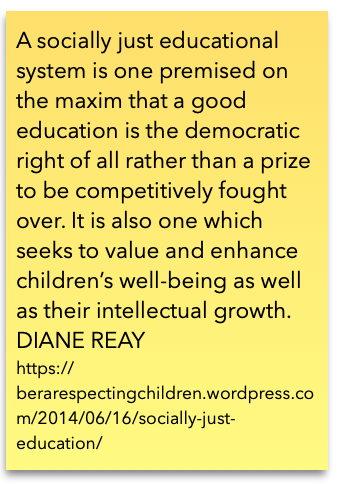
In a socially just view of the world, there is a fair sharing of resources, opportunities, status and responsibilities, There is a balance between the reciprocal needs of individuals and the institutions in society. A more socially just view of arts education means:

  • overt and covert discrimination against the arts is addressed

  • balance recognition of the place and value of arts education in schools is intrinsic to our society

  • Arts Education is not just an entitlement but is fully realised.

The arts have often been vehicles for social justice and change. It is time for us to use our art forms to highlight the social injustice been meted out to arts education in schools. This is a call for action beyond analysis.

Bibliography

ACARA. (2014). "The Australian Curriculum: The Arts." from http://www.australiancurriculum.edu.au/the-arts/introduction.

Covey, S. R. (2004). The 7 Habits of Highly Effective People: Powerful Lessons in Personal Change. New York, NY, Free Press.

Ewing, R. (2020). "The Australian Curriculum: The Arts. A critical opportunity." Curriculum Perspectives 40: 75-81.

Tripp, D. (1993/2012). Critical Incidents in Teaching: Developing Professional Judgement. Abingdon, Oxon, Routledge.

Drama Tuesday - Principles of story in drama

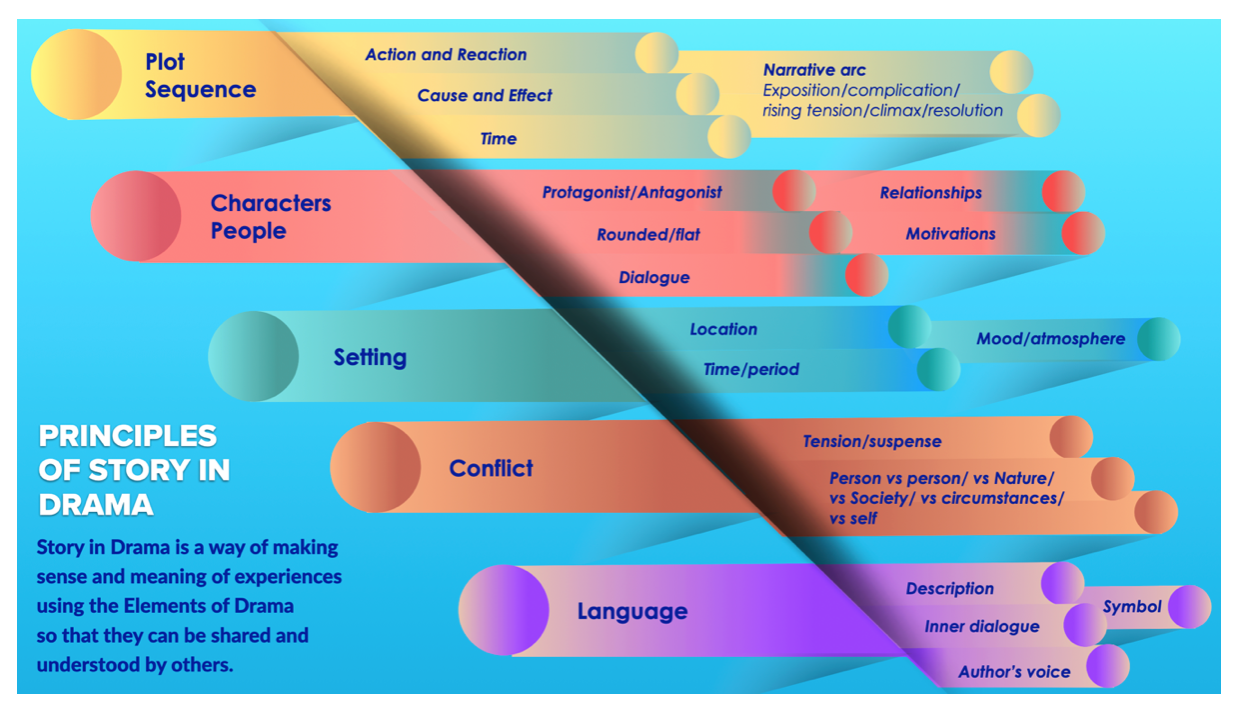
Drama uses the Elements of Drama to tell stories. Story drives how we dynamically combine the Elements of Drama

Story in Drama is a way of making sense and meaning of experiences so that they can be shared and understood by others.

The Principles of Story include: Plot and sequencing of events; characters and people; setting; conflict and Language. 

Within each these major categories there are specific aspects that can be linked to both story and drama.

  • Plot and sequence link to action and reaction; cause and effect; time and how it is manipulated; and, to the narrative arc of exposition, complication, rising tension, climax and resolution or denouement.

  • In stories, characters and people link to protagonist and antagonist; rounded and flat characters; dialogue revealing roles, relationships and motivations.

  • Setting links to a sense of place and time and to to mood and atmosphere.

  • Conflict relates to the use of tensions and suspense; the various ways of thinking about the conflicts person to person; character to Nature, Society and Circumstances; and also the inner conflict within a character.

  • Language is indispensable for story and drama; in story there is a focus on description, inner dialogue, symbol and the use of the author’s voice.

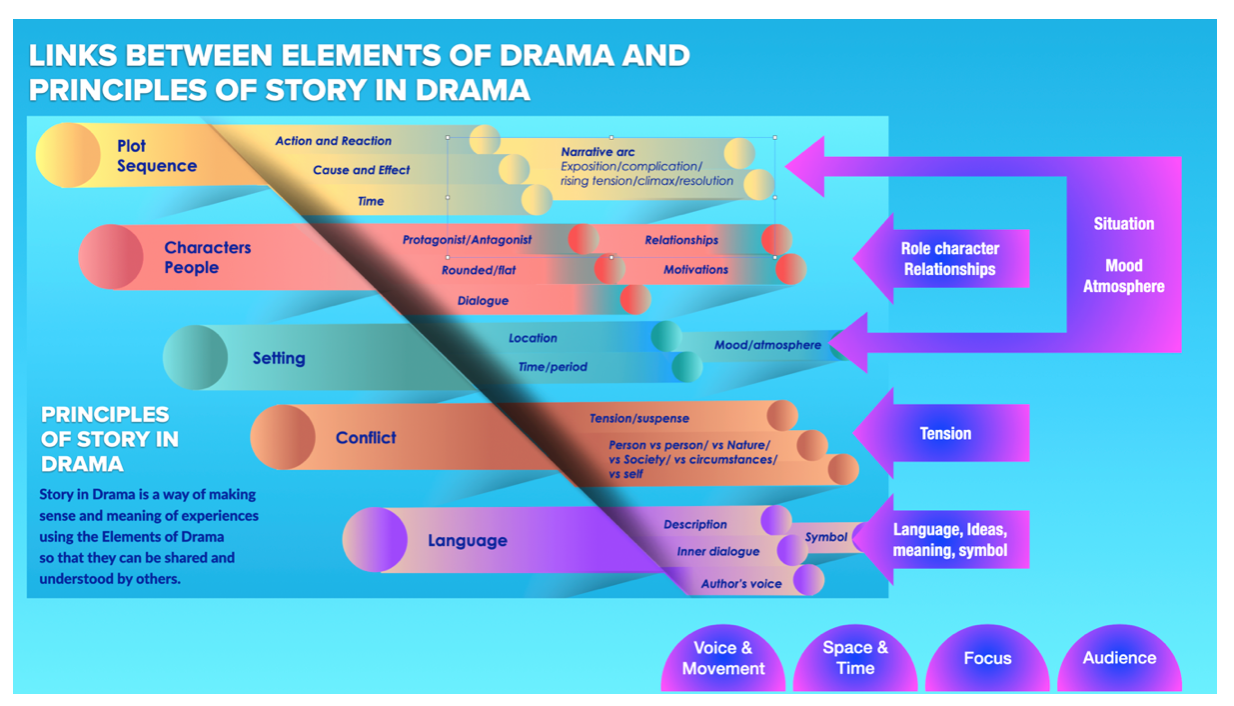
There are clear links between the Elements of Drama and the Principles of Story.

  • Role characters and relationships are linked to aspects of Characters and people found in stories.

  • Situation links to Plot and sequencing of stories as well as the setting.

  • There is the use of tension in both drama and story.

  • Drama uses aspects of language, ideas, meaning making and symbol.

The other Elements of Drama – Voice and Movement, Space and Time, Focus and Audience – are indirectly found in narrative stories.

In Drama we embody stories that narrative fiction tells through print or words alone.

Drama Tuesday - A Fools Project

Creating Performing Opportunities in Times of Lockdown

Lately I have been thinking about ways of generating drama projects for students in lockdown situations. My students need short scenes or plays that can be performed over digital platforms, if necessary, but which can also be rehearsed independently. There are many examples of compilation performances -  Two that I particularly like are based on Shakespeare also: Appel, L. and M. Flachmann (1982). Shakespeare's Lovers: A Text for Performance and Analysis. Carbondale and Edwardsville, University of Southern Illinois. Appel, L. and M. Flachmann (1986). Shakespeare's Women: A Playscript for Performance and Analysis. Carbondale and Edwardsville, Southern Illinois University Press.

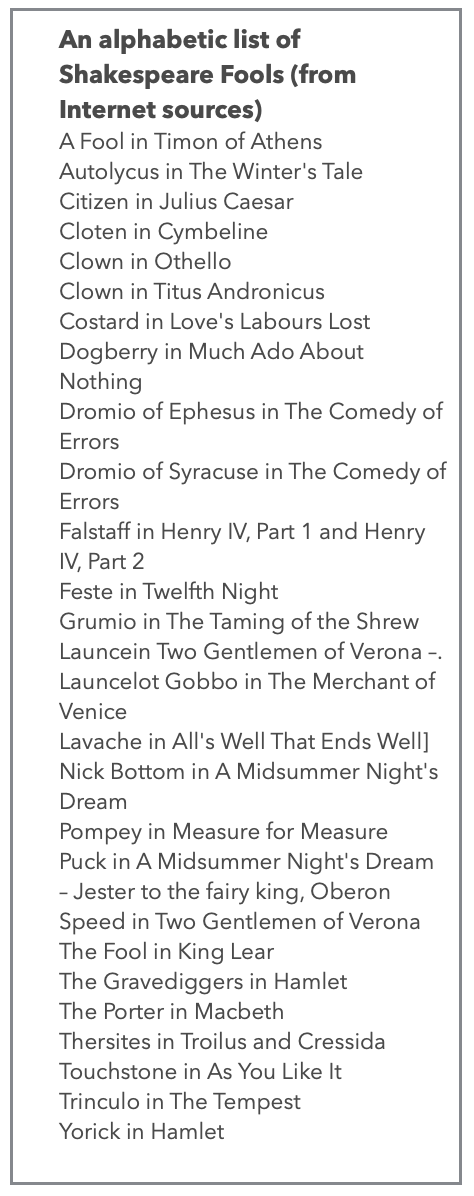
I started by thinking about all of Shakespeare’s Fools. 

I conceptualised this project as a research and performance project. Students would need to research and write about the characters considered fools and their functions in the plays that included them. They would need to look at the research about the Shakespearean Fools. Then, they would identify a scene in which the Fool and others interact, make a suitable scene cutting, rehearse and perform it. Together as a whole class we would construct a devised project. This sounds like a sufficiently challenging and yet satisfying project. 

Screen Shot 2020-09-08 at 10.10.56 AM.png

The Shakespearean fool is a recurring character type in his plays. These characters were most often common people who had the wit and skill to make fun of upper class people. Often seen as “comic relief” to the more serious aspects of a play, it is worth considering that the Fools in Shakespeare provide an emotional depth and contrast to the serious themes. By shifting from the distanced world of the drama to more domestic and familiar scenes, the complexity of the dramatic situation is heightened. 'That, of course, is the great secret of the successful fool – that he is no fool at all.’ (Asimov 1978)

Jan Kott, in Shakespeare Our Contemporary ,

“The Fool does not follow any ideology. He rejects all appearances, of law, justice, moral order. He sees brute force, cruelty and lust. He has no illusions and does not seek consolation in the existence of natural or supernatural order, which provides for the punishment of evil and the reward of good. Lear, insisting on his fictitious majesty, seems ridiculous to him. All the more ridiculous because he does not see how ridiculous he is. But the Fool does not desert his ridiculous, degraded king, and accompanies him on his way to madness. The Fool knows that the only true madness is to recognise this world as rational.”

From a BBC April Fool’s Day Report:

Shakespeare loved a fool and not just on 1 April. He used them in most of his well-known plays, but who would their equivalents be today?

It was never about bright clothes, eccentric hats and slippers with bells on them. Shakespeare’s fools were the stand-ups of their day and liked to expose the vain, mock the pompous and deliver a few home truths - however uncomfortable that might be for those on the receiving end.

"Shakespearean fools, like stand-ups today, had a licence to say almost anything," says Dr Oliver Double, who teaches drama at the University of Kent and specialises in comedy. "It was an exalted position."(Winterman 1 April 2012)

In his book The Guizer Alan Garner (1975)tells us,

If we take the elements from which our emotions are built and give them separate names, such as Mother, Her, Father, King, Child, Queen, the element that I think marks us most is that or Fool, It is where our humanity lies.

The Fool is full of contradictions, as we are. He is at once creator and destroyer, bringer or help and harm. Through his mistakes we learn how to do things properly. He is the shadow that shapes the light. 

Screen Shot 2020-09-08 at 10.07.56 AM.png

Putting on the Motley. 

The costume and props of the Fool were – according to reports of the times – standardised. A patchwork and ragged coat, sometimes with bells hung on it. Breeches of different coloured legs and a mono like hood and cloak decorated with animal body parts such as donkey’s ears and rooster heads. The prop was a stick decorated with a doll head or a fool. A pouch filled with powders, sand, peas or air filled out the outfit. 

Some useful resources

The No Sweat Shakespeare Blog: The Ultimate Guide To Shakespeare’s Fools

https://www.nosweatshakespeare.com/blog/ultimate-guide-shakespeares-fools/

The British Library Shakespeare’s Fools

https://www.bl.uk/shakespeare/articles/shakespeares-fools

OUP Shakespeare’s clowns and fools [infographic]

 https://blog.oup.com/2016/09/shakespeare-clowns-fools-infographic/ 

But there are many more. 

Bibliography

Appel, L. and M. Flachmann (1982). Shakespeare's Lovers: A Text for Performance and Analysis. Carbondale and Edwardsville, Univsersity or Southern Illinois.

Appel, L. and M. Flachmann (1986). Shakespeare's Women: A Playscript for Performance and Analysis. Carbondale and Edwardsville, Southern Illinois University Press.

Asimov, I. (1978). Asimov's Guide to Shakespeare,Vols.1-2. New York, Gramercy Books.

Garner, A. (1975). The Guizer. London, Hamish Hamilton Ltd/William Collins Sons and Co Ltd.

Kott, J. (1964). Shakespeare: Our contemporary. Garden City, N.Y, Doubleday.

Winterman, D. (1 April 2012). "Shakespearean fools: Their modern equivalents."

Music Monday - Resilience in music teachers during Covid.

I have been thinking a lot lately about what it means to be an effective and resilient Australian music teacher in 2020.

The ground has shifted multiple times this year and each shift has found music teachers seeking new ways to find balance and stay effective in the job.

First there was the lockdown- which of course is still in place in parts of Australia. In the early pandemic lockdown days teachers learned to adapt and implement online learning over a variety of platforms. Those of us engaged in teaching singing quickly found the frustrations of the lag on every online platform. We started to prepare and issue backing tracks so that our students could experience accompaniments in real time when singing for us. Ideas and tips were shared.

Zoom fatigue became a thing- after a day of online teaching in front of a laptop screen our necks were locked and our brains exhausted. But then we would turn to watching videoed self-tapes submitted by students for our critical response.

When some states returned to face-to-face teaching we felt relieved. But then a new reality kicked in. Teaching rooms needed to be sanitized between students. Piano keyboards were sanitized between players. Social distancing rendered some of our teaching spaces unusable. Points of assessment missed in first semester were scheduled into a much tighter time frame. At the secondary performing arts school I work in, we scheduled two senior school musicals in the space of two weeks with a fifty percent capacity audience in keeping with the level of restrictions still in place in WA.

Our final year secondary students who are applying for places in tertiary music performance courses find the rules changed here too of course. Instead of live auditions in November - after final academic exams will be over- most tertiary institutions are requiring self- taped videos to be submitted from the end of August. This has significantly reduced the preparation time.

And of course, running underneath these shifting rules is the consideration of ‘what if?’ What if there is another wave (as there has been in Victoria) and we are locked down again? Will 2021 be the year in which most students in elite performance courses - like NIDA, WAAPA, VCA to name only three- are sourced from their home state rather than interstate and overseas? So many ‘what ifs’.

In the meantime teachers are dealing with understandably stressed students.

There has not been one week this year when I have not had at least one student at the secondary or tertiary level in a state of stress which has significantly compromised their work. I get it- none of us knows what the way out of this pandemic really looks like. None of us were around in 1918 for the last one.

But as teachers we are the guides, the strong ones, right?

But who looks after us? And if we are responsible for that, how do we do it?

Among my colleagues I have observed several approaches. One friend took a term of leave and has returned to school refreshed. Several friends are drinking more alcohol in the evenings than in non- Covid times. Yet another colleague has abstained from alcohol altogether and looks and feels fantastic. I have started knitting- nothing complicated, just long scarves with uncomplicated stitches. I find it curiously calming and meditative.

As I write this I am reminded of a radio interview on mindfulness and resilience which I heard in my car early on in the pandemic. A three point approach was encouraged:

  1. Each evening think of one thing which went well in your day.

  2. Each day make contact with someone in your address book- by phone, by text message, by an act of kindness or a social media post.

  3. Spend 10 minutes a day being mindful- eg walk around your block focussing just on the sounds in your immediate environment.

What are you doing to stay healthy and strong in these challenging teaching times?

As always, we encourage and welcome your comments.

Drama Tuesday - Back in the saddle again

Being in the theatre after a break caused by the pandemic.

Screen Shot 2020-09-01 at 9.19.28 AM.png

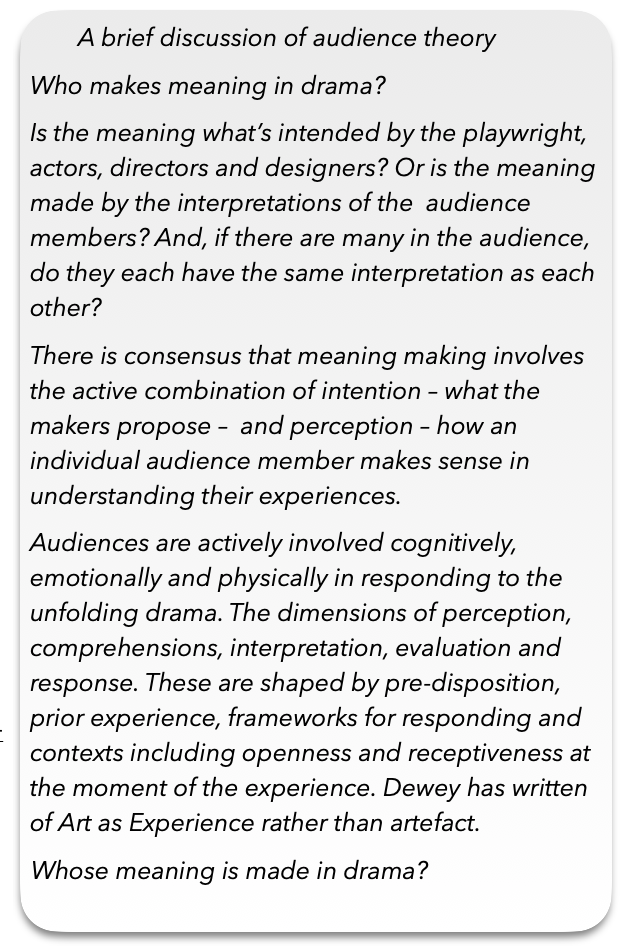
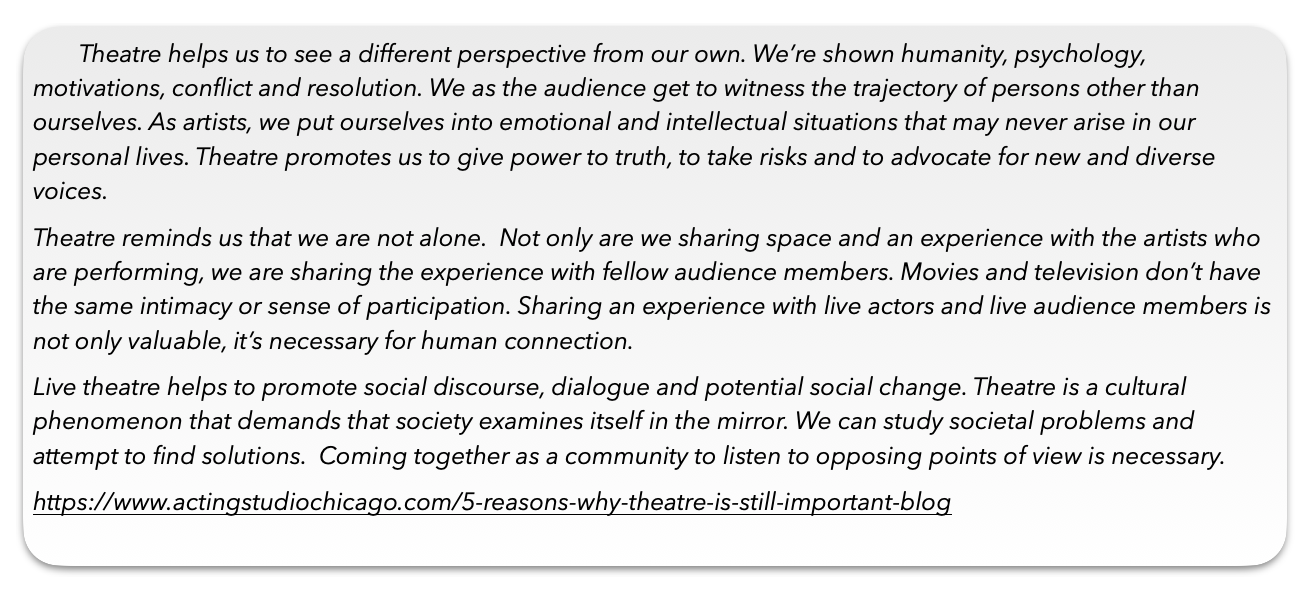
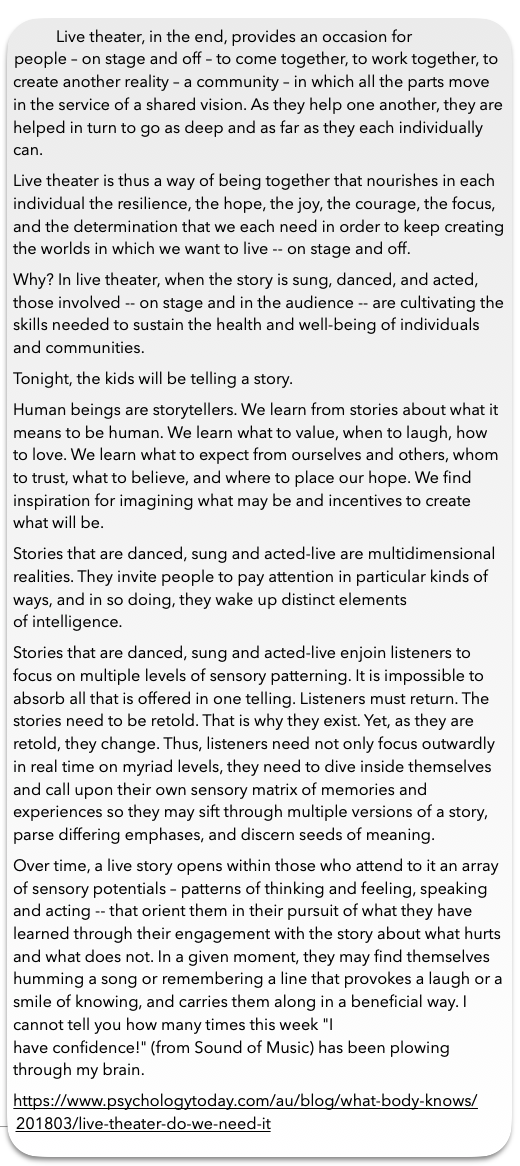
I am sitting in a theatre again – for a stunning production of Chicago at John Curtin College of the Arts. The last time I was in a theatre was with Hannah and Peter in the studio Theatre in Washington DC on March 16. It’s a long theatre drought. As much as I can sit at home and watch Chicago as a filmed event on  Netflix or similar, there is nothing like the visceral presence of being in an audience of other people. As annoying as it can be when there are whoops from some audience members when a high note is struck or a dance move is nailed, there is the living shared presence of belong to an audience at an event. The warm, shared dark beyond the metaphoric footlights is a mysterious space. How is it that individual thoughts, personalities, life experiences coalesce into shared laughter or applause. 

What is an audience and why is it so important?

Can you have drama without an audience?

Why does it matter?

There is a sense of grief in many that the experience of being in a “live” audience is lost in times of pandemic. Our theatre history tells us that there have been other times when the theatres were closed. Plague, pestilence, war and politics have closed theatres in the past, just as the current Pandemic is closing them. (see discussion in https://www.thestage.co.uk/long-reads/from-pandemics-to-puritans-when-theatre-shut-down-through-history-and-how-it-recovered) There will be a time when theatres are reopened and we will flock back to seeing performances as live audiences. 

It is also important to talk about why this is important for us as individuals and as a community.

Screen Shot 2020-09-01 at 9.14.00 AM.png
Screen Shot 2020-09-01 at 9.15.31 AM.png

Consider the reasons why from the  perspective of those who collectively make theatre.

What Idid sense from the production of Chicago at John Curtin College of the Arts was how important it was for the students (and their teachers) to perform for a live audience. The one thing that all the discussion of performance via ZOOM and digital means – as necessary as it was – couldn’t deny was the desirability of returning to live performance. 

This was a stunning production of Chicago from the opening visual impact of the well rehearsed voices and bodies on the bare stage to the final bows. The sense of style and form was effectively realised with the Fosse choreography sitting comfortably on the young bodies. The Cell Block Tango and Razzle Dazzle was driven and pulsating There was attention to the detail in the singing performances. It is exhilarating when young performers are able to reach beyond the surface gloss of style and move an audience (as they did with the sense of pathos in the portrayal of Amos). There was a faithful evocation of the original Fosse style and pizzazz.

This production is as strong as many from WAAPA. And it is a pity that more people didn’t get to be in the audience because of the pandemic restrictions. It is wonderful for those that have been able to be in the audience.

I was briefly taken back to a production in memory – at the old Playhouse in Pier Street. I think Jill Perryman was playing Mama Morton and Maurie Ogden was Amos (with the old vaudeville trick of the boots that hooked into the screws on the stage so that he swayed deeply beyond human limits. 

I have lost sight of the times when I have seen other Chicago productions, but this JCCA production is one that will stick in memory.

 Bibliography

Dewey, J. (1938:2005). Art As Experience, Perigee Trade.

Drama Tuesday - Asking the hard question

Mia, a Year 12 Media student is making a documentary and has invited me to a ZOOM interview. Her questions are thoughtful and require thought in answering them. 

It’s interesting to engage in dialogue with people in school now –such a long time since I was in her shoes. But it set my mind thinking about the importance of young people asking good questions.

What would be your answers to her questions?

1. John Hattie argued that for about 60-70% of students the current education system is working well but for the other 30-40% students are more or less struggling. Do you think a personalised or more specific schooling curriculum could work for these students to have a better chance for learning?

One of the AITSL Standards for Teaching( AITSL Australian Institute for Teaching and School Leadership) - another project that Hattie is connected with - that I find really important is know your students and how they learn. The question then that Hattie’s research prompts is about whether the reasons why a significant number of students are struggling lie in knowing better the students we teach. 

Do we as teachers know and understand the life circumstances of all our students or only of the students that are most like us? Do we understand what enables and what disables the learning of all our students? Do we have empathy for all of our students? Are we bringing our unspoken assumptions, prejudices and judgments into our interactions?  

Underlying these questions is an important understanding of the nature of learning?

What does it mean when we say I learn?

Students will have better learning when there is a sense of personalization and differentiation. One size does not fit all. 

2. John Hattie said that assessments in school should be a test for how teachers teach rather than students’ knowledge. What are your thoughts on this?

Make no mistake about it, all assessment is to some extent a test of how well we teach. While there is a responsibility for every learner to construct their own learning, it is also a measure of how well we teach when our students learn – or don’t learn. 

That’s not a popular position amongst teachers.

But every teacher should be reflecting on the effectiveness of their teaching in helping students learn.

There are dangers of simply assessing how well teachers teach because that can lead to distortions of practice – such as teaching to the test and, worse, coercive or bullying teaching approaches.

And there is the problem in that the true measure of how well students learn lies not in passing an ATAR test at Year 12, but in how they live their lives. Rarely as teachers do we have the opportunity of following up on lives longitudinally. 

But having made those caveats, I still come back to thinking that the test of teaching is: have students learnt? Can they independently, without prompting authentically show their learning? And when teachers teach well, students learn.

3. Do you believe that the High Impact Teaching strategies and the concept of Visible Learning developed by John Hattie would benefit the students learning and overall improve their chances of success in the real world outside of school?

Everyone, it seems, has an opinion about education and schooling. Politicians politicise it and make slogans about it; our community posts on social media all sorts of opinions, misinformation and prejudices; students in the midst of schooling offer their perspectives. It’s no wonder that we have seen flip flopping approaches – and Western Australia has not been immune to this trend. Everyone is looking for the magic bullet that will solve what are identified as problems in schooling. Too many people want simple answers to complex problems. 

Therefore, it is important that we should look at the research evidence and this is where Hattie is valuable. But even his work is being reduced to simple formulae (see, for example, Department of Education and Training, 2017). 

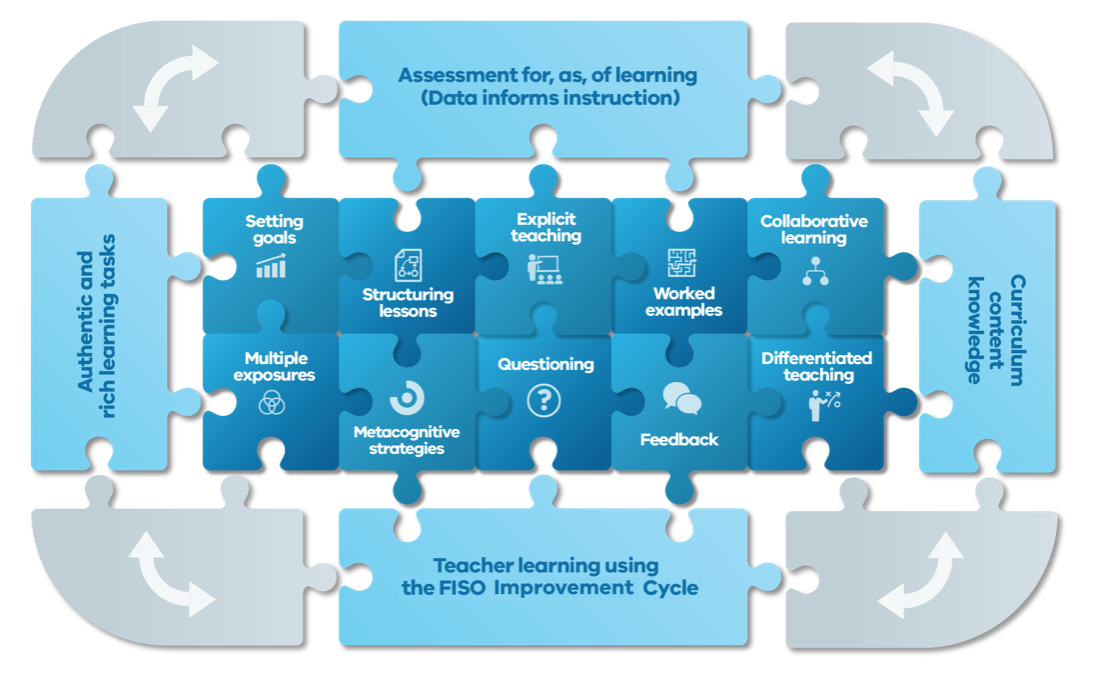
Having said that, I recognise from my own teaching that the High Impact Strategies make good sense – what my mother would have called common sense. Telling students what you intend them to learn; providing structure, signposts and guidance; working in teams; good questioning; explicitly understanding how learning happens; all of these strategies should be in every teacher’s repertoire.

Figure 1 From High Impact Teaching Strategies page 6

Figure 1 From High Impact Teaching Strategies page 6

In Western Australia the Primary Principals Association has promoted a systematic approach called iSTAR – Inform/Inspire; Show/Share; Try/Transfer; Apply/Action; Review/Revise.(see https://www.campbellprimaryschool.wa.edu.au/teaching-learning/learning-areas/literacy/istar-pedagogical-framework/ for an example in use)

There is no shortage of approaches to teaching purposefully. 

The interesting question then is not about these or any  strategies, but why aren’t they evident in the day to day classroom?

There are a dazzling array of theories of learning (see for example, Bates (2019) that we also need to consider. The differences between a theory and evidence are also part of the debate. 

In short, there are no simple answers to the complex question of learning. But it must be more than haphazard and hit and miss. 


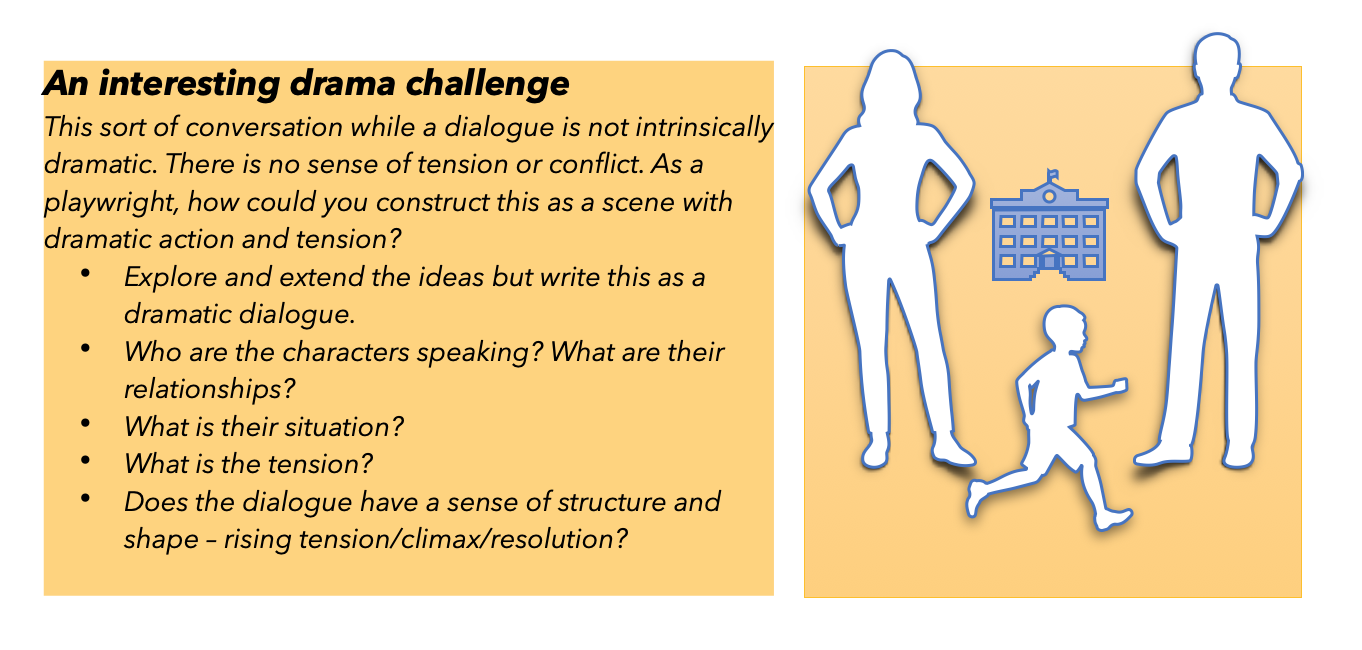
An interesting drama challenge

This sort of conversation while a dialogue is not intrinsically dramatic. There is no sense of tension or conflict. As a playwright, how could you construct this as a scene with dramatic action and tension?

  • Explore and extend the ideas but write this as a dramatic dialogue.

  • Who are the characters speaking? What are their relationships?

  • What is their situation?

  • What is the tension?

  • Does the dialogue have a sense of structure and shape – rising tension/climax/resolution?

Note: John Hattie is a Professor of Education and Director of the Melbourne Education Research Institute at the University of Melbourne, Australia, since March 2011. He was appointed Chair of the AITSL Board on 1 July 2014.

Bates, B. (2019). Learning theories simplified : ....and how to apply them to teaching (2nd Edition). London: Sage.

Department of Education and Training. (2017). High Impact Teaching Strategies Excellence in teaching and learning. East Melbourne, Victoria, 3002: Department of Education and Training

Drama Tuesday - Sometimes a picture tells the story

Some of the recent posts have been text heavy. Sometimes, what is needed is a diagram to tell the story.  

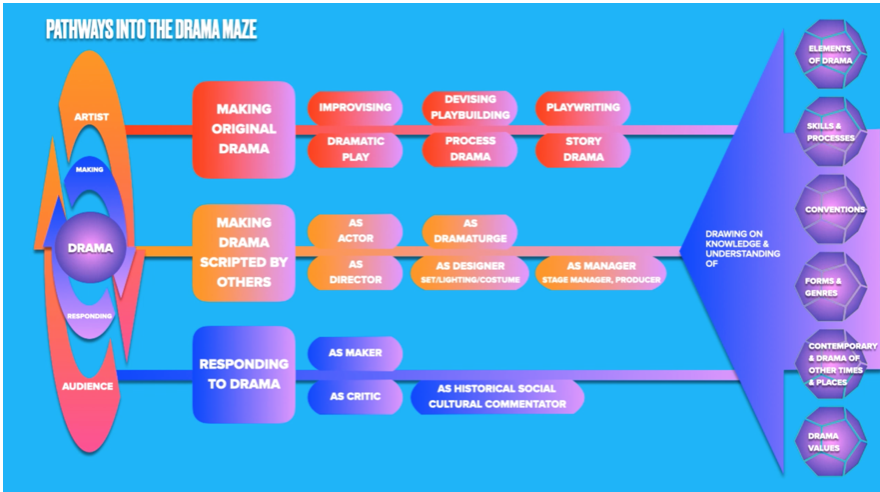
There are many different ways of teaching drama – and we need a guide through the maze. Rather than just listing all the different possibilities, can we categorise and organise them to see patterns?

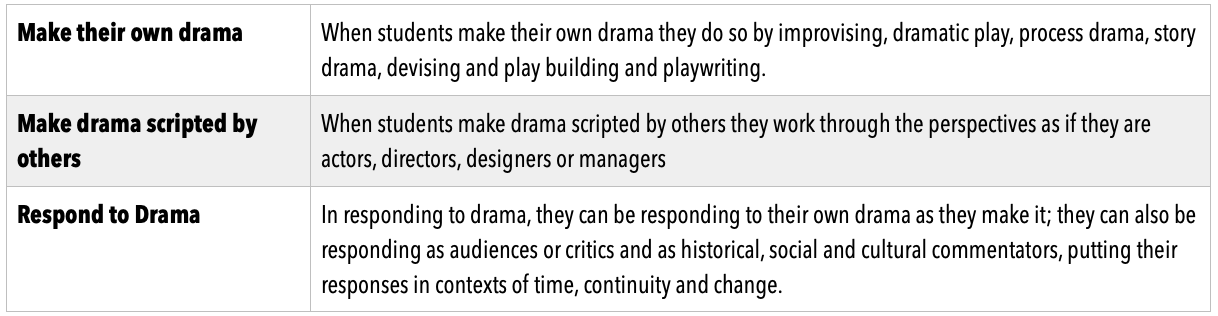
When we teach drama we help our students become artists and audiences. We help them make drama and respond to drama. There are three main pathways that help us organise the many possibilities.

In drama learning and teaching, students

Screen Shot 2020-08-18 at 9.29.39 AM.png

All three pathways depend on  students learning some fundamental knowledge and understanding. of the Elements of Drama; skills and processes of making and responding to Drama; Drama Conventions; Drama Forms and Genres; Contemporary Drama in the context of Drama of other times and places; and, Drama Values, the principles and standards of Drama Practice. 

Putting that all in one diagram, there is an unfolding picture to guide us. 

Screen Shot 2020-08-18 at 9.37.41 AM.png

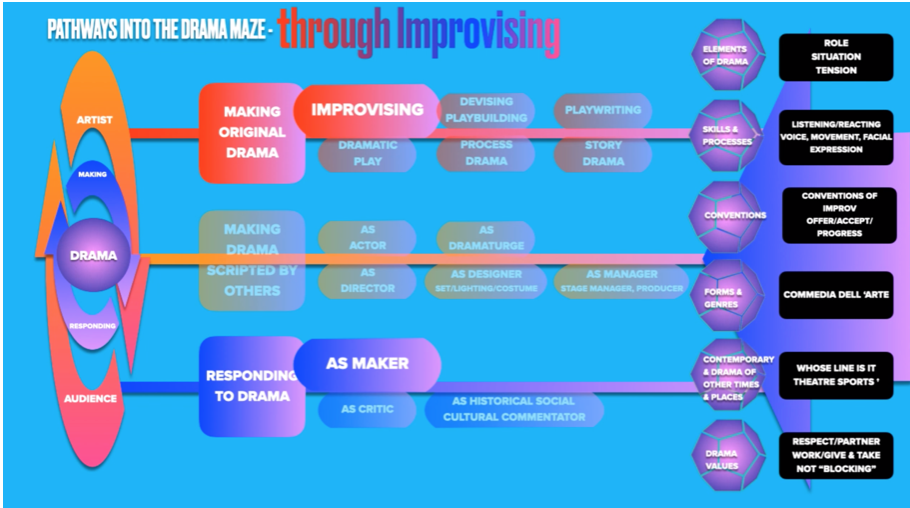
For example, if we come to Drama teaching and Learning through the lens of Improvising, students are both Making their own drama and Responding to their own drama making. To do so they need to draw from their knowledge and understanding of Drama Elements such as Role, Situation and Tension; they use  skills and processes of Listening and reacting, movement and facial expression; the apply the Conventions of Improv. such as offer/accept/progress; they build from a knowledge of improvisationally-based forms such as Commedia Dell’Arte; they also draw on their knowledge of improvising in contemporary theatre practice such as Whose Line Is It; and they practice the values of respecting partners, give and take and “not blocking”.

Screen Shot 2020-08-18 at 9.37.48 AM.png

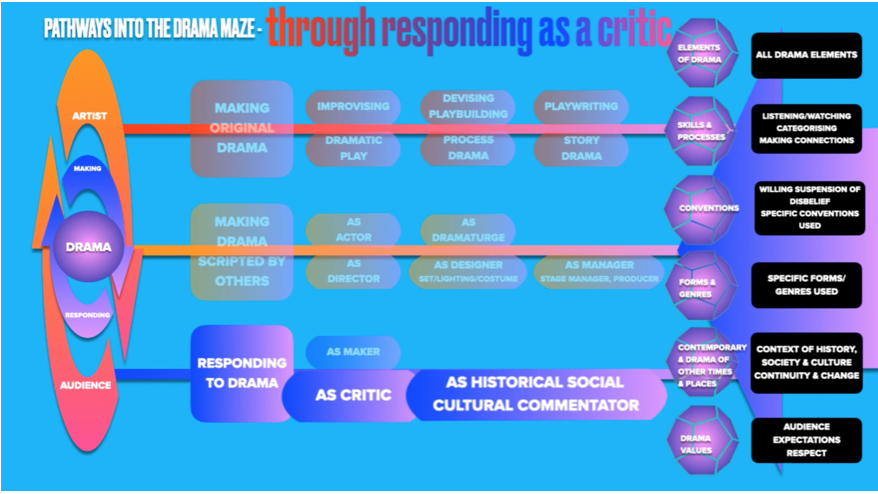
As a second example, if the entry point is responding and the aim is to help students become informed  audiences, responding as critics, then they drama on knowledge of all the Elements of Drama and skills and processes such as listening and watching, categorising information and responses and making connections between experiences; the Drama Conventions of willing suspension of disbelief and the specific conventions used; they bring to the process what they know about the specific forms and genres used in the context of history, society & culture and perspectives of time, continuity and change;. they acknowledge and act on their values of respecting contexts of the drama observed and audience expectations.

Screen Shot 2020-08-18 at 9.37.55 AM.png

Try using this diagram to explore the teaching and learning of different aspects drama.

A diagram is always a shorthand way of saying something. Some people like and read diagrams but others need fuller explanations. What do you prefer to make meaning of the drama teacher experience?

What would you add or take away from this diagram?

Drama Tuesday - Do We Know Our Story?

Do we know our Arts and Drama curriculum story?

“…knowing and understanding the past assists us in placing all we do in perspective” 

(quoted in Green, 2003)

Curriculum – intended, published, enacted in the classroom – can be a confusing tangled story. Who says what we teach in the Arts and Drama? Where do these ideas come from? Sometimes when you read published documents such as the Australian Curriculum: The Arts  (ACARA, 2014), there’s a depersonalised, decontextualised anonymity. Curriculum documents often seem to be the illegitimate progeny of processes that obscure theory and those who wrote them.

Why should we know this story?

It is important that we name and know about our shared story. 

As Seddon (1989: 1) observes: "The dearth of Australian curriculum history is to be regretted. It means that Australian curriculum workers do not know their own past; neither the curricular past, nor the history of their profession”. Understanding educational change as a temporal process with its own rhythms and durational texture, she suggests, requires an historical imagination, one that takes full account of the complex relationships between past, present and future. (in Green, 2003 p. 3)

As an eyewitness to the unfolding story of arts curriculum in Australia and sometimes participant in the process, I feel that it is important to look beyond the published documents to inside the processes. Often succeeding documents devour what went before and there is a danger of losing the threads of continuity and paths not taken. 

Some moments in time

In this moment in time, I begin by naming and highlighting some key published documents that are signposts to the enfolding discussions that inform them. in the scope of this post, I can only introduce them and prefigure later more detailed discussion. 

Screen Shot 2020-08-11 at 9.01.13 AM.png

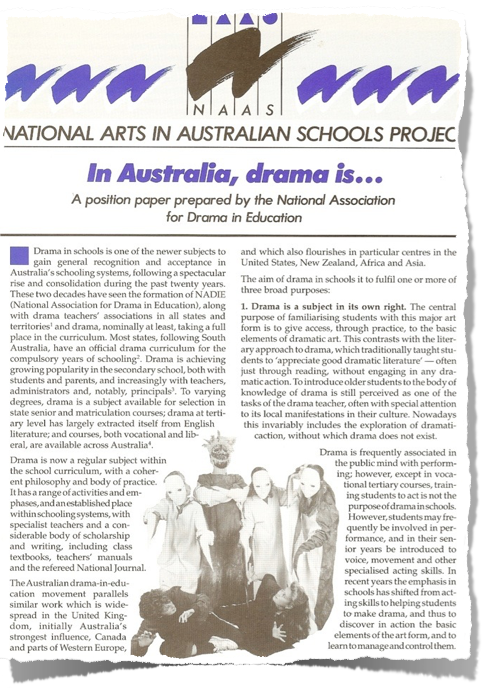
In Australia …Drama is (1991) was written as part of the National Arts in Australian Schools that came from the establishment of the Australian Schools Commission and the Curriculum Development Centre in Canberra in 1975. Much of it resonates with current practice.

Screen Shot 2020-08-11 at 9.01.21 AM.png

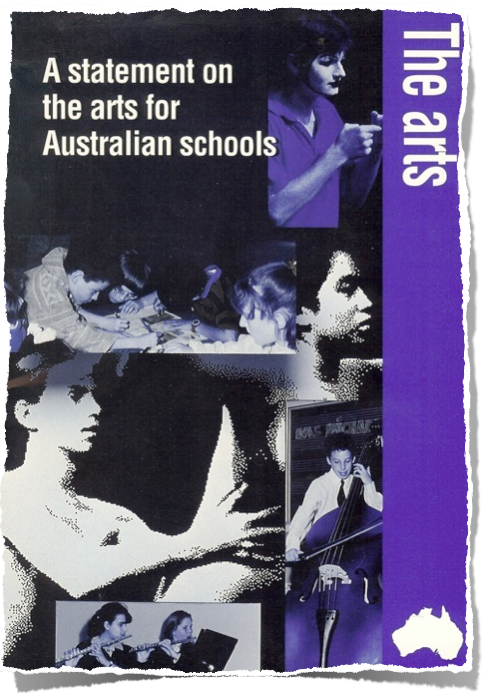
A Statement on the arts for Australian Schools (1994) and the accompanying A Profile of the Arts for Australian Schools (1994) was a first significant attempt to write a national curriculum. The Arts are defined as art forms of dance, drama, media, music and visual arts and recognised as significant ways of knowing. While each art form has its own way of knowing, there are common fundamental aspects to all of the arts disciplines which differentiate them from other key leaning areas of the school curriculum: The arts as aesthetic forms of knowing; as symbolic forms of knowing; and, as culturally constructed ways of knowing. Students are 'making' and 'responding as arts critics’; they are constructing aesthetic values and developing knowledge of the arts in varying contexts. Arts experiences are the right of every student. Teachers of The Arts need to plan a wide range of opportunities to observe artistic learning their students. 

To date there are four “Declarations on Goals for Australian Education” made by the Federal, State and Territory Ministers for Education: Hobart (1989); Adelaide (1999); Melbourne (2008); and, Alice Springs/Mpartnwe (2019). Each of these declarations have asserted the place of The Arts as one of eight learning areas (though sometimes blurring this clarity as the performing arts and the visual arts). This reinforces the Arts as forms of disciplinary knowledge. There is a tension in these declarations about the relationships between broad general knowledge and skills and disciplinary knowledge. In partnership with these declarations an Early Years Learning Framework (2009)has been adopted with direct implications for arts educators.

Screen Shot 2020-08-11 at 9.01.28 AM.png

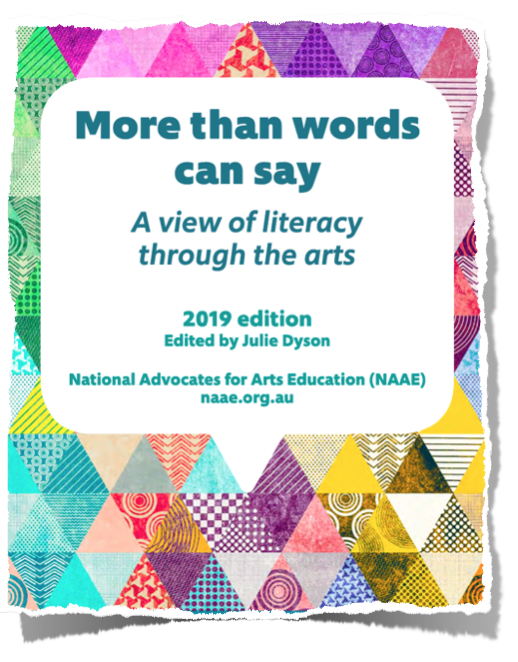
More Than Words Can Say (2019/1998, 2003) was a project of the National Affiliation of Arts Educators (NAAE, now known as National Advocates for Arts Education). This document, revised in 2015, argued the case for the role of the Arts in Literacy and Arts Literacy. The role of the NAAE in bringing together the sometimes disparate voices of the arts education community cannot be underestimated. For example, in 1995 responding to the Australian Government Creative Nation initiative the NAAE held a conference and wrote a report Creative Nation… The Arts leading the way (1995)

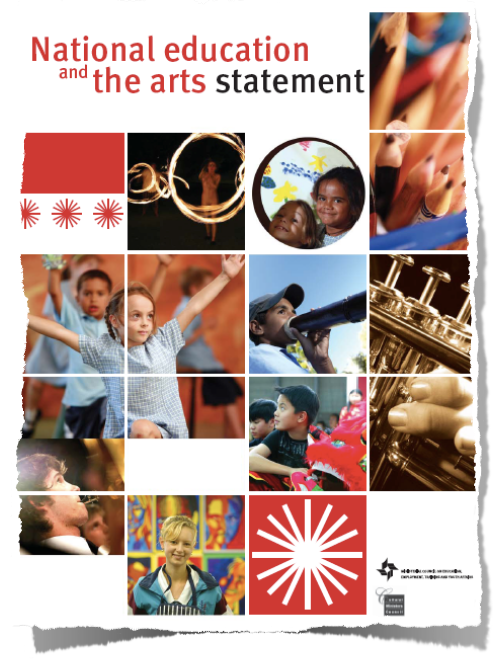
The National Statement on Education and the Arts (2007) jointly made by the Australian Cultural Ministers Council (CMC), and Ministerial Council on Education Employment and Youth Affairs (MCEETYA), is another attempt to bring national coherence to the Arts education story.

Screen Shot 2020-08-11 at 9.01.43 AM.png

The Seoul Agenda on Arts Education (2010) provides a clear internationally endorsed focus on an arts education entitlement.

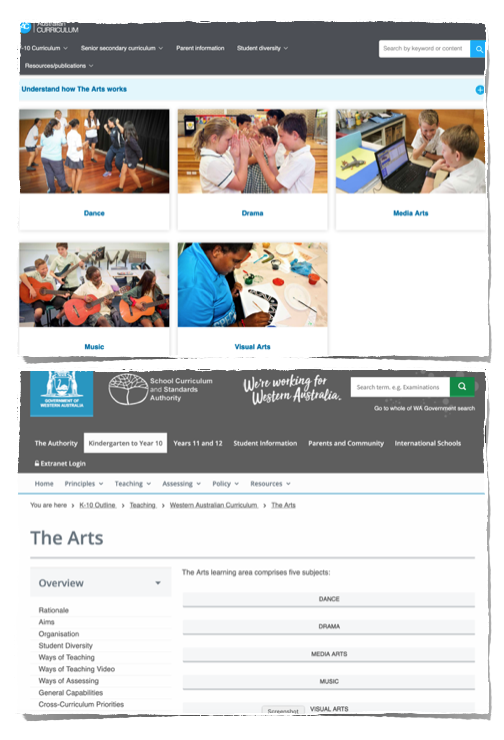
The Australian Curriculum: The Arts (ACARA, 2014) and its adapted forms (such as, School Curriculum and Standards Authority (SCSA), 2015) are the current versions of curriculum guidance and are at the forefront of thinking.

In this curriculum climate, there were a number of important documents that are important to note. Judith McLean wrote a monograph for what is now Drama Australia entitled An Aesthetic Framework in Drama: issues and Implications (1996). Robyn Ewing’s overview The arts and Australian education: realising potential (2010)  provides a comprehensive review of the field. 

Screen Shot 2020-08-11 at 9.01.50 AM.png

Seeing a wider international context

As Chair of the Arts Committee established by the Curriculum Council in 1995 for the development of the Western Australian Curriculum Framework (1998), I put together a portfolio of documents that included

  • Arts in Education: The Idea of a Generic Arts Community, Peter Abbs (1991) and a range of other documents from Abbs such as Living Powers: The Arts in Education (1987)

  • Not a Frill, The Centrality of the Arts in the Education of the Future, Ontario Arts Council, (1994)

  • The Arts are essential in the curriculum of New Zealand schools, Arts Council of New Zealand (1992) 

  • The Vision for Arts Education in the 21st Century Music Educators National Conference (1993)

Also useful are more recent Arts curriculum documents such as: The New York City Department of Education Blueprints for the Arts: schools.nyc.gov/offices/teachlearn/arts/blueprint.html  and the Ontario Arts Curriculum Framework: http://www.edu.gov.on.ca/eng/curriculum/elementary/arts18b09curr.pdf 

While sometimes criticised as a derivative curriculum nation, Australia has shown awareness and alertness to international trends. The Australian Curriculum, Assessment and Reporting Authority ACARA have published comparative curriculum studies with Finland, British Columbia, New Zealand and Singapore, each with discussion of arts curriculum (2018). 

For an article in NJ, the Drama Australia Journal in 2009, I wrote and still affirm, “…there is a clearly articulated worldview and epistemology that provides a direct lineage between the past and current drama documents discussed in these Australian focused articles. There is a recognisable ‘DNA’ of Australian drama education that is strongly affirmed in policy and practice” (2009). But Juliana Saxton and Carole Miller reminded us in presentations at the 6th International Drama in Education Research Institute [IDIERI] and the American Alliance for Theatre and Education [AATE] 2009 conference) that drama education successfully operates in a post-modern curriculum framework. They note that ‘the teacher and class are always teetering in the midst of chaos “not linked by chains of causality but [by] layers of meaning, recursive dynamics, non-linear effects and chance”’(Osberg, 2008). Drama education celebrates the four R’s of Post-modern Curriculum: it is rich, recursive, relational and rigorous.

What are the seminal documents in your arts and drama curriculum history? 

A note on perspective, positionality and point of view

It’s also worth mentioning that in seeing the story through our own autobiographies, we need to remember the fragmented state-based perspectives on curriculum development. The constitutional responsibility for education rests with the Australian States and Territories. This gives rise to “regional and local inflections” and “that different State systems in Australia rarely explicitly reference each other, or seek to learn from each other” (Green, 2003 p. 7).

The bad habit of ghosting previous iterations of curriculum does a disservice to the discussion of how arts and drama curriculum develop over time. What are the markers of continuity and change over time?

Bibliography

Abbs, P. (Ed.) (1987). Living Powers: The Arts in Education. London: Falmer Press.

ACARA. (2014). The Australian Curriculum: The Arts. Retrieved from http://www.australiancurriculum.edu.au/the-arts/introduction

ACARA. (2018). Australian Curriculum comparison studies released. Retrieved from https://www.australiancurriculum.edu.au/news/2018/07/australian-curriculum-comparison-studies-released/

Aspin, D. (1995). The Structure of an Educational Revolution: The Arts Leading the Way. Paper presented at the Creative Nation … The Arts Leading the Way (Australian Arts Education Conference), Olims, Hotel, Ainslie.

Australian Education Council. (1994). The Arts: A Curriculum Profile for Australian Schools. In. Melbourne: Curriculum Corporation.

Council of Australian Governments. (2009). BELONGING, BEING & BECOMING The Early Years Learning Framework for Australia. Canberra: Australian Government

Council of Australian Governments Education Council. (2019). Alice Springs (Mparntwe) Education Declaration. Canberra: Australian Government Retrieved from https://uploadstorage.blob.core.windows.net/public-assets/education-au/melbdec/ED19-0230%20-%20SCH%20-%20Alice%20Springs%20(Mparntwe)%20Education%20Declaration_ACC.pdf

Cultural Ministers Council (CMC), & Ministerial Council on Education Employment and Youth Affairs (MCEETYA). (2007). National Statement on Education and the Arts. Retrieved from http://www.cmc.gov.au/__data/assets/pdf_file/7366/National_Education_and_the_Arts_Statement_-_September_2007.pdf

Curriculum Council of Western Australia. (1998). Curriculum Framework: Curriculum Council of Western Australia.

Ewing, R. (2010). The arts and Australian education: realising potential. Retrieved from Camberwell, Victoria: 

Green, B. (2003). Curriculum Inquiry in Australia: Towards a Local Genealogy of the Curriculum Fireld. In W. F. Pinar (Ed.), International Handbook of Curriculum Research. Mahwah, New Jersey: Lawrence Erlbaum Associates, Publishers.

Hammond, G., & Emery, L. (1994). A Statement on the arts for Australian Schools. Melbourne: Curriculum Corporation (Australia)/Australian Education Council (AEC).

John O'Toole. (1991). In Australia Drama Is... In: NADIE National Arts in Australian Schools Project (NAAS).

MCEETYA Ministerial Council on Education Employment Training and Youth Affairs. (1989). The Hobart Declaration on Schooling. Ministerial Council on Education, Employment, Training and Youth Affairs Retrieved from http://www.educationcouncil.edu.au/EC-Publications/EC-Publications-archive/EC-The-Hobart-Declaration-on-Schooling-1989.aspx

MCEETYA Ministerial Council on Education Employment Training and Youth Affairs. (1999). The Adelaide Declaration on National Goals for Schooling in the Twenty-First Century. Retrieved from http://www.mceetya.edu.au/nationalgoals

MCEETYA Ministerial Council on Education Employment Training and Youth Affairs. (2008). The Melbourne Declaration on Educational Goals for Young Australians. Retrieved from http://www.mceetya.edu.au/verve/_resources/National_Declaration_on_the_Educational_Goals_for_Young_Australians.pdf

McLean, J. (1996). An Aesthetic Framework in Drama: issues and Implications. Brisbane: NADIE National Association for Drama in Education (Australia).

NAAE. (2019/1998, 2003). More than words can say – a view of literacy through the arts. Retrieved from https://static1.squarespace.com/static/5c7763c2778897204743a4c4/t/5ce4e34ad77bf50001a63f5c/1558504312124/MTWCS_2019.pdf

Osberg, D. (2008). The Politics in Complexity. Guest Editorial. Journal of the Canadian Association of Curriculum Studies, 6(1), iii-xiv. 

Pascoe, R. (2009). Postscript to Special Edition Drama Curriculum: looking forward. NJ (Drama Australia Journal), 33(1). 

School Curriculum and Standards Authority (SCSA). (2015). Western Australian P-10 Arts Syllabus. Retrieved from http://k10outline.scsa.wa.edu.au/home/p-10-curriculum/curriculum-browser/the-arts

UNESCO. (2010). Seoul Agenda: Goals for the Development of Arts Education. Retrieved from http://portal.unesco.org/culture/en/ev.php-URL_ID=41117&URL_DO=DO_TOPIC&URL_SECTION=201.html

What's so special about graphic novels? (November 2010). Retrieved from http://splash.abc.net.au/home#!/media/1249323/what-s-so-special-about-graphic-novels-


Music Monday - staying vigilant

Yesterday the WA Chapter of ANATS (Australian Association of Teachers of Singing) held its AGM. We are the only state to hold our AGM in person this year, and at the meeting there was a real sense of how very lucky we are on the west coast of Australia that currently we have no community transmission of Covid-19. Life feels pretty normal right now.

And yet the situation could change in a matter of days. All it takes is a single breach of the rules from a returned international traveller or staff at a quarantine hotel doing the wrong thing and the virus could take off again.

And there is a potential danger in the kind of complacency we are starting to feel in the west.

In the past few days I have observed a number of behaviors which would be risky with even a slightly larger higher viral load here.

I attended a high school music theatre performance on Friday evening. It was SO good to be back in the theatre. But although the theatre seating had been sold at only fifty percent of capacity (in line with the current restrictions) there was no actual separation of patrons inside the theatre. We were seated next to each other with no spare seats between. Of course, there was less congestion than usual in the foyer, but any virus here would have had ample opportunity to spread during the show.

Furthermore, at both of my workplaces recently I have had the awkward experience of being in a toilet cubicle when the cubicle alongside was vacated- then no sound of water running at the wash basin followed - ie no hand washing.

I too have definitely caught myself being less constantly vigilant about frequent hand washing and hand sanitizing lately. But FaceTime chats with our daughter and her husband in the USA are a stark reminder of how much worse things could be. And tend to pull me back on track.

As arts workers we make close physical contact with each other on a daily basis. Singing and woodwind playing produce significant aerosols. Many pianists play the same piano. Dance routines often involve touch. So many scenes in plays involve embracing and kissing.

In order to inch slowly towards being able to do all of these things again we must stay vigilant in doing what science tells us to do in this pandemic: wash our hands regularly, avoid touching our face, keep a social distance from each other and where required- wear a mask.