Drama Tuesday - Making Drama Spaces your own

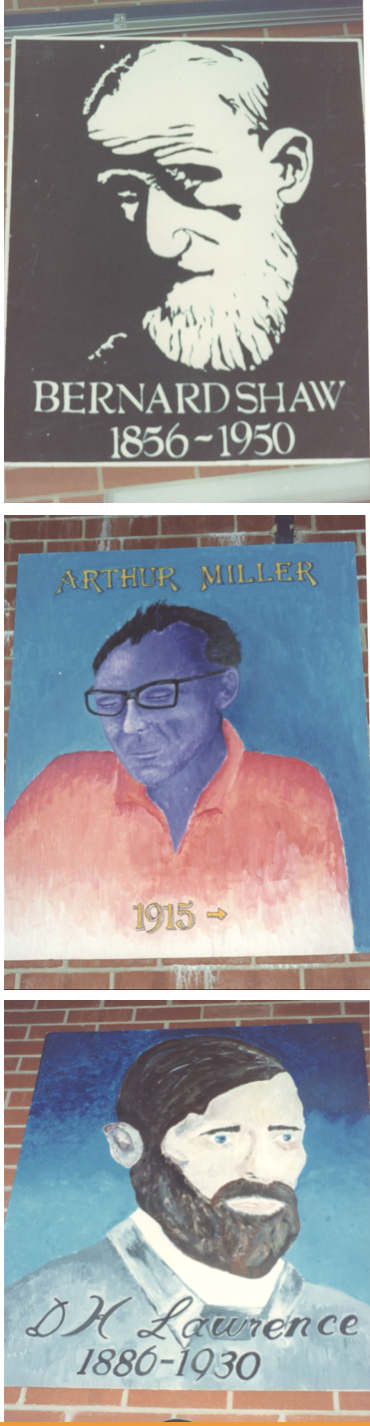
Images by Robin PascoeTaken at Woodvale SHS

Images by Robin Pascoe

Taken at Woodvale SHS

Schools, particularly secondary schools are anonymous spaces. I envy the capacity of the primary teacher to take a classroom and personalise it for the teaching and also for this year’s students. That’s not always possible in secondary schools where purposes are multipurpose.

I am interested then when I can find examples where teachers have added value to their spaces. These images show how one teacher commissioned her visual arts students to create large posters of playwrights. They are displayed on the walls of the Performing Arts Centre. 

How can you personalise your drama teaching space?

P.S. Who are other “overlooked” and “out of fashion” playwrights who deserve to be given another look in the 21st Century?

We think of Lawrence as novelist and poet before playwright so it’s useful to remember him in this role (and to keep alive the spirit of GBS). 

IN 1913 D. H. LAWRENCE spoke of his plays as relaxation from the more arduous work of novel writing: "I enjoy so much writing my plays-they come so quick and exciting from the pen-that you musn't growl at me if you think them a waste of time."l Although he wrote seven plays and a fragment,2 Lawrence didn't take his dramatic work very seriously. (From Waterman, A.E. (1959). The Plays of D. H. Lawrence. Modern Drama 2(4), 349-357. doi:10.1353/mdr.1959.0053.)

Drama Tuesday - Circling back to the beginning

From time to time in our professional lives, we turn again to ideas from the beginning. 

Screen Shot 2021-06-01 at 10.50.15 AM.png

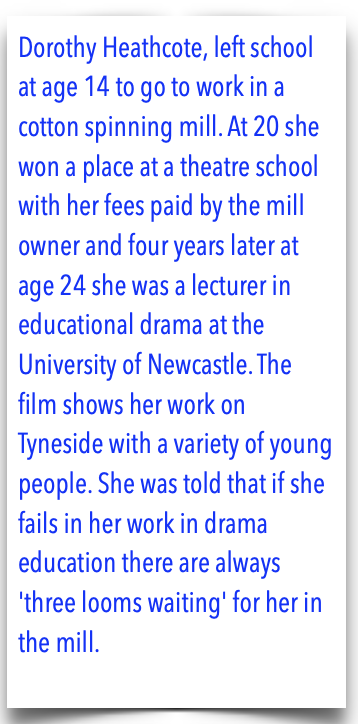
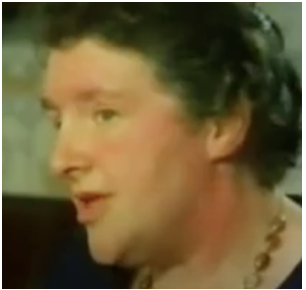
In 1974 (in the last century) in studying my teaching major for Speech and Drama, we were introduced to the video documentary (on one inch videotape) Three Looms Waiting about the work of Dorothy Heathcote (1972). I found her work inspirational and influential.

Heathcote influenced many drama educators (not without some controversy). She had a long career and visited many places. Her work was written about. She wrote herself about her emerging ideas about the field as it was becoming more widely accepted and practiced. 

This post is prompted by coming across the words of one of Heathcote’s last workshops in New Zealand in 2009. In that year Heathcote gave the keynote address at the Weaving our Stories Conference at Waikato University, Hamilton, New Zealand. Entitled, Mantle of the Expert: My Current Understanding, Heathcote was typically pragmatic  reminding us that This will not be an academic treatise. I'm a practising teacher still – learning as I go.

Three Looms Waiting is available on Youtube

Three Looms Waiting is available on Youtube

The original document is handwritten (as is so often the case – I have another of her handwritten transcripts from a presentation in Turkey around the same time). The  transcription was made by Dianna Elvin and published by Dr Viv Aitken (see Viv’s website: https://mantleoftheexpert.co.nz/new-blog-mantle-of-the-expert-my-current-understanding/)

For a detailed commentary on this text, please visit http://vivadrama.blogspot.co.nz/ .

This is a long winded introduction to thinking about one – just one – of Heathcote’s ideas that has been like a beacon in my own understanding and thinking.

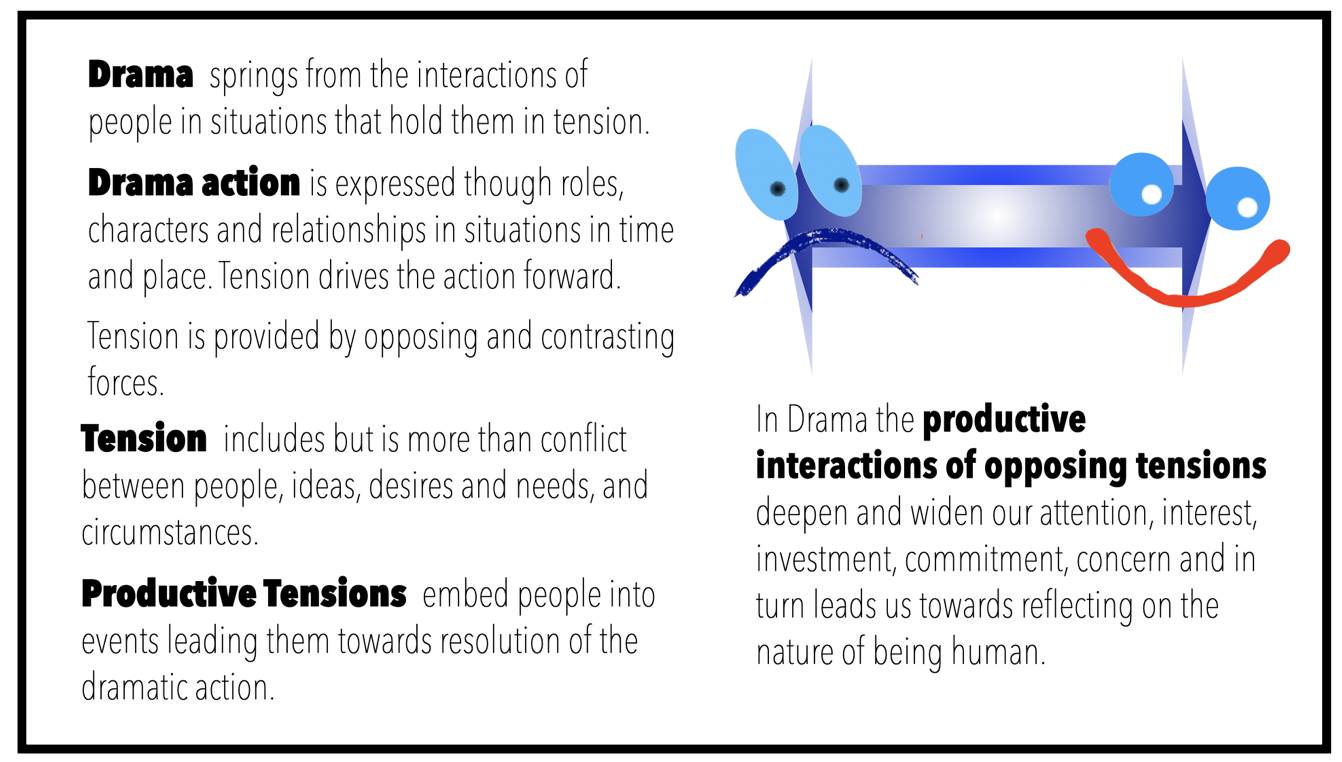
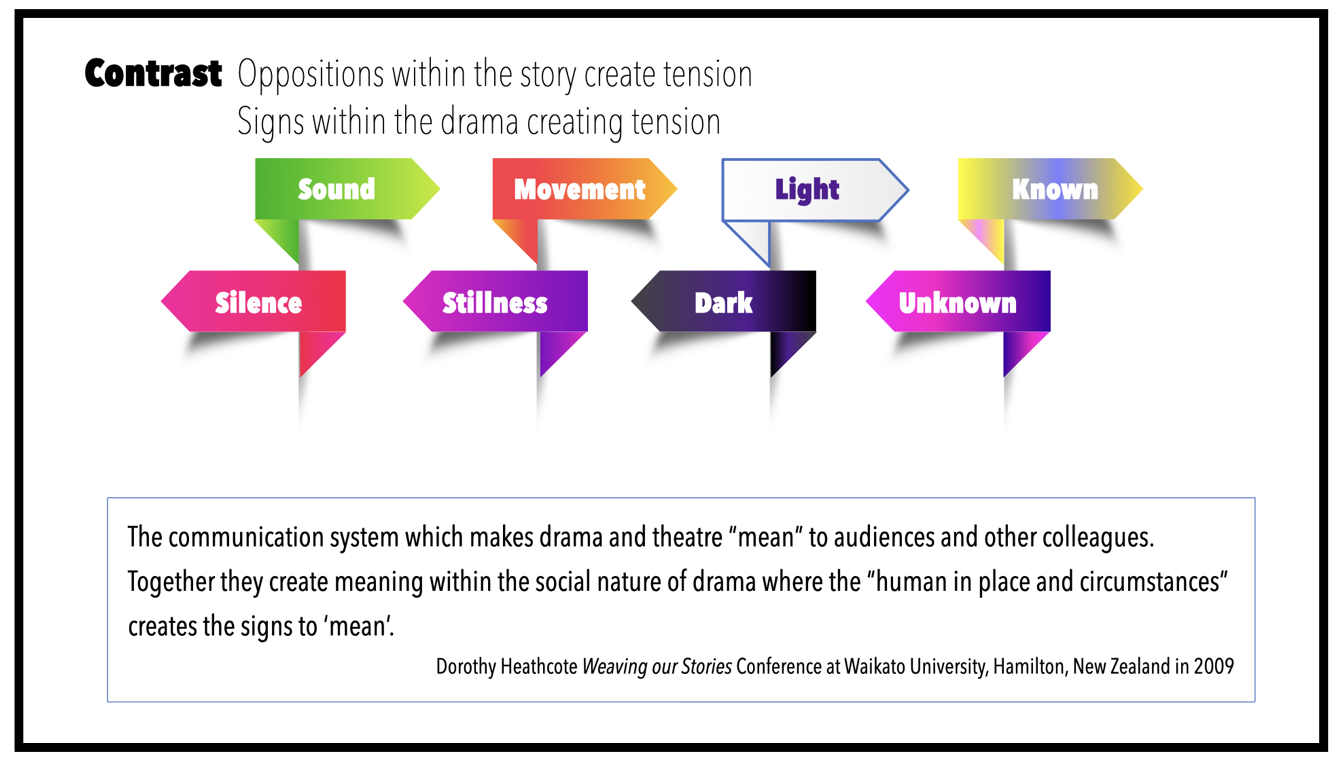
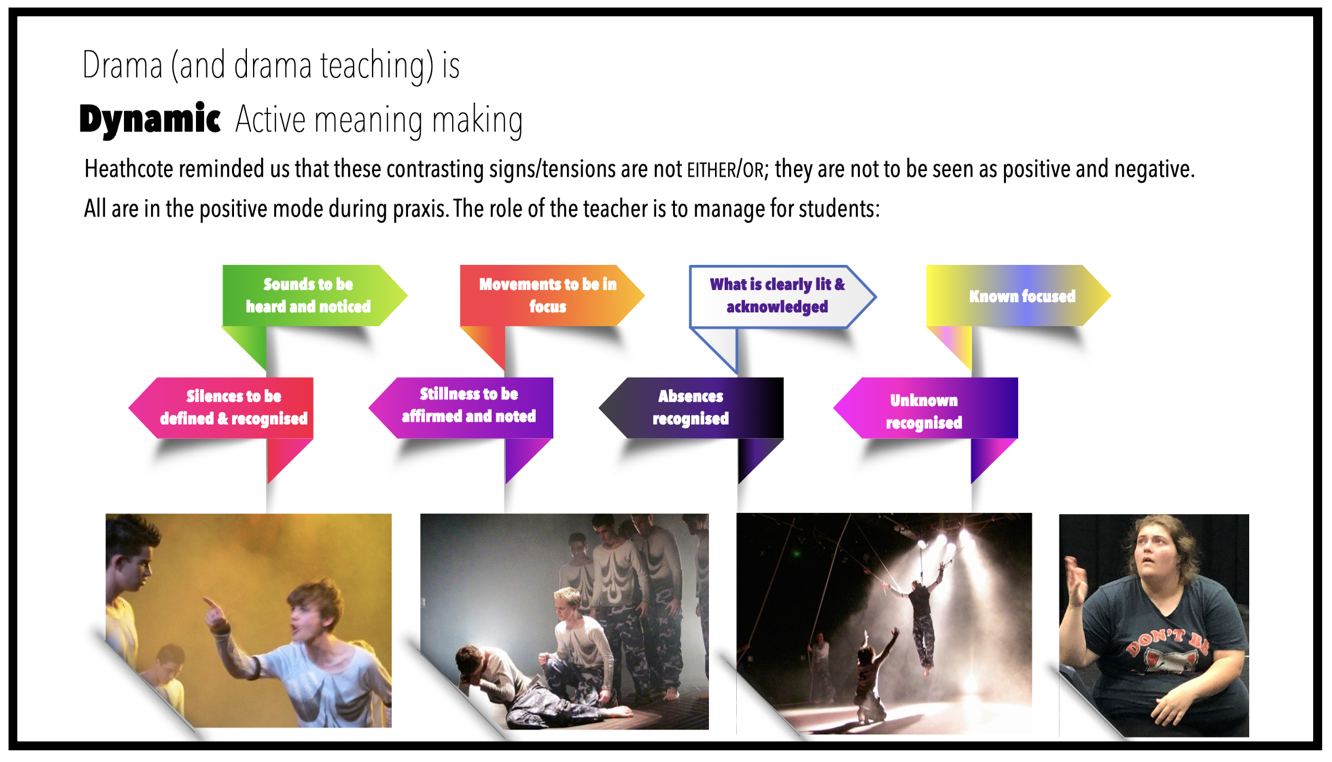
The DNA of drama is the contrasting impulses of tension

I have made a short video to focus on these ideas and also include the slides themselves.

Screen Shot 2021-06-01 at 10.51.46 AM.png

Bibliography

Heathcote, D., Smedley, R., & Eyre, R. (1972). Three Looms Waiting. London: BBC TV.

Music Monday - And into another lockdown we go…

Today was the first of 3 days of stage one restrictions being reintroduced here in Western Australia, in response to an outbreak of the Delta variant of Covid-19 in Sydney and a case brought home to Perth by a traveller returned from the east coast. By 8pm the 3-day restrictions had developed into a 4-day lockdown from midnight. 

Australia has an embarrassingly low rate of vaccination – less than 5% of our population is fully vaccinated. Compare that with around 59% in Israel and 45% in the USA, to name just two of the many countries ahead of us. I sense that it’s not the anti-vaxxers here (though they are out in their minority with rattlings of ‘it’s a worldwide experiment’ etc), but more the  sense of ‘she’ll be right, mate’ complacency which comes from living in a country where the rate of infection has been relatively low throughout the pandemic. 

Our Australian government responded firmly and effectively at the start of the pandemic, following health advice rather than the political polls, to ensure that Australians stayed safe. Unfortunately, they took a too relaxed approach to rolling out the vaccines, contributing to our current situation.

So today at school, the students were back in masks, never ideal for singing. It is the last week of an 11-week term so as far as possible, I tried to make each voice lesson about the preparation for next term. Where singing had to occur, I encouraged the students to sing lightly and rest frequently if they felt too constrained behind their fabric. 

After school we ran a rehearsal of Matilda (Junior Version) as that performance is scheduled for the 2nd week of next term. Again, the kids sang lightly in masks while the director and I struggled to hear them – but at least they rehearsed the blocking, choreography and music accuracy.

Earlier in the school day, I couldn’t help observing, as I walked past the school gym, that around 30 students were exercising without masks – properly spaced, as the regulations require – but shouting and calling out to each other as they chased a basketball. This struck me as a metaphor for Australia’s response to Covid-19. The Arts are constantly locked down while large sporting events have still gone ahead. Are Covid-19 aerosols just more contagious when sung than when shouted out of someone’s mouth?

And so we start another lockdown. Everyone on the planet knows what to expect from that. Let’s hope that lockdown fatigue inspires more and more Australians to get vaccinated so that outbreaks in the future are significantly curtailed.

Drama Tuesday - Belonging

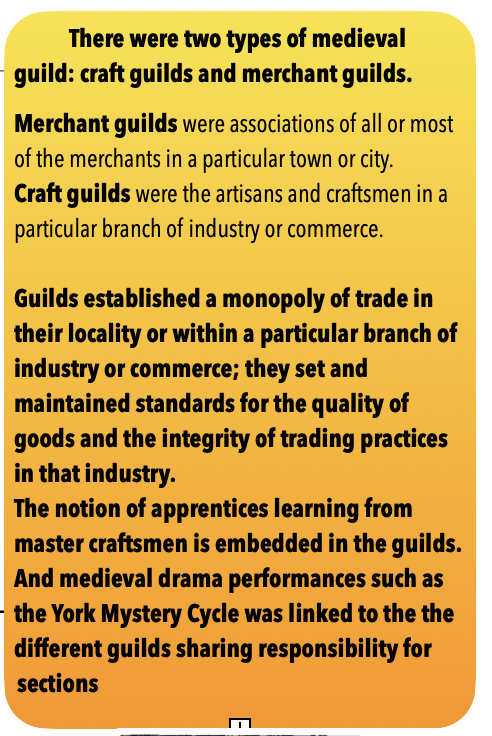
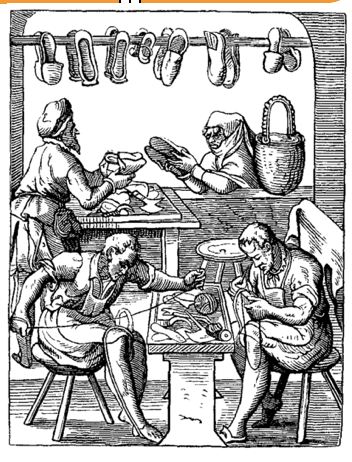
What does it mean to belong to a community – a guild – of drama teachers? 

Screen Shot 2021-06-01 at 10.45.09 AM.png

In setting up the drama teaching course at Murdoch University in 2002 I involved two metaphors

  • building a reporter of resources to support teaching drama on Day 1

  • enrolling students in a guild or association of drama educators.

It is useful to think about why I find the concept of belonging to a group of drama educators an important foundational concept. 

It is not simply because as a graduating teacher i had impressed on me the importance of belonging. Though that is part of it. I have in professional life always been a joiner. 

This post is reflecting on the role of belonging. 

Teaching drama can be isolated. Unlike, say, teaching English, in many schools, as drama teacher you are on your own because there may be only one of you in a school. 

There are many ways of belonging to a community even if you are a one person band. 

  • You can establish networks and use buddy systems.

  • You can be a member of a community when you are not physically located together.

  • You can belong to a virtual community.

  • You can belong to a corresponding community exchanging emails and snail mail and telephone calls.

  • You can belong to a community by reading what others say and write and do by reading professional journals.

  • You can contribute to your professional community by writing of your experiences in professional journals yourself.

  • You can take responsibility for the future of the community. You can be a leader and a worker for the field. You do that from inside your drama workshop but also beyond. What you say and do with colleagues in your school, in your profession is a necessary part of contributing to the future of drama as a part of the curriculum for all students.

Belonging means that we don’t need to reinvent the wheel every time

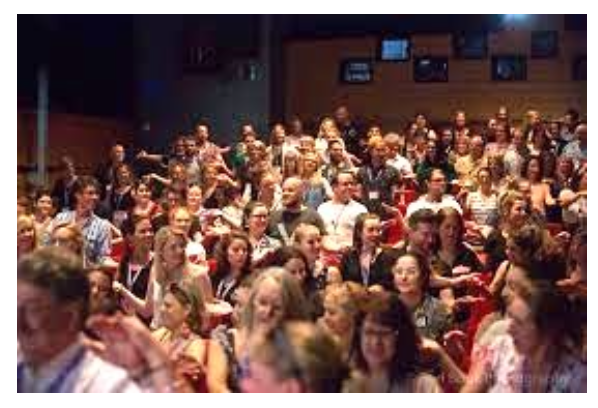
Drama Victoria Facebook

Drama Victoria Facebook

One of the difficulties for productive and creative teachers is that they often reinvent their  particular wheels. Rather than efficiently re-using and re-cycling their teaching notes and resources, they make new ones each year. 

So, isn’t the issue: how do we better organise our pool of resources so that we can effectively and efficiently access them when we need to? And adapt them as our thinking about teaching drama changes, develops and grows

Using available resources better

Similarly, there seems to be a rejection of commercially published materials and textbooks. While I have never been able to use one textbook and one textbook alone, I do draw from many sources in my own teaching. But the most useful resources are people - and that brings us back to why it is necessary to have a sense of belonging.

Music Monday - Enthralled in the moment

Screen Shot 2021-06-21 at 9.05.52 PM.png

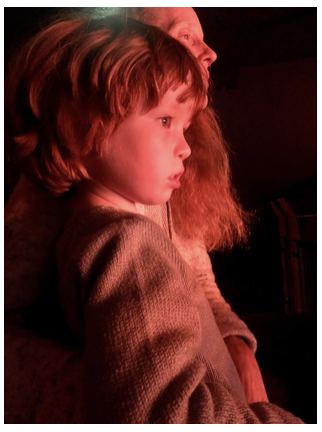
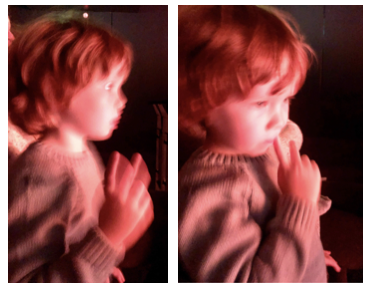
 Our grandson, William (aged 4 and three quarters, as he insists on telling us) was in the audience of the John Curtin College of the Arts production of Mary Poppins. Cousin Janet sneakily managed an iPhoto portrait as William watched, his face lit up by the reflected light from the stage.

He knew the words to songs like Supercalifragilisticexpialidocious. and sang along. 

He was amazed at the animals in the toy box coming to life. 

In the interval, he wriggled and danced (and spilt his bottle of water).

In the second half his attention waned a little (and he missed the spectacular Step in Time because he had to go to the toilet with his mum). He got back to his seat just in time for the reprise.

After the show, I took him backstage (I was one of the vocal directors on the show)  He shook hands with Bert whom he could name from the show.  

Screen Shot 2021-06-21 at 9.05.58 PM.png

When he was taken out on the stage itself, behind the closed curtain, his hand gripping mine was tighter and tighter. The following day I asked him why he seemed nervous on the stage itself and he revealed that he was afraid that the curtain would open again and that he “didn’t know the words.” Cute - but in his childlike way, an understanding of the process.

We cannot overlook how important it is for kids to see theatre live, to experience the transformation in themselves when their eyes, ears and imaginations takes them somewhere different.

Nor, how important it is that before, during and after the experience, we share ways of making meaning of it. Before going to the production I sat down with him on a wet Sunday afternoon and we watched clips on YouTube of the songs. We then sat at the piano and sang through those songs from the score. And the day after the event, he was telling us to Step in Time. Step in time. as he beat the rhythm with his feet and mimicked the tap routine.


Music Monday - How often do I need a music lesson?

This year has marked a significant reduction in singing lessons at the tertiary institution I work for. Driven by budget constraints, the students are now provided with fortnightly lessons, where previously they were weekly. Furthermore, there are a number of non-teaching weeks in each semester (rehearsal, production and performance weeks) when classes are cancelled, so, in fact, the fortnight’s gap between lessons often becomes several weeks. In 2021 there are a total of 12 lessons per year in the 1st and 2nd years of the bachelor degree and 10 lessons in the 3rd year.

At the same time, in my other workplace, a specialist performing arts high school, there continue to be weekly lessons (40 per year). The irony has not been lost on me when sending home an email to the parents of a student who has missed a lesson – “only 8 more lessons this term – don’t miss any more!”

This strange 2021 dichotomy between my two teaching environments has set me thinking about how many lessons we actually need at the various stages of our training.

As a young child with a live-in piano teaching grandmother, I was used to the pupils turning up at their regular weekly lesson time. I guess the weekly lesson meant that each family’s household calendar was straightforward. Certainly in the beginning stages of learning any instrument (including the voice), regular lessons ensure that mistakes are not too practised in before correction by the teacher.

In my role as a high school voice teacher, I wear several hats – simultaneously I am teaching vocal technique, music literacy, interpretation skills, to name a few. The students need the weekly contact to maintain their growth and development.

In the tertiary environment, our 1st year students come from a variety of musical backgrounds. Because they are music theatre students, their individual skill levels vary. Some are strong dancers and inexperienced singers. Occasionally I have had a student with a prior degree in voice. The so-called triple threat encompasses singing, acting and dancing and no one starts the degree with equal skills in all three – I mean, why would they bother to do the course? It is very frustrating to be limited in how much instruction we can offer the beginners, who really need correction and guidance in the studio on a weekly basis.

If a reduction in practical training is to be a thing of the future, how can we fill the gaps?

Students could, of course, seek private teachers outside of the institution. The obvious benefit is the increased number of lessons. The potential downside is differing teacher approaches, which could be confusing in the early stages of training.

Technology offers some solutions. Although I am not a huge fan of the zoom music lesson – mainly because of the time lag involved – I do find that students benefit other uses of technology, such as submitting practice/ performance videos for teacher viewing and feedback. Is technology the way of the future here?

However, one thing that becomes clearer to me with every passing year is this – unless there is an investment in significant practice routines by the student, the number and frequency of lessons is irrelevant. A student who doesn’t practice will make as little progress with weekly, fortnightly, or even monthly lessons. But a student with good practice habits is going to progress faster with more regular instruction. Your thoughts?


Drama Tuesday - Against the odds

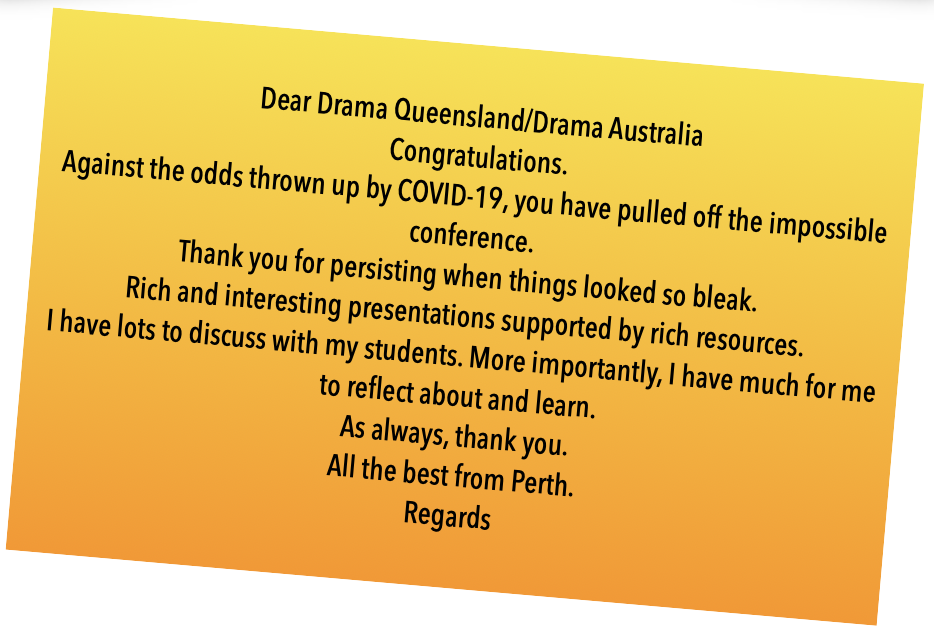
A national drama education conference in plague times

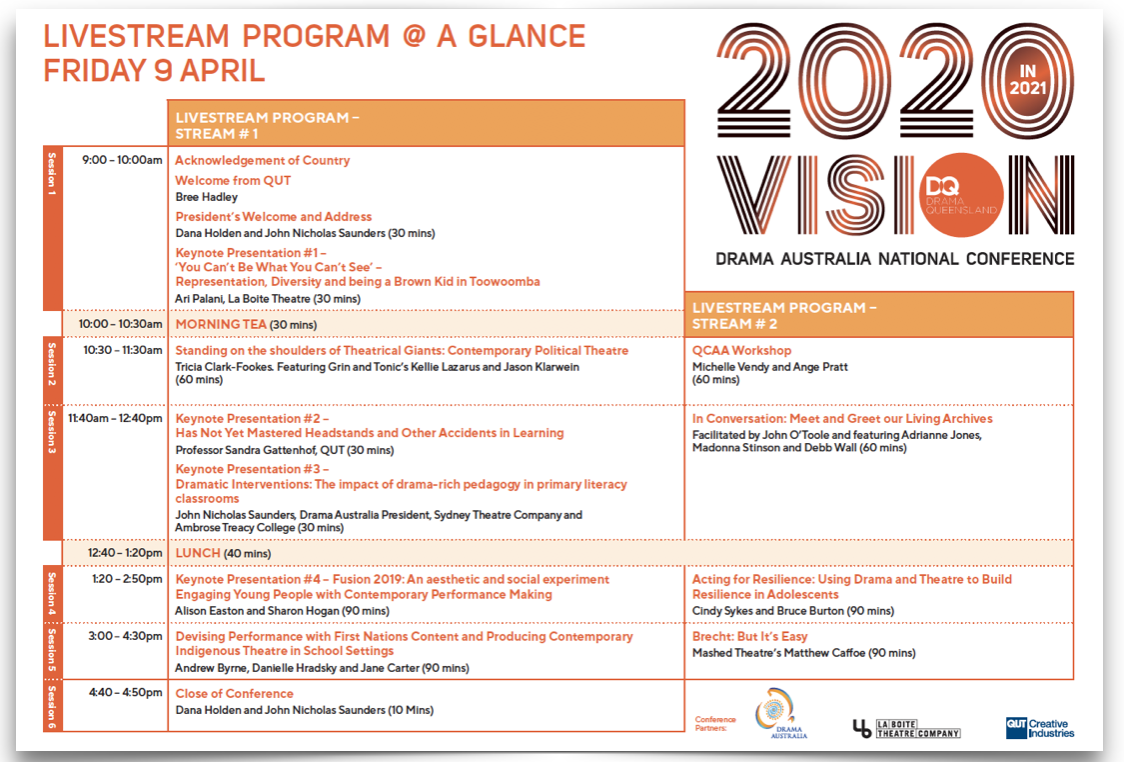
In April 2020 the Drama Australia community were preparing to meet at the Vision 2020 National Conference to be held in Brisbane, Queensland. A little thing called the Coronavirus Pandemic intervened. 

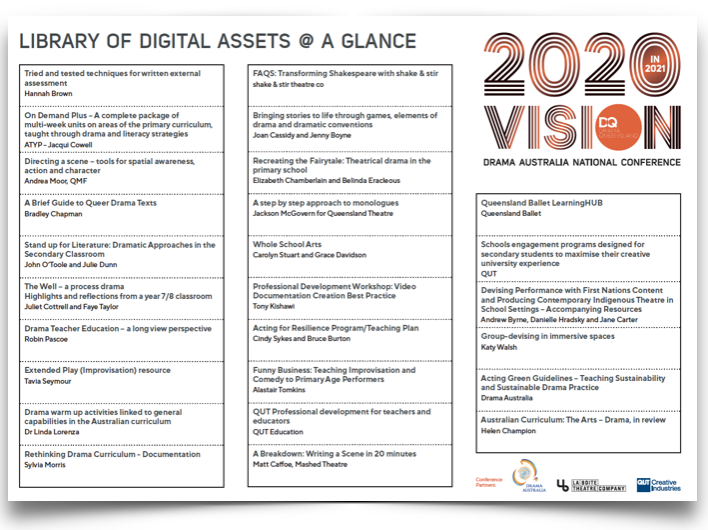
In April 2021 the same community were preparing to reconvene in Brisbane to have another go at this conference. This time it was a 3-day lockdown in Brisbane immediately before the conference was due to start. But the resilient Drama Australia community, led by Drama Queensland, pivoted to make this event an online event. A few lucky souls met in person at the QUT Conference venue but the rest of us were sitting at our computers - in my case two hours behind Brisbane (which was a strange and unnerving experience). 

It is important to reflect both on the resilience of the community as well as the themes that emerged in this particular conference.

The focus on recognition of indigenous and aboriginal voices is is noticeable. In particular (though not alone in a wide program) was ‘You Can’t Be What You Can’t See’ – Representation, Diversity and being a Brown Kid in Toowoomba

by Ari Palani, La Boite Theatre. Delivered from the heart with authenticity, this keynote set a thoughtful and yet provocative tone for the conference as a whole. 

Screen Shot 2021-06-01 at 10.37.01 AM.png

Many presentations were recorded and will be available through the Drama Queensland portal.

They are published published in the Digital library for the Conference that Drama Queensland has put together. https://www.dramaqueensland.org.au/pd/conference/  

Another of the important pieces of information embedded in the Conference was a presentation from ACARA The Australian Curriculum, Assessment and Reporting Authority. A heads up for the Drama Australia community  – and the whole Arts Education community, ACARA has announced a review of the Australian Curriculum :The Arts (as part of a curriculum wide review).

Information about the Review can be found at https://acara.edu.au/curriculum/curriculum-review 

The Review will be carried out concurrently in all eight learning areas. The review will give a particular focus to the F–6 curriculum in order to reduce overcrowding and provide improved manageability and coherence to the curriculum for the primary years of schooling. The scale and magnitude of content refinement and reduction will not be the same across all learning areas.

There are some good news stories for Arts educators – For example

Learning in and through The Arts enables and promotes transferable knowledge, skills and dispositions seen as essential for

today’s world, 2030 and beyond.

“The potential of the arts in symphony to promote self-understanding and wellbeing and to make meaning to illuminate the advantages of viewing the world from multiple perspectives is limitless. Contemporary research, alongside multi-disciplinary and transdisciplinary arts-rich initiatives, underline that we must blur the boundaries while maintaining respect for the integrity of each arts discipline.” (Ewing, R, in More than words can say, A view of literacy through the Arts, ed. Dyson, J, NAAE, 2019) 

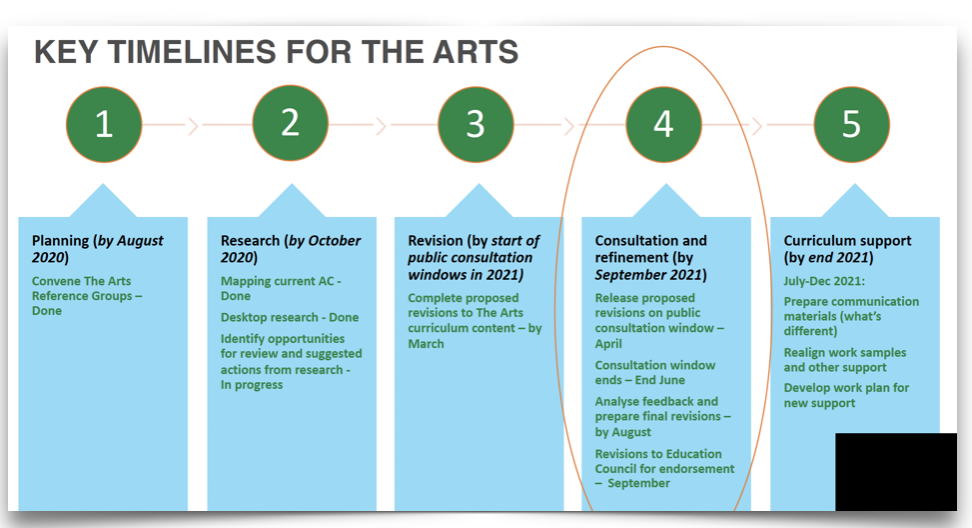
But we should be aware of the timeline.

People interested can contact ACARA – helen.champion@acara.edu.au 

Screen Shot 2021-06-01 at 10.38.34 AM.png
Screen Shot 2021-06-01 at 10.38.43 AM.png

Music Monday - Which layer of the music do you hear best?

A couple of weeks ago I attended a singing concert given by our graduating class of acting students. It is a class that I have taught for the past 25 years, and passed up this year as the start of a general reducing of my teaching hours. 

For past concerts I have been the accompanist and this time I was in the audience enjoying the whole experience. A couple of observations surprised me. For a start, I found that my attention kept straying to the pianist – despite compelling story-telling from the singers concerned. Was part of me wishing I was still on the piano stool? Or was it the fact that the accompanist is one of our finest local pianists? Or something else?

One of the challenges in training classes of acting students to sing is that there is a wide range of natural ability, experience and inclination present. This group were all strong at the story-telling aspect of singing, a couple had pitch issues and several are all round strong singers. With the last category, I was more able to appreciate the whole tapestry of their song – text on melody and the harmonic layers of the accompaniment.

In the week which followed, I was in one of my secondary school singing classes, but for once the students were silent. They were completing a written ‘marking up the score’ task in preparation for some sight-singing. In nearby rooms the faint sounds of clarinet and violin lessons could be heard. One of the students commented on how distracting the sounds were. Another said that she always likes to hear the background lessons when we are quiet in our singing class. Someone else noticed that the violin and clarinet clashed with each other but yet another student remarked that she thought it sounded like a really interesting piece of (unintentional) music. At this point a student, who had been intensely focussed on figuring out the solfa for the sight-singing piece, looked up and asked, “What are you talking about? I don’t hear anything.”

We can never really know what audiences hear when they listen to music. For example, that wonderful, evocative wash of sound in so many piano concerti of the Romantic period is created by the harmonic structure. We hum the tunes, but we inwardly hear the harmonies from both piano and orchestra.

How can we submit to the complete tapestry of music without our own preferences (and prejudices?) distracting?

Is it easier for audiences without music training to appreciate the whole concert experience?

These are my current preoccupying thoughts.


Drama Teacher Education – got my ticket for the long way round

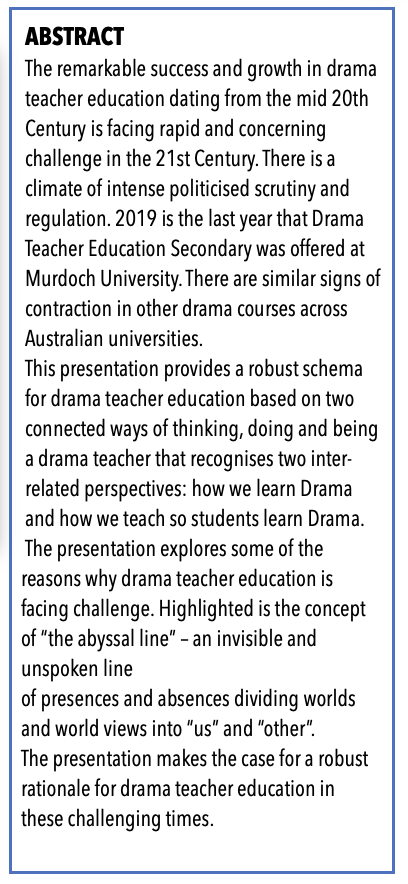
Drama Teacher Education in Australia is at crossroads.

Screen Shot 2021-06-01 at 10.32.08 AM.png

For the Vision 2020 National Drama Conference due in Brisbane in April 2021, I re-worked my workshop presentation as a video and share it here. 

The presentation draws on a chapter I have been writing and re-writing since 2020 for the Routledge Companion to Drama Education edited by Peter O’Connor and Mary McEvoy (forthcoming after a long delay caused by the Coronavirus COVID-19 Pandemic – another of the many pivots that have happened 2020-2021).

Screen Shot 2021-06-01 at 10.32.14 AM.png

 The text of the presentation is also included. 

It is also published in the Digital library for the Conference that Drama Queensland has put together. 

https://www.dramaqueensland.org.au/pd/conference/ 

Video Script

Drama Teacher Education – got my ticket for the long way round

Drama Teacher Education in Australia is at crossroads. 

Robin Pascoe 

Honorary Fellow, College of Science, Health, Engineering and Education (SHEE), Murdoch University, South Street, Murdoch, Western Australia 6150

Introduction

Drama Teacher Education in Australia is at another crossroads. Drama teacher education emerging within formal university structures in the mid 20th century until now has been a remarkable success story. But there is rapid and concerning change. Indicative of changes in other universities, 2019 was the last time that Drama Teacher Education Secondary was offered at Murdoch University. There are similar signs of contraction in other drama courses across Australian universities 

Context: developing a drama teacher education course

I have spent the last 20 years teaching drama education beginning with asking colleagues fundamental questions:

  • What do you want teachers to know and be able to do on Day 1? And every day after that?

Over time I developed an approach based on the following principles:

We learn to teach Drama in the way that we learn drama

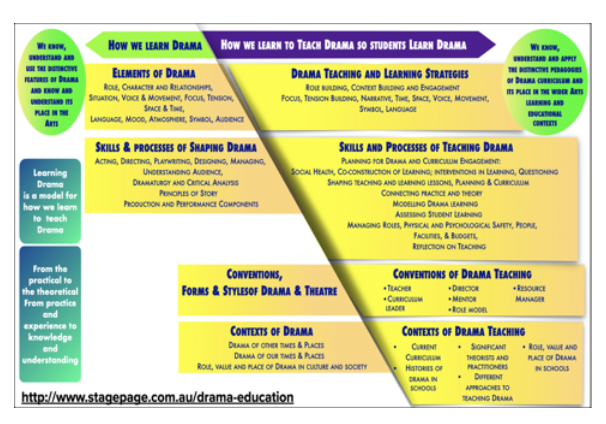
To teach Drama effectively we develop two inter-related perspectives: how we learn Drama and how we teach so students learn Drama. They are connected ways of thinking, doing and being a drama teacher. 

We learn Drama through experience, observation, modelling and being part of an ensemble. We learn to teach Drama through applying our direct experiences of drama and theatre; observing and modelling from others teaching drama; and, belonging to a community of shared practice (what I sometimes call a Guild of Drama Teachers).

In Learning Drama, we identify the distinctive nature of Drama/Theatre as an art form and its role in people’s lives, society and community. We learn Drama by making Drama recognising that it is hands-on, practical and experiential. It is embodied learning that brings together our body, mind and spirit. We understand that

Drama is aesthetic experience contextualised in the art forms’ histories, conventions and cultures. 

Figure 1: Relationship between learning drama and learning to teach drama

In Learning to Teach Drama, we identify Drama as curriculum. We shape our practice in our Drama Teacher roles as teacher, curriculum leader, director, mentor, role model and resource manager.

Learning to teach Drama is practical, embodied experience. We learn to teach Drama by teaching Drama – by trying out strategies, concepts and approaches that help us refine our choice making as teachers.

In practice, this translated into an articulated course (Example available at  http://www.stagepage.com.au/drama-education). 

Conceptual learning was integrated into and followed practical experience. Hands on, practical examples of strategies, skills and processes were underpinned by connections with contexts, curriculum, theory, theorists and history. Key multiple roles of teaching drama – teacher, curriculum leader, director, mentor, role model and resource manager – were modelled and taught.

The current crisis

Drama teacher education in Australia began to be recognised in the 1960s. In Western Australia for example, in 1974 I was in the first intake of students permitted to take Drama Education as a major curriculum study at the Secondary Teachers College. The course outlined earlier was established in 2002 as the third available in Western Australia. As drama education grew in Western Australian schools (particularly with recognition of Drama ATAR in 1999) there has been a steady need for drama teachers. But there has been rapid and concerning change in the twenty-first century in the complex contemporary landscape of Australian universities.

In the past ten years or so there have been more than forty inquiries into different aspects of teacher education (Mills & Goos, November.13.2017). The Australian Government Teacher Education Ministerial Advisory Group (TEMAG) reported in Action Now: Classroom Ready Teachers (December 2014) issues and concerns. There is a populist tabloid perception that teacher education is flawed if not failing (see, for example, Shine, 2018). This, in turn, has led to intense politicised scrutiny and regulation including Accreditation of Initial Teacher Education Programs in Australia (AITSL, 2011) and the establishment of Australian Professional Standards for Teachers (Australian Institute for Teaching and School Leadership (Australian Institute for Teaching and School Leadership (AITSL), 2017). Yet, the situation is not clear cut.

Trends and patterns There has been an erosion of drama teacher education at my university over time and diffusion of focus in other Universities.

What is happening for drama teacher education is more than a response to the Coronavirus COVID-19 pandemic. There is a significant challenge to place of drama teacher education itself. To move beyond this moment, we need to better understand some deeper underlying issues.


Recognising the abyssal line

It is too easy to sound a warning about declining standards in drama teacher education. The tree that holds up the sky is uneasily still holding for us. 

But as teacher educators in a contemporary world ,we have come to recognise “the abyssal line” (Santos, 2007), an invisible and unspoken line of presences and absences dividing worlds and world views into “us” and “them”. Things, people, ideas beyond that line are de-emphasised to the point that they are rendered null (in an Australian context, a terra nullius). This side of that line is what we collectively value, what we collectively think is important. In the eyes, minds and assumptions of many others both educators and the wider community, arts education is rendered as “other”, “peripheral”. Drama is negated, obscured, overlooked and rendered invisible, unimportant or non-essential (e.g., in course offerings in schools it is “optional”). When the dominant approaches to education consign arts education to this nether world, we have institutionalised “epistemicide” (Paraskeva, 2016) - a war on the knowledge(s) that we value, the destruction of existing knowledge and denial the possibilities of new knowledge(s).

To put it bluntly, what we believe in is not shared by many. 

There continue to be many misconceptions about drama teaching. 

Now more than ever we need as a drama education community to re-articulate our beliefs and values about drama education.

A robust schema for Drama Teacher Education

Whatever approach is taken to drama teacher education, there needs to be an underlying robust, durable, practical schema to serve as a living and responsive guide to our work.

Learning to teach drama focuses on embodied learning in the arts (Bresler, 2004). Through practical, hands on experiences in the drama we model the ways that your students learn the arts and ways that you teach the arts. This engenders embodied teaching.

This approach is based on sound research about providing:

analogue experiences – analogue experiences are like the ones students in drama experience; providing teachers with similar learning experiences that they need to facilitate for their students (Hilda Borko & Ralph  T. Putnam, 1995; Morocco & Solomon, 1999) 

content focus – unambiguous content description (Desimone, Porter, Garet, Yoon, & Birman, 2002; S.Garet, Porter, Desimone, Birman, & SukYoon, 2001; Shulman, 1986) 

active learning – where teachers are engaged in the analysis of teaching and learning; learning from other teachers and from their own teaching; reviewing examples of effective teaching practice (Desimone et al., 2002; Franke, Carpenter, Fennema, Ansell, & Behrend, 1998; Franke, Fennema, & Carpenter, 1997; Morocco & Solomon, 1999; S.Garet et al., 2001) 

dialogue amongst teachers – belonging to a community of drama teachers participating in discussion with practicing teachers (T. R. Guskey, 1986; T.R.  Guskey, 2003; Virginia Richardson, October 1990) 

long term support and feedback – support beyond the immediate experiences in the workshop through enrolling in community of drama teachers (H. Borko & R.T. Putnam, 1995; T.R. Guskey, 2002) 

This is an articulated theoretical framework for drama teacher education course design that steps beyond pragmatic functionalism. It is a framework informed by Dewey, Vygotsky, Bruner, Eisner, Greene and others. Learning to teach drama involves acts of purposeful meaning making that draw together personal experiences and those of others (Dewey, 1938:2005; Eisner, 2002). No one learns alone – drama is intrinsically social learning (Grumet, 2004; Vygotsky, 1978). Drama teachers learn cognitively, somatically and affectively – mind, body and spirit (Peters, 2004). They work with enactive, iconic and symbolic modes (Bruner, 1990). Learning to teach drama engages aesthetic imagination (Greene, 1995). Learning to teach drama involves proactive participation in communities of practice (Wenger, 1998). Learning to teach drama organises drama knowledge, categorise it and uses strategies of paradigmatic thinking and narrative building (Bruner, 1991).

Every Drama Teacher needs a robust schema for what they are doing and why as the experienced drama teacher in the focus group articulated.

Peter Wright and I have written recently about Arts Teacher Education as Applied Aesthetic Understanding (in press) (adapted and extended from (Wetterstrand, 1999). Students need to:

  • see themselves as creators – as emerging artists beginning to develop understanding and control of specific skills and processes in drama

  • see themselves as thinking and engaging aesthetically. They critically engage with their own experiences and those of others

  • speak the language of the art form

  • display the habits of mind of artists and build cognitive and practical structures for managing their learning and teaching drama

  • build personal identity through drama and develop personal, social and cultural agency – capacity to initiate, manage and forge their own meaning making

  • develop perspective and a range of practical and informed understandings rather than take a simple unitary view of drama teaching

  • extend and deepen their understanding of the characteristics of drama as an art form and drama in the service of learning

  • reflect on their processes, products and their own learning in, through and about drama – and, beyond that, to human experience itself.


At the heart of it the developing drama teachers need capacity to cope with the sometimes stressful and always demanding work of teaching drama. They need to become reflective practitioners understanding and managing their multiple roles. All of which is underpinned by their practical knowledge, understanding of the skills and processes of the art form of Drama

An important point was made by an experienced teacher who was part of my initial focus group:

  • young teachers need to have an articulated philosophy of drama teaching. They must be clear about why they want to be a drama teacher. Their ultimate success as drama teachers relies significantly on their values about drama and about teaching. They needed a capacity built on respect, collaboration, working through process as well as product.


Conclusion

I don’t think I realised just how long the drama education journey would be when I entered that course in 1974. I got my ticket for the long way round. 

There’s a song that’s an earworm in my life at the moment. I think its emblematic for a life in drama teacher education. 

I got my ticket for the long way round

Two bottles of whiskey for the way

And I sure would like some sweet company

And I'm leaving tomorrow, what do you say

(Simone, 2013)

Drama teacher education and drama education itself, is a long-term project. There’s a need for a long view perspective. We are here for the long haul. Drama education and drama teacher education will survive the current road bumps. We will emerge a little shaken and stirred. But we must not lose sight of the long view and the challenges of helping those who make decisions to step over the abyssal line. Or that we as drama educators need in this time and into the future to walk both sides of that line. 

The need for the robust schema outlined earlier is urgent and essential.  Drama teacher education curriculum is not just content knowledge. It embodies ways of knowing and being in the world. It is too easy to play the misunderstood victim role as contexts change. It is necessary for us to strategically acknowledge and disarm critics and move past obstacles. It is insufficient to simply assert our place in the educational sun; we need to make the case with robust research based on experience that is not merely confirming the past but engaging future possibilities.

While I continue to work towards the long-term goals outlined, I know that this is not the task of one person and that at some point we all need to pass the baton to another generation. Long after I am gone, the case needs to be argued. We need to build drama teacher education as inevitable, as a self-evident truth. 


References

AITSL. (2011). National system for the accreditation of pre‑service teacher education programs. Retrieved from http://www.aitsl.edu.au/verve/_resources/AITSL_Preservice_Consultation_Paper.pdf

Australian Institute for Teaching and School Leadership (AITSL). (2017). Australian Professional Standards for Teachers.  Retrieved from https://www.aitsl.edu.au/teach/standards

Borko, H., & Putnam, R. T. (1995). Expanding  a  Teachers’  Knowledge  Base:  A  Cognitive  Psychological Perspective on Professional Development. In T. R. Guskey & M. Huberman (Eds.), Professional Development in Education: New Paradigms and Practices (pp. 35-66). New York: Teachers College Press.

Borko, H., & Putnam, R. T. (1995). Expanding a teacher’s knowledge base: A cognitive psychological perspective on professional development. In T. R. Guskey & M. Huberman (Eds.), Professional Development in Education. New York: New York: Teachers College Press.

Bresler, L. (2004). Knowing Bodies, Knowing Minds - Towards Embodied Teaching and Learning. Dordrecht: Kluwer Academic.

Bruner, J. (1990). Acts of Meaning. Cambridge, MA: MIT Press.

Bruner, J. (1991). The Narrative Construction of Reality. Critical Inquiry, 18(1), 1-21. Retrieved from http://www.jstor.org/stable/1343711

Desimone, L. M., Porter, A. C., Garet, M. S., Yoon, K. S., & Birman, B. F. (2002). Effects of Professional Development on Teachers' Instruction: Results from a Three-Year Longitudinal Study. Educational Evaluation and Policy Analysis, 24(2 (Summer 2002)), 81-112. Retrieved from http://www.jstor.org/stable/3594138

Dewey, J. (1938:2005). Art As Experience: Perigee Trade.

Eisner, E. W. (2002). What can eduction learn from the arts about the practice of education? John Dewey Lecture for 2002, Stanford University. Retrieved from www.infed.org/biblio/eisner_arts_and_the_practice_or_education.htm . Last updated: April 17, 2005.

Franke, M., Carpenter, T., Fennema, E., Ansell, E., & Behrend, J. (1998). Understanding teachers’ self- sustaining, generative change in the context of professional development. Teaching and Teacher Education, 14(1), 67-80. 

Franke, M., Fennema, E., & Carpenter, T. (1997). Teachers creating change: Examining evolving beliefs and classroom practice. In E. Fennema & B. Scott-Nelson (Eds.), Mathematics teachers in transition (pp. 255-282). Mahwah: Lawrence Erlbaum Associates.

Greene, M. (1995). Releasing the Imagination: Essays on Education, The Arts and Social Change. San Francisco: Jossey-Bass.

Grumet, M. (2004). No one learns alone. Putting the arts in the picture: Reframing education in the 21st century, 49-80. 

Guskey, T. R. (1986). Staff development and the process of teacher change. Educational Researcher, 15, 5-12. 

Guskey, T. R. (2002). Professional development and teacher change. Teachers and Teaching: Theory and Practice, 8, 381-391. 

Guskey, T. R. (2003). What makes professional development effective? Phi Delta Kappan, 84(10), 748-750. 

Mills, M., & Goos, M. (November.13.2017). Three major concerns with teacher education reforms in Australia.  Retrieved from https://www.aare.edu.au/blog/?p=2548

Morocco, C. C., & Solomon, M. Z. (1999). Revitalising professional development. In M. Z. Solomon (Ed.), The diagnostic teacher: Constructing new approaches to professional development (pp. 247-267). New York: Teachers College Press.

Paraskeva, J. (2016). Curriculum epistemicides. New York: Routledge.

Peters, M. (2004). Education and the Philosophy of the Body: Bodies of Knowledge and Knowledges of the Body. In L. Bresler (Ed.), Knowing Bodies, Moving Minds - Towards Embodied Teaching and Learning. Dordrecht: Kluwer Academic Publishers.

S.Garet, M., Porter, A. C., Desimone, L., Birman, B. F., & SukYoon, K. (2001). What Makes Professional Development Effective? Results From a National Sample of Teachers. American Educational Research Journal. doi:https://doi.org/10.3102/00028312038004915

Santos, B. d. S. (2007). Beyond   Abyssal   Thinking:   From   Global   Lines   to   Ecologies   of   Knowledges. Review, XXX(1). 

Shine, K. (2018). Everything is negative’: Schoolteachers’ perceptions of news coverage of education. Journalism. Retrieved from https://espace.curtin.edu.au/bitstream/handle/20.500.11937/70003/267577.pdf

Shulman, L. (1986). Those who understand: Knowledge growth in teaching. Educational Researcher, 15(2), 4-14. 

Simone, J. (2013). Cups (You're Gonna Miss Me When I'm Gone). In.

Teacher Education Ministerial Advisory Group (TEMAG). (December 2014). Action Now: Classroom Ready Teachers. Retrieved from https://docs.education.gov.au/system/files/doc/otheraction_now_classroom_ready_teachers_print.pdf

Virginia Richardson. (October 1990). Significant and Worthwhile Change in Teaching Practice. Educational Researcher, 19(7), 10-18. doi:10.2307/1176411

Vygotsky, L. S. (1978). Mind in Society: The Development of Higher Psychological Processes. Cambridge, MA: Harvard University Press.

Wenger, E. (1998). Communities of practice: Learning, meaning, and identity. Cambridge: Cambridge University Press.

Wetterstrand, G. (1999). Creating Understanding in Educational Drama. In C. Miller & J. Saxton (Eds.), Drama and Theatre in Education International Conversations. Victoria B.C.: American Educational Research Association Arts and Learning Special Interest Group and the International Drama in Education Research Institute July308 1997 Victoria, B.C. Canada.