
Drama Thinking - Part 2
/In the first part I discussed drama thinking approaches to getting to know and understand the story better. This included looking at the narrative chain – the who, when, where, what happens and why of the story. A second approach looked at the story in terms of dramatic structure – as suggested by Gustave Freytag. The first drama thinking approach suggested was brainstorming – thematic networking. This post will develop further drama thinking approaches.
Categorisation of the story in terms of daily lives.
Rather than the free association of ideas in brainstorming or thematic networking, the starting point are experiences commonly found in everyday lives and asking if this is a source for drama in this story.
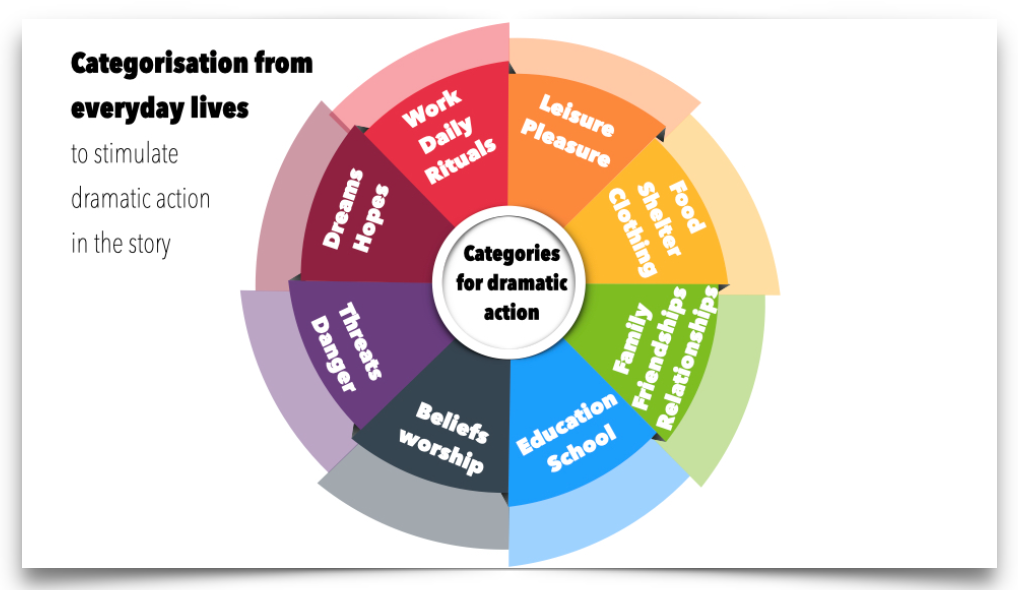
Some categories include:
Work and daily rituals
Leisure and pleasure
Food, shelter and clothing
Family, friends and relationships
Education and schooling
Beliefs and worship
Threats and danger
Drama and hopes.
There can be other categories too.
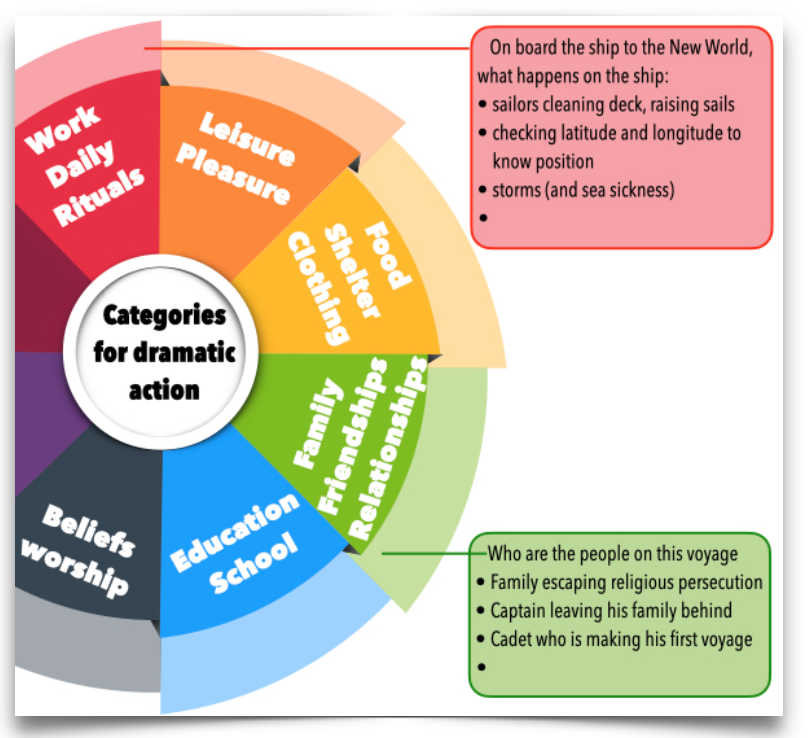
For example, what is the drama in the daily work and rituals of life on board a ship headed for the New World:
sailors cleaning deck, raising sails – opportunities for movement and voice
checking latitude and longitude to know position – using Mantle of the Expert to reinforce knowledge of the world
storms (and sea sickness) – exploring the emotions along with movement, improvisation, etc.
not forgetting that there are many other possibilities
A second example: are families, friendships and relationships central to the story?
What are the essential Elements of Drama and potential for tension within the families in the stories? And how do the relationships change during the story?Narrative Structure of the story
Who are the people on this voyage
Family escaping religious persecution
Captain leaving his family behind
Cadet who is making his first voyage
There are more possibilities
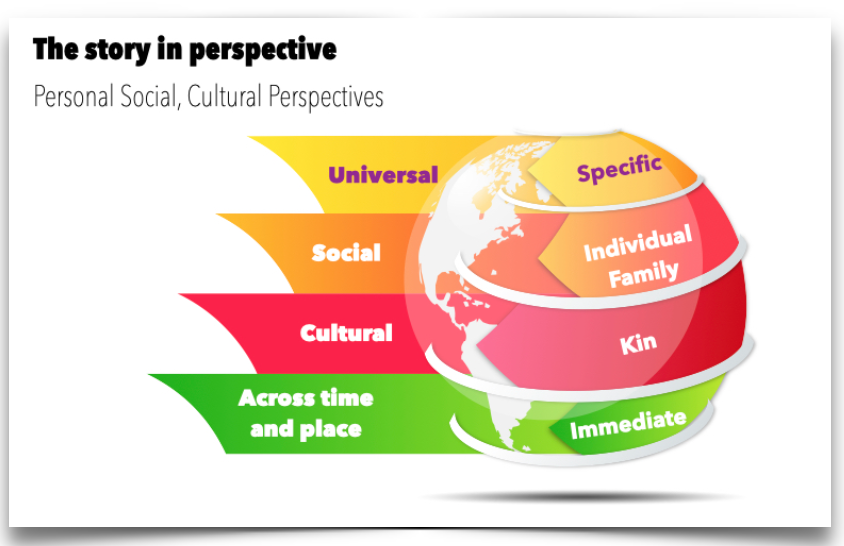
The story in perspective - seeing the story from Personal Social, Cultural Perspectives
It is possible to think of the story from different perspectives.
You can consider the relationships between
the universal elements of the story (how it applies to all people and places) or you can think about the story as very specific to only some people and places.
the broader society and the individual or family perspective
the cultural – affecting wider ideas, habits, customs and values – or those of a specific group
the broadly historical – what happens across time and place – and the immediate and personal history.
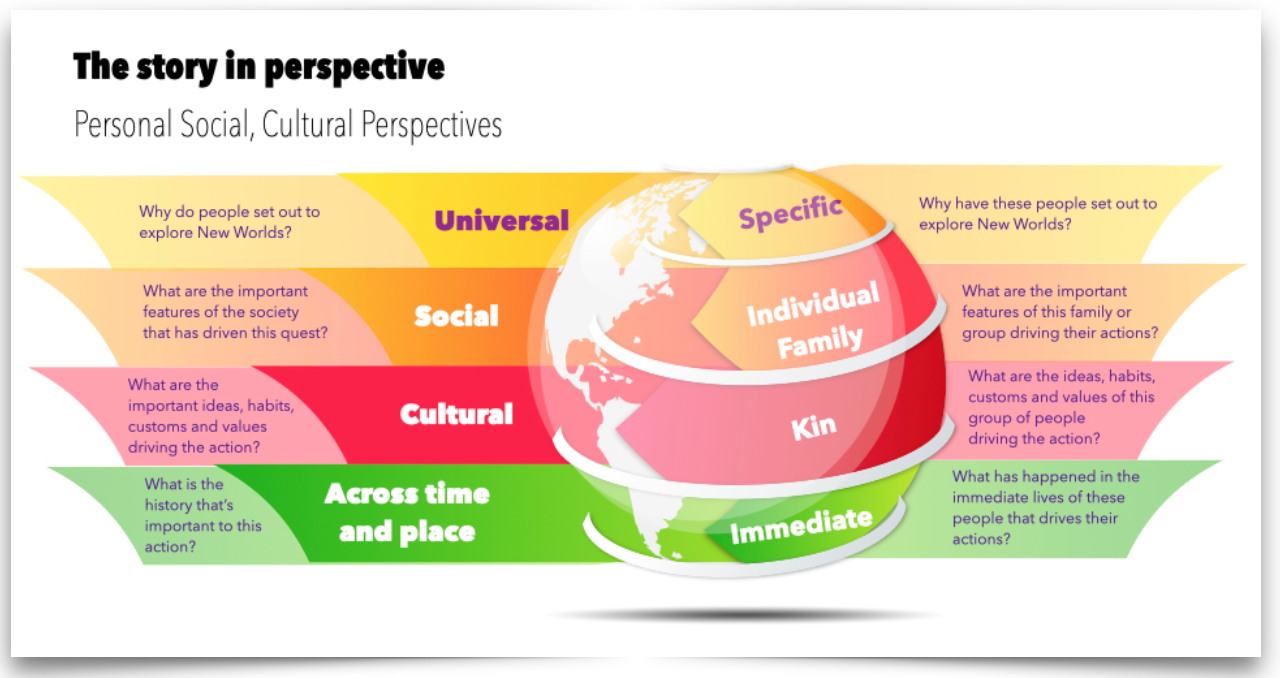
The sorts of questions that can be asked about the travellers on board the ship to the new world.
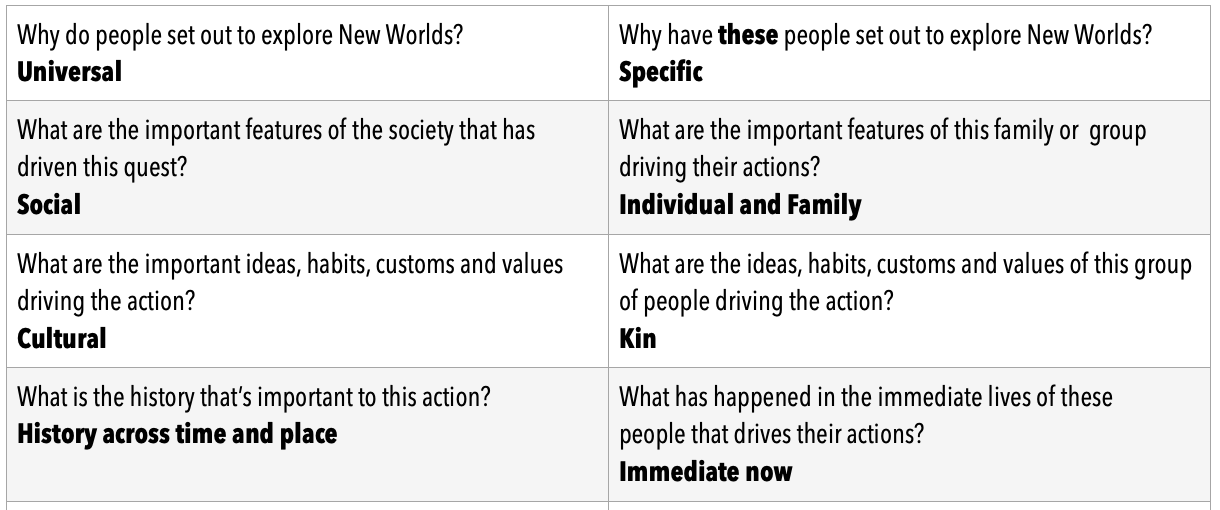
There is caution needed in using terms such as universal or cult. They have specific meanings and are often argued about as theoretical and practical concepts. But it is nonetheless useful to think about these aspects of a story when we are planning our drama workshops.
This is not yet a plan for teaching your drama lesson. This is a process that hand in hand with an understanding of Drama Teaching and Learning Strategies, enables you to plan your lesson.
There are still more Drama Thinking approaches to explore.