
Drama Thinking - Part 3
/In Part 1 we unpacked the story itself. In Part 2 we discussed using categories from everyday life and considering different perspectives – personal, social, cultural and historical. This post will develop further drama thinking approaches.
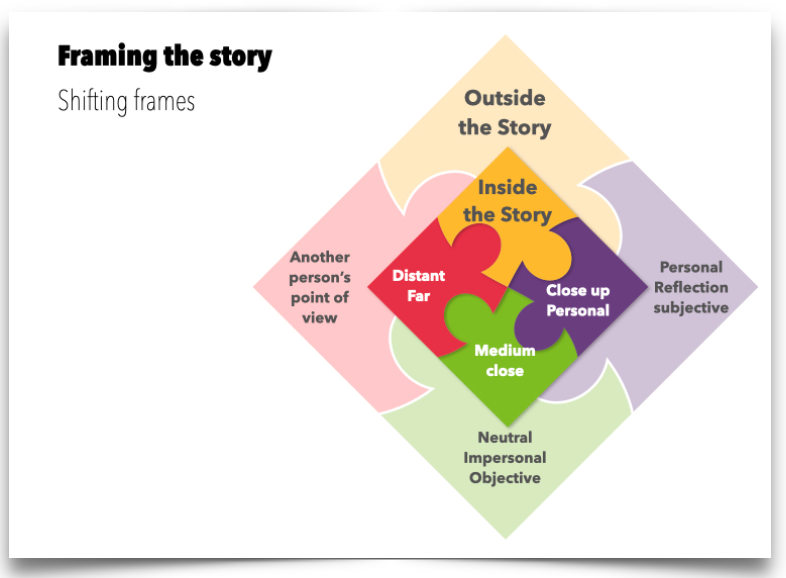
Framing the story Shifting frames
Linked with seeing the story from different perspectives is to deliberately think about the ways that we can frame the story for our drama exploration.
It is possible to frame the story Inside the story where we focus on taking role and acting out situation directly; or we can consider the perspective of being outside the story where we think about the story and its implications for us.
Both perspectives are important in planning our drama.
Consider what happens when you frame the story from these different frames or points of view.
Inside the story you can choose to focus
up close and personal
stepping back from the up close and personal to see it from mid distance – medium close.
stepping right back to see the story from far away.
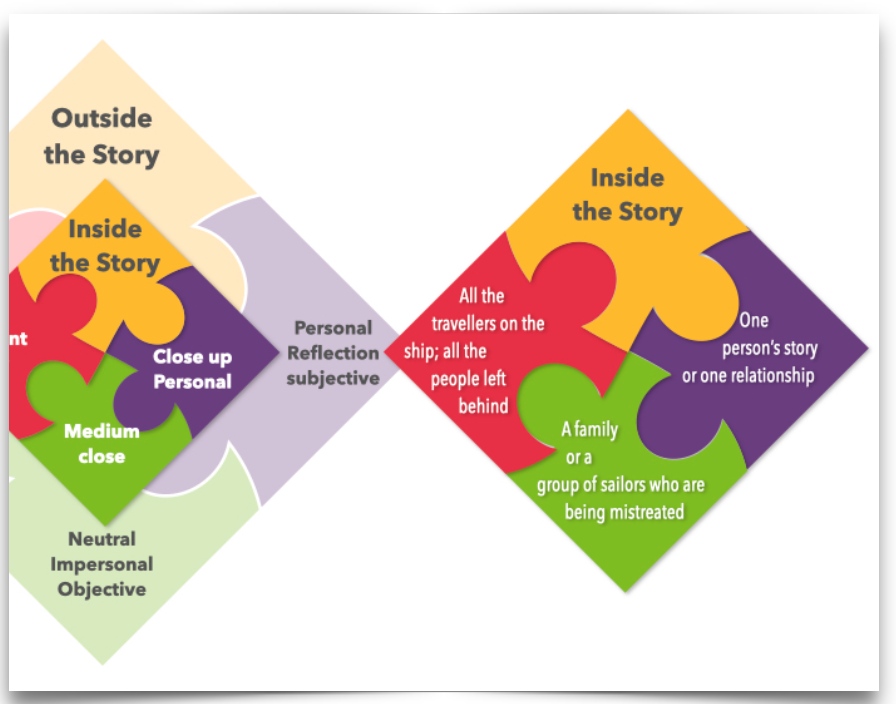
In the example of the travellers on board a ship to the New World, up close and personal focuses on one person’s story or one relationship between two people in the story. Stepping to the mid distance, you might consider all the members of one group, say a family or a group of sailors who are being mistreated. Looking at the story from a distance would focus on all the travellers on the ship.
All of these examples, still have people stepping into specific roles and characters. They are inside the action of the situation and respond to the tension.
Outside the story you step out of role and consider the story from someone looking in on it.
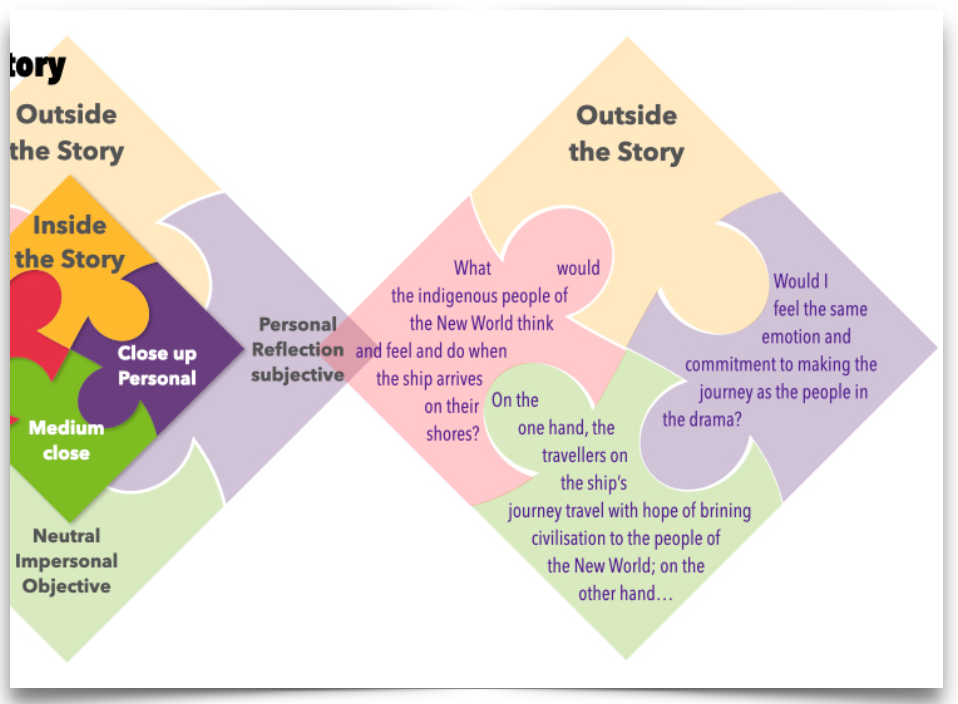
For example, the personal reflection is a subjective opportunity for you to think about the people and action of the story as an observer. You examine your thoughts and feelings about the story and the dramatic action. You explore your empathy (or antipathy) to the people and situation. For example, would I feel the same emotion and commitment to making the journey as the people in the drama?
Stepping further back from the story to a neutral position enables you to look at both sides of what happens in the story. You are neither for or against but considering the implications of the story with one even hand. On the one hand, the travellers on the ship’s journey travel with hope; on the other hand they are going to a New World where they hope to exploit the natural wealth and make the indigenous people slaves.
The third possibility of a frame outside the story is to consider it from another person’a point of view. What would the people who stay behind when the travellers leave on the ship think and feel? What would the indigenous people of the New World think and feel and do when the ship arrives on their shores?
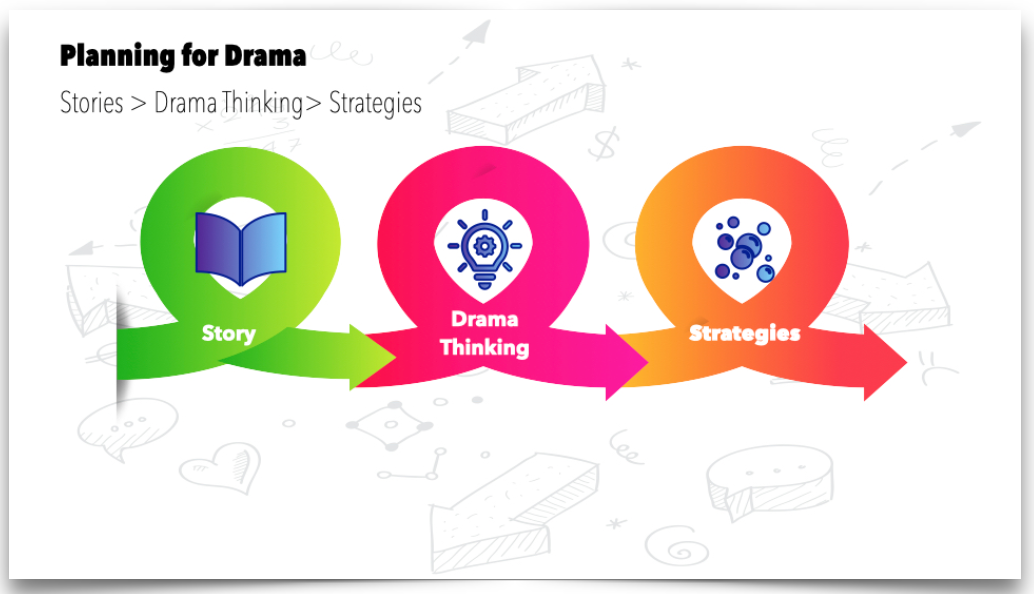
A reminder: You do not necessarily have a plan for teaching your drama lesson. The Drama Thinking outlined in this post is a process that hand in hand with an understanding of Drama Teaching and Learning Strategies, enables you to plan your lesson.
There are still more Drama Thinking approaches to explore.