
Antigone - Act3 2025 WAAPA student production, Studio Underground Theatre

Act3 2025 WAAPA student production, Studio Underground Theatre

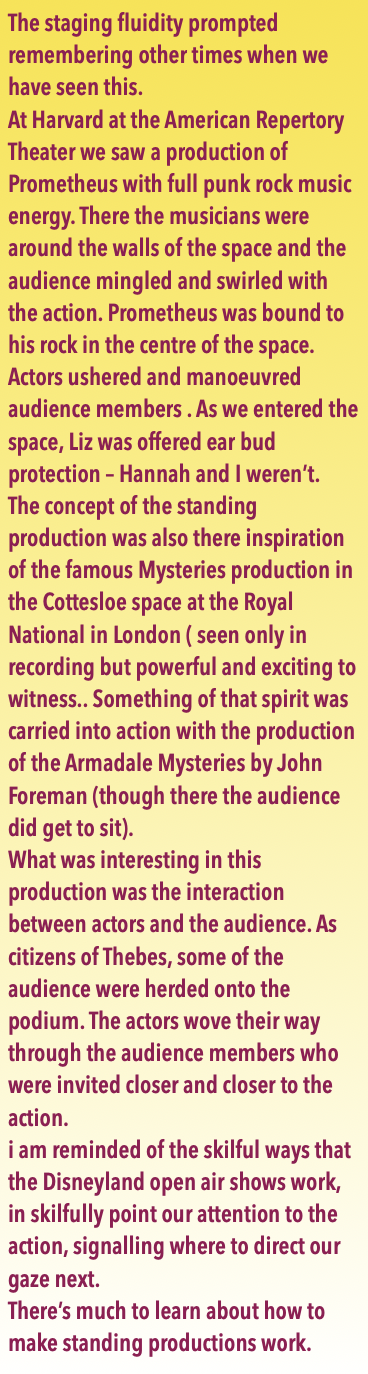
A standing performance.

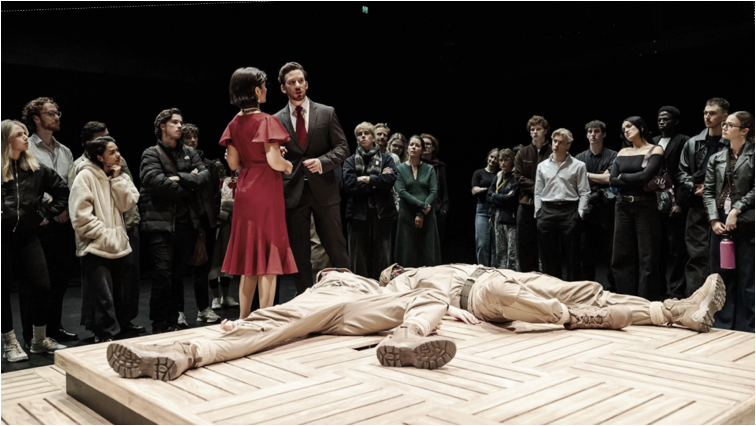
The audience wait and then stream down the stairs to enter the vast open black space of the Underground. In the middle of the space, a chorus of 8 arranged artistically on a small square low rise podium. The audience hug the walls. The ushers offer a few people assistance with folding chairs but most agree to stand. The wafting music stops.
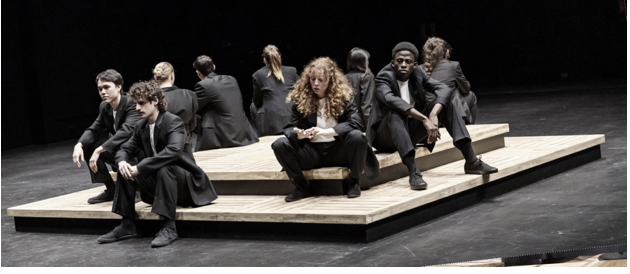
The chorus in simple black suits and white t shirts, galvanise into a chanted and stomped opening. Ritualised gestures. Energy focused. All culminating in a mandatory circle of Greek vine dancing. 

On the podium, a slow motion fight of two soldiers in battle fatigues.

The audience are drawn closer to the podium.
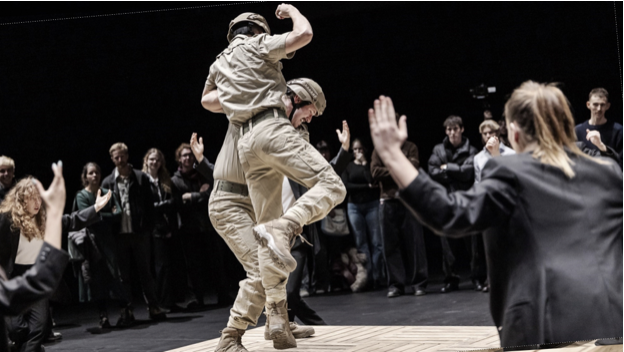
Antigone’s defiance of the decree against offering burial rites to her dead brother is boldly declared from the centre stage podium while her sister Ismene’s response is circled behind the audience. 
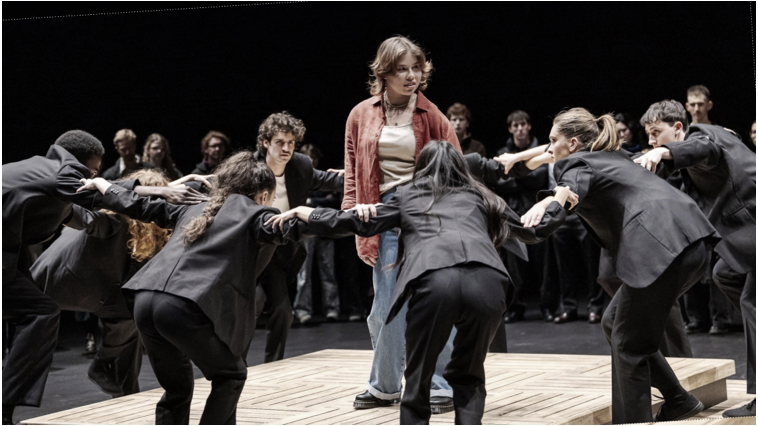
The mime show of the battle is recreated and Creon enters to assert unyielding authority. The thesis of the play is the grappling with questions of justice, loyalty, and the consequences of defying the state. 

Enter the comic timing of the Guard who drew the short straw to tell Creon of Antigone’s defiance. 
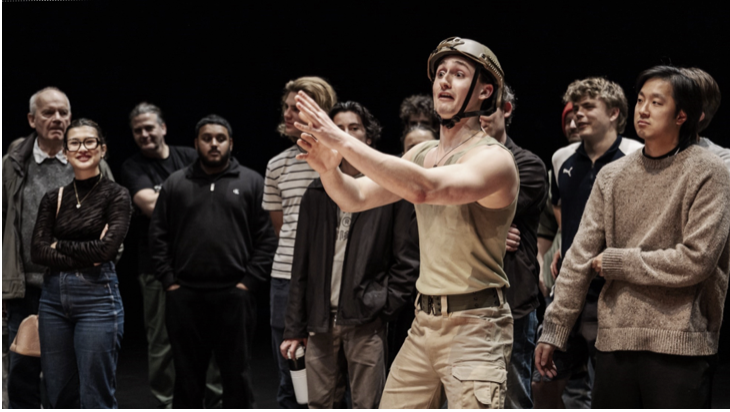
And so the play unfolds in a short 1 hour and 15 minutes. 
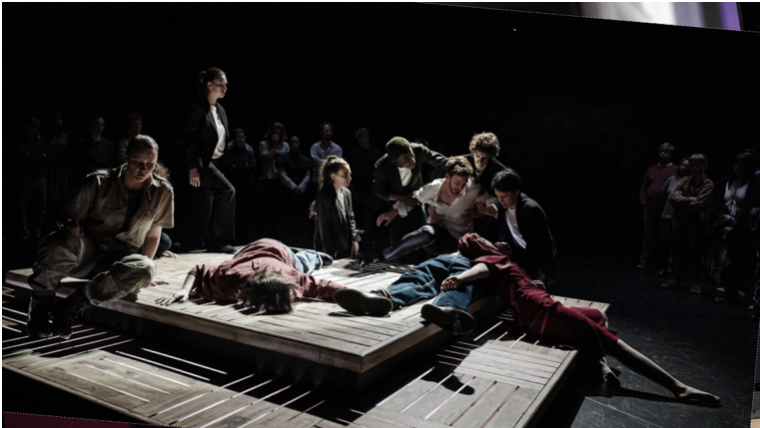
We witness Antigone’s declaiming (a shouty harshness). Haemon questioning  of his father Creon’s rigidity. 

The descent into Creon’s destruction. 

It is always curious that this play is called Antigone, when  the arc of tragic flaw is actually Creon’s.

Overall a strong production – a project under the direction of Cheek by Jowl, the international theatre company of Declan Donnellan and Nick Ormerod (who many moons ago were featured in the Festival of Perth at the Octagon. 

The splendid images in the online program capture the experience powerfully. 

There is much to value in this production for drama students.

Skilful integration of audience and action. Strong spirited performances (though Creon’s son looked older than Creon).

It was great to see across the space the engrossed faces of school students engaged with the performances.
This production should inspire some interesting experiments and investigations. I can’t wait to see what those students might do with a different text handled in this way. 

And, we did manage to survive the standing production (groaning knees and back, of course). 
Drama Tuesday - Play and Drama

We are putting on a play! say the excited school students. 

Let’s study the play! says the English Literature teacher. 

Enter HAMLET and Players in Act 3 Scene II of Shakespeare’s Hamlet. And the test for Claudius set by Hamlet lies in the performance of the players. As Hamlet says:

…the play's the thing

Wherein I'll catch the conscience of the King

The https://idioms.thefreedictionary.com/play+a%2Fyour+part says that to play (one's) part is to do what one should and is expected to do within a group in order to achieve a particular result; to perform one's role.

"Play Your Part" is a song by Canadian singer Deborah Cox. 

A “play” is a term in American football. 

Wikipedia says: A play is a work of drama, usually consisting mostly of dialogue between characters and intended for theatrical performance rather than just reading. The writer of a play is a playwright.

In the film business, the shooting script is is called a screen play.

Around the world, there are theatres called the Playhouse

And there are many more references to play. Find and share them

Screen Shot 2020-12-15 at 11.19.24 AM.png

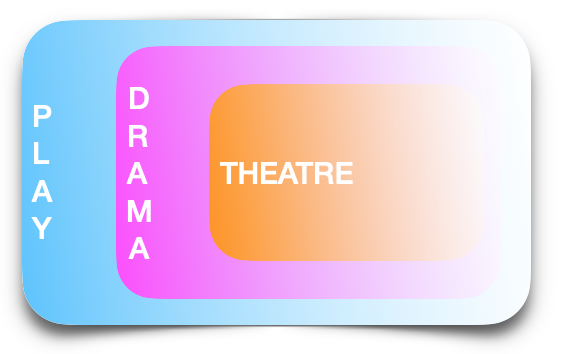
There is a clear link between Play, Drama and Theatre. I would argue that drama and theatre are nested porously within the wider filed of activity that is play. 

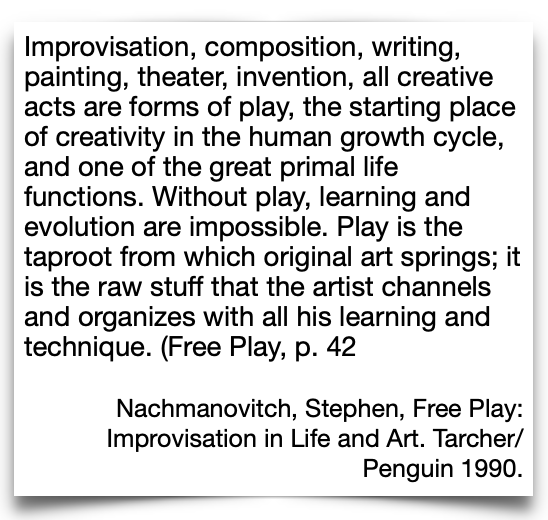
So much of what we do in drama and theatre calls on our capacity for play, purposeful play. We explore ideas and feelings; we experiment with forms and approaches; we derive pleasure and satisfaction (that old fashioned term: fun).

It is useful to remind ourselves about play. 

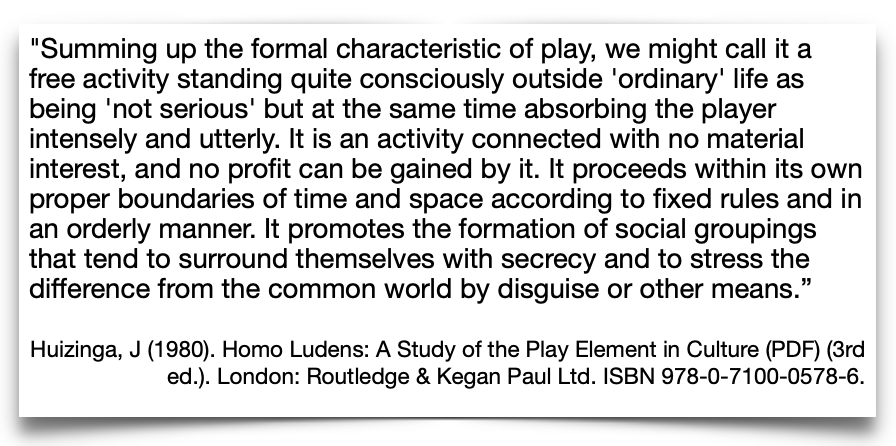
Defining play is difficult. It has many definitions, characteristics, types and approaches. 

Screen Shot 2020-12-15 at 11.19.57 AM.png
Screen Shot 2020-12-15 at 11.20.14 AM.png

The dual nature of play is important to understanding drama. Play and drama are both simultaneously part of life and experience and separated from it. There are rules and conventions but also opportunities and unscripted or improvisational moments. Drama and Play are social. They engage our physical, thinking and emotional capacities. 

The connection between play and drama can be powerfully argued. 

The Australian Early Years Framework (ELF) Belonging, Being and Becoming, has a specific emphasis on play-based learning. It builds on the United Nations Convention on the Rights of the Child that recognises children’s right to play. Play-based learning is a context for learning through which children organise and make sense of their social worlds, as they engage actively with people, objects and representations. 

Screen Shot 2020-12-15 at 11.20.22 AM.png

It can be argued that drama is also a powerful learning medium where we make sense and meaning of our world as we experience it actively engaging with people and roles and representations of our experiences. 

Screen Shot 2020-12-15 at 11.20.28 AM.png

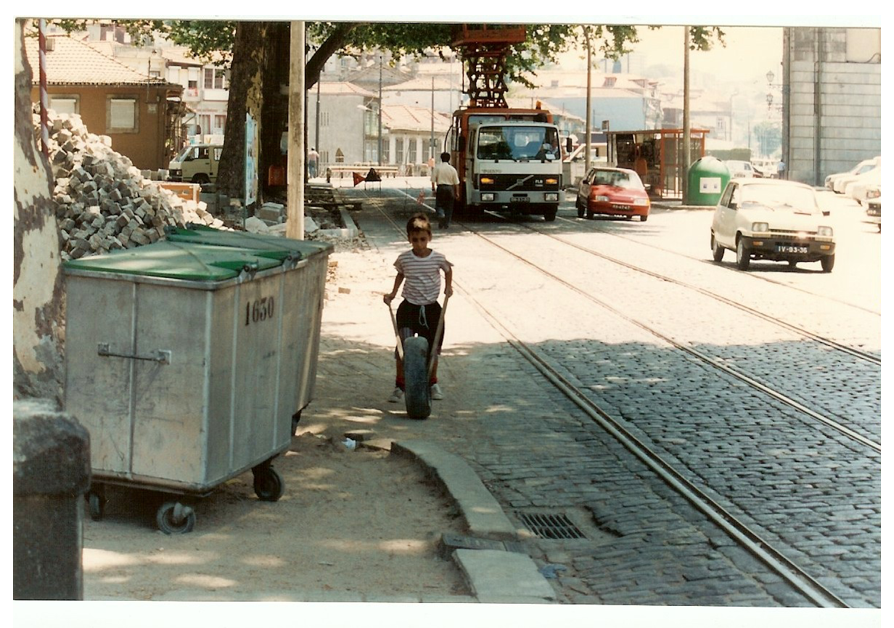
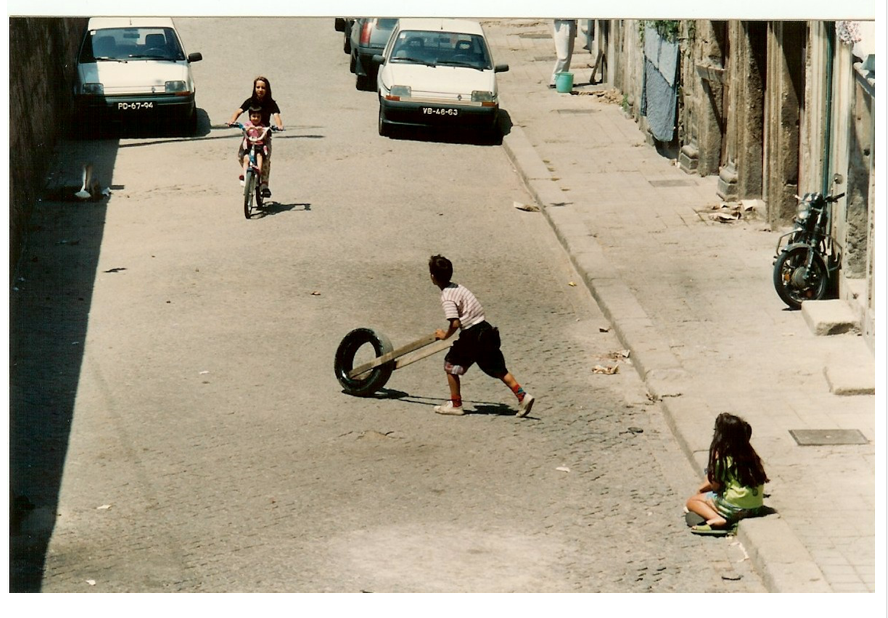
In closing I share two images  taken a long time ago when I was in Porto, Portugal, July 1992 for the First World Congress on Drama Education (the founding of IDEA, the International Drama/Theatre and Education Association). On a rare afternoon of walking in the city, down by the dock area, I saw kids playing with old tires. The rubbish on the street of abandoned rubber tyres, had been appropriated by these kids and made into play. Two sticks of wood, the rubber tyre, energy and above all imagination to see the possibilities. This sense of play is exhilarating (in what looked like a low socio-economic setting). What looks like simple object play has the capacity to extend into imagination and role. 

Play is vital for understanding drama and theatre. 

In play we find our capacity for creative improvisation, imagination and exploration of form. 

Let’s play more!

The Australian Early Years Framework (ELF) Belonging, Being and Becoming 

can be found at https://www.education.gov.au/early-years-learning-framework-0